

 Most Biased
 Satire
 Economy
 Opinion
 Elections
 Environment
 Entertainment
 Government
 Technology
 Politics
 Health
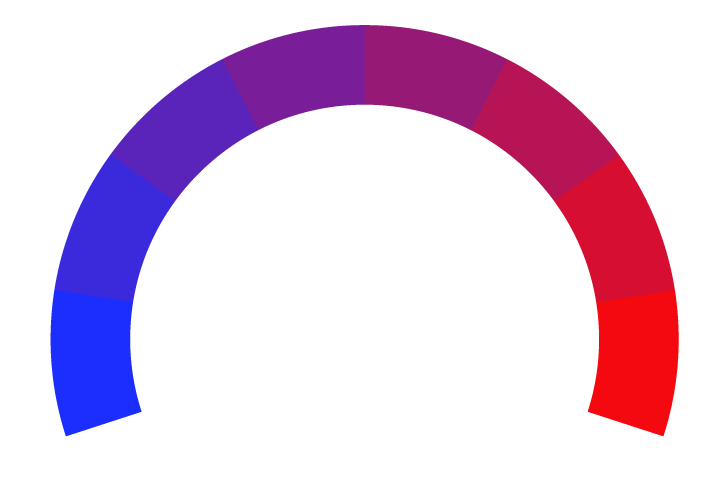
60% Medium Right
Bias Meter
Extremely
Liberal
Very
Liberal
Somewhat Liberal
Center
Somewhat Conservative
Very
Conservative
Extremely
Conservative
-100%
Liberal
100%
Conservative
- Profile
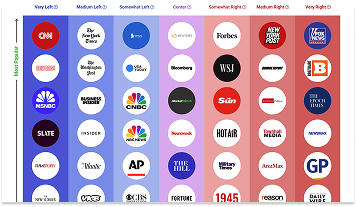
The Epoch Times on the media bias chart
- Bias Rating
60% Medium Right
- Reliability79% Reliable GoodPolicy Leanings
10% Center
Extremely
LiberalVery
LiberalModerately
LiberalSomewhat Liberal
Center
Somewhat Conservative
Moderately
ConservativeVery
ConservativeExtremely
Conservative-100%
Liberal100%
Conservative
Average Reliability
*Our bias meter rating uses data science including sentiment analysis, machine learning and our proprietary algorithm for determining biases in news articles. Bias scores are on a scale of -100% to 100% with higher negative scores being more liberal and higher positive scores being more conservative and 0% being neutral. The rating is an independent analysis and is not affiliated nor sponsored by the news source or any other organization.
Politician Portrayal9% positive
Analysis of The Epoch Times Articles
Analysis of Bias in The Epoch Times Online Articles
To evaluate this, we can analyze select The Epoch Times articles through several of Biasly’s bias rating criteria: Tone, Tendency, Author, Diction, and Expediency Bias.
- Tone: The overall attitude conveyed by the article
- Diction: Specific word choices made by the writer
- Author: The background and social presence of the journalist
- Tendency: Patterns of bias in the writer’s broader body of work
- Expediency Bias: Quick visual or textual indicators like headlines and photos that imply bias

Source: The Epoch Times
Our first article features a headline that is straight to the point, immediately drawing attention to shortcomings in the Biden administration’s approach to immigration, followed by a photo of Rep. Henry Cuellar beneath it during a press conference. The piece opens by quoting Rep. Henry Cuellar, a moderate Democrat, stating that President Biden’s budget proposal does not go far enough on border security. This framing immediately positions the story as a critique of Democratic policy, using an internal party voice to lend credibility to the conservative-leaning narrative.
The story leads with Rep. Henry Cuellar, a Democrat, criticizing President Biden’s budget proposal for not going far enough on border security. That is a notable framing choice. By putting a Democratic critic at the center, the article gives its critique added legitimacy and signals that the policy is failing even by intra-party standards.
“Earlier, a top CBP chief acknowledged that DHS does not have operational control of the border, undercutting Department of Homeland Security Secretary Alejandro Mayorkas’s claims to the contrary.”
This sentence is a good example of how tone and diction can work together. The phrase “undercutting” is a trigger word because it suggests exposure and reversal, not just disagreement. It nudges readers toward viewing the administration as misleading or ineffective. The article also repeatedly uses border-enforcement language that aligns more naturally with conservative framing than with a neutral bureaucratic framing of immigration policy.
Another The Epoch Times article examines state-level economic policy debates, such as discussions around unemployment benefits and workforce participation in South Carolina. This piece is more balanced than the immigration article, but its framing still reveals editorial preference.
“Last week, the Department of Labor reported that only 266,000 jobs were created in April, falling far short of economists’ and analysts’ expectations, while Republican elected officials have said it is, in part, due to the extra $300 weekly benefits that were included in pandemic relief bills that were signed into law last year.”
Here, the tone is more restrained and the article includes a counterpoint from Heidi Shierholz of the Economic Policy Institute. Still, the headline phrase “Road to Socialism” is highly charged and functions as a strong expediency-bias cue. Even before readers reach the body, they are primed to read the unemployment-benefit debate through a partisan ideological frame. That is a recurring pattern in The Epoch Times’ coverage: the body may stay relatively measured, but the headline often carries a stronger political signal.
The author analysis in these cases is mixed. Joseph Lord’s immigration piece is structured professionally, but its source hierarchy and wording produce a critical frame toward Democratic border policy. Jack Phillips’ unemployment article is more neutral in presentation, and his public-facing social media presence appears mostly focused on article promotion rather than overt personal ideology. That said, author bias does not only come through open opinion. It can also show up through source emphasis, recurring topic choice, and which claims receive the least skepticism.
Overall, the tendency in these news articles is not blatant partisan ranting. It is steadier and more strategic than that. The Epoch Times often builds factual articles around topics, quotes, and framing devices that reinforce conservative conclusions without always stating those conclusions outright. That is one reason Biasly places the outlet at a Medium Right rating rather than at Center.
Analysis of The Epoch Times Opinion Articles
The Epoch Times’ opinion section is more openly ideological than its straight-news reporting, and that is where the outlet’s political orientation becomes hardest to miss.
One example is the op-ed titled “Biden Announces Four More Years of Corruption, Coercion, and Incompetence.” The title uses stacked trigger words—“corruption,” “coercion,” and “incompetence”—to leave very little room for ambiguity. It is not merely critical; it is prosecutorial in tone.
In contrast, another opinion piece titled “When Weaponized Journalism Threatens Our Nation” uses language that is more institutional than personal but still carries clear ideological charge. The phrase “weaponized journalism” frames mainstream media not as flawed or biased, but as actively dangerous. That creates an atmosphere of distrust and moral urgency rather than ordinary media criticism.
The opinion section makes explicit what the news section often implies through framing. It regularly publishes arguments that criticize Democratic leaders, liberal media, or progressive policy using forceful and emotionally charged language. That pattern strengthens the broader perception that The Epoch Times is not simply right-leaning in a diffuse sense, but systematically aligned with conservative editorial priorities.
Analysis of Reliability in The Epoch Times’ Online News Articles
The Epoch Times is more reliable in straight-news format than in opinion writing, but its reliability still varies by topic. Coverage of policy disputes, labor debates, and government announcements often includes verifiable facts, attributed statements, and public data. That gives many articles a baseline level of trustworthiness even when the framing is slanted.
One example is the article “Road to Socialism’: South Carolina Governor Says Businesses Are Failing Because Staff Earn More in Unemployment.” The piece relies on Department of Labor figures, attributed political statements, and an opposing perspective from Heidi Shierholz at the Economic Policy Institute. That source mix improves reliability because the article does not rely on a single ideological speaker or a chain of unsupported claims. The body also stays more descriptive than accusatory, which reduces the risk that rhetoric overtakes reporting. For readers evaluating trustworthiness, that distinction matters: an article can be slanted in framing while still being factually grounded in its core claims.
By contrast, the immigration-budget article is still fact-based but less rounded. It includes clear attribution and references real disputes involving CBP and DHS officials, yet it offers less space to the administration’s broader reasoning or alternative interpretations of the budget’s priorities. That creates a more one-directional reading experience. The article is not necessarily inaccurate, but it is less balanced in how it distributes context.
In general, The Epoch Times is strongest when it stays close to public data, official statements, and conventional beat reporting. Its reliability becomes more vulnerable when story selection, headline framing, or omitted context push readers toward a single ideological conclusion.
Quality of Sources and Facts Used
The Epoch Times often uses a combination of official sources, political actors, internal links, and occasional outside experts. The quality of those sources is usually acceptable, but balance varies substantially from article to article.
Consider the headline: “Biden’s Budget ‘Falls’ Short on Combatting Illegal Immigration: Top Democrat.” The piece is supported by a Democratic lawmaker’s remarks and references to border officials, which gives it some factual grounding. However, the overall source structure still pushes in one direction because the article centers criticism of the administration without giving equivalent space to the administration’s budget rationale or to experts defending the policy approach. That does not make the article false, but it does limit its completeness.
In contrast, the article “Road to Socialism: South Carolina Governor Says Businesses Are Failing Because Staff Earn More in Unemployment” is stronger on this front. It includes Department of Labor data, Republican governors’ arguments, and a left-leaning economic counterpoint. The article contains multiple direct and partial quotes. The shortest quote is a brief phrase like “falls short,” while the longer quotes run several sentences. The average quote length is moderate, which can improve reliability because readers are allowed to see more of a speaker’s original wording instead of only highly selective fragments.
On linked sources, the sourcing pattern also shows a political tilt. In the unemployment article, Right-leaning political voices dominate by volume and prominence, while the Left appears mostly in rebuttal form through one expert counterpoint and references to federal policy. Center or institutional sources—such as the U.S. Department of Labor—help stabilize the piece factually, but they do not fully offset the imbalance in narrative emphasis.
So the issue is not usually that The Epoch Times invents sources. It is that the outlet often arranges credible sources in a way that favors one political interpretation. That distinction matters because sourcing quality and sourcing balance are not the same thing.
- Rep. Henry Cuellar, Democratic congressman
- Customs and Border Protection officials
- Alejandro Mayorkas, DHS Secretary
- U.S. Department of Labor
- Gov. Henry McMaster
- Heidi Shierholz, Economic Policy Institute
- Kay Ivey, Alabama governor
- Republican governors in multiple states
- Bank of America economists and analysts
- The Epoch Times internal reporting
Selection and Omission Bias
The Epoch Times provides extensive coverage of conservative policy critiques and Republican-led initiatives, which is reasonable given its editorial focus. However, bias still emerges through framing and story selection.
In the immigration-budget article, the story is built around criticism of Biden’s budget from a Democratic source, but it gives little attention to how the administration might justify the same proposal. There is minimal discussion of competing funding priorities, alternative Democratic views, or broader immigration-policy tradeoffs. That omission matters because it narrows the possible interpretation of the story.
The article does not meaningfully explore proactive measures the administration may have prioritized or the broader fiscal logic behind the proposal. As a result, the framing steers readers toward a failure narrative rather than a contested-policy narrative.
By comparison, the South Carolina unemployment article is less one-sided, but selection bias is still visible in the organizing frame. Republican governors’ warnings about enhanced benefits receive the most narrative weight, while the counterargument appears later and carries less momentum. A rough source-balance view of the article suggests that conservative or Republican-aligned voices outnumber liberal ones and receive more central placement in the story. That does not automatically make the article unreliable, but it does make it one-sided in emphasis.
In opinion pieces, issues with sourcing balance, omission, and ideological framing are more common and more explicit. The articles discussed above reflect The Epoch Times’ Medium Right orientation, but that orientation is most visible not through fabricated facts, but through the repeated selection of stories and angles that favor conservative interpretation.
The Epoch Times Bias Overview
The Epoch Times was founded in 2000 as a Chinese-language newspaper by John Tang and other Chinese-American practitioners of Falun Gong. It was created in part to provide uncensored news to Chinese communities and to report on human rights abuses, Communist Party censorship, and persecution tied to the Chinese state. Over time, it expanded into an international media organization with print, digital, and video operations.
That history is important because the outlet’s anti-CCP orientation is not incidental; it is part of the publication’s founding identity. In the U.S. context, that mission has often overlapped with conservative foreign-policy and institutional narratives, especially where issues of national sovereignty, anti-communism, religious liberty, and distrust of establishment media converge.
The result is a source whose political identity is shaped both by American partisanship and by a distinct anti-CCP mission. That combination helps explain why The Epoch Times can sound conventionally newsy in form while still expressing a strong and consistent editorial worldview in practice.
Is The Epoch Times Biased?
Based on Biasly’s evaluations, The Epoch Times is rated as Medium Right.
By examining content patterns and the broader context of media influence, readers can better understand why The Epoch Times is often perceived as politically slanted. Its recurring use of conservative framing devices, combined with topic selection and omission patterns, supports the conclusion that the outlet leans right rather than occupying a neutral center.
How Does Biasly Rate News Sources?
Biasly uses a combination of AI-driven language analysis and human analyst review to evaluate bias across thousands of media outlets. These reviews consider article tone, diction, source balance, factual support, selection and omission, author tendencies, and expediency cues such as headlines or image choices.
Biasly assigns each outlet three key scores:
- Reliability Score – Reflects factual accuracy
- AI Bias Score – Generated through natural language analysis
- Analyst Bias Score – Assigned by human political analysts
These evaluations help readers compare how different outlets frame similar stories and identify ideological patterns that may not be obvious at first glance.
Is The Epoch Times Politically Biased?
The Epoch Times earns a Medium Right rating for its AI Bias Score and a Center for its Analyst Bias Score. Those ratings align with the outlet’s broader coverage patterns.
The publication often presents Democratic administrations, progressive social policy, and mainstream institutions through a more skeptical or critical frame. At the same time, it tends to give more validation to themes related to border enforcement, cultural conservatism, anti-communism, and institutional decline. That does not mean every article is overtly ideological, but it does mean the outlet’s broader editorial trajectory is politically recognizable.
As The Epoch Times states on its about page:
“We are transparent about our values and our mission… More than 90 percent of our funding comes directly from subscribers, not advertisers or outside interests.”
The outlet’s origins in the Falun Gong community and its consistent opposition to the Chinese Communist Party provide important context. A Pew Research Center article notes that Falun Gong is considered a cult in mainland China and is banned by the CCP. The U.S. House Select Committee hearing page documents allegations of persecution, including organ harvesting claims involving Falun Gong practitioners. These dynamics help explain why The Epoch Times’ mission overlaps with certain conservative foreign-policy narratives in the U.S.
How to Evaluate Bias
Although Biasly rates The Epoch Times as Medium Right, it is still important to evaluate individual articles on their own terms. Bias can appear through emotional language, subtle framing, selective context, or source imbalance.
Readers should ask a few practical questions: Who gets quoted most? Which side sets the narrative? What facts appear early, and what context is delayed or omitted? Those questions are especially useful with The Epoch Times because its articles often present real facts inside a structure that still leans politically.
To compare coverage across outlets, readers can use Biasly’s Media Bias Ratings, Media Bias Chart, and Media Literacy Education Platform.
To start comparing news outlets and better understand political bias, sign up for Biasly’s Media Bias & News Analytics Platform to see how stories vary between sources*
The Epoch Times Reliability Overview
Is The Epoch Times Reliable?
The Epoch Times can be reliable on many straight-news stories, especially when those stories are grounded in official statements, government data, or clearly attributed reporting. However, reliability should be judged article by article rather than assumed uniformly across the outlet.
Its reporting on U.S. politics tends to show more variation than its more document-based or event-based news coverage. That is because framing bias and omission become more influential when the topic is politically polarized. A source can still be factually grounded while guiding readers toward a slanted conclusion. That is often the more useful way to understand The Epoch Times: not as uniformly unreliable, but as variably reliable within a recognizably ideological frame.
How to Evaluate Reliability?
Reliability refers to how trustworthy and accurate a news source is. Strong indicators include primary documents, direct quotes with context, credible institutional sources, transparent attribution, and consistency with other factual reporting.
Warning signs include unsupported causal claims, highly selective sourcing, emotionally loaded framing, and the absence of meaningful counter-context. Articles that rely heavily on one ideological camp while presenting contested interpretations as settled fact deserve closer scrutiny.
Biasly’s reliability framework incorporates these factors when evaluating media outlets across the political spectrum.
So How Does The Epoch Times Fare in Its Reliability?
The political reliability index developed by Biasly assesses both accuracy and trustworthiness. The Epoch Times currently holds a Good Reliability Score, which reflects the fact that the outlet often provides real evidence and real sourcing, but does not always provide the most balanced or complete presentation of contested issues.
The Epoch Times’ Source Analysis Score is Average at 40% Reliable. This suggests that the outlet generally uses credible and traceable sources, even if those sources are sometimes arranged in an ideologically tilted way.
The Fact Analysis Score of The Epoch Times is Good at 89% Reliable. This reflects how well the outlet supports factual claims, handles opposing evidence, and avoids distortion through omission or unsupported framing.
The Epoch Times Accuracy and Reliability
According to Biasly’s analysis, The Epoch Times maintains a Good Reliability Score, but individual articles may vary significantly. Many straight-news pieces remain anchored to public events, public officials, and documented claims. That matters. It separates the outlet from sources that rely mainly on rumor or fabrication.
Still, accuracy is not the same thing as full reliability. Reliability also depends on how evidence is selected, how claims are challenged, and whether the reader is given enough context to understand the issue fairly. In The Epoch Times’ political coverage, those are the areas where the outlet is most likely to fall short.
So, is The Epoch Times Reliable?
Overall, The Epoch Times can be considered very reliable. It often publishes fact-based reporting with recognizable journalistic structure, but readers should remain alert to framing bias, selective emphasis, and incomplete counter-context.
As media literacy improves, readers can more easily identify issues with selection bias, omission bias, and ideological framing. Biasly’s News Bias Checker can help readers compare how multiple outlets cover the same story.
This makes it easier to consume news in a way that is more informed, balanced, and critically aware.
The Epoch Times Editorial Patterns
The Epoch Times coverage of political topics often reflects a Medium Right bias, with consistent patterns in phrasing, source selection, and thematic focus that are Moderately Conservative. The outlet frequently selects stories that resonate with conservative audiences—immigration enforcement, progressive overreach, censorship, national decline, religious freedom, and anti-CCP conflict—and then frames those stories through language that elevates urgency, threat, or institutional failure.
Coverage of Liberal vs. Conservative Topics
Coverage of liberal or progressive issues often arrives through a skeptical lens. Stories about Democratic administrations, social policy, gender debates, education conflicts, and expansive government programs are more likely to emphasize unintended consequences, controversy, or ideological overreach.
By contrast, conservative concerns—especially those involving border security, religious liberty, anti-communism, or criticism of elite institutions—tend to receive more affirming or more sympathetically structured coverage. This difference is not always obvious in sentence-level tone, but it becomes easier to see across topic patterns and repeated framing devices.
Policy and Issue Framing
When covering immigration and border security, The Epoch Times often emphasizes enforcement gaps, disorder, and government weakness. This aligns with a Medium Right media bias. Similarly, coverage of China reflects urgency and moral clarity consistent with the outlet’s founding mission and anti-CCP worldview.
In contrast, issues like expansive social programs, regulatory policy, or identity-based legislation are more likely to be framed through cost, conflict, or unintended consequence. These framing habits do not mean every article is misleading. They do mean the reader is regularly being guided toward a particular political interpretation of events. That is what makes the outlet’s bias cumulative: any one article may appear fairly restrained, but the broader pattern points in the same ideological direction.
Coverage and Relevance
The Epoch Times reporting often touches on key issues central to the discussion of media bias, source bias, and political framing. Readers who want to compare its output with other publications can visit Biasly’s Media Bias Chart and Political Bias Chart to explore how related sources and public figures are positioned.
Funding and Ownership
Who Owns The Epoch Times?
The Epoch Times grew out of The Epoch Times Association and related nonprofit or mission-driven entities connected to Epoch Media Group. It was founded in 2000 by John Tang and other Chinese-American Falun Gong practitioners. The publication later expanded into a wider media network that also includes affiliated video and broadcast operations.
Leadership and governance have shifted over time, but the organization continues to define itself as independent from major legacy media conglomerates and strongly committed to its founding mission. That mission—especially its opposition to CCP censorship and repression—remains central to the outlet’s identity and informs its editorial worldview.
Who Funds The Epoch Times?
The Epoch Times is funded primarily through subscribers. According to its about page, more than 90 percent of its funding comes directly from subscribers, with additional revenue from advertising, donations, and related media activities.
A subscriber-heavy model can reduce some commercial pressures, but it does not eliminate editorial incentives. In practice, audience expectations, institutional mission, and ideological positioning can still shape story selection and framing over time.
Additional Insights
News Source Comparison
When it comes to news source comparison, The Epoch Times is often grouped with right-leaning or center-right digital outlets that pair factual reporting structure with a recognizable ideological frame. It is generally more formal in tone than some highly partisan outlets, but it still shares key patterns with media that emphasize conservative critiques of liberal governance, elite institutions, and mainstream news.
Readers seeking balanced political coverage may compare The Epoch Times’ framing of issues with outlets rated as Center or Lean Right on Biasly’s chart, or explore other related outlets on similar source pages.
Notable Contributors and Authors
The Epoch Times features reporters and contributors who frequently cover politics, immigration, China, religion, and institutional conflict. Journalists such as Jack Phillips help define the outlet’s political-news voice through recurring coverage of national controversies, policy disputes, and ideological flashpoints.
Readers interested in writer-level patterns can use Biasly’s Journalist Bias Analytics Platform to compare contributors and recurring author tendencies.
Related Tools and Resource Pages
To better understand how The Epoch Times fits into the broader media landscape, we recommend exploring these helpful resources:
- Media Bias Chart: See where The Epoch Times ranks among hundreds of media outlets across the political spectrum.
- Political Bias Chart: Visualize political slants of news sources across various policy areas.
- Journalist Bias Analytics Platform: Explore how individual journalists contribute to bias within their publications.
- Politician Bias Analytics Platform: Compare how politicians are framed differently by The Epoch Times and other outlets.
- Media Literacy Education Platform: Learn how to critically assess media sources, bias techniques, and news reliability.
Frequently Asked Questions
The Epoch Times is rated as Medium Right by Biasly. Its reporting often uses source selection, framing, and topic emphasis that align more closely with conservative priorities than with center or left-leaning editorial norms.
Yes. The Epoch Times has faced criticism for promoting disputed or false claims in some high-profile areas, especially around the 2020 election and COVID-19. For example, the Associated Press published a fact check on a widely shared Epoch Times-linked election-fraud video here, and FactCheck.org has tracked additional examples involving COVID-19 misinformation here.
Biasly uses a combination of AI-assisted language analysis and human analyst review to assess tone, diction, source quality, article framing, expediency bias, and factual support. These factors are used to assign both bias and reliability ratings.
Often, yes—especially in straight-news articles built around official statements, public data, or event coverage. However, readers should still watch for one-sided framing, selective omission, and ideologically tilted story construction.
Military Spending
| Date | Sentiment | Associated Article | Snippet |
|---|---|---|---|
| 08/25/2019 | 75% For | Trump Family Detentions Flores Agreement (link) | So, of course, the Trump administration is doing the opposite in a baldfaced |