Media Literacy Education Student Course

- Description
- Curriculum
- Reviews
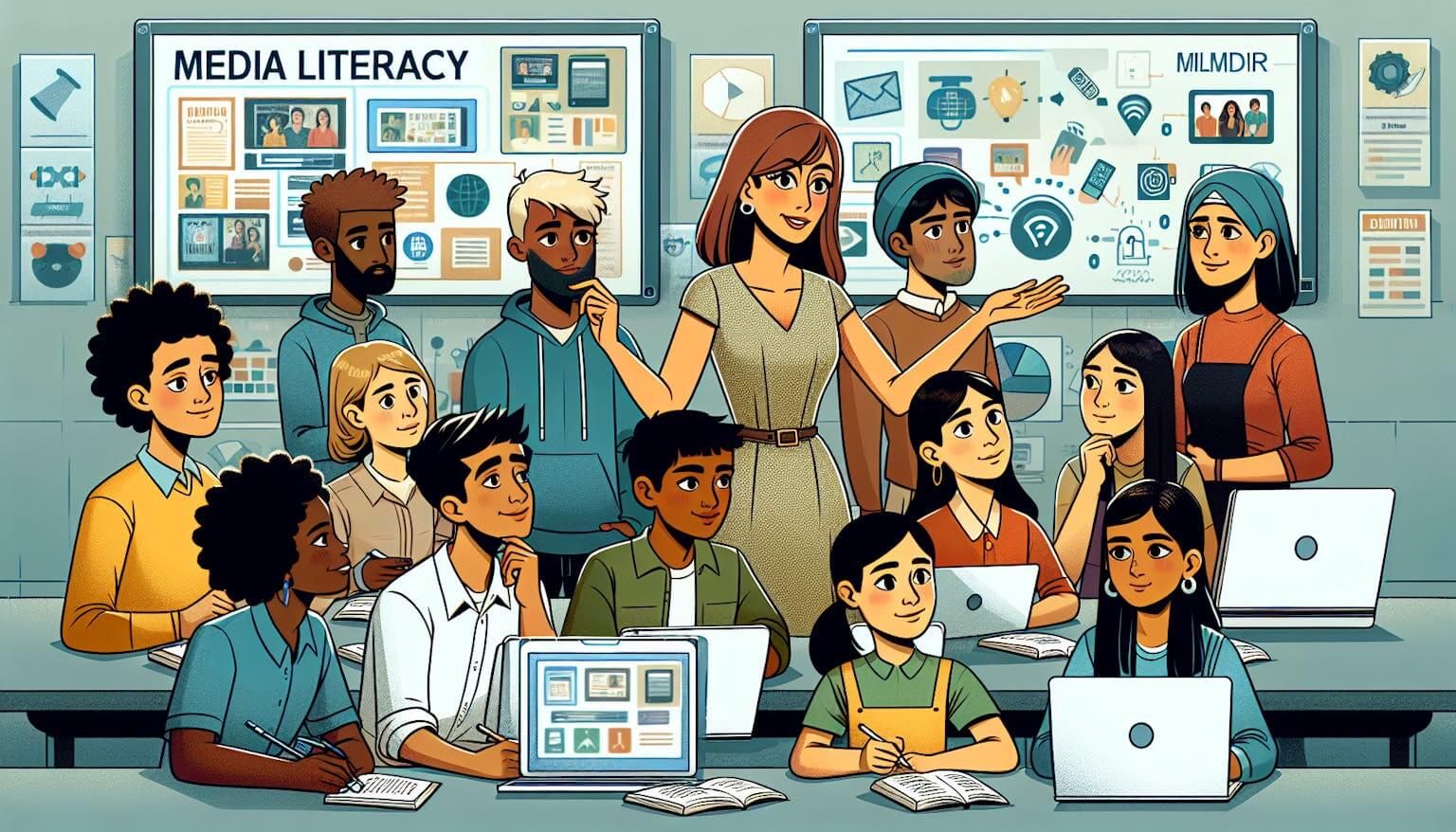
Welcome To The Media Literacy Education Course
In today’s interconnected world, media significantly shapes our lives and perceptions. With the overwhelming daily flood of information, being discerning and responsible for media consumption is critical. This course aims to equip you with vital tools and understanding, allowing you to effectively navigate this information-rich landscape.
The course is meticulously structured into several informative modules:
- Introduction to Media Literacy: This will provide you with a deep understanding of media literacy and its importance in classroom education. Clear learning objectives are outlined to guide your journey throughout the course.
- Understanding and Analyzing Political Bias: This module will introduce political bias and its influence on media content. With real-world examples and an introduction to our unique method of analysis, you’ll learn to identify and understand different forms of political bias.
- Practical Exercises and Final Assessment: The course concludes with practical exercises allowing you to apply your understanding. An insightful self-reflection essay and final knowledge check will reinforce your learning and understanding of media bias.
In an era underscored by the rapid dissemination of information, misinformation, and fake news, being media literate is no longer an option but a necessity. This course is designed to empower students, teachers, and avid media consumers with the critical skills needed to interact effectively with complex media landscapes. Whether you’re new to the field or looking to enhance your media literacy skills, this course has something to offer you. Welcome aboard to this enriching journey that promises not just learning but empowerment.
- 1
 1.1 What is Media Literacy and Why Should We Teach it in the classroom
In this section, we will dive deep into the concept of media literacy, exploring its importance and why it is vital to incorporate it into classroom education.
- 21.2 Learning Objectives
Here, we will outline the learning objectives of the course, guiding you through the skills and knowledge you will acquire throughout.
- 3
 2.1 What is Political Bias
This part will introduce you to political bias, explaining its implications on the way information is presented in the media.
[embed]https://www.youtube.com/watch?v=ZyuLyIe_x8I[/embed]
- 42.2 Political Bias Through History
We will take a historical journey to understand how political bias has shaped the media landscape over time.
- 5
 Test Your Understanding: Political Bias Through History
 - 62.3 Types of Political Bias
We will discuss the different forms of political bias prevalent in the media, providing you with comprehensive knowledge to identify them.
- 72.3.1 Explicit vs. Implicit Bias
We will discuss the distinct natures of explicit and implicit political bias in the media, providing you with the comprehensive knowledge needed to identify both conscious partisan agendas and unconscious framing.
- 8Test Your Understanding: Explicit vs. Implicit Bias
- 92.3.2 Personal Bias
We will examine how personal bias shapes a journalist's worldview, providing you with the comprehensive knowledge needed to identify how individual beliefs unconsciously filter the news.
- 10Test Your Understanding: Personal Bias
- 112.3.3 Confirmation Bias
We will examine the mechanics of confirmation bias in journalism, providing you with the comprehensive knowledge needed to spot how media creators and consumers selectively process information to validate pre-existing beliefs.
- 12Test Your Understanding: Confirmation Bias
- 132.3.4 Funding
We will examine the financial underpinnings of funding and sponsorship bias in the media, providing you with the comprehensive knowledge needed to detect how corporate money, advertisers, and wealthy donors quietly dictate news coverage.
- 14Test Your Understanding: Funding
- 152.3.5 Selection/Omission and Gatekeeping
We will examine how media gatekeepers engineer reality through selection and omission bias, providing you with the comprehensive knowledge needed to spot what facts and stories are being hidden from public view.
- 16Test Your Understanding: Selection/Omission and Gatekeeping
- 172.3.6 Halo Effect
We will examine how the halo effect skews media reporting, providing you with the comprehensive knowledge needed to spot how a public figure's single positive trait causes journalists to view their entire character and policies through an overly favorable lens.
- 18Test Your Understanding: Halo Effect
- 192.3.7 Unsubstantiated Claims
We will examine the proliferation of unsubstantiated claims in the news, providing you with the comprehensive knowledge needed to spot when media outlets present assertions, rumors, or speculation as verified facts.
- 20Test Your Understanding: Unsubstantiated Claims
- 212.3.8 Mind Reading
We will examine the psychological projection of "mind reading" in journalism, providing you with the comprehensive knowledge needed to spot when reporters pretend to know the hidden motives, thoughts, or emotions of public figures instead of stick to verifiable facts.
- 22Test Your Understanding: Mind Reading
- 232.3.9 Slant/Tone
We will examine the nuances of slant and tone in media reporting, providing you with the comprehensive knowledge needed to spot how emotionally charged language and selective framing subtly manipulate public perception.
- 24Test Your Understanding: Slant/Tone
- 252.3.10 Ad Hominem
We will examine the mechanics of ad hominem attacks in media commentary, providing you with the comprehensive knowledge needed to spot when outlets attack a person’s character, appearance, or background rather than addressing their actual arguments or data.
- 26Test Your Understanding: Ad Hominem
- 272.3.11 Image Selection
We will examine the visual framing of image selection in the media, providing you with the comprehensive knowledge needed to spot how outlets use specific photographs or video stills to subconsciously alter public perception of a person or event.
- 28Test Your Understanding: Image Selection
- 292.3.12 Demographic Bias
We will examine the structural impact of demographic bias in the media, providing you with the comprehensive knowledge needed to identify how news coverage favors specific socio-economic, racial, and generational audiences.
- 30Test Your Understanding: Demographic Bias
- 312.3.13 Corporate Bias
We will examine the structural mechanics of corporate bias in the media, providing you with the comprehensive knowledge needed to identify how news coverage favors the financial interests of media owners, parent conglomerates, and elite business networks.
- 32Test Your Understanding: Corporate Bias
- 332.3.14 Neutrality Bias
We will examine the concept of journalistic neutrality, providing you with the comprehensive knowledge needed to distinguish true objectivity from "false balance" and hidden bias in news reporting.
- 34Test Your Understanding: Neutrality Bias
- 352.3.15 Priming Bias
We will examine the psychological framework of media priming, providing you with the comprehensive knowledge needed to spot how news organizations subtly prep your brain to evaluate political figures and events based on specific, pre-selected topics.
- 36Test Your Understanding: Priming Bias
- 372.3.16 Publication Bias
We will examine the systemic mechanics of publication bias, providing you with the comprehensive knowledge needed to spot how the selective printing of positive or sensational results distorts scientific and political realities.
- 38Test Your Understanding: Publication Bias
- 392.3.17 Placement/Expediency Bias
We will examine how media organizations manipulate public urgency through placement and expediency bias, providing you with the comprehensive knowledge needed to spot how the strategic positioning of stories and a rush for rapid production distort objective reality.
- 40Test Your Understanding: Placement/Expediency Bias
- 412.3.18 Types of Political Bias: End Note
This chapter highlights the vast scope of media bias, providing practical tools to help you scrutinize information, challenge your "filter bubble," and evaluate diverse viewpoints.
- 42Quiz: Types of Political Bias
- 432.4 Media Political Leanings – Examples
Using a range of real-world examples, we will illustrate the varying political leanings present in the media.
- 44Test Your Understanding:Media Political Leanings – Examples
- 453.1 Introduction to Media Usage
Explaining the growing dependency on media usage for information and the negative effects that come with this dependency.
- 463.2 Social Media and Technology Usage and its Effects
Detailing the overlap of Social Media and Technology Usage.
- 47Test Your Understanding: Social Media and Technology Usage and its Effects
- 483.3 Analyzing Advertisements and Other Messages
The harmful impact that social media has on our society, in particular children.
- 49Test Your Understanding: Analyzing Advertisements and Other Messages
- 503.4 Harmful effects of Social Media
Information on how to create habits that limit your daily media usage.
- 51Test Your Understanding: Harmful effects of Social Media
- 523.5 Responsible Social Media Usage
Explore the fascinating interplay between media usage, addiction, and our neurological responses in this lesson. Dive into the dopamine reward system, understand its role in perpetuating addictive behavior on social platforms, and learn practical strategies to curtail excessive media consumption for a healthier digital lifestyle.
- 53Quiz: Responsible Media and Technology Usage
- 543.6 Spread of Misinformation through Social Media
This section explores how misinformation is disseminated through social media platforms and its potential consequences.
- 55Test Your Understanding: Spread of Misinformation through Social Media
- 563.7 Manipulation of Behavior through Social Media
This part discusses the tactics used by social media platforms to manipulate user behavior and the resulting impacts.
- 57Test Your Understanding: Manipulation of Behavior through Social Media
- 583.8 Ensuring Social Media Safety
This section provides crucial guidance on maintaining personal safety and security while using social media platforms.
- 59Test Your Understanding: Ensuring Social Media Safety
- 603.9 Media and Culture
This section investigates the impact and influence of media on cultural perceptions and societal norms.
- 61Quiz: Media and Cultures test
- 624.1 Recognizing and Navigating Deepfakes
This section offers strategies to identify deepfakes and advice on preventing their widespread dissemination.
- 63Quiz: DeepFakes
- 644.2 Recognizing and Navigating Fake News
This part provides guidelines on detecting fake news, discerning credible sources, and emphasizes the necessity of reporting misinformation.
- 65Test Your Understanding: Recognizing and Navigating Fake News
- 664.3 On Other Misinformation
This section explores how misinformation spreads in different forms and outlines measures for individual contribution to its minimization.
- 67Quiz: Misinformation
- 685.1 Employing Critical Thinking and Leveraging Information Resources
This section focuses on developing critical thinking skills to effectively evaluate and use various information resources.
- 695.2 Distinguishing Primary and Secondary Sources in Research Methods
This part of the text instructs on understanding and distinguishing between primary and secondary sources in research.
- 70Test Your Understanding: Distinguishing Primary and Secondary Sources in Research Methods
- 715.3 Differentiating Facts, Perspectives, and Opinions
This section brings attention to the nuances among facts, personal perspectives, and opinions, highlighting their importance in information interpretation.
- 72Test Your Understanding: Differentiating Facts, Perspectives, and Opinions
- 735.4 Utilizing Peer-Reviewed Print and Digital Library Resources
This portion provides valuable insights into accessing and effectively using peer-reviewed print and digital resources available in libraries.
- 74Quiz: Critical Thinking
- 755.5 Understanding the Economic, Legal, and Social Implications of Information Use
This section discusses the economic, legal, and social consequences related to the use of information, providing an informed perspective.
- 76Test Your Understanding: Understanding the Economic, Legal, and Social Implications of Information Use
- 775.6 Ensuring Ethical Information Production
This section sheds light on the importance of ethics in producing information, focusing on responsibility and integrity.
- 78Test Your Understanding: Ensuring Ethical Information Production
- 796.1 Introduction to Biasly's Rating Methodology
We will introduce our unique method for analyzing political bias, offering an effective tool to evaluate media content.
- 806.2 The Seven Elements of Rating
This part details the seven elements that form our rating system, a crucial aspect of analyzing political bias.
- 81Test Your Understanding: The Seven Elements of Rating
- 826.3 Rating an Article Step-By-Step
We will guide you through a step-by-step process on how to rate an article using our methodology.
- 83Test Your Understanding: Rating an Article Step-By-Step
- 846.4 The 7 Elements - Real Examples
We will apply the seven elements of rating to real-world media content, offering practical demonstrations of our analysis method.
- 857.1 A Practical and Fun Approach to Learning Media LiteracyThis section includes exercises that enable you to apply your understanding of media literacy in a fun way.
- 867.2 Tone and Tendency Practical ApplicationThis section includes exercises that enable you to apply your understanding of tone and tendency in media content.
- 877.3 Diction Word Choice QuizA quiz to test your knowledge on the impact of diction or word choice in media communication.
- 887.4 Author CheckThis practical task will allow you to explore the influence of authors on the content they produce.
- 897.5 Selection and OmissionThrough these exercises, we will highlight how the selection or omission of information impacts the overall message of a piece.
- 907.6 ExpediencyHere, we will delve into the concept of expediency and how it shapes media content.
- 917.7 AccuracyAccuracy is paramount in media literacy, and this section will help you discern factual information from misinformation.

- 969.1 Appendix A
An analysis of how biased the news source Alternet is.
- 979.2 Appendix B
An analysis of how biased the news source MSNBC is.
- 989.3 Appendix C
An analysis of how biased the news source AP News is.
- 999.4 Appendix D
An analysis of how biased the news source The Hill is.
- 1009.5 Appendix E
An analysis of how biased the news source Breitbart is.
- 1019.6 Appendix F
An analysis of how biased the news source InfoWars is. This course is designed for all – students, teachers, or avid consumers of media. Get ready to embark on an enriching journey that empowers you to interact with the complex media landscape responsibly and effectively. Welcome aboard!