

 Most Biased
 Satire
 Economy
 Opinion
 Elections
 Environment
 Entertainment
 Government
 Sports
 Politics
 Health
6% Center
Bias Meter
Extremely
Liberal
Very
Liberal
Somewhat Liberal
Center
Somewhat Conservative
Very
Conservative
Extremely
Conservative
-100%
Liberal
100%
Conservative

- Profile
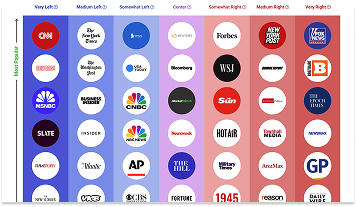
Fortune Magazine on the media bias chart
- Bias Rating
6% Center
- Reliability62% Reliable AveragePolicy Leanings
12% Somewhat Right
Extremely
LiberalVery
LiberalModerately
LiberalSomewhat Liberal
Center
Somewhat Conservative
Moderately
ConservativeVery
ConservativeExtremely
Conservative-100%
Liberal100%
Conservative
Average Reliability
*Our bias meter rating uses data science including sentiment analysis, machine learning and our proprietary algorithm for determining biases in news articles. Bias scores are on a scale of -100% to 100% with higher negative scores being more liberal and higher positive scores being more conservative and 0% being neutral. The rating is an independent analysis and is not affiliated nor sponsored by the news source or any other organization.
Politician Portrayal9% positive
Analysis of Fortune Magazine Articles
Analysis of Bias in Fortune Magazine Online Articles
Fortune Magazine appears to have found that in-depth business coverage is an effective way to drive subscriptions. It’s essential to ask: is Fortune Magazine truly biased?
To evaluate this, we can analyze select Fortune Magazine articles using several of Biasly’s bias-rating criteria: Tone, Tendency, Author, Diction, and Expediency Bias.
- Tone: The overall attitude conveyed by the article
- Diction: Specific word choices made by the writer
- Author: The background and social presence of the journalist
- Tendency: Patterns of bias in the writer’s broader body of work
- Expediency Bias: Quick visual or textual indicators like headlines and photos that imply bias
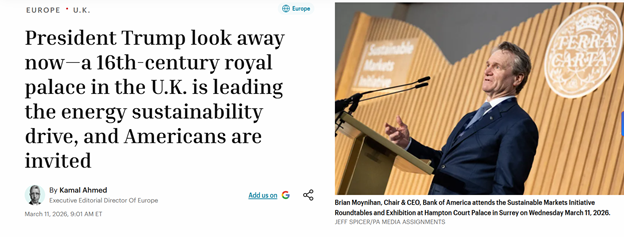
The article by Kamal Ahmed, “President Trump look away now—a 16th-century royal palace in the U.K. is leading the energy sustainability drive, and Americans are invited,” presents a mostly neutral discussion of a sustainability conference at Hampton Court Palace, where major business leaders promoted private-sector efforts toward the energy transition. The piece focuses on comments from executives such as Brian Moynihan of Bank of America, Ron O’Hanley of State Street, and Janet Truncale of EY, who discuss how businesses can help move energy systems toward renewables and other low-carbon technologies.
In terms of tone and diction, the article is largely informative and straightforward. The language does not contain strong emotional or persuasive wording. Instead, it primarily reports what the executives said about sustainability, the role of the private sector, and the economic opportunities in the growing green economy. For example, the article quotes Moynihan, emphasizing that the private sector has “the money, the innovation, the techniques, the know-how” to advance the energy transition, illustrating its reliance on direct quotations rather than opinionated commentary.
“I get asked all the time: is this falling off the agenda?” said Truncale. “And my answer is always that the best companies are focusing on sustainability as core to resilience, value protection, value creation, and growth.”
The quote pushes back against a common concern about whether sustainability is “falling off the agenda.” Raising that question explicitly acknowledges skepticism or fatigue in public discourse. But the answer reframes sustainability not as a trend or moral add-on, but as a strategic business priority.
Key phrases such as “resilience,” “value protection,” “value creation,” and “growth” are core business metrics. Including this quote signals to readers that sustainability is being integrated into financial and operational decision-making rather than treated as corporate social responsibility window-dressing.
The phrasing “I get asked all the time” suggests the speaker is a credible insider fielding recurring concerns. That gives the quote weight: it’s not abstract theory, but a response grounded in real conversations with stakeholders (investors, executives, policymakers).
Rather than saying “everyone is doing this,” the quote narrows the claim to “the best companies.” This subtly creates a benchmark of excellence, which implies that companies that deprioritize sustainability may be falling behind.
The author, Kamal Ahmed, is known for writing about business and economic issues, and his approach in this article reflects that background. Rather than focusing heavily on political argument, Ahmed centers the piece on corporate leadership and market trends connected to sustainability initiatives. His reporting style generally aims to be balanced, though he has sometimes received criticism from fiscal conservatives for the framing of economic topics. In this case, however, the article’s structure mostly emphasizes factual reporting and statements from business leaders rather than advocating a clear position. Ahmed mostly uses social media to repost his articles, along with other Fortune Magazine articles.
And here is @ameliagentleman with the original story of Antony Bryan. Sitting in Limbo @BBCOne #Windrush https://t.co/TDQnm9fjFo
— Kamal Ahmed (@kamalahmednews) June 8, 2020
Although the headline may suggest a slight anti-Trump perspective, especially with the phrase “President Trump look away now,” the body of the article does not strongly reinforce that tone. The reference to Donald Trump appears mainly to explain how his administration has changed the political climate surrounding climate policy, including the decision to withdraw the United States from the Paris climate agreement and criticism of sustainability initiatives. These points are presented as contextual information rather than direct criticism.
“Ron O’Hanley, the chief executive of State Street, and Janet Truncale, the chief executive of EY, are here to promote private sector efforts to drive the energy transition and climate sustainability. Donald Trump might want to look away.”
Overall, the article shows only minimal bias. The headline may imply a slightly critical stance toward Trump, but the content itself remains largely neutral and focused on business perspectives about sustainability and energy transition efforts. The informative tone, reliance on quotes from corporate leaders, and emphasis on economic implications contribute to a relatively balanced presentation of the topic.
“Trump may claim the war is ‘complete,’ but Wall Street expects the Fed to stay hawkish long after the conflict has ended,” the article by Eleanor Pringle discusses the economic implications of the war in Iran and how financial markets believe it will influence U.S. monetary policy. Specifically, it focuses on expectations that the Federal Reserve will maintain a hawkish stance on interest rates because geopolitical conflict in the Middle East is likely to keep energy prices and inflation elevated. The piece primarily analyzes economic reactions from Wall Street analysts and central bank officials rather than offering direct political commentary.
The tone of the article is generally informative and analytical, consistent with financial reporting. It explains how the conflict could influence inflation, oil prices, and the Fed’s decision on base interest rates. Economists cited in the article argue that disruptions to energy supply, especially through the Strait of Hormuz, a key global oil shipping route, could push prices higher and make rate cuts less likely. Because the Fed’s mandate includes controlling inflation, analysts expect policymakers to keep interest rates higher for longer.
“This is the concern of a central bank, many of which are mandated to keep prices stable. In countries like the U.S., the Fed even has an inflation target of 2% to maintain.”
However, the article’s diction subtly suggests a more liberal framing. While the language remains mostly factual, the phrasing around President Trump’s statements introduces skepticism. The title itself questions the president’s claim that the conflict is essentially finished, contrasting it with Wall Street’s expectation that the economic consequences will continue. This framing implies doubt about the certainty of Trump’s statement and emphasizes the broader economic risks tied to the conflict.
“But Trump is likely to be disappointed. Macquarie strategists Thierry Wizman and Gareth Berry say that even if the war in Iran does quickly draw to a close, it will be months before central banks feel confident its inflationary impacts have subsided.”
Referencing Donald Trump sets up an expectation, which is likely optimism about a quick resolution to the Iran conflict. The line “Trump is likely to be disappointed” immediately undercuts that, signaling a disconnect between political narrative and economic constraints.
Citing Thierry Wizman and Gareth Berry adds credibility from financial markets rather than politics. The quote highlights a crucial concept: economic effects persist long after the triggering event ends. You can use this to explain why markets or households may not feel relief even after geopolitical tensions ease.
The author, Eleanor Pringle, is known for writing about business and economic issues. Although she is rated as a slightly conservative economic writer, her reporting typically centers on financial analysis rather than partisan political argument. In this article, that approach is visible in the heavy use of analyst commentary, economic data, and discussion of monetary policy. The focus on market expectations and Federal Reserve strategy keeps the article grounded in economic reporting rather than ideological debate. Pringle does not appear to maintain a notable public social media presence.
Overall, the article contains mild bias primarily through framing rather than overt opinion. The informative tone and reliance on financial experts maintain a mostly objective style, but the headline and some word choices express skepticism toward Trump’s claim that the war is effectively over. As a result, the piece can be interpreted as subtly leaning liberal in diction while still functioning mainly as a financial analysis of how the Iran conflict could affect interest rates and inflation.
Analysis of Fortune Magazine Opinion Articles
To fully understand political bias in media, it’s important to distinguish between factual reporting and opinion pieces. While reporting aims to present facts and let readers form their own conclusions, opinion articles express personal viewpoints on current issues. Although the previous section examined factual reporting, this section turns to how bias surfaces through Fortune Magazine’s selection and tone of opinion content.
Many of %SOURCE_NAME%’s opinion-style or rankings-based features focus on business and economics. The Fortune 500-2025” ranking attempts to minimize bias primarily through transparency about how the list is created. On the methodology page, Fortune Magazine provides a detailed explanation of how companies are selected and ranked, allowing readers to understand exactly what criteria determine the results.
According to the methodology, companies are ranked mainly by total annual revenue from their most recent fiscal year, and only firms that file financial statements with a government agency and operate in the United States are eligible for inclusion. This reliance on reported financial data helps reduce subjective judgment in the ranking process.
The tone of the methodology description is purely informational and technical. It explains the definitions used for revenue, profits, and balance-sheet figures, and it also outlines which companies are excluded, such as those incorporated outside the United States or those that do not publicly report complete financial statements. By clearly stating these rules and definitions, Fortune Magazine gives readers the ability to evaluate whether the ranking is fair or potentially biased.
Because the ranking is based on measurable financial metrics rather than editorial opinion, the methodology itself suggests an effort to maintain objectivity. Fortune Magazine also explains how data is verified using sources such as company filings, earnings releases, and external financial data providers, further reinforcing the reliability of the ranking process. This transparency helps readers understand how the list is constructed and why certain companies appear where they do.
However, one limitation is that much of the detailed company data and deeper analysis connected to the ranking is behind a paywall. While the methodology is publicly described, full access to the data may require a subscription. This limits some readers’ ability to independently analyze the results or fully verify the ranking.
Overall, the Fortune Magazine 500 ranking shows relatively low structural bias because the methodology is clearly explained and grounded in consistent financial metrics. The main concern is not the criteria themselves but the limited accessibility of the complete data, which may make it harder for readers without a subscription to fully evaluate the ranking.
The Fortune Magazine ranking of the “100 Most Powerful People in Business” attempts to reduce bias by clearly explaining the methodology used to create the list. Fortune Magazine provides a full description of how individuals are evaluated, including factors such as the size and health of the business they run, revenue and profit growth, innovation, influence, career trajectory, and overall impact. This transparency allows readers to see the criteria used and understand how the rankings are determined.
However, some potential bias still exists because the concept of “power” itself is inherently subjective. While measurable factors like company revenue, profitability, and market value provide objective data, other criteria such as influence, innovation, and whether a leader is “making the world a better place” require editorial judgment from Fortune Magazine’s staff. Because these elements depend on interpretation, different editors or organizations might rank individuals differently.
The description of the list also emphasizes leaders who shape the behavior and thinking of others in the business world, highlighting executives whose decisions influence industries and markets. While this definition helps clarify what Fortune Magazine means by “power,” it still leaves room for subjectivity in deciding whose influence is most significant.
Overall, Fortune Magazine attempts to limit bias by publishing its methodology and explaining the factors used to rank business leaders. This transparency helps readers understand the reasoning behind the rankings. However, because the idea of “power” involves qualitative judgments about influence and impact, some level of subjectivity and, therefore, potential bias remains in the final list.
Analysis of Reliability in Fortune Magazine’s Online News Articles
Fortune Magazine aims to serve its readers with objective, fact-based reporting. Its staff includes writers from varying ideological backgrounds, which can help balance coverage. However, readers should distinguish between news reporting and opinion pieces to evaluate credibility effectively.
“Dario Amodei says he ‘cannot in good conscience’ bow to Pentagon’s demands over AI use in military,” is an article with good reliability. Amodei is the CEO of Anthropic, an A.I. and technology company. He is one of the most reliable sources you can consult when discussing A.I. However, the article doesn’t just rely on him. The article does a good job of using and quoting multiple sources. Most of the other sources used are reliable as well. The only negative is that the other sources complement what Amodei says, rather than countering it. Despite this, the article is still reliable.
Another article, titled “DOJ releases missing files with unconfirmed allegations about Trump from the 1980s,” also has good reliability. The article uses reliable sources to back the claims made in the title. Unlike the last article, this article also does a good job of representing both sides. The reader understands what the allegations are, but also that they are not proven at this time. This article’s main weakness is a lack of quotes. Although the sourcing is strong, they rely on paraphrasing more than direct quotes. Although government documents can sometimes lead to dry quotes, it’s still important to quote them so the reader knows what the primary source is saying.
Quality of Sources and Facts Used
Fortune Magazine often uses credible sources from across the political spectrum. However, some articles lean too heavily toward how comprehensively they present opposing viewpoints.
In “Bosses are firing Gen Z grads just months after hiring them—here’s what they say needs to change,” the article relies on a mix of surveys, academic institutions, experts, and business leaders. These sources include:
- Survey from Intelligent.com
- Research or commentary connected to Michigan State University
- Expert analysis from Huy Nguyen, Chief Education and Career Development Advisor at Intelligent.com
- Statements from Andy Jassy, CEO of Amazon
- Commentary from Richard Branson, founder of Virgin Group
- Statements from Mark Zuckerberg, CEO of Meta
- Comments from David Meads, a top executive at Cisco
- References to additional reporting from other Fortune Magazine articles
All the sources are used once or twice. The article allows the different viewpoints to get relatively equal representation. Nguyen is the only expert who’s directly quoted. Jassy and Meads are directly quoted to showcase the business perspective.
A balanced view of these sources reveals a consistent theme: the growing disconnect between formal education and workplace expectations, alongside a broader shift toward valuing soft skills and adaptability. A survey from Intelligent.com found that many employers view recent graduates as unprepared, citing issues such as a lack of initiative and professionalism, while guidance from Huy Nguyen emphasizes the importance of proactive behavior, feedback-seeking, and workplace awareness to bridge that gap. Efforts at Michigan State University, such as teaching students practical networking and social cues, illustrate how institutions are beginning to respond by integrating career-readiness skills into their programs.
Meanwhile, business leaders reinforce this shift: Andy Jassy highlights attitude as a key driver of early-career success, Mark Zuckerberg prioritizes raw talent and personality over credentials, and Richard Branson advocates for experiential learning over traditional degrees. Similarly, Cisco executive David Meads underscores that “attitude and aptitude” outweigh formal qualifications, aligning with broader industry sentiment. Together with additional reporting from other articles, these perspectives suggest a convergence between academic reform and employer expectations, emphasizing that success increasingly depends not just on education, but on practical skills, mindset, and adaptability in a rapidly evolving workforce.
The article primarily uses expert commentary, surveys, and statements from business leaders to support its argument that artificial intelligence and changing hiring practices are making college degrees less central to employment. The most concrete piece of evidence comes from the survey conducted by Intelligent.com, which provides numerical data about employer attitudes toward hiring and education.
The article also includes an interpretation from Huy Nguyen, Intelligent’s Chief Education and Career Development Advisor, who explains the survey results and their implications for job seekers. This gives the article a professional expert perspective, although it relies heavily on a single organization’s research rather than multiple independent studies.
Another group of sources consists of major technology and business leaders, including Andy Jassy, Richard Branson, Mark Zuckerberg, and David Meads. Their comments support the idea that skills and practical abilities are becoming more important than formal degrees.
Because these individuals lead large companies such as Amazon, Meta, Cisco, and the Virgin Group, their opinions carry authority about hiring practices. However, these statements are opinion-based rather than research-based, meaning they reflect the views of influential executives rather than systematic evidence.
The article also references research associated with Michigan State University and links to additional reporting from other Fortune Magazine articles. This helps provide context and connects the topic to broader discussions about employment and education trends.
A notable aspect of the article’s sourcing is that it emphasizes personal responsibility over corporate policy. By highlighting statements from business leaders and career advisors, the article suggests that individuals should focus on developing skills, adaptability, and practical experience rather than relying solely on a college degree. The sources focus more on how workers should respond to changes in the job market, instead of examining corporate hiring policies, structural barriers, or broader economic factors.
Relying too heavily on quotes from business leaders can create a narrow and potentially biased understanding of complex issues like education and workforce readiness. Executives such as Andy Jassy, Mark Zuckerberg, and Richard Branson often speak from positions shaped by corporate priorities, which may emphasize productivity, efficiency, and company needs over broader social or educational considerations.
This can lead to an overrepresentation of employer expectations while underrepresenting the experiences of students, educators, and entry-level workers themselves. As a result, important factors such as systemic inequality, access to resources, and differing learning environments may be overlooked.
Additionally, business leaders’ perspectives may not always be backed by comprehensive research, unlike academic studies or institutional data, making it risky to treat their opinions as universally applicable. Overquoting such figures can therefore skew the narrative, limit critical analysis, and reduce the diversity of viewpoints needed to fully understand and address the challenges facing today’s workforce.
Overall, the article uses credible but limited types of sources. It includes expert commentary, survey data, and high-profile executives, which can make the argument persuasive. However, the reliance on a single survey and several opinion-based statements means the article focuses more on interpretation and advice for individuals than on providing extensive academic research or policy analysis on how companies are formally changing their hiring requirements.
In “Kraken co-CEO Arjun Sethi on why the crypto exchange’s new Fed master account access and NASDAQ partnership isn’t designed to disrupt the banking system”, the article draws on multiple sources, but most of them align on the same perspective: that crypto–traditional finance integration is beneficial, or at least inevitable. The sources appear objective on the surface (executives, infrastructure partners, policy discussion), yet collectively reinforce a single framing that Kraken’s move is a modernization of financial infrastructure rather than a systemic threat. In other words, the article shows source diversity but not viewpoint diversity.
The most prominent voice in the article is Arjun Sethi, who explains Kraken’s strategy and repeatedly frames the move as an improvement to financial infrastructure rather than a disruption. This creates two sourcing issues. The central narrative comes directly from the executive whose company benefits from the development, and the story is anchored around Sethi’s framing (“not disruption, but efficiency”), which becomes the organizing lens of the piece. Because the article is tied to a podcast interview, it functions partly as amplified executive commentary rather than independent reporting. The primary source sets the frame before other sources appear.
The article references developments such as Kraken gaining direct access to the Federal Reserve payment infrastructure, a major milestone for crypto firms. However, the sources cited tend to be financial technology infrastructure participants, crypto industry leaders, and financial-market technologists. These groups typically share incentives aligned with expanding crypto legitimacy, integrating blockchain into financial rails, and reducing banking intermediaries. Even when these sources are not Kraken employees, they implicitly support the same direction of change. The sourcing is institutionally diverse but ideologically narrow.
What’s notably underrepresented are perspectives from groups that might challenge the framing, such as Federal Reserve policy officials and banking regulators concerned about systemic risk. Banks might view direct crypto access to payment rails as a competitive threat because of regulatory and financial stability risks. Without these voices, the article lacks structural criticism of the policy implications.
The article emphasizes themes such as financial “plumbing”, efficiency improvements, market modernization, and integration of crypto and traditional finance. These themes align with the crypto industry’s long-standing messaging strategy that blockchain infrastructure improves existing financial systems rather than replacing them. This framing implicitly minimizes concerns such as systemic risk, regulatory gaps, and banking discrimination.
As a result, the article demonstrates ecosystem sourcing through interviews with actors within the same economic network. The sourcing appears diverse but, functionally, advocates the view that Kraken’s integration into traditional financial infrastructure is a positive or neutral evolution rather than a disruptive or risky one.
Selection and Omission Bias
Fortune Magazine provides extensive coverage of technology. However, bias may still emerge through framing and story selection.
Here’s an evaluation of selection and omission bias in the Fortune Magazine article “How Walmart CEO John Furner is using his father’s lessons—and AI—to steer a $1 trillion giant.”
The article highlights John Furner’s upbringing and lessons from his father, tying his leadership approach to family values and respect for individuals. This humanizes him and frames his leadership as rooted in empathy and long-term commitment. This selection biases the narrative toward a positive and inspirational portrayal, making readers more inclined to view Furner as a values‑driven leader rather than just a corporate executive.
A sizable portion of the article discusses Walmart’s embrace of AI, including partnerships (e.g., training employees) and Furner’s optimism that AI will help workers rather than replace them. This frames Walmart’s strategic direction as forward‑looking and beneficial to employees, aligning with Fortune Magazine’s typical business‑innovation angle, but it also overlooks critical challenges associated with AI adoption.
The article mentions Walmart’s revenue performance and online growth, positioning Furner as the right person to keep the company on track. This strengthens a continuity narrative that appeals to investors and business readers, signaling stability rather than disruption.
The article mentions staff retention improvement and training programs, but does not deeply explore employee anxiety around AI, job displacement, or wage issues beyond managerial pay. It notes broad worries about AI among Gen Z workers only indirectly and largely counters them with Furner’s optimistic view. This omission can make the transformation story seem uniformly positive, downplaying real employee concerns documented elsewhere (including in public discussions and worker forums).
While the article notes Walmart’s rank on the Fortune Magazine 500 and online growth, it does not critically assess competitive pressures. For example, how Walmart’s strategies compare with rivals like Costco or Target’s evolving model. This omission creates a sanitized growth narrative rather than situating Walmart in a challenging, competitive landscape.
The article predominantly quotes or paraphrases Furner and allied voices (e.g., corporate statements, positive executive commentary). There’s no inclusion of independent analysts or critics offering alternative evaluations of his leadership style or strategy. This omission contributes to selection bias, as it excludes potentially skeptical or critical insights that could balance the corporate messaging.
Overall, the article has a selection bias toward positive, human‑interest, and future‑oriented aspects of Walmart’s leadership transition and strategy. It simultaneously exhibits omission bias by underrepresenting worker concerns, competitive pressures, and critical external perspectives. The piece reads as a promotional leadership profile that celebrates Furner’s background and vision while minimizing challenges and alternative viewpoints, which is a common pattern in executive features in business media.
Here’s an evaluation of selection and omission bias in the Fortune Magazine article “Crypto industry could get its long‑awaited bill as soon as July, says longtime D.C. insider.”
The article centers on Kristin Smith, a well‑known crypto policy expert and industry lobbyist (president of the Solana Policy Institute and former Blockchain Association head), to project optimism about the Clarity Act’s prospects. By foregrounding a crypto policy insider, the article selects a viewpoint already sympathetic to crypto interests and legislative success, which tilts the narrative toward expected passage of the bill.
The article emphasizes support from senior Senate Democrats like Chuck Schumer,
President Trump and traditional financiers and banks. This choice highlights political motivations and strategic alliances without deeply unpacking opposing forces or skepticism. The narrative frames the Clarity Act as politically plausible and robustly supported, which builds confidence but sidesteps deeper legislative friction.
The article notes setbacks such as Coinbase CEO Brian Armstrong withdrawing support due to perceived bias toward banks, but then immediately positions these as negotiable rather than substantive. The portrayal emphasizes that these are expected delays rather than structural legislative issues. This selection reinforces the narrative that the bill’s headwinds are short‑term and not decisive, favoring an optimistic outlook.
Nowhere in the piece do we see sustained perspectives from regulators (e.g., SEC, CFTC leadership), consumer protection advocates, or lawmakers skeptical of crypto lobbying influence. This absence means the article does not represent concerns about market risks, enforcement challenges, or safeguards for users. Without these voices, readers get a one‑sided view of regulation as mostly beneficial, rather than also contentious or potentially risky.
The article briefly mentions opposition from Coinbase leadership, but does not delve into the underlying reasons for structural regulatory disagreements over stablecoin yield limits or enforcement regimes, which have been major sticking points in broader CLARITY Act negotiations. By not exploring the substantive basis for opposition, the article softens the perception of legislative conflict and implies the bill’s passage is more straightforward than it may be.
There’s a lack of quotes from independent policy analysts, legal scholars, or financial regulators who might provide a more neutral assessment of the bill’s merits, risks, or political viability. This omission amplifies industry viewpoints without counterbalancing with external, non‑industry perspectives.
Overall, the article leans toward advocating a positive legislative trajectory for the Clarity Act, primarily through industry‑aligned sources and framing, while downplaying or omitting deeper dispute and skepticism. This combination shapes reader perceptions toward anticipating the bill’s passage and minimizes attention to meaningful counterarguments or regulatory criticisms.
Fortune Magazine Editorial Patterns
Fortune Magazine’s coverage of political topics often reflects a Center bias, with consistent patterns in phrasing, source selection, and thematic focus that are Neutral. The publication demonstrates journalistic standards in many of its reports. This content analysis examines how Fortune Magazine handles liberal and conservative issues and evaluates its language choices and editorial tendencies.
Coverage of Liberal vs. Conservative Topics
Fortune Magazine is focused on business news. They do in-depth stories of many CEOs and investors. A majority of their stories have a positive spin. This is more in line with the conservative narrative, which supports competitive capitalism.
However, they also write stories about employees’ lives. Fortune Magazine has done in-depth coverage of DEI and work-life balance. They cover DEI in a positive light, in line with the liberal narrative.
Policy and Issue Framing
Despite focusing on business, Fortune Magazine also covers a wide range of political issues. They show little bias in their coverage of most mainstream issues.
Border control and clean energy are two issues extensively covered by Fortune Magazine. A lot of business-centered publications show pro-business bias when covering clean energy, but Fortune Magazine breaks that trend. Both of these issues are covered with very little bias.
Border asylum and China tariffs are issues where Fortune Magazine shows more bias. China tariffs have become a major issue in the business world, and Fortune Magazine has taken a Somewhat Left position. Despite this, neither issue is covered extensively by Fortune Magazine.
Coverage and Relevance
Fortune Magazine’s reporting often touches on key issues central to business discussion. As such, it serves as a compelling case study for examining source bias and news media bias.
Readers who wish to further explore how Fortune Magazine compares with other publications can visit Biasly’s Media Bias Chart to analyze tone and word choice in real time.
Fortune Magazine Bias Overview
Founded in 1929 by Henry Luce, Fortune Magazine was established to provide in-depth analysis on business and economic issues. The idea came during a time of great economic change in the United States, and Smith aimed to create a publication that would inform business leaders and the general public about the forces shaping the economy. Edgar Smith created the Fortune 500 list series in 1955.
The magazine is well-known for its annual lists, such as the Fortune 500, which ranks the largest U.S. companies by revenue. , Fortune Magazine provides insights and analysis that are valuable to professionals, investors, and anyone interested in the world of business.
Is Fortune Magazine Biased?
Based on Biasly’s evaluations, Fortune Magazine is rated as Center.
By examining content patterns and the broader context of media influence, we aim to offer a balanced perspective on Fortune Magazine’s political bias—and contribute to the ongoing discussion about bias in the news.
How Does Biasly Rate News Sources?
Biasly uses proprietary algorithms and a team of analysts to provide comprehensive bias evaluations across thousands of news outlets. Over 200,000 articles from more than 3,200 sources have been analyzed to identify the most accurate and unbiased stories.
Biasly assigns each outlet three key scores:
- Reliability Score – Reflects factual accuracy
- AI Bias Score – Generated via natural language processing
- Analyst Bias Score – Assessed by human political analysts
These scores are based on seven core metrics: Tone, Tendency, Diction, Author Check, Selection/Omission, Expediency Bias, and Accuracy. These elements help analysts and algorithms evaluate the political attitude conveyed by each article.
Biasly’s Bias Meter ranges from -100% (most left) to +100% (most right), with 0% indicating neutrality. The system evaluates individual articles based on political terms, policies, figures, and sentiment to calculate precise bias ratings.
Is Fortune Magazine Politically Biased?
Fortune Magazine earns a Center rating for its AI Bias Score and a Center for its Analyst Bias Score. The Analyst Bias Score is generated by reviewers from liberal, moderate, and conservative backgrounds. Analysts reviewed Fortune Magazine articles and noted minimal bias.
This Bias score is determined through natural language processing that evaluates the tone, word choice, and opinion embedded in the reporting.
How to Evaluate Bias
Although Biasly rates Fortune Magazine as Center, it’s important to remember that bias can vary from article to article. This complexity underscores the importance of examining each article individually. So, let’s learn how to evaluate media bias.
Recognizing media bias requires awareness and critical thinking. Often, readers trust news sources that affirm their existing beliefs, a psychological tendency known as confirmation bias. This makes it harder to identify slanted narratives or one-sided reporting.
To address this, it’s essential to challenge your assumptions by consulting multiple perspectives and verifying information through third-party analysis. Tools like Biasly’s media bias ratings allow readers to compare the same news story across the political spectrum.
Ultimately, bias isn’t always a matter of what is said; it’s also about what is left out, how topics are framed, and which stories are chosen for coverage. Learning to recognize these patterns can help readers make more informed decisions and develop greater media literacy.
To start comparing news outlets and gain a better understanding of bias, sign up for Biasly’s Media Bias & News Analytics Platform to see how stories vary between sources.
Fortune Magazine Reliability Overview
Is Fortune Magazine Reliable?
Fortune Magazine finds itself toward the middle of the spectrum, with neither high nor low accuracy.
At Biasly, we specialize in evaluating not just bias but also the reliability of media outlets. Let’s explore the accuracy and trustworthiness of Fortune Magazine.
How to Evaluate Reliability?
Reliability refers to how trustworthy or accurate a news source is. If we can’t trust what we read, then continuing to consume content from that outlet serves little purpose. So how do we evaluate a news outlet’s reliability?
There are several key indicators of reliability to consider when assessing a media source. Red flags of an unreliable article can include wild, unsubstantiated claims, facts that depend on other unreliable sources, heavy use of opinionated language, and more. In contrast, hallmarks of a reliable source include:
- Absence of subjective language
- Citing credible sources (e.g., .gov, .edu, academic references)
- Verifiable facts and statistics from multiple outlets
- Use of primary sources, like interviews or transcripts
- Consistency with coverage across other platforms
Biasly’s reliability scores incorporate these elements in evaluating media outlets.
So How Does Fortune Magazine Fare in Its Reliability?
The political reliability index developed by Biasly assesses both accuracy and trustworthiness. Fortune Magazine currently holds Average Reliability Score, which is calculated as a weighted average of:
- Fact Analysis Score – Evaluates the accuracy of claims, facts, and evidence.
- Source Analysis Score – Assesses the number, diversity, and credibility of sources and quotes used.
Fortune Magazine’s Source Analysis Score is Average at 62% Reliable. This suggests moderate trustworthiness in its sourcing practices. The score is AI-generated and considers quote length, frequency, diversity, and quality.
The Fact Analysis Score of Fortune Magazine is Pending at N/A. This further shows how well Fortune Magazine supports its claims, addresses selection and omission bias, and presents verifiable evidence.
While Fortune Magazine leans toward factual reporting, occasional lapses, such as unbalanced viewpoints or incomplete data, can affect its reliability rating. These nuances emphasize the importance of analyzing individual articles.
Fortune Magazine’s Accuracy and Reliability
According to Biasly’s analysis, Fortune Magazine maintains Average Reliability Score, but individual articles may vary significantly. Let’s dive into the details.
Political orientation plays a crucial role in how audiences perceive reliability. Fortune Magazine has been accused of favoring a liberal narrative, potentially at the expense of factual reporting. To validate such claims, it’s essential to analyze whether the publication backs its assertions with sufficient evidence and diverse viewpoints.
Two common types of bias that affect factuality include:
- Selection Bias – Highlighting or omitting stories to fit a particular narrative.
- Omission Bias – Leaving out differing perspectives or relevant details to skew perception.
Biasly’s accuracy ratings use a scale from 1% (least accurate) to 100% (most accurate). Factors include supporting evidence, reliable internal and external sources, and balanced viewpoints.
For example, according to Biasly, CNET has a bias score of about 2% toward the center, meaning it generally does not lean strongly toward either liberal or conservative viewpoints. In addition, it has a reliability score of about 62%, which is classified as “average reliability.” This suggests that while many of its articles are accurate and trustworthy, readers should still evaluate information carefully and compare it with other sources.
We will take a closer look at more examples like this below to provide a further investigation into the reliability of Fortune Magazine’s articles. This will include its use of selection bias, omission bias, and the quality of its sources and the facts it uses.
So, is Fortune Magazine Reliable?
Overall, Fortune Magazine can be considered an outlet that is moderately reliable. The site includes a mix of reported articles, analysis, features, rankings, and commentary, which can create some variability in tone and sourcing.” While some claims are supported with evidence, consistency in sourcing and balance could be improved to meet stronger journalistic standards.
As media literacy improves, readers can more easily detect issues with selection bias, omission bias, and factuality. To strengthen your ability to assess reliability across the political spectrum, use Biasly’s News Bias Checker to compare how multiple outlets report the same story.
This empowers you to consume more accurate, balanced, and dependable news.
Funding and Ownership
Who Owns Fortune Magazine?

Time Warner Cable, Source: Wikimedia Commons
In 2018, the Meredith Corporation purchased Fortune Magazine, which ended nearly 90 years of ownership by Time (later Time Warner after they merged with Warner Bros.). Later in 2018, Fortune Magazine was purchased by Thai businessman Chatchaval Jiaravanon. He is a member of the Charoen Pokphand Group, a Thai-based conglomerate.
Who Funds Fortune Magazine?
Fortune Magazine primarily makes money through subscriptions. Although the new ownership has moved away from traditional advertising, they still have some traditional ads on their site. They also host events for business leaders like Brainstorm Tech and Most Powerful Women summits.
Additional Insights
News Source Comparison
When it comes to news source comparison, Fortune Magazine is often evaluated alongside other outlets that cover business. Sources like The Wall Street Journal, Bloomberg, and Forbes often present similar tones and editorial philosophies. While Fortune Magazine maintains a Center media bias, it differs from strongly partisan sources in that it occasionally includes opposing viewpoints and strives for coverage balance.
This puts it in contrast with more biased media outlets that present consistently one-sided narratives without factual counterpoints. Readers seeking balanced political coverage may compare Fortune Magazine’s framing of issues with outlets rated as Center or Lean Right on our Media Bias Chart, or explore other regional papers on our Similar Sources page.
Notable Contributors and Authors
Fortune Magazine features a diverse range of reporters and columnists, many of whom are deeply familiar with business.
Alyson Shontell is the editor-in-chief of Fortune Magazine. She got her journalism career started in 2007 as a magazine network intern for Condé Nast Publications. She was hired by Business Insider in 2008 and worked there for 13 years. In 2021, she was hired by Fortune Magazine as the editor-in-chief.
With business being Fortune Magazine’s primary focus, Nick Lichtenberg’s role as business editor is one of the most important in the company. He got his first editing job in 2005 as an assignment editor for ALM Media. He’s worked for many of the top business publications in the newsphere, like Financial Times, Bloomberg, and Business Insider. He first worked as a digital editor for Fortune Magazine from 2022 to 2024. After a brief stint as an editor for Netflix, he returned to Fortune Magazine in 2025. He was promoted to business editor in September 2025. According to Biasly, Lichtenberg doesn’t have a strong bias and has average reliability.
Related Tools and Resource Pages
To better understand how Fortune Magazine fits into the broader media landscape, we recommend exploring these helpful resources:
- Media Bias Chart: See where Fortune Magazine ranks among hundreds of media outlets across the political spectrum.
- Political Bias Chart: Visualize political slants of news sources across various policy areas.
- Journalist Bias Analytics Platform: Explore how individual journalists contribute to bias within their publications.
- Politician Bias Analytics Platform: Compare how politicians are framed differently by Fortune Magazine and other outlets.
- Media Literacy Education Platform: Learn how to critically assess media sources, bias techniques, and news reliability.
Frequently Asked Questions
Fortune Magazine is rated as Center based on Biasly’s media bias algorithm, which assesses sentiment, article framing, and policy favorability.
In 2025, Fortune Magazine wrote an article about a worker who was fired by Elon Musk during his takeover of X, formerly known as Twitter. The worker claimed that Musk was planning to paywall X and eliminate timestamps. However, the worker revealed that he had faked his identity for the purpose of misleading Fortune Magazine. Fortune Magazine immediately deleted the article upon learning about the source’s true identity. Elon Musk called this “another example of legacy media failing.”
Biasly uses a combination of AI sentiment analysis and human analyst review to assess tone, fact accuracy, source quality, and media bias indicators. Learn more on our Bias Meter page.
Generally, yes, though partisan framing and selective reporting can affect perceived reliability.
Military Spending
| Date | Sentiment | Associated Article | Snippet |
|---|---|---|---|
| 08/25/2019 | 75% For | Trump Family Detentions Flores Agreement (link) | So, of course, the Trump administration is doing the opposite in a baldfaced |