

 Most Biased
 Satire
 Economy
 Opinion
 Elections
 Environment
 Entertainment
 Government
 Technology
 Politics
 Health
32% Somewhat Right
Bias Meter
Extremely
Liberal
Very
Liberal
Somewhat Liberal
Center
Somewhat Conservative
Very
Conservative
Extremely
Conservative
-100%
Liberal
100%
Conservative

- Profile
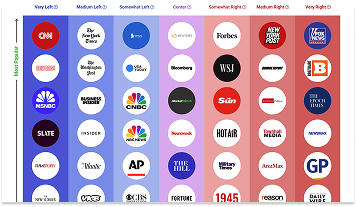
Reason on the media bias chart
- Bias Rating
32% Somewhat Right
- Reliability73% Reliable GoodPolicy Leanings
26% Somewhat Right
Extremely
LiberalVery
LiberalModerately
LiberalSomewhat Liberal
Center
Somewhat Conservative
Moderately
ConservativeVery
ConservativeExtremely
Conservative-100%
Liberal100%
Conservative
Good Reliability
*Our bias meter rating uses data science including sentiment analysis, machine learning and our proprietary algorithm for determining biases in news articles. Bias scores are on a scale of -100% to 100% with higher negative scores being more liberal and higher positive scores being more conservative and 0% being neutral. The rating is an independent analysis and is not affiliated nor sponsored by the news source or any other organization.
Politician Portrayal82% negative
Analysis of Reason Articles
Analysis of Bias in Reason Online Articles
To evaluate this, we can analyze select Reason articles through several of Biasly’s bias rating criteria: Tone, Tendency, Author, Diction, and Expediency Bias.
- Tone: The attitude conveyed by the writing
- Diction: Specific word choices made by the author
- Author: The background and social presence of the journalist
- Tendency: Patterns of bias in the writer’s other pieces of work
- Expediency Bias: Quick visual or textual indicators like headlines and photos that imply bias
Source: Reason
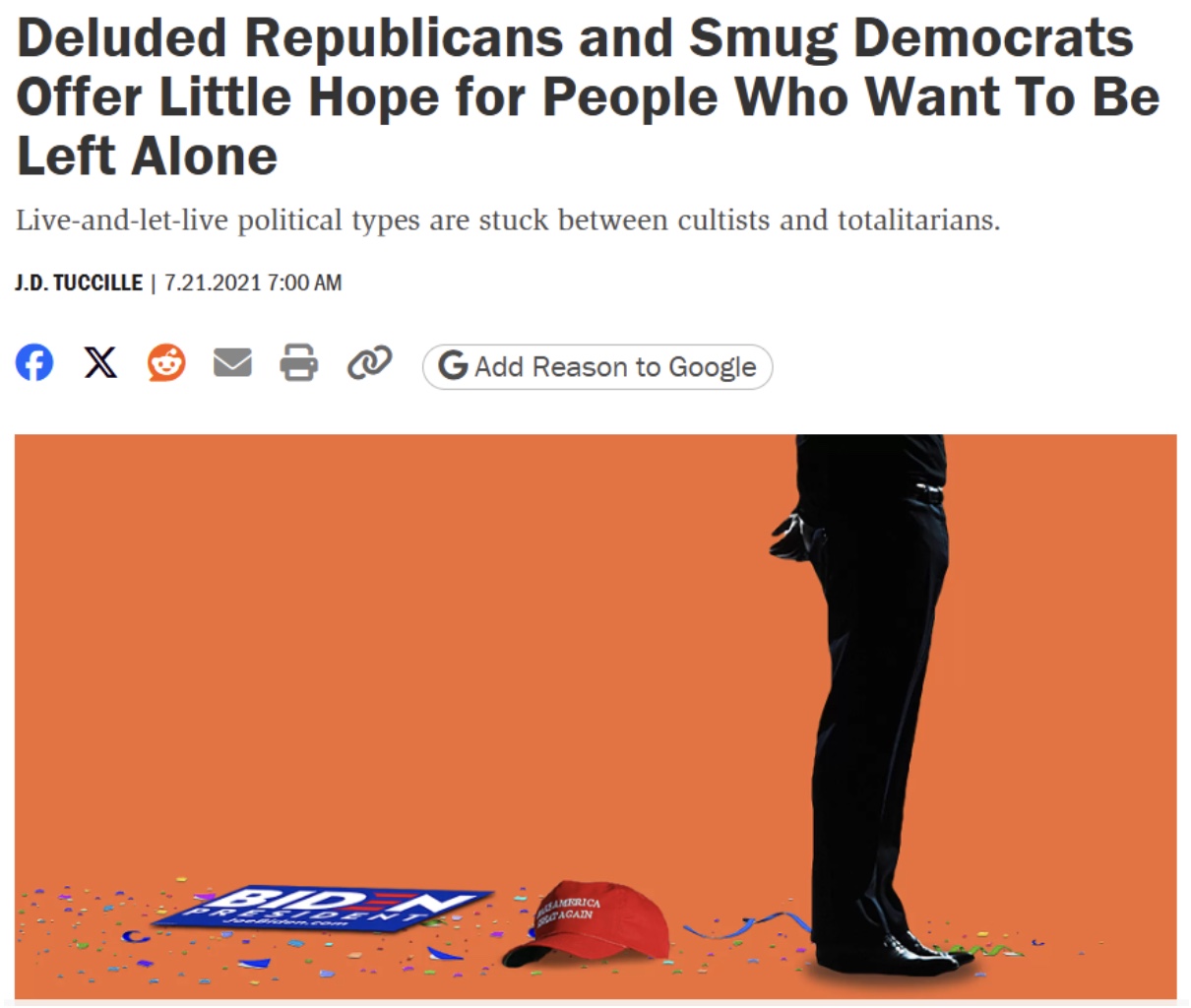
The first article we’ll take a look at is called “Deluded Republicans and Smug Democrats Offer Little Hope for People Who Want To Be Left Alone” and has been rated “Somewhat Right” on Biasly’s Bias Meter. Although the author addresses both democrats and republicans with negativity, there is a slightly right-leaning tone in the article, which would explain Biasly’s rating. The headline and imagery do not immediately suggest a partisan leaning since both parties are disgraced in the title.
Further, the tone of the article is rather pessimistic about both sides of the political spectrum, addressing both sides and their respective flaws and scandals. Yet, there is slightly more negativity towards the Biden administration, including the following statements:
“Unfortunately, Biden and Democrats pretend that protecting democracy requires concentration of power and muzzling dissent.”
“Targeting speech hostile to the administration is especially dangerous as Biden pursues an ambitious agenda, including massive spending laden with payoffs to allies.”
As a result, despite the author’s attempt to remain neutral in its tone, this isn’t the case. Next, the diction, while not very extreme, clearly asserts the author’s negativity towards the government, labeling Republicans as “cultists” and Democrats as “totalitarians.”
Last, author J.D. Tuccille’s personal Twitter account, as well as other articles, demonstrate his personal stance, which corresponds with the right-leaning analysis of the article above.
My contribution, covering the U.S., to a National Post series on the damage done by progressive “social justice” ideology to English-speaking countries. https://t.co/PP5AYDqk65 via @nationalpost
— J.D. Tuccille (@JD_Tuccille) June 16, 2026
Tuccille’s Twitter confirms that he believes there’s good reason to investigate a Biden impeachment, and that the government is spending way too much money. Moreover, Tuccille’s previous articles on Reason also show his personal stance, as they are titled, “Biden, the ‘Most Pro-Union President,’ Reaps What He Shows,” and “There’s Plenty of Evidence of Corruption Around Biden.”
Overall, while the article strives for objectivity and does touch on flaws on both sides of the political spectrum, ultimately, there is a slight right-leaning bias present in the article. All of this suggests that, despite some neutral elements, our analysis of this article aligns with our overall analysis and ranking of the media bias found in Reason magazine.
Although this article leans to the right on the political spectrum, bias differs between topics and authors, even when they come from the same source. Ultimately, this demonstrates the importance of looking for signs of media bias, including tone, diction, author, and omission bias, in any articles that you read.
For example, another article from The Reason that demonstrates little media bias is titled “An $86 Billion Moral Hazard.” Biasly’s rating is “Center ” for this article, as its content is very cut and dry and leaves out negative notions of politicians and their policies. Moreover, the article avoids emotionally loaded language and sticks to using neutral terms:
“The American Rescue Plan Act creates a new federal grant program to support multi-employer pension funds. There are more than 1,400 of these retirement plans, which are jointly funded by unions and the private companies that contract with them through collective bargaining agreements.”
There is a small mention of Democrats and Republicans in the article, but it is entirely objective and speaks to facts without emotionally loaded language:
“Democrats in Congress have been seeking federal aid for these retirement plans for years, while Republicans have been pushing for reforms in exchange for new loan or grant programs to prop up the pension system.”
In this article, mention of specific political sides does not influence the content or tone of the article.
These articles are only a small representation of all of Reason’s content, but they indicate that the outlet does have an opinion in its writing– this further underscores the importance of knowing how to differentiate between subjective writing and genuine reporting.
Analysis of Reason Opinion Articles
It is important to distinguish between factual reporting and opinion content in political media. Factual reporting will generally present facts and allow readers to draw their own conclusions, while opinion articles are designed to advance specific viewpoints. As a libertarian publication, Reason’s opinion section often evaluates issues through the lens of personal liberty and limited government and state power.
Some perspectives in specific articles are against political influence altogether in social and economic areas, and others focus on government overreach, free speech issues, or criminal justice reform in a way that does not consistently align with either the political left or the political right. For example, some issues are framed in constitutional terms, like the subjects of surveillance or bipartisan government, which prioritize individual rights and personal freedom.
Many of these examples of the source’s stances demonstrate its ability to not consistently align with the mainstream conservative or liberal viewpoints. In the same way, this highlights Reason’s steadfast libertarian worldview in its writing, even though some beliefs more often align with the right than the left. Some of these intersecting areas of agreement between Reason’s perspective and the conservative perspective include economic policy, some social issues, and an underlying skepticism of government.
Analysis of Reliability in Reason’s Online News Articles
Reliability, in general, refers to how trustworthy or accurate information, or in this case, a news source, is. If we consider this definition, it quickly becomes clear why reliability is important in media sources. If we can’t trust the things we read, then there isn’t much of a point in continuing to consume content from that source, after all. So how exactly can we gauge the reliability of a news source anyway?
There are several potential measures of reliability to look out for when trying to determine whether a media source is reliable or not. Red flags for an unreliable article can include the presence of wild, unsubstantiated claims, facts dependent on other unreliable sources, heavy use of opinionated language, and more. Some indicators of a reliable news source, on the other hand, include things like:
- Absence of subjective/opinionated language in articles
- Credible sources cited (e.g., neutral sources, .gov, .edu websites)
- Facts and statistics backed by multiple relevant outside sources
- Use of primary sources when possible (e.g., interviews, quotes)
- Information that remains consistent across news sources
The political reliability index developed by Biasly objectively assesses news organizations’ accuracy and trustworthiness. Reason’s overall Reliability Score has been rated as ‘Good’ by Biasly. This rating is a weighted average of two distinct scores: the Fact Analysis Score and the Source Analysis Score, each evaluating separate components of Reason’s Reliability. When computing the Average Reliability of the article, the Fact Analysis score is more heavily weighted. These ratings are as follows in the next two paragraphs:
The Fact Analysis Score of Reason is Good at 74% Reliable, which suggests readers can trust most of Reason’s content online. The Fact Analysis score focuses more on the accuracy of claims, facts, and sources presented in the article and any hints of selection and omission bias, which we will discuss further in the article.
Reason’s Source Analysis Score is Good at 71% Reliable,’ which suggests readers can trust most of the sources, links, and quotes provided by the news source. This score, which is based on A.I., focuses on assessing the quality of sources and quotes used, including their number, length, uniqueness, and diversity.
However, since these scores are based on percentages and averages, individual articles could be more or less trustworthy depending on the context, author, and other factors. Our findings show that Reason’s reliability is mostly but not entirely factual because they have retracted several stories in the past or had pieces that were not factual.
Let us analyze the supporting data for Reason’s rankings and discuss what to watch out for while searching for trustworthy news sources.
Quality of Sources and Facts Used
In “Politics Is Seeping Into Our Daily Life and Ruining Everything,” J.D. Tuccille argues that political polarization has expanded beyond elections and public policy into consumer choices, friendships, workplaces, and everyday social interactions. The article’s central claim is that increasing partisan identity is making Americans less willing to engage with people, products, and institutions associated with opposing political views.
While the piece relies heavily on academic research and survey data, its tone is clearly shaped by a libertarian perspective that views the growing importance of politics as socially harmful and suggests that reducing government could lessen polarization. Overall, the article is analytical in structure but opinionated in its conclusions.
The article contains 18 direct or partial quotations enclosed in quotation marks. The longest quote is 37 words, the shortest is 1 word, and the average quote length is approximately 20 words. Most of the longer quotations come directly from academic studies or researchers rather than partisan commentators, which generally increases their reliability. Longer quotations are particularly useful because they provide readers with the source’s full context and wording rather than a selective excerpt. Although the article occasionally uses short quoted phrases for emphasis, the most important factual claims are supported by substantial quotations that reveal little obvious emotional language or ideological framing.
The article uses approximately six distinct linked sources. These include a peer-reviewed marketing journal article, two consumer surveys, a Forbes commentary, a Wall Street Journal article, and an American Sociological Review study. Ideologically, the sourcing leans toward center or nonpartisan sources, with roughly five center/nonpartisan sources, one center-right source (The Wall Street Journal), and no clearly left-leaning sources.
Most of the evidence comes from academic or business-oriented publications rather than explicitly political outlets, giving the article a stronger empirical foundation than many opinion pieces.
Sources used in the article:
- Journal of Public Policy & Marketing study by T.J. Weber, Chris Hydock, David Sprott, and colleagues
- 2018 global consumer survey on political brand boycotts and purchases
- 2020 survey on Millennials preferring companies aligned with their values
- Christine Moorman, marketing scholar writing for Forbes
- Wall Street Journal article discussing corporate involvement in political issues
- Daniel DellaPosta, sociologist at Pennsylvania State University and author of the “oil spill” polarization study
- Dave Sprott, dean of the University of Wyoming College of Business and co-author of the marketing study
The sourcing is reasonably broad in terms of institutional backgrounds but not ideologically balanced. Academic researchers and business experts dominate both the number of sources and the amount of quoted material. No explicitly progressive or conservative advocacy organizations are cited. Most quoted words come from the Journal of Public Policy & Marketing paper, making that study the article’s primary evidentiary foundation. Because the article relies far more on academic research than on partisan voices, ideological imbalance is less significant than it would be in a political news story. However, there is still an underlying tilt because the selected studies all support the article’s thesis that polarization is spreading into daily life.
The author generally uses sources positively and as supporting evidence rather than as subjects of scrutiny. Researchers who document polarization are presented as credible authorities whose findings reinforce the article’s argument. Their claims are rarely challenged, and alternative interpretations receive little attention. Skepticism is directed primarily toward politicized consumer behavior, corporate activism, and increasing partisan identity. The framing is established almost entirely by the author and the cited researchers, while the potential benefits of political engagement or values-based consumer choices receive minimal discussion. Based on the sourcing patterns, framing, and conclusion advocating a reduced role for government, the article merits a Somewhat Right bias rating, specifically reflecting a libertarian rather than traditional conservative perspective.
Most of the article’s factual claims are supported by credible research and appear accurate when compared with other published studies. The Journal of Public Policy & Marketing paper cited by the author does argue that political polarization affects consumer behavior, employment decisions, and social relationships. Likewise, Daniel DellaPosta’s “oil spill” model found evidence that political identities increasingly shape attitudes in previously nonpolitical areas of life.
Subsequent research has also documented growing partisan influence on consumer preferences and social interactions, lending support to the article’s overall thesis. Where the article becomes more debatable is in its interpretation of those findings—particularly the suggestion that reducing government influence would meaningfully reduce polarization. That conclusion reflects the author’s ideological perspective rather than a consensus finding from the cited research. Overall, the factual foundation is strong, while the policy conclusions are more subjective and ideological.
Selection and Omission Bias
Selection bias is when stories and facts are selected or deselected, often on ideological grounds, to create a narrative in support of the new sources’ ideology. Omission bias, on the other hand, is when different opinions and political views regarding a situation are left out so that the reader is only exposed to the ideological perspective supported by the author. It’s important to keep in mind these two types of biases when trying to assess an article’s level of accuracy.
Biasly aligns a percentage score for accuracy, ranging from least accurate (one) to most accurate (one-hundred). These ratings are calculated by weighing assertions with supporting evidence, the number of reliable internal sources used, and the number of external sources used. A full page on Biasly’s website includes these reliability ratings for newly released Reason articles– click here to check it out. Nevertheless, recall that Reason has been deemed to have “Good” reliability, although this score will vary between articles and their topics. The most extreme discrepancies in dependability are caused by bias, specifically selection and omission bias.
Consider also the Washington Post, which has a Somewhat Liberal bias and has “Good” reliability according to Biasly. For example, they had one article rated “Excellent” reliability titled “The claim that crime falls when states relax gun-control laws,” while an article rated “Good” reliability, titled “Rep. Louie Gohmert has set the new (low) bar for downplaying the Jan 6. riot.” As a result, stories displaying a stronger political leaning (especially in their title) are often less reliable than neutral ones.
Reason Bias Overview
Reason, “Free Minds and Free Markets,” is a U.S. monthly magazine for public policy and general interest. Founded and released in 1968, the magazine is currently owned by the Reason Foundation, covering politics, culture, and ideas using news, analysis, commentary, and reviews.
Pew Research cites that 78% of Americans read at least occasionally to keep up with current events– as such, this American news source will be investigated. This article will analyze the magazine’s coverage and editorial decisions to determine whether or not the information Americans are reading to keep up with current events has a political bias. Our analysis will provide a comprehensive answer to whether the Reason is biased and identify the factors contributing to media bias.
Is Reason Biased?
Based on Biasly’s evaluations, Reason is rated as Somewhat Right.
By examining content patterns and the broader context of media influence, we aim to offer a balanced perspective on Reason’s political bias—and contribute to the ongoing discussion about bias in the news.
How Does Biasly Rate News Sources?
Biasly uses proprietary algorithms and a team of analysts to provide comprehensive bias evaluations across thousands of news outlets. Over 200,000 articles from more than 3,200 sources have been analyzed to identify the most accurate and unbiased stories.
Biasly assigns each outlet three key scores:
- Reliability Score – Reflects factual accuracy
- AI Bias Score – Generated via natural language processing
- Analyst Bias Score – Assessed by human political analysts
These scores are based on seven core metrics: Tone, Tendency, Diction, Author Check, Selection/Omission, Expediency Bias, and Accuracy. These elements help analysts and algorithms evaluate the political attitude conveyed by each article.
Biasly’s Bias Meter ranges from -100% (most left) to +100% (most right), with 0% indicating neutrality. The system evaluates individual articles based on political terms, policies, figures, and sentiment to calculate precise bias ratings.
Is Reason Politically Biased?
Reason earns a Somewhat Right rating for its AI Bias Score and a Somewhat Right for its Analyst Bias Score. The Analyst Bias Score is generated by reviewers from liberal, moderate, and conservative backgrounds. The creative concept and ideas behind Reason magazine are particularly interesting from a consumer perspective:
“As a magazine of free minds and free markets, Reason exists outside of the left/right echo chamber. Our goal is to deliver fresh, unbiased information and insights to our readers, viewers and listeners every day.” – About Reason
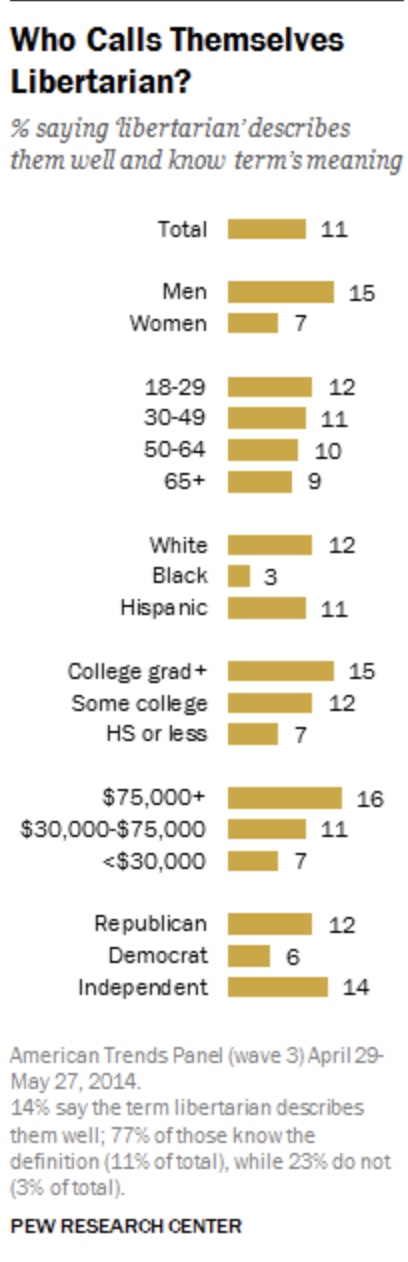
Consider also that Reason is the “nation’s leading libertarian magazine.” Pew Research states that libertarianism has been gaining significant popularity– take a look at the chart below for a demographic breakdown of the 11% of Americans who describe themselves as a libertarian:
Source: Pew Research
As such, taking a look into Biasly’s analysis of its bias and taking a deep dive into some articles will give us a holistic perspective of the Reason.
Biasly’s rating for Reason is based on two scores, one derived from computer algorithms based on A.I., and one from its analysts. Biasly rated Reason with a Computer bias score of Moderately Conservative and an Analyst bias score of Moderately Conservative, which means that overall, the source will provide political coverage from a slightly conservative American political perspective. Analyst scores are based on an average of at least 15 articles, with each article being reviewed by a liberal, moderate, and conservative analyst. The more articles that are rated by Biasly’s analyst team for a specific source, the more accurate the analyst score. So, as Biasly rates more articles, the scores will become more accurate. Praise for conservative politicians and policies and dislike for liberal policies and politicians contribute to this rating. Last, Biasly’s scores closely align with analysis from other third-party bias research agencies.
The remainder of this article will talk about ways to identify bias to separate opinions from facts. Altogether, this will increase our media understanding and help us become more informed consumers of news.
Before we begin, we need to discuss bias. Bias is a natural human function, and we can express it both consciously and unconsciously. Bias is one of the most fundamental forms of pattern recognition in humans. This isn’t to lower the bar and say that “all things are biased,” but to explain the process in which we may come to trust certain news organizations that display patterns of coverage.
On the media’s part, there is an incentive to retain audiences, encourage them to purchase subscriptions, and rate products positively. Bias is a two-way street; people want to see news stories about things they care about, and the media needs viewers to continue their operations. This creates a positive feedback loop that influences what stories are covered and from what perspective. This also explains the actions of more liberal news organizations.
How to Evaluate Bias
Although Biasly rates Reason as Somewhat Right, it’s important to remember that bias can vary from article to article. Reason also covers with objectivity on many issues, from state legislation to social developments. This complexity underscores the importance of examining each article individually. So, let’s learn how to evaluate media bias.
Recognizing media bias requires awareness and critical thinking. Often, readers trust news sources that affirm their existing beliefs—a psychological tendency known as confirmation bias. This makes it harder to identify slanted narratives or one-sided reporting.
To address this, it’s essential to challenge your assumptions by consulting multiple perspectives and verifying information through third-party analysis. Tools like Biasly’s media bias ratings allow readers to compare the same news story across the political spectrum.
Ultimately, bias isn’t always a matter of what is said—it’s also about what is left out, how topics are framed, and which stories are chosen for coverage. Learning to recognize these patterns can help readers make more informed decisions and develop greater media literacy.
To start comparing news outlets and gain a better understanding of bias, sign up for Biasly’s Media Bias & News Analytics Platform to see how stories vary between sources.
Reason Reliability Overview
Is Reason Reliable?
Our analysis suggests that Reason is typically a highly reliable news source with a strong reputation for libertarian and independent journalism. However, the more you research reliability and accuracy, the easier it will be to spot issues with sources, selection, omission bias, and factuality. Biasly’s News Bias Checker is a critical resource for uncovering these reliability issues and guaranteeing you find the most accurate news.
How to Evaluate Reliability?
Reliability refers to how trustworthy or accurate a news source is. If we can’t trust what we read, then continuing to consume content from that outlet serves little purpose. So how do we evaluate a news outlet’s reliability?
There are several key indicators of reliability to consider when assessing a media source. Red flags of an unreliable article can include wild, unsubstantiated claims, facts that depend on other unreliable sources, heavy use of opinionated language, and more. In contrast, hallmarks of a reliable source include:
- Absence of subjective language
- Citing credible sources (e.g., .gov, .edu, academic references)
- Verifiable facts and statistics from multiple outlets
- Use of primary sources, like interviews or transcripts
- Consistency with coverage across other platforms
Biasly’s reliability scores incorporate these elements in evaluating media outlets.
So How Does Reason Fare in Its Reliability?
The political reliability index developed by Biasly assesses both accuracy and trustworthiness. Reason currently holds Good Reliability Score, which is calculated as a weighted average of:
- Fact Analysis Score – Evaluates the accuracy of claims, facts, and evidence.
- Source Analysis Score – Assesses the number, diversity, and credibility of sources and quotes used
Reason’s Source Analysis Score is Good at 71% Reliable. This suggests moderate trustworthiness in its sourcing practices. The score is AI-generated and considers quote length, frequency, diversity, and quality.
The Fact Analysis Score of Reason is Good at 74% Reliable. This further shows how well Reason supports its claims, addresses selection and omission bias, and presents verifiable evidence.
While Reason leans toward factual reporting, some lapses, like unbalanced viewpoints, can affect its reliability rating. These nuances emphasize the importance of analyzing individual articles.
Reason’s Accuracy and Reliability
According to Biasly’s analysis, Reason maintains Good Reliability Score, but individual articles may vary significantly. Let’s dive into the details.
The reliability of news sources is significantly impacted by an organization’s bias and political orientation. By evaluating Reason’s integrity in their news sources, we will deduce how well they support claims with ample evidence, check for selection and omission bias, and ultimately assess the correctness and factuality.
Two common types of bias that affect factuality include:
- Selection Bias – Highlighting specific details in stories to fit a particular narrative.
- Omission Bias – Leaving out differing perspectives or details to skew perception in a certain direction.
Biasly’s accuracy ratings use a scale from 1% (least accurate) to 100% (most accurate). Factors include supporting evidence, reliable internal and external sources, and balanced viewpoints.
For example, this Reason article titled “Politics Is Seeping Into Our Daily Life and Ruining Everything” is rated at Center. Concerning its selection and omission bias, author J.D. Tucille selects facts that underscore the drastic left-right divide, “
The researchers find that people’s chosen political identities become self-reinforcing through associations with groups with shared beliefs. Our associations can even create a ‘group-specific shared reality’ that makes it harder to relate to those with opposing views.”
“Even before political tensions hit their current fever pitch, a 2018 survey found that ‘Nearly two-thirds (64 percent) of consumers around the world will buy or boycott a brand solely because of its position on a social or political issue.’”
Given that this article was rated at the Center, the author does not explicitly support one side of the political spectrum more than the other. Similarly, the author omits any sort of emotionally loaded examples of political disagreements and rather looks to highlight that the removal of politics in our day-to-day life is healthier:
“Making politics less important through reducing the ability of government to affect our lives has the potential to make us all healthier and happier.”
As such, this central article describes the negative effects of politics and government on our lives. With this being said, the article supports an ideological perspective that does not prefer one political party over the other– something that all news sources should strive to achieve.
We will take a closer look at more examples like this below, looking further into Reason’s reliability. The following section includes a deeper dive into selection bias, omission bias, and the quality of sources and facts used.
So, is Reason Reliable?
Overall, Reason can be considered to be an outlet that is very reliable. It demonstrates a consistent goal of journalistic integrity and typically supports claims with sources and quotes. Occasional omissions and framing bias do appear, particularly on culturally sensitive or partisan issues.
As media literacy improves, readers can more easily detect issues with selection bias, omission bias, and factuality. To strengthen your ability to assess reliability across the political spectrum, use Biasly’s News Bias Checker to compare how multiple outlets report the same story.
This empowers you to consume more accurate, balanced, and dependable news.
Reason Editorial Patterns
Reason’s coverage of political topics often reflects a Somewhat Right bias, with consistent patterns in phrasing, source selection, and thematic focus that are Slightly Conservative. While the publication demonstrates journalistic standards in many of its reports, the choice of issues, framing, and word usage can indicate a political slant. This content analysis examines how Reason handles liberal and conservative issues and evaluates its language choices and editorial tendencies.
Coverage of Liberal vs. Conservative Topics
Reason’s articles frequently discuss individual liberty, free markets, limited government, and civil liberties. These themes are commonly associated with political thought and include reducing state intervention and expanding personal freedoms. Beyond these example topics, the source covers a multitude of subjects, including cultural space, education, foreign policy, and government surveillance.
Some of these themes correlate with conservative thinking, like individual autonomy and economic deregulation, but the source, for the most part, refrains from adopting a stance neatly aligned on the left or right. This represents Biasly’s bias score for the source. Other libertarian viewpoints that the source advocates for include anti-regulation, government expansion, and infringement on personal freedoms.
Policy and Issue Framing
While this source often provides a libertarian perspective, it tends to align with the right on some policy issues. For example, the outlet somewhat agrees with conservative thought about the US border control policy, affirmative action, and the politicization of Black Lives Matter.
Besides where the outlet aligns with the right, its bias towards libertarian perspectives can manifest itself subtly across different topics. The source may prioritize libertarian scholars, economics, or pundits, or frame questions around personal freedom and government power. The Black Lives Matter movement is a good example of a subject where the source partly agrees with conservative thought and frames the argument in a libertarian manner.
In one article, Reason defends self-defense claims in some police encounters and advocates that BLM should consider every case individually. This defense makes sense through the lens of the libertarian, pro-Second Amendment perspective, and though the article defames excessive force by police, this specific opinion is somewhat right-leaning.
Coverage and Relevance
Reason’s reporting covers a wide range of media topics across different types of multimedia. The source has a podcast and video section, along with its magazine component, which features prominent, catchy headlines. The coverage is mostly domestic but can generally include any current events or topics like social issues, policy debates, foreign policy, and state economics.
Readers who wish to further explore how Reason compares with other publications can visit Biasly’s Media Bias Chart to analyze tone and word choice in real time.
Funding and Ownership
Who Owns Reason?

Source: Wikimedia Commons
Reason is published by Reason Foundation, which is a nonprofit education and research organization. The foundation was created in 1978, while the magazine was first published nearly ten years prior. According to the Foundation:
“Reason and Reason.com provide a fresh alternative to right-wing and left-wing outlets by making a principled case for liberty and individual choice in all areas of human activity.”
Founder Robert Poole served as the past president of the Foundation. David Nott has served as Reason Foundation’s president since 2001.
Who Funds Reason?
Under its nonprofit structure, the publication receives revenue from individual and foundation donations, advertisements, and occasional corporate support. Some of the most notable donors include the Searle Freedom Trust, the Dunn Foundation, and the Sarah Scaife Foundation, each donating more than $1 million. The same source reported the news outlet’s 2021 revenue at around $15 million.
Tax filings from Reason also disclose that revenue from subscriptions and related programs is much smaller than donations. The nonprofit structure allows the organization’s Form 990 filings to be searchable by year on the outlet’s website. Some of these foundations are notoriously conservative donors, which may, to an extent, explain some of the publication’s perceived biases, but the nonprofit structure allows no degree of secrecy about this. The source even provides access to the opinions of independent US auditors about Reason’s money management.
Additional Insights
News Source Comparison
Other news sources that may compare to Reason include other classically libertarian outlets and perspectives. Some examples include the Cato Institute, Quillette, National Review, and the American Conservative. The first two align with Reason predominantly in the libertarian and coverage category. Quillette and Cato both cover policy similarly to Reason and offer both libertarian and anti-interventionist viewpoints. National Review and the American Conservative lean farther right than the previous two, but also offer anti-interventionist perspectives and policy analysis. Another large overlap between all of these sources is a skepticism towards government and progressive social causes.
Notable Contributors and Authors
Reason features notable contributors including Nick Gillespie, an editor with a long history with the magazine, Matt Welch, former editor-in-chief, and Katherine Mangu-Ward, the current editor-in-chief. These figures write for the magazine but also direct the editorial decisions of all publications. Other writers include Radley Balko, a criminal justice reporter, and Jesse Walker, a cultural historian.
Related Tools and Resource Pages
To better understand how Reason fits into the broader media landscape, we recommend exploring these helpful resources:
- Media Bias Chart: See where Reason ranks among hundreds of media outlets across the political spectrum.
- Political Bias Chart: Visualize political slants of news sources across various policy areas.
- Journalist Bias Analytics Platform: Explore how individual journalists contribute to bias within their publications.
- Politician Bias Analytics Platform: Compare how politicians are framed differently by Reason and other outlets.
- Media Literacy Education Platform: Learn how to critically assess media sources, bias techniques, and news reliability.
Frequently Asked Questions
Reason is rated as Somewhat Right based on Biasly’s media bias algorithm, which assesses sentiment, article framing, and policy favorability.
Reason is not widely known for fake news or misinformation. Sparse accusations have been made against the source, and all claims are heavily disputed by Reason. Expect a libertarian/free-market perspective in publications, which is a type of framing bias, but the facts themselves are not likely to be fabricated or unsubstantiated.
Biasly uses AI sentiment analysis and human analyst review to assess for tone, fact accuracy, source quality, and media bias indicators. Learn more on our Bias Meter page.
Generally, yes, though libertarian framing and reporting can affect the perceived reliability.
Military Spending
| Date | Sentiment | Associated Article | Snippet |
|---|---|---|---|
| 08/25/2019 | 75% For | Trump Family Detentions Flores Agreement (link) | So, of course, the Trump administration is doing the opposite in a baldfaced |