




14% Somewhat Right
Bias Meter
Extremely
Liberal
Very
Liberal
Somewhat Liberal
Center
Somewhat Conservative
Very
Conservative
Extremely
Conservative
-100%
Liberal
100%
Conservative

Biasly determines media bias ratings through a dual-layered approach combining artificial intelligence and analyst review. The platform’s proprietary bias detection engine, Bias Meter, evaluates sentiment, policy position alignment, and language framing across thousands of data points in news articles. Analysts then verify and interpret the AI’s findings, providing additional context where needed. Learn more about ratings
- Profile
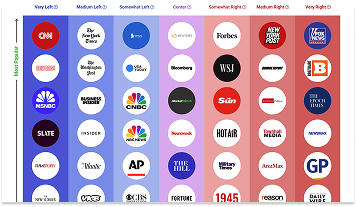
Wall Street Journal on the media bias chart
Wall Street Journal has a Bias Score of 14% Somewhat Right which is based on a variety of factors including its policy and politician leanings, article ratings, and the use of biased language. Its Reliability is rated as Good, and additional analytical insights are available in the other tabs.

- Bias Rating
14% Somewhat Right
- Reliability81% Reliable GoodPolicy Leanings
10% Center
Extremely
LiberalVery
LiberalModerately
LiberalSomewhat Liberal
Center
Somewhat Conservative
Moderately
ConservativeVery
ConservativeExtremely
Conservative-100%
Liberal100%
Conservative
Limited Reliability
*Our bias meter rating uses data science including sentiment analysis, machine learning and our proprietary algorithm for determining biases in news articles. Bias scores are on a scale of -100% to 100% with higher negative scores being more liberal and higher positive scores being more conservative and 0% being neutral. The rating is an independent analysis and is not affiliated nor sponsored by the news source or any other organization.
Politician Portrayal12% negative
Continue For Free
Create your free account to see the in-depth bias analytics and more.
By creating an account, you agree to our Terms and Privacy Policy, and subscribe to email updates.
Log In
Log in to your account to see the in-depth bias analytics and more.
Policy Leanings Analysis
Policy | Bias score |
|---|
Wall Street Journal Editorial Patterns
Wall Street Journal’s coverage of political topics often reflects a Somewhat Right bias, with consistent patterns in phrasing, source selection, and thematic focus that are Slightly Conservative. Wall Street Journal focuses on fiscal issues, and a lot of its conservative bias comes from fiscally conservative narratives.
Coverage of Liberal vs. Conservative Topics
Articles covering conservative figures or Republican-led initiatives often employ a more supportive tone. Biasly’s analysis of recent Wall Street Journal articles reveals a tendency to highlight positive outcomes and support surrounding Republican policies, while downplaying negative aspects or liberal rationale. This is most evident in Republicans’ fiscal policy.
Meanwhile, liberal fiscal positions tend to get more scrutiny. On social issues, they tend to show less bias, but can still be biased from time to time.
This news media bias manifests in subtle ways, such as placing greater prominence on Republican voices or using emotional diction when describing liberal causes.
Policy and Issue Framing
On a majority of political issues, Wall Street Journal doesn’t show extreme bias one way or another. On issues like affirmative action, the border wall, and charter schools, their coverage is rated center by Biasly. Since they’re primarily a fiscal news site, they don’t cover most of these issues too often. The border wall is the most widely covered of these three, with 34 articles rated by Biasly.
On other social issues, like abortion and border control, they can show some conservative bias. Both of these issues are extensively covered by Wall Street Journal. On social issues that they cover more regularly, Wall Street Journal is more likely to show conservative bias.
Even in neutral coverage, phrasing choices shape perception. Articles will describe conservative proposals as “expanding access” or “strengthening protections,” while liberal legislation may be described as “imposing limits” or “rolling back rights.” This consistent choice of words reflects an editorial direction that, even unintentionally, can contribute to bias in news media.
Coverage and Relevance
Wall Street Journal is one of the most prominent newspapers in the financial news sphere. As such, it serves as a compelling case study for examining source bias and news media bias in state-focused reporting.
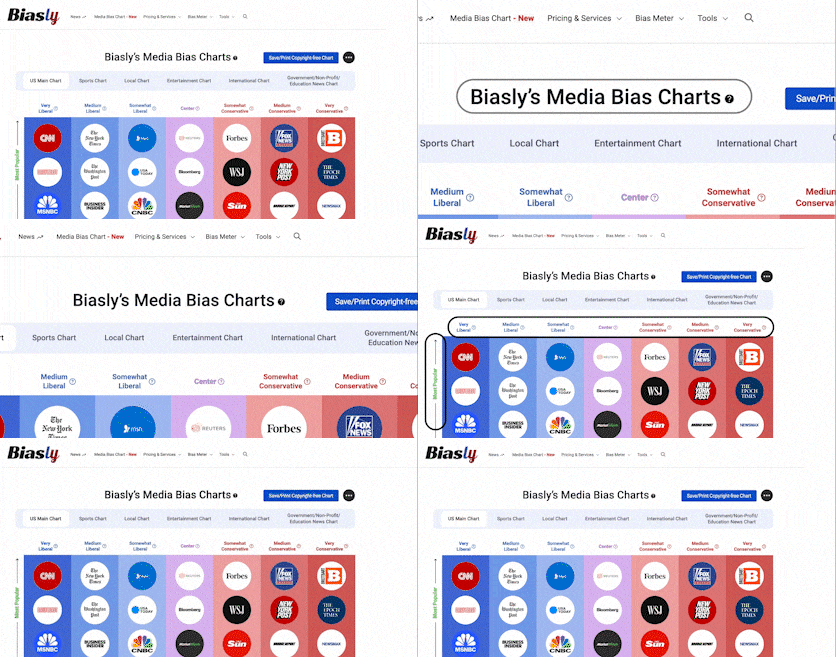
Readers who wish to further explore how Wall Street Journal compares with other publications can visit Biasly’s Media Bias Chart to analyze tone and word choice in real time.
Wall Street Journal Bias Analysis
Wall Street Journal, available online at wsj.com, was founded in 1889 by Charles Dow, Edward Jones, and Charles Bergstresser. Their goal was to provide comprehensive financial and business news to the public.
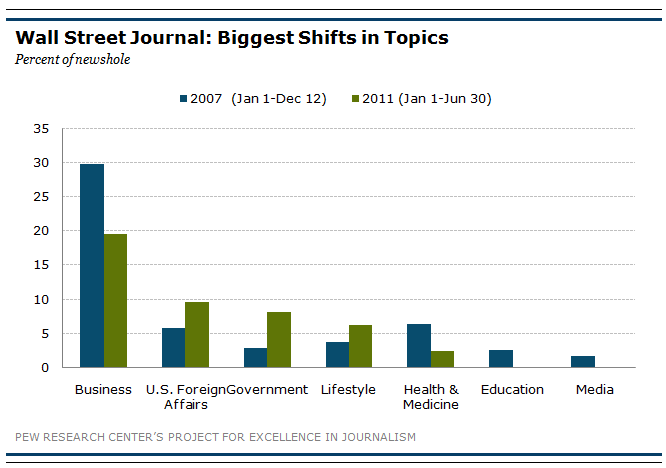
The Wall Street Journal operates from its primary location in New York City but has a global footprint with offices in many international cities. It covers a broad range of news categories, including Business, Economics, Politics, Technology, Arts & Entertainment, Lifestyle, Sports, Health, and more. Its thorough coverage of financial and business news has garnered a substantial global readership.
Source: Pew Research
As a leading media outlet in New York City, Wall Street Journal plays a significant role in shaping public perception. Readers’ trust in news accuracy may mirror the conclusions of Biasly’s media bias ratings. This article delves into Wall Street Journal’s editorial tendencies to explore whether political bias is present and, if so, to what degree.
Is Wall Street Journal Biased?
Based on Biasly’s evaluations, Wall Street Journal is rated as Somewhat Right.
By examining content patterns and the broader context of media influence, we aim to offer a balanced perspective on Wall Street Journal’s political bias and contribute to the ongoing discussion about bias in the news.
How Does Biasly Rate News Sources?
Biasly uses proprietary algorithms and a team of analysts to provide comprehensive bias evaluations across thousands of news outlets. Over 200,000 articles from more than 3,200 sources have been analyzed to identify the most accurate and unbiased stories.
Biasly assigns each outlet three key scores:
- Reliability Score – Reflects factual accuracy
- AI Bias Score – Generated via natural language processing
- Analyst Bias Score – Assessed by human political analysts
These scores are based on seven core metrics: Tone, Tendency, Diction, Author Check, Selection/Omission, Expediency Bias, and Accuracy. These elements help analysts and algorithms evaluate the political attitude conveyed by each article.
Biasly’s Bias Meter ranges from -100% (most left) to +100% (most right), with 0% indicating neutrality. The system evaluates individual articles based on political terms, policies, figures, and sentiment to calculate precise bias ratings.
Is Wall Street Journal Politically Biased?
Wall Street Journal earns a Somewhat Right rating for its AI Bias Score and a Center for its Analyst Bias Score. The Analyst Bias Score is generated by reviewers from liberal, moderate, and conservative backgrounds. Analysts reviewed Wall Street Journal articles and noted preferences in areas such as coverage of conservative politicians and policy topics, including tax cuts and reducing government spending. However, the paper maintained objectivity on topics such as affirmative action and charter schools.
Although New York City is liberal-leaning, people on Wall Street tend to be more conservative, particularly on fiscal issues. This Bias score is determined through natural language processing that evaluates the tone, word choice, and opinion embedded in the reporting.
Analysis of Bias in Wall Street Journal Online Articles
Wall Street Journal has found that in-depth coverage of fiscal issues is one of the most effective ways to drive subscriptions. Given that much of its readership is New York City-based, where fiscal issues take precedence, it’s essential to ask: is Wall Street Journal truly biased?
To evaluate this, we can analyze select Wall Street Journal articles through several of Biasly’s bias rating criteria: Tone, Tendency, Author, Diction, and Expediency Bias.
- Tone: The overall attitude conveyed by the article
- Diction: Specific word choices made by the writer
- Author: The background and social presence of the journalist
- Tendency: Patterns of bias in the writer’s broader body of work
- Expediency Bias: Quick visual or textual indicators like headlines and photos that imply bias

On December 1, 2021, the Wall Street Journal published an article entitled “Supreme Court Majority Shows Openness to Mississippi’s Precedent-Breaking Abortion Law.” Despite the article’s controversial subject matter, the title alone shows no bias, as it presents only the facts of the story and avoids emotionally loaded words. The subheading shows the same centricity: “State law banning the procedure after 15 weeks of pregnancy presents a direct challenge to 1973 Roe v. Wade.” However, the image portrays intense protesting regarding abortion, which can show the gravity of the situation, and may affect liberals and conservatives differently.
Getting into the meat of the article, one would not be able to tell which side of the issue the authors favor through their writing:
“The court spent nearly two hours on Wednesday debating what to do about a 2018 Mississippi law that banned abortions for women 15-weeks pregnant—roughly two months earlier than current Supreme Court precedent allows. The state seeks the invalidation of the high court’s 1973 decision in Roe v. Wade establishing a woman’s right to terminate an unwanted pregnancy, pushing instead to let elected officials decide how abortion should be regulated or prohibited.”
The authors avoid any positive or negative tone and do not indicate bias. Extreme and harsh language is avoided throughout, with an emphasis on neutral words and phrases. Instead, the article is simply written to explain what happened, the opinions held by those involved, the legal precedent, and when the case would be decided on. Both sides of the argument are presented fairly, meaning everyone involved in the issue receives an honest depiction. These authors do an excellent job of “just the facts” reporting, which is part of the reason for Biasly’s Center Analyst Score.
Even on social media, authors Jess Bravin and Brent Kendall stay remarkably unbiased in their posts. Rather than adding commentary to the articles they share, they simply create captions that explain what happened in a news story and the current and potential future consequences.
SCOTUS in 1 tweet: No Garland. Probably no Senate filibuster of DJT noms. The Chief & Kennedy as powerful as ever. Libs pray for RBG health.
— Brent Kendall (@brkend) November 9, 2016
Let’s evaluate another article that isn’t as centrist. A more recent piece entitled “President Biden Announces 2024 Re-Election Bid, Setting Up Potential Trump Rematch” received a %_SOURCE_LIB_% A.I. Bias Rating from Biasly for demonstrating a 58% negative politician portrayal, with 2 negative sentiments and 1 positive sentiment for Joe Biden and 1 positive sentiment for Donald Trump, with one of the negative sentiments including:
“President Biden opened his 2024 re-election campaign by casting Republicans as a danger to democracy and abortion rights, while the GOP countered that the presidential contest would pivot on the faltering economy and Mr. Biden’s age.”
The bias may not be glaringly obvious, but it lies in the author’s slight value judgment when referring negatively to the state of the economy and Biden’s age. A more neutral version of the sentence would read more like this:
“President Biden launched his 2024 re-election campaign by highlighting his support for democracy and abortion rights, while the GOP focused on the economic challenges and the age of the incumbent president as key issues in the upcoming election.”
The latter statement is more objective and states the facts rather than infusing opinionated language.
The same bias is evident in the subheading in this article: “Oldest-ever president asks a divided nation to give him a second term, kicking off fight with GOP over his record.” Referring to Biden as the “oldest-ever president” influences the reader’s view of Biden before they even begin reading the article. It also seems to suggest that the “divided nation” is his doing.
The top photo shows Biden, notably alone, with a strained look on his face. If you scroll down, you’re then met with a photo of a confident-looking Trump with lots of hands outstretched toward him and people taking pictures of him on their phones. The juxtaposition of these images, without words, suggests the organization views Trump as the more popular and confident of the two presidential nominees and wants to put that idea in readers’ minds as well.
The diction is largely formal, measured, and analytical, reflecting a traditional news style while subtly emphasizing uncertainty about the campaign. Words and phrases associated with strategy, such as references to planning, messaging, and political positioning, create a tone of calculation rather than enthusiasm, suggesting that the campaign is being managed carefully amid concerns about age and electability. The article also employs neutral but weighty political vocabulary, including terms related to “freedoms,” governance, and national stakes, which elevates the significance of the election while maintaining journalistic objectivity. At the same time, the diction occasionally introduces cautious or skeptical undertones through words that imply challenge or risk, framing the campaign as a serious undertaking rather than a confident victory lap. Overall, the word choice balances neutrality with subtle evaluative shading, guiding readers to view the campaign as consequential, complex, and uncertain.
To sum it up, Wall Street Journal shows inconsistent bias across its reporting. Despite attempts at balance in some reporting, Wall Street Journal’s tendency to highlight conservative initiatives and frame stories through a fiscal lens indicates an overall right-leaning orientation, particularly when covering the intersection of money and politics.
Analysis of Wall Street Journal Opinion Articles
Here’s an example of a Wall Street Journal opinion: “Team Biden Looks for an Excuse to Impose Price Controls.” Before getting into the body of the article, we already know the author likely has negative feelings about Team Biden and opposes price controls from the way the title explains the action as “looking for an excuse.”
The rest of the article contains much of the same biased language against the Biden Administration:
“Put simply, the Biden administration is searching for some justification to claim that the law allows the government to impose price controls on certain prescription drugs.”
“And in January, the Energy Department announced it would provide $125 million ‘for basic research on rechargeable batteries.’ That funding may lead to patentable discoveries. But if Mr. Becerra gets his way, the government could march in if it doesn’t like the final price of a product developed under the patent.”
“If the Biden administration can use march-in rights to impose price controls on prescription drugs, it or a future administration could do so for any innovation that benefited from federal funding. It is vital to the future of American innovation that march-in orders not be abused for political purposes.”
Another article, called “George Santos has got to go,” shows a willingness to criticize Republican politicians as well. George Santos was a New York representative who lied about many of his credentials. Some conservative outlets defended him, stating that he should be voted out rather than kicked out. However, this Wall Street Journal was very critical of Santos.
These tendencies underscore the importance of distinguishing subjective viewpoints from straight reporting, especially when interpreting the political leanings of any news organization.
How to Evaluate Bias
Although Biasly rates Wall Street Journal as Somewhat Right, it’s important to remember that bias can vary from article to article. Wall Street Journal also covers a Slightly Conservative with objectivity on many issues, from state legislation to social developments. This complexity underscores the importance of examining each article individually. So, let’s learn how to evaluate media bias.
Recognizing media bias requires awareness and critical thinking. Often, readers trust news sources that affirm their existing beliefs—a psychological tendency known as confirmation bias. This makes it harder to identify slanted narratives or one-sided reporting.
To combat this, it’s essential to challenge your assumptions by consulting multiple viewpoints and verifying news through third-party analysis. Tools like Biasly’s media bias ratings allow readers to compare the same news story across the political spectrum.
Ultimately, bias isn’t always a matter of what is said—it’s also about what is left out, how topics are framed, and which stories are chosen for coverage. Learning to recognize these patterns can help readers make more informed decisions and develop greater media literacy.
To start comparing news outlets and gain a better understanding of bias, sign up for Biasly’s Media Bias & News Analytics Platform to see how stories vary between sources.
Wall Street Journal Reliability Analysis
Wall Street Journal finds itself toward the upper end of the reliability spectrum. At Biasly, we specialize in evaluating not just bias but also the reliability of media outlets. Let’s explore the accuracy and trustworthiness of Wall Street Journal.
How to Evaluate Reliability?
Reliability refers to how trustworthy or accurate a news source is. If we can’t trust what we read, then continuing to consume content from that outlet serves little purpose. So how do we evaluate a news outlet’s reliability?
There are several potential measures of reliability to look out for when trying to determine whether a media source is reliable or not. Red flags for an unreliable article can include the presence of wild, unsubstantiated claims, facts dependent on other unreliable sources, heavy use of opinionated language, and more. In contrast, hallmarks of a reliable source include:
- Absence of subjective language
- Citing credible sources (e.g., .gov, .edu, academic references)
- Verifiable facts and statistics from multiple outlets
- Use of primary sources, like interviews or transcripts
- Consistency with coverage across other platforms
Biasly’s reliability scores incorporate these elements in evaluating media outlets.
So How Does Wall Street Journal Fare in Its Reliability?
The political reliability index developed by Biasly assesses both accuracy and trustworthiness. Wall Street Journal currently holds Good Reliability Score, which is calculated as a weighted average of:
- Fact Analysis Score – Evaluates the accuracy of claims, facts, and evidence.
- Source Analysis Score – Assesses the number, diversity, and credibility of sources and quotes used.
Wall Street Journal’s Source Analysis Score is Limited at 23% Reliable. This suggests moderate trustworthiness in its sourcing practices. The score is AI-generated and considers quote length, frequency, diversity, and quality.
The Fact Analysis Score of Wall Street Journal is Excellent at 96% Reliable. This further shows how well Wall Street Journal supports its claims, addresses selection and omission bias, and presents verifiable evidence.
While Wall Street Journal leans toward factual reporting, occasional lapses—such as unbalanced viewpoints or incomplete data—can affect its reliability rating. These nuances emphasize the importance of analyzing individual articles.
Wall Street Journal’s Accuracy and Reliability
According to Biasly’s analysis, Wall Street Journal maintains Good Reliability Score, but individual articles may vary significantly. Let’s dive into the details.
Political orientation plays a crucial role in how audiences perceive reliability. Wall Street Journal has been accused of favoring a conservative narrative, potentially at the expense of factual reporting. To validate such claims, it’s essential to analyze whether the publication backs its assertions with sufficient evidence and diverse viewpoints.
Two common types of bias that affect factuality include:
- Selection Bias – Highlighting or omitting stories to fit a particular narrative.
- Omission Bias – Leaving out differing perspectives or relevant details to skew perception.
Biasly’s accuracy ratings use a scale from 1% (least accurate) to 100% (most accurate). Factors include the presence of supporting evidence, internal and external reliable sources, and balanced viewpoints.
For example, according to the Biasly profile for Bloomberg Business Media, Bloomberg News receives a bias score of Somewhat Right, placing it slightly center-leaning in its political tone, and is assessed as “Good” in reliability, based on Biasly’s metrics, which combine machine analysis and human review of article language and content. This reliability rating suggests that, by Biasly’s measures, most Bloomberg reporting is considered factually sound and dependable, though not perfect. The site’s bias measurement focuses on subtle tendencies in wording and topic framing rather than overt partisanship, and Bloomberg’s overall policy leanings are also near the center of the spectrum. These evaluations reflect how Biasly’s algorithm and analysts interpret Bloomberg’s news output, rather than an endorsement or external verification from Bloomberg itself.
We will take a closer look at more examples like this below to provide a further investigation into the reliability of Wall Street Journal’s articles. This will include its use of selection bias, omission bias, and the quality of its sources and the facts it uses.
Analysis of Reliability in Wall Street Journal’s Online News Articles
Wall Street Journal aims to serve its readers with objective, fact-based reporting. Its staff includes writers from varying ideological backgrounds, which can help balance coverage. However, readers should distinguish between news reporting and opinion pieces to evaluate credibility effectively.
An article entitled “Biden’s Student-Debt Pledge Stalls, Frustrating Supporters” was rated as liberal. In terms of selection and omission bias, the authors of this article are very good at pulling sources from both sides of the aisle, quoting students who support student debt relief, liberal politicians like Elizabeth Warren, and conservative Trump supporters who oppose the proposition. They include both conservative skepticism and liberal hope about student loan relief; the 12 quotes are of moderate length and offer insights into the emotional and financial toll of student debt. There is an excellent balance of sources, quantitative and qualitative, including student debt figures, public polls, and so forth. What’s more, it doesn’t smear either side of the aisle. This article is mostly reliable.
Another article, called “New U.S. Arms Export Policy Boosts Production of Weapons Important to Pentagon,” shows less bias while still being reliable. This article draws on multiple reliable sources to help the reader fully understand U.S. arms export policy. One weakness is that there are no sources opposing the arms export policy, or even those that aren’t directly part of it. Although using primary sources can improve reliability, not having a diverse set of sources can undermine it. Overall, this article has good reliability according to Biasly.
Quality of Sources and Facts Used
Wall Street Journal often uses credible sources from across the political spectrum. However, some articles skew in how comprehensively they present opposing viewpoints.
For example, consider “Republican Party: Make Trump tax cuts permanent.” The authors’ selection of sources focuses exclusively on how people across all tax brackets have had to pay lower taxes, which they consider a good thing, and on the benefits of tax cuts. They do not account for the left’s perspective; the left favors a large government safety net and taxpayer-funded public services, which are usually among the first to be cut back when tax cuts are enacted. They often see tax cuts as favoring the rich and limiting the availability of public goods and welfare.
- Data from the 2017 Tax Cuts and Jobs Act (TCJA)
- Jason Smith (R-MO), congressional representative
- Congressional reports and analysis
This article relies on primary sources to come to its conclusion. As stated earlier, primary sources are very strong and can make an article more reliable. However, the lack of statements from anyone who would oppose this policy makes the article biased and its sourcing flawed.
The article’s use of facts and sourcing reflects a selection bias approach typical of opinion journalism: it shows statistics that support its thesis, such as wage gains and low unemployment among Black and Hispanic workers, while offering limited methodological context or competing interpretations. Many of these claims are empirically true in isolation (unemployment did reach historic lows pre-pandemic), but the piece does not engage with economists’ debates over causation, timing, or alternative drivers like the long post-recession expansion. Nor does it address counter-evidence, such as analyses suggesting the 2017 tax law increased deficits or produced modest growth effects relative to projections. Nonpartisan research bodies have estimated that making the tax cuts permanent would reduce federal revenue by trillions while yielding comparatively small GDP gains, underscoring the policy’s contested impact. By privileging favorable outcomes without systematically weighing opposing findings, the article relies more on advocacy-aligned data points than on comprehensive sourcing, which can give readers a confident narrative but not a fully balanced evidentiary picture.
In a more severe case of factuality, an article titled “The Climate Snow Job” was analyzed by 10 scientists, who found its credibility very low due to the author’s distortion of the facts. The author provided evidence to support several debunked and unsubstantiated claims.
For example, the following statement was ruled false: “Without El Niño, temperatures in 2015 would have been typical of the post-1998 regime.” Scientists said that the El Niño event in question contributed only a few tenths of a degree to the record-breaking temperatures worldwide in 2015 and that the author wanted readers to believe the increase in global temperature is normal. The scientists end their analysis, stating:
“The Wall Street Journal promises potential subscribers to help them ‘make better-informed decisions’ by providing them with ‘expert commentary and insight’. This op-ed piece is at odds with that ambition.”
This mistake could’ve been prevented by using more primary sources and expert opinions.
Selection and Omission Bias
Wall Street Journal provides extensive coverage of fiscal and government leaders, which is reasonable given the readership’s makeup. However, bias may still emerge through framing and story selection.
In an article entitled “The Sea Is Rising, but Not Because of Climate Change,” author Fred Singer says that warming does not impact the rise of sea levels. As it turns out, Singer cherry-picked the date range of 1915-1945 to display sea levels and based his conclusions on a single 1990 study. He ignored the widely available data that has been published since, which indicates that sea level rise is accelerating as a result of human-caused warming.
In a separate article, “About Those Non-Disappearing Pacific Islands,” another author failed to provide all the information necessary to build a strong case for his argument. The article states that Pacific islands aren’t shrinking as sea levels rise because natural processes move sediment to expand shorelines. What it leaves out, however, is that sea level rise related to climate change would make many Pacific islands uninhabitable; climate researchers determined that the author’s cited research was cherry-picked and applied too broadly. Overall, the author was accused of stringing together a misleading picture through omissions, selective reporting, and half-truths.
So, is Wall Street Journal Reliable?
Overall, Wall Street Journal can be considered an outlet that is very reliable. The site regularly publishes fact-based reporting and demonstrates a commitment to credible sourcing across most of its content. While some opinion or editorial framing may appear, particularly in commentary sections, the majority of its coverage maintains journalistic integrity and a balanced presentation of perspectives. Occasional gaps in attribution or depth may occur, but they do not significantly undermine the outlet’s overall trustworthiness.
Funding and Ownership
Who Owns Wall Street Journal?

Rupert Murdoch, Owner, Wall Street Journal – Source: Wikimedia Commons
Wall Street Journal was inherited by the Bancroft family in 1928. After Clarence Barron’s death, his stepdaughter, Jane Bancroft, took control of the company. Despite the family being from Boston, they had strong oversight of Wall Street Journal. For many years, the Bancroft family was strongly against ever selling the paper. However, in 2007, News Corp, owned by media giant Rupert Murdoch, bought Dow Jones & Company, the parent company of Wall Street Journal, for $5 billion. Despite some critics believing the price was too high, many believed Murdoch wanted greater influence over fiscal discussions in the United States.
Who Funds Wall Street Journal?
The majority of Wall Street Journal’s articles are behind a paywall. Corporations will often buy bulk subscriptions for their employees, which is one of Wall Street Journal’s biggest revenue streams. However, both their physical and digital copies still contain advertisements. There’s no way to remove ads, even with a site subscription.
Additional Insights
News Source Comparison
When it comes to news source comparison, Wall Street Journal is often evaluated alongside other national outlets that lean right or center-right. Sources like Forbes, Hot Air, and The Dispatch often present similar tones and editorial philosophies. While Wall Street Journal maintains a Somewhat Right media bias, it differs from strongly partisan sources in that it occasionally includes opposing viewpoints and strives for regional coverage balance.
This puts it in contrast with more biased media outlets that present consistently one-sided narratives without factual counterpoints. Readers seeking balanced political coverage may compare Wall Street Journal’s framing of issues with outlets rated as Center or Lean Right on our Media Bias Chart, or explore other regional papers on our Similar Sources page.
Notable Contributors and Authors
Wall Street Journal features a diverse range of reporters and columnists, many of whom are deeply familiar with the economy and global issues.
Marcus Weisgerber is one of Wall Street Journal’s newest reporters. He started his career in 2004 as an internet news manager for Newsday. Since 2006, he’s consistently been one of the top reporters on military issues. In December 2025, he was hired by Wall Street Journal as the National Security Reporter. Despite being new to the company, Weisgerber brings extensive reporting experience. Biasly rates Weisgerber as a center-leaning reporter and considers him an overall reliable reporter, with strong emphasis on his sourcing.
Jason Douglas has worked his way to become one of Wall Street Journal’s most experienced reporters. He was a reporter for Dow Jones Newswire, owned by Dow Jones & Company, from 2007 to 2012. The newswire focuses on real-time newsbreaks. They are often used as sources for Wall Street Journal articles.
He caught the attention of Wall Street Journal editors, who hired him as a reporter in 2012. In July 2025, he was promoted to the Tokyo Bureau Chief. His coverage of this area is important to investors and businesses worldwide. Biasly rates Douglas as a center-leaning reporter, though his reliability is considered more limited than that of other reporters like Weisgerber.
Related Tools and Resource Pages
To better understand how Wall Street Journal fits into the broader media landscape, we recommend exploring these helpful resources:
- Media Bias Chart: See where Wall Street Journal ranks among hundreds of media outlets across the political spectrum.
- Political Bias Chart: Visualize political slants of news sources across various policy areas.
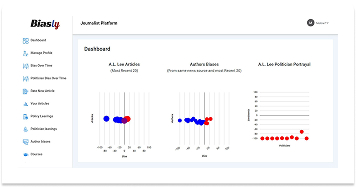
- Journalist Bias Analytics Platform: Explore how individual journalists contribute to bias within their publications.
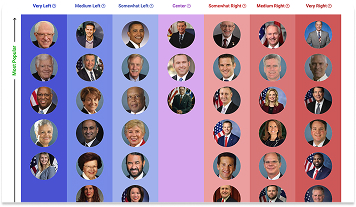
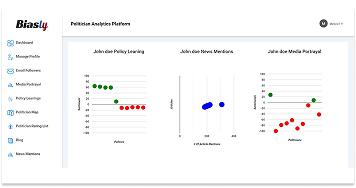
- Politician Bias Analytics Platform: Compare how politicians are framed differently by Wall Street Journal and other outlets.
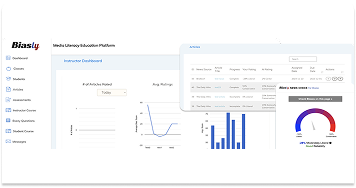
- Media Literacy Education Platform: Learn how to critically assess media sources, bias techniques, and news reliability.
Frequently Asked Questions
Wall Street Journal is rated as Somewhat Right based on Biasly’s media bias algorithm, which assesses sentiment, article framing, and policy favorability.
As shown earlier in this article, Wall Street Journal has been accused of contributing to misinformation regarding the climate crisis. In 2011, CEO Les Hinton resigned due to being involved in a phone-hacking scandal. Hinton was a close ally to owner Rupert Murdoch. In 2020, Wall Street Journal staff held protests over fake news being released by the publication.
In particular, they believed the opinion section wasn’t living up to editorial standards. Articles like “China Is The Real Sick Man Of Asia” (since deleted) were seen as offensive. They also protested for diversity in the newsroom, as part of a broader theme in America after the death of George Floyd. Wall Street Journal is reliable on most issues, but it’s important to fact-check anything that isn’t directly sourced
Biasly uses a combination of AI sentiment analysis and human analyst review to assess tone, fact accuracy, source quality, and media bias indicators. Learn more on our Bias Meter page.
Generally, yes, though partisan framing and selective reporting can affect perceived reliability.
Ratings are based on recent news using data science and A.I. technology.
Military Spending
| Date | Sentiment | Associated Article | Snippet |
|---|---|---|---|
| 08/25/2019 | 75% For | Trump Family Detentions Flores Agreement (link) | So, of course, the Trump administration is doing the opposite in a baldfaced |