

 Most Biased
 Satire
 Economy
 Opinion
 Elections
 Environment
 Entertainment
 Government
 Sports
 Politics
 Health
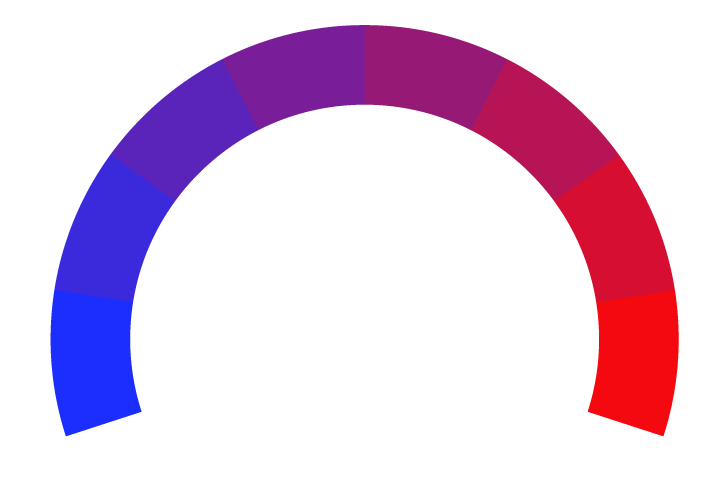
-32% Somewhat Left
Bias Meter
Extremely
Liberal
Very
Liberal
Somewhat Liberal
Center
Somewhat Conservative
Very
Conservative
Extremely
Conservative
-100%
Liberal
100%
Conservative
- Profile
The Times of Israel on the media bias chart
- Bias Rating
-32% Somewhat Left
- Reliability62% Reliable AveragePolicy Leanings
-44% Medium Left
Extremely
LiberalVery
LiberalModerately
LiberalSomewhat Liberal
Center
Somewhat Conservative
Moderately
ConservativeVery
ConservativeExtremely
Conservative-100%
Liberal100%
Conservative
Average Reliability
*Our bias meter rating uses data science including sentiment analysis, machine learning and our proprietary algorithm for determining biases in news articles. Bias scores are on a scale of -100% to 100% with higher negative scores being more liberal and higher positive scores being more conservative and 0% being neutral. The rating is an independent analysis and is not affiliated nor sponsored by the news source or any other organization.
Politician Portrayal1% positive
Analysis of The Times of Israel Articles
Analysis of Bias in The Times of Israel Online Articles
To evaluate this, we can analyze select The Times of Israel articles through several of Biasly’s bias rating criteria: Tone, Tendency, Author, Diction, and Expediency Bias.
- Tone: The overall attitude conveyed by the article
- Diction: Specific word choices made by the writer
- Author: The background and social presence of the journalist
- Tendency: Patterns of bias in the writer’s broader body of work
- Expediency Bias: Quick visual or textual indicators like headlines and photos that imply bias
Source: The Times of Israel
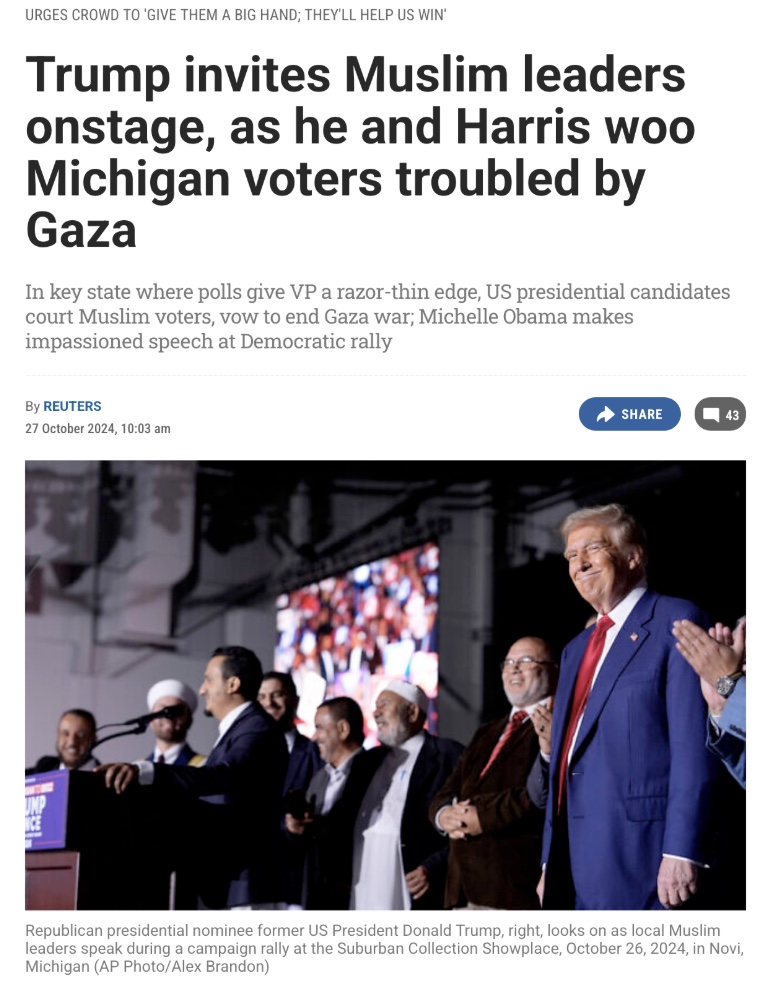
One such article features a headline that, while focusing on a foreign election, does directly involve Israeli interests with the words “woo Michan voters troubled by Gaza”. It is followed by a photo of the Republican nominee, Donald Trump, surrounded by Muslim leaders in Michigan during a campaign event. This is supported by a third-party source explaining precisely what is happening in the image.
The article presents Kamala Harris’s positions favorably while framing Donald Trump’s past policies, such as the Muslim travel ban, critically. It quotes Harris extensively on Trump’s character and includes glowing references to Michelle Obama as “very popular and successful,” while Trump’s gains among Muslim voters are acknowledged but downplayed, saying:
“But first Obama, the popular wife of former US president Barack Obama, fired up the crowd by drawing distinctions between the two candidates on personal character and qualifications, saying there was a double standard in how Trump and Harris were being treated.”
Overall, the article is somewhat centered in its portrayal of Harris and Trump, with the primary focus being on what both candidates planned to do about the Gaza situation. By contrasting Trump’s outreach to Muslim communities with critical framing of his record, the author aligns the narrative with left-leaning perspectives. This framing, while uplifting, subtly situates the subjects within a progressive ideological lens, further underscoring the article’s ideological slant.
Another The Times of Israel article, “Trump’s MSG rally features vows to back Israel, antisemitic joke and nativist rhetoric,” employs strong emotional diction such as “racism,” “antisemitism,” “Holocaust-denying,” “bigoted rhetoric,” “violence,” and “nativism.” The headline and accompanying unflattering images of Trump allies create an expediency bias by immediately associating the event with negative stereotypes.
The author’s framing of such quotes and statements made by Trump allies, and the embedded social media post, suggests a left-leaning outlook.
On the other hand, another article titled “‘History’s greatest comeback!’ Netanyahu and Trump speak after PM swift to fete win” is far more right-leaning in its election framing. Israeli Prime Minister Benjamin Netanyahu is directly cited here in his congratulatory statement for Trump by saying:
“Your historic return to the White House offers a new beginning for America and a powerful recommitment to the great alliance between Israel and America. This is a huge victory!”
In addition, the article prominently quotes a wide array of Israeli officials (Herzog, Smotrich, Ben-Gvir, Gantz, etc.) to emphasize broad Israeli support for Trump, with minimal counterbalancing perspectives or critical analysis.
Reporters and editors at The Times of Israel bring deep expertise in Israeli and regional affairs, but patterns show occasional Center-Left-leaning diction and framing when covering Israeli domestic politics (especially Netanyahu) or U.S. conservative figures, balanced by pro-Israel perspectives on security and Jewish issues.
For instance, founder and editor David Horovitz’s leanings come across as pro-Israel, liberal/center-left Israeli perspective. For instance, his X account shows tweets strongly critical of Netanyahu’s far-right coalition partners, and this can be seen bleeding into his own writing in The Times of Israel.
Op-ed: It is Netanyahu who chose to bring two Jewish supremacist thugs into the heart of government, and gave them power and responsibility over law enforcement, policies and day-to-day life in the West Bank, and national security https://t.co/EYgZuyeFCU via @timesofisrael
— David Horovitz (@davidhorovitz) April 29, 2026
In summary, The Times of Israel shows inconsistent bias in its reporting. While many articles deliver professional, fact-rich coverage of Israeli security and diplomacy—particularly in pure news reporting—coverage of Israeli politics, U.S. elections, and the Israeli-Palestinian conflict often reveals a Center-Left slant through tone, diction, tendency, selection/omission, and expediency bias. This pattern is more pronounced on politically charged topics than in straightforward reporting on Jewish-world or tech/start-up stories.
Analysis of The Times of Israel Opinion Articles
To fully understand political bias in media, it’s important to distinguish between factual reporting and opinion pieces. While reporting aims to present facts and let readers form their own conclusions, opinion articles express personal viewpoints on current issues.
Although the previous section examined factual reporting, this section turns to how bias surfaces through The Times of Israel’s selection and tone of opinion content.
One prominent example is Editor-in-Chief David Horovitz’s op-ed titled “Netanyahu’s firing of Gallant mid-war is reckless, divisive and dangerous to Israel.” The title itself signals a strongly critical and persuasive tone, framing Prime Minister Benjamin Netanyahu’s decision as harmful to national security and unity during wartime.
“Netanyahu’s firing of Gallant mid-war is reckless, divisive, and dangerous to Israel.”
The piece uses emotionally charged diction that prioritizes advocacy against the move over balanced exploration of coalition dynamics or alternative security rationales.
In contrast, a reader-submitted opinion piece titled “Jan 6 made me rule out Trump, Nov 7 made me vote for him” adopts a more personal, reflective tone. It acknowledges initial opposition to Trump based on January 6 but shifts to support following the October 7 Hamas attack, providing a nuanced perspective aligned with pro-Israel priorities.
These examples show that while not all The Times of Israel opinion pieces are overtly ideological, the platform frequently publishes content that aligns with Center-Left critiques of Israeli right-wing leadership alongside pro-Israel voices on external threats. This consistent selection of opinion pieces can contribute to perceptions of systemic bias—particularly when editorials critique Netanyahu or right-leaning policies more sharply.
This tendency underscores the importance of distinguishing subjective viewpoints from straight reporting, especially when interpreting the political leanings of any news organization.
Analysis of Reliability in The Times of Israel’s Online News Articles
The Times of Israel aims to provide readers with factual coverage of local and state political developments, particularly around elections, government policy, and legislative races. While some reporting touches on politically charged topics, the outlet generally maintains a restrained tone in its straight news coverage. Readers should still distinguish between standard reporting and opinion-based framing when evaluating reliability and bias.
One notable example is the article titled “National Democrats target Zenger’s Forsyth County seat in key 2026 race.” Reporter John Deem covers the national Democratic effort to contest a Republican-held North Carolina legislative district by relying heavily on attributed statements from both parties, election statistics, and organizational announcements. Rather than presenting the race as inherently positive or negative for either side, the article focuses on campaign strategy and electoral stakes.
The article maintains a relatively neutral tone by balancing quotes from Democratic and Republican officials. For example, Democratic Party Chair Anderson Clayton praises Amy Taylor North’s coalition-building efforts, while Republican spokesperson Matt Mercer criticizes her platform as promoting “higher property and income taxes.” Both perspectives are presented side by side without the reporter inserting personal commentary or evaluative language.
Additionally, the article uses restrained and procedural diction such as “identified the contest,” “plans to offer support and resources,” “targeting,” and “picked up at least one seat,” which reinforces a factual campaign-analysis style rather than ideological persuasion. Even references to politically sensitive issues, such as Trump’s popularity or abortion-rights advocacy, are framed through attribution to parties or organizations rather than as direct assertions by the reporter.
The piece also incorporates contextual electoral data, including prior vote margins and partisan indexes, which help ground the reporting in measurable political realities rather than emotional framing. Despite touching on partisan conflict, the article largely avoids loaded language and functions as a conventional political race update rather than an opinion-driven narrative.
Quality of Sources and Facts Used
The Times of Israel often uses credible sources from across government institutions, courts, and official records. However, some articles lean too heavily toward how comprehensively they present opposing viewpoints.
Consider the article “High Court rules on Palestinian prisoners’ food rations amid hunger strike threats.” The piece reports on the Israeli High Court’s ruling allowing the Israel Prison Service to reduce food portions for Palestinian security prisoners in response to planned hunger strikes. It is structured around the court decision, legal arguments from both the state and petitioners, and includes quotes from IPS officials, human rights lawyers, and government spokespeople.
The article uses several direct and partial quotes. These range from brief four-word attributions to longer, 28-word statements, with an average length of approximately 11 words. Many statements are presented as attributed summaries of the court’s reasoning or paraphrased positions rather than extended verbatim blocks, allowing the piece to
focus on the procedural and legal timeline. This approach can be more reliable in one way—readers see a clear sequence of court proceedings with less opportunity for selective snippetting—but it also means we don’t always get full context or tone except for key labeled phrases.
On linked sources, the article uses a modest number of hyperlinks in the body, primarily internal to The Times of Israel pages providing background on previous hunger strikes, IPS policy, or related court cases. By left/center/right: Left = 3 (references to human rights lawyers and petitioners), Center = 5 (High Court ruling, institutional records, procedural details), Right = 2 (IPS and government spokespeople). The sourcing footprint is mostly institutional and legal rather than a broad cross-ideological set of external primary documents.
- Israel Prison Service (IPS) officials and government spokespeople (Right-leaning in context)
- High Court of Israel ruling and justices’ statements (Center/Institutional)
- Petitioners’ lawyers and human rights organizations (Left-leaning)
- Previous Times of Israel archives on hunger strikes and security prisoners (internal to the outlet)
- Official court documentation and legal filings (Center/Institutional)
- References to Palestinian Authority responses or prisoner representatives (limited, left-leaning in context)
In how sources are used, the piece presents the court ruling narrative primarily through quotes and statements from IPS and government sources explaining the security rationale, with petitioners’ concerns receiving attribution but less narrative weight. Claims about the legality of the ration reduction are amplified through official channels, while alternative human rights or international law perspectives receive shorter treatment inside the text. While reporting the judicial outcome chronologically creates a veneer of neutrality, it can also inadvertently favor the state’s perspective by giving it more narrative space and institutional backing without robust balancing or counter-evidence from prisoner advocates or international observers. Grounded in what we can count here (speaker access and framing), the author’s operating bias reads closest to the center on this topic: the structure is chronological and fact-focused rather than overtly argumentative, but source emphasis tilts toward official Israeli institutional voices.
On factual accuracy, the broad context is generally consistent with public records: the High Court ruling, IPS policy change, and hunger strike threat were well-documented at the time. Where accuracy becomes harder is inside interpretive claims about the broader implications for prisoner rights or security presented without extensive counter-data or Palestinian Authority responses in the main body.
In contrast, other The Times of Israel pieces on pure diplomatic announcements or start-up innovation stories sometimes incorporate longer timelines, multiple named expert sources from both sides, and balanced stakeholder quotes, scoring higher on transparency and neutrality.
Selection and Omission Bias
The Times of Israel provides extensive coverage of Israeli security, politics, and Jewish-world affairs, which is reasonable given its mission and readership. However, bias may still emerge through framing and story selection.
Selection bias is evident in articles like “Knesset passes law allowing military tribunals for October 7 suspects” where coverage emphasizes human rights criticisms over the government’s security rationale. The pieces do not deeply examine proactive or positive measures taken by the government to address the October 7 aftermath or contrasting viewpoints from victims’ families and security officials who supported the law. Therefore, the coverage leans toward portraying the legislation primarily through a critical lens rather than a balanced national security necessity. Still, it remains rooted in verifiable quotes and legislative records.
The article does not highlight any proactive or positive measures taken by the Knesset or security services, nor does it present contrasting viewpoints from right-leaning lawmakers or terror victims’ families in depth. That said, the reporting does not cross into overt editorializing and is, for the most part, grounded in verifiable facts and quotes.
By comparison, the article “History’s greatest comeback!’ Netanyahu and Trump speak after PM swift to fete win” shows a stronger balance. It lays out quotes from a wide spectrum of Israeli officials across the political spectrum and references public statements without heavy interpretive framing. The piece integrates perspectives from across the Israeli political spectrum and cites documentation available for public review. Overall, it used a well-rounded approach to delivering objective news to readers of The Times of Israel
In opinion pieces, issues with factuality, sourcing, selection, and omission are more common. The articles we’ve covered so far reflect The Times of Israel’s Somewhat Left views, but this is not detrimental to its reliability. Its story selection favors issues more likely to concern pro-Israel and Jewish audiences, suggesting it may give less emphasis to certain Palestinian or critical international perspectives. However, the contents of many The Times of Israel articles maintain accuracy and tend to cite evidence from numerous and varied sources.
The Times of Israel Bias Overview
The Times of Israel was founded in 2012 by veteran journalist David Horovitz and colleagues as an independent digital news site based in Jerusalem. Today, it functions as a multilingual platform (English, French, Arabic, Persian) covering Israeli, Middle Eastern, and Jewish-world news, with sections dedicated to start-up innovation and opinion.
As a leading English-language source on Israeli affairs, The Times of Israel plays a significant role in shaping international perception of the region. This article delves into The Times of Israel’s editorial tendencies to explore whether political bias is present and, if so, to what degree.
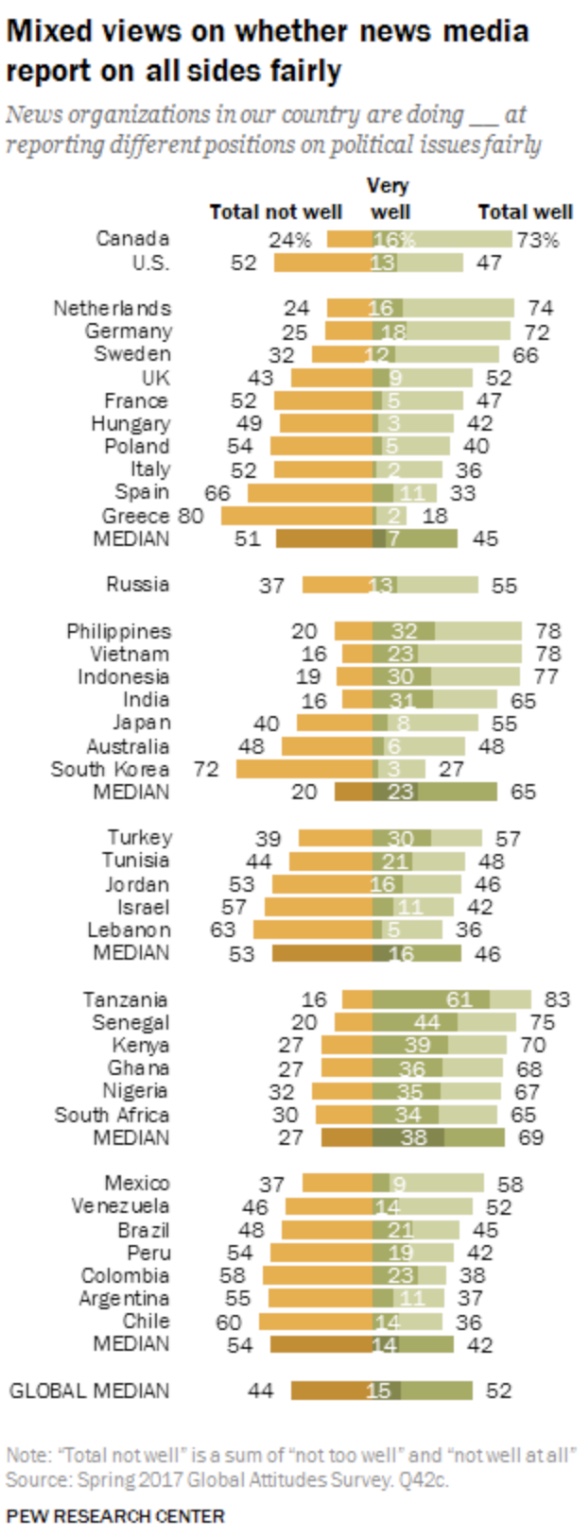
Source: Pew Research
As a leading English-language source on Israeli affairs, The Times of Israel plays a significant role in shaping international perception of the region. Readers’ trust in the accuracy of local news may mirror the conclusions reached by Biasly’s media bias ratings. This article delves into The Times of Israel’s editorial tendencies to explore whether political bias is present and, if so, to what degree. Is The Times of Israel Biased?
Based on Biasly’s evaluations, The Times of Israel is rated as Somewhat Left.
By examining content patterns and the broader context of media influence, we aim to offer a balanced perspective on The Times of Israel’s political bias—and contribute to the ongoing discussion about bias in the news.
How Does Biasly Rate News Sources?
Biasly uses proprietary algorithms and a team of analysts to provide comprehensive bias evaluations across thousands of news outlets. Over 200,000 articles from more than 3,200 sources have been analyzed to identify the most accurate and unbiased stories.
Biasly assigns each outlet three key scores:
- Reliability Score – Reflects factual accuracy
- AI Bias Score – Generated via natural language processing
- Analyst Bias Score – Assessed by human political analysts
These scores are based on seven core metrics: Tone, Tendency, Diction, Author Check, Selection/Omission, Expediency Bias, and Accuracy. These elements help analysts and algorithms evaluate the political attitude conveyed by each article.
Biasly’s Bias Meter ranges from -100% (most left) to +100% (most right), with 0% indicating neutrality. The system evaluates individual articles based on political terms, policies, figures, and sentiment to calculate precise bias ratings.
Is The Times of Israel Politically Biased?
The Times of Israel earns a Somewhat Left rating for its AI Bias Score and a Somewhat Right for its Analyst Bias Score. The Analyst Bias Score is generated by reviewers from liberal, moderate, and conservative backgrounds. Analysts reviewed several The Times of Israel articles and noted consistent patterns in areas such as coverage of Israeli domestic politics (particularly criticism of Prime Minister Benjamin Netanyahu and judicial reform), U.S. elections, and the Israeli-Palestinian conflict. However, the outlet maintained strong objectivity and pro-Israel perspectives on core security, diplomatic, and Jewish-world issues, including Hamas attacks, hostage negotiations, and antisemitism.
For example, coverage of Israeli protests against the Netanyahu government and judicial overhaul reflected a mostly neutral tone in factual reporting but contributed significantly to the Somewhat Left rating through the selection of critical voices and framing that emphasized threats to democracy. Articles involving U.S. conservative figures, such as detailed reporting on Donald Trump’s rallies or policies, also added to the slight left-leaning tilt, while stories on Israeli security operations or international support for Israel consistently scored closer to Center or Center-Right.
Israel’s demography presents a contrasting backdrop. Pew Research shows that 57% of all American Jewish Adults follow news about Israel very closely. Considering The Times of Israel is an international newspaper that covers Israeli topics to the Jewish Diaspora, this makes their reporting method focus on centering Jewish identity in relation to Israel.
This, in turn, could explain differing perceptions of The Times of Israel’s content. The paper may draw mixed reactions depending on readers’ political orientations.
This Bias score is determined through natural language processing that evaluates the tone, word choice, and opinion embedded in the reporting.
How to Evaluate Bias
Although Biasly rates The Times of Israel as Somewhat Left, it’s important to remember that bias can vary from article to article. The Times of Israel also covers a conservative-leaning state with objectivity on many issues, from state legislation to social developments. This complexity underscores the importance of examining each article individually. So, let’s learn how to evaluate media bias.
Recognizing media bias requires awareness and critical thinking. Often, readers trust news sources that affirm their existing beliefs—a psychological tendency known as confirmation bias. This makes it harder to identify slanted narratives or one-sided reporting.
To address this, it’s essential to challenge your assumptions by consulting multiple perspectives and verifying information through third-party analysis. Tools like Biasly’s media bias ratings allow readers to compare the same news story across the political spectrum.
Ultimately, bias isn’t always a matter of what is said—it’s also about what is left out, how topics are framed, and which stories are chosen for coverage. Learning to recognize these patterns can help readers make more informed decisions and develop greater media literacy.
To start comparing news outlets and gain a better understanding of bias, sign up for Biasly’s Media Bias & News Analytics Platform to see how stories vary between sources.
The Times of Israel Reliability Overview
Is The Times of Israel Reliable?
The Times of Israel finds itself toward the middle of the spectrum, with neither high nor low accuracy. Its status as a local news outlet contributes to its moderate reputation for reliability. According to Pew Research, Israelis generally hold more mixed political views of local news than of national media. In fact, 50% of adults regard local journalism’s portrayal of governmental figures as well.
This suggests that The Times of Israel’s popularity among the Jewish Diaspora and Israeli citizens may not stem from the reliability of its political news coverage. Further investigation is needed to determine whether bias or other factors are affecting its accuracy. At Biasly, we specialize in evaluating not just bias but also the reliability of media outlets. Let’s explore the accuracy and trustworthiness of The Times of Israel.
How to Evaluate Reliability?
Reliability refers to how trustworthy or accurate a news source is. If we can’t trust what we read, then continuing to consume content from that outlet serves little purpose. So how do we evaluate a news outlet’s reliability?
There are several key indicators of reliability to consider when assessing a media source. Red flags of an unreliable article can include wild, unsubstantiated claims, facts that depend on other unreliable sources, heavy use of opinionated language, and more. In contrast, hallmarks of a reliable source include:
- Absence of subjective language
- Citing credible sources (e.g., .gov, .edu, academic references)
- Verifiable facts and statistics from multiple outlets
- Use of primary sources, like interviews or transcripts
- Consistency with coverage across other platforms
Biasly’s reliability scores incorporate these elements in evaluating media outlets.
So How Does The Times of Israel Fare in Its Reliability?
The political reliability index developed by Biasly assesses both accuracy and trustworthiness. The Times of Israel currently holds Average Reliability Score, which is calculated as a weighted average of:
- Fact Analysis Score – Evaluates the accuracy of claims, facts, and evidence.
- Source Analysis Score – Assesses the number, diversity, and credibility of sources and quotes used.
The Times of Israel’s Source Analysis Score is Average at 35% Reliable. This suggests moderate trustworthiness in its sourcing practices. The score is AI-generated and considers quote length, frequency, diversity, and quality.
The Fact Analysis Score of The Times of Israel is Average at 69% Reliable. This further shows how well The Times of Israel supports its claims, addresses selection and omission bias, and presents verifiable evidence.
While The Times of Israel leans toward factual reporting, occasional lapses—such as unbalanced viewpoints or incomplete data—can affect its reliability rating. These nuances emphasize the importance of analyzing individual articles.
The Times of Israel’s Accuracy and Reliability
According to Biasly’s analysis, The Times of Israel maintains Average Reliability Score, but individual articles may vary significantly. Let’s dive into the details.
Political orientation plays a crucial role in how audiences perceive reliability. The Times of Israel has been accused of favoring a liberal narrative, potentially at the expense of factual reporting. To validate such claims, it’s essential to analyze whether the publication backs its assertions with sufficient evidence and diverse viewpoints.
Two common types of bias that affect factuality include:
- Selection Bias – Highlighting or omitting stories to fit a particular narrative.
- Omission Bias – Leaving out differing perspectives or relevant details to skew perception.
Biasly’s accuracy ratings use a scale from 1% (least accurate) to 100% (most accurate). Factors include supporting evidence, reliable internal and external sources, and balanced viewpoints.
For instance, Biasly gave Bloomberg a Center bias rating overall but a Good Analyst Reliability Score. One Bloomberg article, titled “Gunshots Heard at Philippine Senate Where Lawmaker Is Holed Up,” showed a somewhat right score and a limited reliability rating for failing to include diverse viewpoints. In contrast, another piece from the outlet, titled “Hegseth Grilled on Defense Spending as Iran War Drags On,” was rated as somewhat left and similarly scored limited for reliability, for also failing to include diverse viewpoints.
So, is The Times of Israel Reliable?
Overall, The Times of Israel can be considered to be an outlet that is moderately reliable. It demonstrates a consistent goal of journalistic integrity and typically supports claims with sources and quotes. Occasional omissions and framing bias do appear, particularly on culturally sensitive or partisan issues.
As media literacy improves, readers can more easily detect issues with selection bias, omission bias, and factuality. To strengthen your ability to assess reliability across the political spectrum, use Biasly’s News Bias Checker to compare how multiple outlets report the same story.
This empowers you to consume more accurate, balanced, and dependable news.
The Times of Israel Editorial Patterns
The Times of Israel’s coverage of political topics often reflects a Somewhat Left bias, with consistent patterns in phrasing, source selection, and thematic focus that are Slightly Liberal. While the publication demonstrates journalistic standards in many of its reports, the choice of issues, framing, and word usage can indicate a political slant. This content analysis examines how The Times of Israel handles liberal and conservative issues and evaluates its language choices and editorial tendencies.
Coverage of Liberal vs. Conservative Topics
The Times of Israel’s articles include progressive social causes and critiques of right-wing Israeli leadership, which tend to adopt sympathetic or critical language depending on the context. For instance, its coverage of anti-Netanyahu protests, judicial reform demonstrations, and social issues such as LGBTQ+ rights or women’s equality frequently aligns with liberal viewpoints, using inclusive and affirmative language to frame these movements as necessary defenses of democracy and civil liberties.
On the other hand, articles covering conservative Israeli figures or right-wing policies—such as settlement expansion, judicial overhaul legislation, or stricter security measures—often employ a more critical tone. Biasly’s analysis of recent The Times of Israel articles reveals a tendency to highlight controversies or opposition surrounding right-leaning initiatives, while downplaying positive aspects or conservative rationale. For example, in coverage of the judicial reform package advanced by Netanyahu’s coalition, the reporting frequently emphasized mass protests and warnings of “democratic erosion,” while giving less space to arguments from coalition lawmakers about restoring balance between branches of government.
This news media bias manifests in subtle ways, such as placing greater prominence on progressive or left-leaning Israeli voices (e.g., protest organizers, opposition parties like Yesh Atid or Labor) or using emotionally charged diction when describing certain conservative actions, while offering more detached language in other contexts. Words like “democracy,” “rights,” “protests,” and “backlash” appear more frequently in liberal-oriented reporting, while conservative policies are often framed as “controversial,” “divisive,” “overreach,” or “threats to democratic norms.”
Policy and Issue Framing
When covering Israeli domestic politics, particularly judicial reform or government accountability, The Times of Israel often references democracy, judicial independence, and checks on power, supporting movements for expanded legal protections and civil liberties. This aligns with a Somewhat Left media bias in certain domestic contexts, especially in coverage of the 2023 judicial overhaul crisis. Similarly, coverage of social issues or U.S. elections reflects scrutiny of populist or right-leaning figures, often contextualized through their potential impact on Israeli interests or Jewish communities abroad.
In contrast, issues like security cooperation, settlement policy, or responses to Palestinian terrorism — typically associated with conservative platforms — are covered with strong factual emphasis on Israeli security needs but can still show framing through the lens of international criticism or human rights concerns. These stories are often contextualized through the impact on Palestinian communities or framed as polarizing. For example, reporting on military operations in Gaza or the West Bank frequently includes detailed casualty figures and international reactions, while offering less space to Israeli operational rationale or long-term strategic goals.
Even in neutral coverage, phrasing choices shape perception. Articles will describe liberal or opposition proposals as “strengthening democracy” or “protecting rights,” while conservative legislation or security measures may be described as “divisive,” “reckless,” “erosion of democratic norms,” or “escalating tensions.” This consistent choice of words reflects an editorial direction that, even unintentionally, can contribute to bias in news media, particularly when covering the intersection of Israeli politics and the Israeli-Palestinian conflict.
Coverage and Relevance
The Times of Israel’s reporting often touches on key issues central to the media political bias discussion — including newspaper bias, bias in journalism, and biased media narratives. As such, it serves as a compelling case study for examining source bias and news media bias in state-focused reporting.
Readers who wish to further explore how The Times of Israel compares with other publications can visit Biasly’s Media Bias Chart to analyze tone and word choice in real time.
Funding and Ownership
Who Owns The Times of Israel?
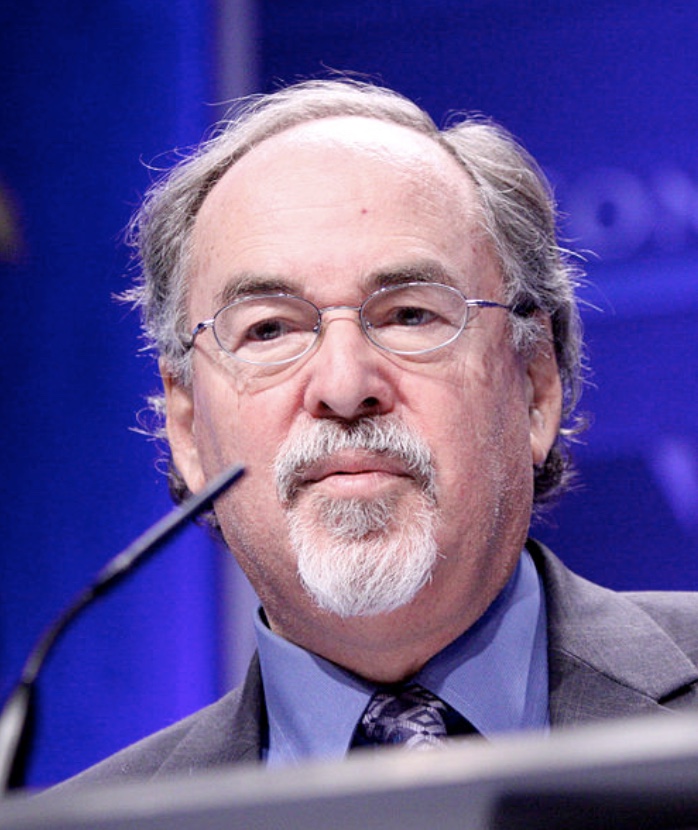
David Horovitz, Founder and Editor-in-Chief of The Times of Israel- Source: Wikipedia
David Horovitz is the founding editor of The Times of Israel and one of the most recognizable figures associated with the outlet’s editorial identity. Before launching The Times of Israel in 2012, Horovitz built a long career in Israeli and international journalism, including senior editorial roles at The Jerusalem Post. His professional background matters because it helps explain why The Times of Israel often presents itself as a serious English-language news platform aimed at both Israeli and global readers, with a mix of breaking news, political analysis, and commentary on Israeli society.
Horovitz has generally positioned the publication as independent and broad in scope rather than narrowly partisan. At the same time, founder influence still matters. In a founder-led outlet, editorial leadership helps shape not just tone, but also newsroom priorities, the kinds of debates that are elevated, and the boundaries of what counts as
fair or mainstream discourse. In the case of The Times of Israel, that influence is often visible in its strong focus on Israeli politics, security, religion, diaspora issues, and the international framing of events involving Israel.
Under its independent ownership structure, The Times of Israel operates without the direct control of a large public media conglomerate. That may reduce some forms of shareholder or corporate pressure, but it does not make the outlet ideologically neutral. Independent ownership can protect editorial freedom, but it can also concentrate influence in a relatively small leadership circle. For readers evaluating bias, the more important question is how that leadership shows up in practice — through story selection, source balance, tone, and the framing of politically sensitive topics.
Who Funds The Times of Israel?
The Times of Israel operates as a for-profit independent digital media company. Its primary revenue comes from a combination of digital advertising, premium subscriptions for in-depth content and ad-free access, reader donations, events, syndication, and licensing partnerships. The outlet has developed a sustainable model built on a loyal global audience interested in high-quality reporting on Israeli and Jewish affairs, rather than relying on a single dominant funding source.
Unlike nonprofit or donor-heavy outlets, The Times of Israel does not depend on large philanthropic foundations or government grants, which reduces the risk of donor-driven editorial influence. Revenue is supplemented by targeted advertising from companies and organizations interested in reaching an engaged, international readership. As with any independent media company, financial sustainability is tied to audience growth and advertiser relationships, but the outlet has publicly committed to maintaining editorial independence regardless of commercial pressures.
The company publishes transparency statements on its website and maintains a clear corrections policy, reinforcing its commitment to accountability. Readers concerned about potential influence can review the outlet’s About page and annual transparency updates, which emphasize its independent status and mission-driven approach. Overall, the combination of private ownership, diversified revenue streams, and a longstanding commitment to editorial independence has helped The Times of Israel maintain its reputation as a trusted source in a highly polarized region.
Additional Insights
News Source Comparison
When it comes to news source comparison, The Times of Israel is often evaluated alongside other regional and national outlets that lean left or center-left. Sources like Haaretz or The Jerusalem Post often present similar tones and editorial philosophies. While The Times of Israel maintains a Somewhat Left media bias, it distinguishes itself by striving for independent, fact-driven reporting that includes a broader range of Israeli voices across the political spectrum—something that sets it apart from more ideologically consistent outlets on either side.
This puts it in contrast with more biased media outlets that present consistently one-sided narratives without factual counterpoints. Readers seeking balanced political coverage may compare The Times of Israel’s framing of issues with outlets rated as Center or Lean Right on our Media Bias Chart, or explore other regional papers on our Similar Sources page.
Notable Contributors and Authors
The Times of Israel features a diverse range of reporters and columnists, many of whom are deeply familiar with Israel’s political and social climate. Columnists like the editor-in-chief, David Horowitz, who frequently provide opinions regarding political controversies and election matters, exemplify the outlet’s strength in international news coverage
Other contributors focus on religion or civil rights—topics central to Israel and Jewish Diaspora communities. While some contributors may be seen as leaning left in tone or topic selection, their work is generally grounded in factual reporting. The presence of recurring bylines helps readers evaluate individual journalists’ bias over time.
Related Tools and Resource Pages
To better understand how The Times of Israel fits into the broader media landscape, we recommend exploring these helpful resources:
- Media Bias Chart: See where The Times of Israel ranks among hundreds of media outlets across the political spectrum.
- Political Bias Chart: Visualize political slants of news sources across various policy areas.
- Journalist Bias Analytics Platform: Explore how individual journalists contribute to bias within their publications.
- Politician Bias Analytics Platform: Compare how politicians are framed differently by The Times of Israel and other outlets.
- Media Literacy Education Platform: Learn how to critically assess media sources, bias techniques, and news reliability.
Frequently Asked Questions
The Times of Israel is rated as Somewhat Left based on Biasly’s media bias algorithm, which assesses sentiment, article framing, and policy favorability.
Yes The Times of Israel has been accused several times of spreading fake news and/or misinformation. In 2020, the outlet (along with The Jerusalem Post, Algemeiner, and Arutz Sheva) published several opinion pieces submitted under falsified identities by hoaxers; the pieces were promptly removed once the deception was discovered, and opinion editor Miriam Herschlag publicly expressed regret, noting that the incident distorted public discourse and could create barriers for genuine voices. In May 2023, a guest blog post by Jeffrey Camras containing extreme inflammatory language—including calls to “obliterate” Palestine and denying Palestinian nationality—was published and quickly deleted after backlash, drawing accusations from critics and some genocide scholars that the site’s open blogging network had platformed hate speech or extremism. Additionally, during the Gaza war, some analysts and critics have accused The Times of Israel and other Israeli media of initially echoing or overstating certain IDF/government claims, such as early reporting on Hamas infrastructure at Al-Shifa Hospital where subsequent independent assessments found the evidence thinner than first presented; these cases are typically framed as bias or selective sourcing rather than deliberate fabrication.
Biasly uses a combination of AI sentiment analysis and human analyst review to assess tone, fact accuracy, source quality, and media bias indicators. Learn more on our Bias Meter page.
Generally, yes, though partisan framing and selective reporting can affect perceived reliability.
Military Spending
| Date | Sentiment | Associated Article | Snippet |
|---|---|---|---|
| 08/25/2019 | 75% For | Trump Family Detentions Flores Agreement (link) | So, of course, the Trump administration is doing the opposite in a baldfaced |