








Cyprus Steps Up Sanctions Enforcement: From Compliance Obligations To Criminal Consequences
- Bias Rating
- Reliability
20% ReliableLimited
- Policy Leaning
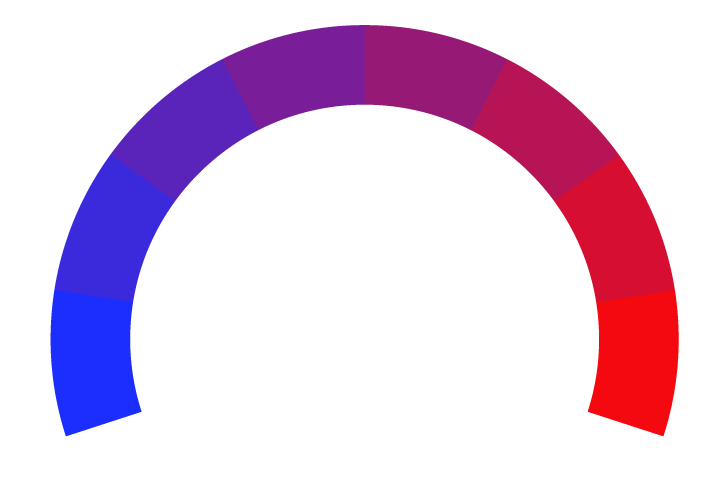
96% Very Right
- Politician Portrayal
N/A
Continue For Free
Create your free account to see the in-depth bias analytics and more.
By creating an account, you agree to our Terms and Privacy Policy, and subscribe to email updates.
Log In
Log in to your account to see the in-depth bias analytics and more.
Bias Score Analysis
The A.I. bias rating includes policy and politician portrayal leanings based on the author’s tone found in the article using machine learning. Bias scores are on a scale of -100% to 100% with higher negative scores being more liberal and higher positive scores being more conservative, and 0% being neutral.
Sentiments
-46% Negative
- Liberal
- Conservative
| Sentence | Sentiment | Bias |
|---|---|---|
Unlock this feature by upgrading to the Pro plan. | ||
Reliability Score Analysis
Policy Leaning Analysis
Politician Portrayal Analysis
Bias Meter
Extremely
Liberal
Very
Liberal
Moderately
Liberal
Somewhat Liberal
Center
Somewhat Conservative
Moderately
Conservative
Very
Conservative
Extremely
Conservative
-100%
Liberal
100%
Conservative
Contributing sentiments towards policy:
57% : "capital" covers financial assets and economic benefits of any kind, and is drafted broadly to include, inter alia, cash, cheques, monetary claims, deposits, negotiable instruments and other payment means; securities, both publicly and privately traded (including shares, bonds, notes, warrants and derivatives); credits, guarantees, letters of credit and other financial commitments; income or gains derived from such assets; documents evidencing participation in funds or financial resources; and crypto-assets as defined in Article 3(1)(5) of Regulation (EU) 2023/1114.54% : Significance The Law positions Cyprus firmly within the EU's collective effort to strengthen the enforcement of restrictive measures amid a shifting geopolitical environment.
52% : Law 150(I)/2025 establishes the National Sanctions Implementation Unit within the Ministry of Finance, responsible for coordinating national enforcement of both EU and UN sanctions, issuing guidance, managing licensing procedures, and imposing administrative fines.
51% : Its adoption marks an important step in reinforcing Cyprus' commitment to transparency, accountability, and effective alignment with the EU Sanctions regime.
50% : It also requires the collection of anonymised enforcement data and its reporting to the European Commission through the Unit for the Implementation of EU Restrictive Measures (EMEK).
47% : The Law applies to both natural and legal persons, and covers a wide range of conduct related to the breach or circumvention of the EU Sanctions, among which are the transfer, disposal, and/or concealment of economic resources, capital and/or assets belonging to a natural or legal person, entity or body subject to EU Sanctions (a "Designated Person").
46% : Where the commission of an offence falls within the jurisdiction of more than one EU Member State, Cyprus is required to cooperate with the other Member States to determine which will undertake the prosecution, with the matter being referred to Eurojust where appropriate, in line with Framework Decision 2009/948/JHA.
45% : Criminal offences Article 5 of the Law sets out the core offences criminalised under Cypriot law in alignment with the EU Sanctions framework.
45% : Enforcement and cooperation Part III of the Law strengthens enforcement by providing for the freezing and confiscation of assets linked to EU Sanctions breaches, the investigative powers of the police, customs, and other authorities, and cooperation with EU bodies such as Europol, Eurojust, and the European Public Prosecutor's Office, particularly in cross-border cases.
43% : within Consumer Protection, Real Estate and Construction and Transport topic(s) Cyprus Steps Up Sanctions Enforcement: From Compliance Obligations to Criminal Consequences On the 25 of July, 2025, the Republic of Cyprus ("Cyprus") enacted Law 149(I)/2025, formally titled The Criminalization of the Violation of the Restrictive Measures of the European Union Law of 2025 (the "Law").
41% : At the national level, it signifies that compliance with EU Sanctions is no longer merely a matter of regulatory diligence but now carries potential criminal liability for both individuals and corporate entities; not only those who commit breach, but also those attempt, facilitate, or conspire to do so.
37% : The Law transposes EU Directive 2024/1226 of the European Parliament and Council of the 24 of April, 2024, which harmonises the definition of criminal offences and penalties for the violation of EU restrictive measures.
37% : In parallel, Law 148(I)/2025 amends the existing whistleblowing framework to extend protection to persons reporting breaches of EU Sanctions, including acts of incitement, aiding and abetting, or attempted violations.
34% : It provides that any intentional act or omission resulting in a breach of an EU Sanction constitutes a criminal offence.
32% : Purpose and scope The Law aims to ensure that breaches of restrictive measures of the European Union ("EU"), established pursuant to Article 29 of the Treaty on European Union and Article 215 of the Treaty on the Functioning of the European Union (collectively referred to as "EU Sanctions"), constitute clearly defined criminal offences under national law, punishable by proportionate and dissuasive penalties.
30% : In particular, the Law criminalises: * the direct or indirect provision of funds or economic resources to, or for the benefit of, a Designated Person; * the failure to freeze funds or economic resources owned, held or controlled by such Designated Person; * the facilitation of the entry into or transit through the territory of an EU Member State by a Designated Person in breach of a travel ban; * the execution or continuation of transactions with a third country, its entities, or entities owned or controlled (directly or indirectly) by it, including the award or continuation of public contracts or concessions, where such conduct is prohibited or restricted under EU Sanctions; * the execution of commercial transactions involving the import, export, sale, purchase, transfer, transit or brokering of goods, or the provision of intermediary, technical assistance or related services, contrary to EU Sanctions; * the provision of financial services or financial activities, or any other type of service prohibited or restricted under EU Sanctions; * the circumvention of EU Sanctions, including through: Importantly, an offence involving the trade, export or provision of technical assistance in relation to items on the EU Common Military List or dual-use items (as listed in Annexes I and IV to Regulation (EU) 2021/821) may be committed even through gross negligence, thereby extending criminal liability beyond intentional conduct.
*Our bias meter rating uses data science including sentiment analysis, machine learning and our proprietary algorithm for determining biases in news articles. Bias scores are on a scale of -100% to 100% with higher negative scores being more liberal and higher positive scores being more conservative, and 0% being neutral. The rating is an independent analysis and is not affiliated nor sponsored by the news source or any other organization.