








One-third of Nigeria's workforce will no longer pay tax from 2026 -- Oyedele
- Bias Rating
- Reliability
30% ReliableAverage
- Policy Leaning
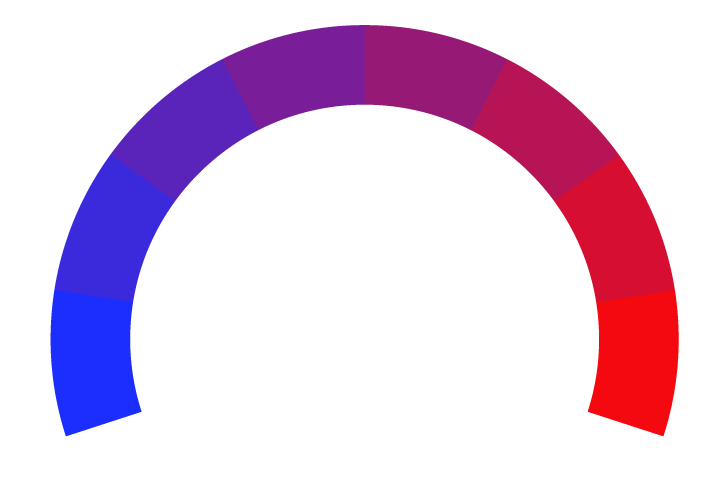
82% Very Right
- Politician Portrayal
N/A
Continue For Free
Create your free account to see the in-depth bias analytics and more.
By creating an account, you agree to our Terms and Privacy Policy, and subscribe to email updates.
Log In
Log in to your account to see the in-depth bias analytics and more.
Bias Score Analysis
The A.I. bias rating includes policy and politician portrayal leanings based on the author’s tone found in the article using machine learning. Bias scores are on a scale of -100% to 100% with higher negative scores being more liberal and higher positive scores being more conservative, and 0% being neutral.
Sentiments
4% Positive
- Liberal
- Conservative
| Sentence | Sentiment | Bias |
|---|---|---|
Unlock this feature by upgrading to the Pro plan. | ||
Reliability Score Analysis
Policy Leaning Analysis
Politician Portrayal Analysis
Bias Meter
Extremely
Liberal
Very
Liberal
Moderately
Liberal
Somewhat Liberal
Center
Somewhat Conservative
Moderately
Conservative
Very
Conservative
Extremely
Conservative
-100%
Liberal
100%
Conservative
Contributing sentiments towards policy:
58% : Under the reforms, a top personal income tax rate of 25 per cent will apply exclusively to individuals earning N120 million or more annually.53% : Chairman of the Presidential Committee on Fiscal Policy and Tax Reforms, Mr Taiwo Oyedele, said the exemption would affect roughly one in every three workers nationwide, marking a decisive break from what he described as a long-standing practice of "taxing poverty".
53% : " To improve the business environment, the government has reduced the corporate income tax rate from 30 per cent to 25 per cent.
51% : THE Federal Government has unveiled plans to exempt about one-third of Nigeria's workforce across both the public and private sectors from paying personal income tax, in what officials describe as a major shift toward a fairer and more inclusive tax system.
51% : According to him, many of the countries that originally introduced such tax systems have since reformed or abandoned them because they became barriers to growth, productivity and investment.
51% : Oyedele noted that Nigeria ranks among the top 10 countries globally with the highest tax burden on businesses, despite its urgent need for domestic and foreign investment to drive job creation and reduce poverty.
49% : " Oyedele explained that the policy forms part of a broader overhaul of Nigeria's tax framework, much of which, he said, dates back to colonial-era legislation that no longer reflects modern economic realities.
48% : Beyond the exemption for low-income earners, the reforms are also designed to reduce the tax burden on middle-income workers.
48% : "If you destroy the middle class, you weaken consumption, savings and long-term growth," he said. High-income earners, by contrast, will shoulder a slightly higher share of the tax burden.
47% : Under the proposed reforms, low-income earners earning N100,000 or less per month will no longer be required to pay personal income tax from January next year.
46% : The reforms, he said, will repeal several major existing tax laws and replace them with a streamlined framework aimed at eliminating duplication and improving transparency.
45% : Individuals earning between N100,000 and about N2 million per month will pay less tax under the new regime, effectively increasing their disposable income without any corresponding salary increase.
43% : "Nigeria is searching for investment, yet we operate one of the most complex and punitive tax systems in the world.
39% : The reforms extend beyond personal income tax to address deep-seated structural issues in Nigeria's business taxation system.
32% : He also highlighted the problem of multiple taxation and the proliferation of tax-collecting agencies, including non-state actors, which have made compliance costly, confusing and prone to abuse.
29% : Oyedele warned that misinformation has clouded public discourse around the reforms, pointing to false claims about inheritance taxes and exaggerated fears over tax increases.
*Our bias meter rating uses data science including sentiment analysis, machine learning and our proprietary algorithm for determining biases in news articles. Bias scores are on a scale of -100% to 100% with higher negative scores being more liberal and higher positive scores being more conservative, and 0% being neutral. The rating is an independent analysis and is not affiliated nor sponsored by the news source or any other organization.