








 Cyprus Mail Article Rating
Cyprus' tax reform fails the fairness test
- Bias Rating
28% Somewhat Right
- Reliability
N/AN/A
- Policy Leaning
40% Somewhat Right
- Politician Portrayal
55% Positive
Continue For Free
Create your free account to see the in-depth bias analytics and more.
By creating an account, you agree to our Terms and Privacy Policy, and subscribe to email updates.
Log In
Log in to your account to see the in-depth bias analytics and more.
The A.I. bias rating includes policy and politician portrayal leanings based on the author’s tone found in the article using machine learning. Bias scores are on a scale of -100% to 100% with higher negative scores being more liberal and higher positive scores being more conservative, and 0% being neutral.
Sentiments
14% Positive
- Liberal
| Sentence | Sentiment | Bias |
|---|---|---|
Unlock this feature by upgrading to the Pro plan. | ||
Bias Meter
Extremely
Liberal
Very
Liberal
Moderately
Liberal
Somewhat Liberal
Center
Somewhat Conservative
Moderately
Conservative
Very
Conservative
Extremely
Conservative
-100%
Liberal
100%
Conservative
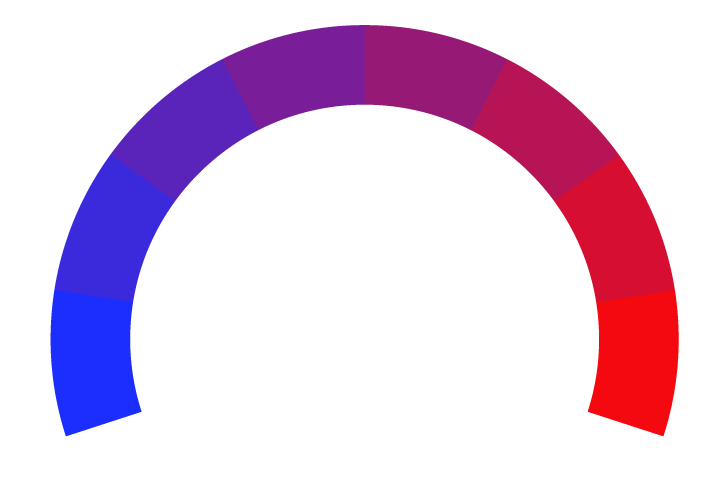
Contributing sentiments towards policy:
66% : For Adam Smith, taxation was both a moral and economic responsibility -- where contribution is a function of ability.62% : A tax reform should correct these shortfalls, even if the result is still not revenue-neutral, and do so in accordance with the clearly defined principles of taxation that we have recognized since the time of Adam Smith as the principles of good taxation.
60% : These tax bracket adjustments do not eliminate the phenomenon of fiscal drag, but they do make the taxation of middle incomes fairer and more efficient, because they strengthen the consumer power of the economic groups facing the greatest financial pressures.
59% : This is fully compatible with fiscal adequacy but, more importantly, with increasing the progressivity of the tax system.
59% : Conclusion: the cost of inaction A tax system that draws more revenue from its most regressive segments, particularly indirect taxes, while total tax revenues grow faster than economic growth, presents a complex picture with various implications.
56% : This would mean up to €37.200 for a tax rate of 20 per cent, up to €48.000 for a tax rate of 25 per cent, and up to €80.000 for a tax rate of 30 per cent.
56% : High earners benefit from the shift in the €60,000-80,000 tax bracket.
55% : Although it was originally designed to be competitive at an international level, the existing system involves unproductive discrimination against domestic companies, favors increasing foreign ownership, and, after a long period of accumulated inflation, places an excessive burden on lower income groups.
55% : Volt submitted its proposals early on for all the main aspects of the tax reform.
55% : Volt also proposed introducing a ceiling of €70.000 income, above which no further tax exemption from life insurances would be allowed within the framework of the 1/5 for exemptions for all social insurance, welfare funds, health plans, and insurances.
54% : Volt proposed an increase in the tax-free allowance to €24.000, or 23 per cent, in the absence of credits for lower incomes.
54% : The statutory corporate income tax rate is increased from 12.5 per cent to 15 per cent for all companies.
53% : For incomes above €80,000, the tax rate will be 35 per cent.
52% : It is also proposed that tax brackets be automatically adjusted for inflation.
52% : At the same time, the reform maintains key incentives -- such as the intellectual property rights framework and the notional interest deduction against capital issuance -- which greatly benefit foreign companies by allowing them to reduce their effective tax rate.
51% : Without adjustments, inflation acts as an additional tax, reducing the real disposable income of citizens For illustrative purposes.
51% : The tax reform proposed by the government places a greater burden on middle and low incomes, which is precisely the income group it claims to want to support.
51% : In order to limit the phenomenon of fiscal drag and avoid the problems caused by accumulated inflation, it is necessary for tax scales to be adjusted at regular intervals, for example every three years, for the cumulative inflation of the period.
51% : Corporate reform and economic growth In the corporate sector, the tax reform abolishes the withholding tax on profits, reduces the special defense contribution from 17 per cent to 5 per cent, strengthens incentives for research and development, and extends the period for carrying forward losses from five to seven or ten years.
51% : Regressive taxes take a larger share of income from lower-income households than from higher-income households.
50% : As the economy grows, the tax burden on lower-income households increases disproportionately.
49% : The tax burden on an income of €30.000 in 2025 is much higher than that on €20.000 in 2002.
49% : And an increase in all other tax brackets by 33 per cent against a cumulative inflation of 50 per cent.
49% : The surplus is maintained only through a 20-year-plus 'inflation tax' on citizens, while offering 'social' measures that are invisible to the most vulnerable.
48% : In real terms, the actual disposable income of these economic groups, after taxation, is lower than their corresponding incomes in 2002, given the cumulative inflation in the intervening period.
48% : Fiscal drag occurs when inflation and income growth push taxpayers into higher income tax brackets, leading to an increase in their tax bills, without any change in tax rates, leaving individuals and households with less disposable income in real terms.
46% : This will also make the tax system fairer, ensuring that tax burdens do not increase simply because of inflation.
46% : Opposing ineffective allowances Income tax exemptions for children and for housing exacerbate inequalities according to Volt, as they favor higher incomes, and in most cases where incomes are below the non-taxable amount, there will be no benefit.
46% : Tax allowances and breaks are not the obvious solution, despite the impressions they generate.
45% : In the social dialogue surrounding the tax reform, no entity or political group has presented a comprehensive or integrated approach to the issue, apart from piecemeal amendments.
45% : The Volt Cyprus proposals: combating regressivity Given the relative regressivity of the tax system, any increases in indirect taxes, such as green taxation, must be offset by measures that will reduce tax revenues from indirect taxes as a whole.
45% : To address the problem of low progressivity more generally, tax brackets need to be adjusted for cumulative inflation over the relevant period, namely since the previous tax reform in 2002.
44% : The Cypriot tax system, which was designed almost a quarter of a century ago, in 2002, is facing problems of ageing.
44% : The fiscal burden also occurs through indirect taxes that are proportional to prices, which naturally rise with inflation.
43% : Middle earners benefit little from the deductions if they earn enough to have a tax liability that offsets them.
39% : By comparison, it is one of the least progressive tax systems in the EU, with the greatest dependence on indirect taxes such the value added tax, and on social security contributions.
39% : Thus, consumers end up paying more taxes on their purchases, even if their purchasing power has not improved, further reducing their disposable income.
37% : The increase in the corporate tax rate from 12,5 per cent to 15 per cent will not be effective unless it includes effective taxation clauses, which it does not.
36% : Taking into account higher indirect taxes such as VAT and the higher cost of living - more expensive electricity and rents - things will be even worse.
36% : By refusing to align tax scales more closely with actual cumulative inflation and opting instead for tax deductions, the reform in Cyprus is squeezing the lower end of the scale.
*Our bias meter rating uses data science including sentiment analysis, machine learning and our proprietary algorithm for determining biases in news articles. Bias scores are on a scale of -100% to 100% with higher negative scores being more liberal and higher positive scores being more conservative, and 0% being neutral. The rating is an independent analysis and is not affiliated nor sponsored by the news source or any other organization.