








 The News
Throwback/Tax Reform: How It Will Protect the Poor, Small Businesses -- Taiwo Oyedele -
- Bias Rating
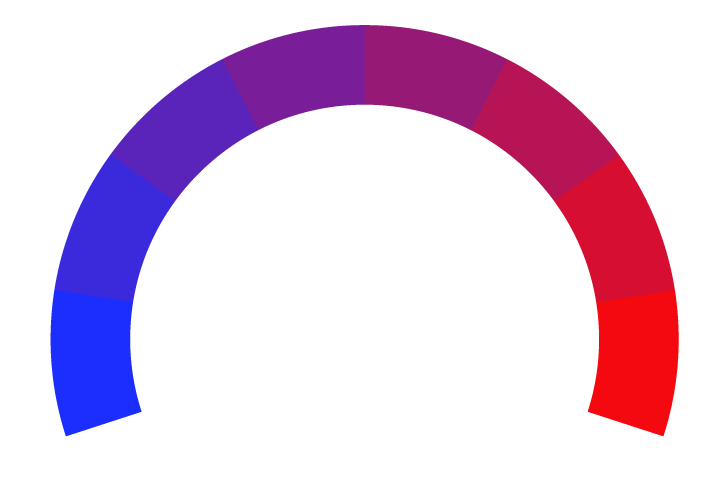
100% Very Right
- Reliability
N/AN/A
- Policy Leaning
100% Very Right
- Politician Portrayal
N/A
Continue For Free
Create your free account to see the in-depth bias analytics and more.
By creating an account, you agree to our Terms and Privacy Policy, and subscribe to email updates.
Log In
Log in to your account to see the in-depth bias analytics and more.
The A.I. bias rating includes policy and politician portrayal leanings based on the author’s tone found in the article using machine learning. Bias scores are on a scale of -100% to 100% with higher negative scores being more liberal and higher positive scores being more conservative, and 0% being neutral.
Sentiments
16% Positive
- Liberal
| Sentence | Sentiment | Bias |
|---|---|---|
Unlock this feature by upgrading to the Pro plan. | ||
Bias Meter
Extremely
Liberal
Very
Liberal
Moderately
Liberal
Somewhat Liberal
Center
Somewhat Conservative
Moderately
Conservative
Very
Conservative
Extremely
Conservative
-100%
Liberal
100%
Conservative
Contributing sentiments towards policy:
61% : The tax reduction and tax waivers on personal income tax are going to benefit more than 90 per cent of workers in Nigeria - in the private and public sectors.61% : So, today, we have the company's income tax, education tax, NITDA levy, you have NASENI, you have police you have Financial Reporting Council of Nigeria- which got a tax in their Act in 2023 - just two years ago to fund their activities.
57% : I was also involved in drafting the National Tax Policy in 2017.
57% : But because we are so passionate about education, we said by 2030, the whole development levy should go to NELFUND.
56% : President Bola Tinubu on Thursday signed into law the four new tax bills recently passed by the National Assembly, describing the new laws as pivotal to the success of the administration's reforms and the country's prosperity.
56% : In February2025, TheNEWS had an interview with Mr Taiwo Oyedele, Chairman, Presidential Fiscal Policy and Tax Reforms Committee.
56% : But why is it necessary to reform the Nigerian tax system now?
56% : So, if you say pay TV tax at that time, it makes sense because you are targeting the middle class.
56% : By the way, this provision of family income has been in our tax laws even before independence.
55% : Many federal government agencies don't have a special tax; they get their funding from the budget.
55% : Before the Education Tax was introduced in 1993, Nigerian universities were ranked in the top 1000 in the world.
55% : Today, the highest effective tax rate is about 19 per cent.
55% : So, in most developed countries, even, in Africa, the tax rate for high-income earners is much higher.
55% : There is personal income tax if you work as an employee and they pay you a salary, you will pay tax.
54% : So, because of the evolution of the economic space, society and human development, we need to also up our tax system to be able to drive our aspirations for growth.
54% : So, people from all states in Nigeria sent submissions to us- organized private sector, companies, professional firms, professional bodies, tax consulting firms, accounting firms, legal firms; we had sessions with more than 40 sectors - from Fintech to agriculture, to even the education sector, workers and so on.
54% : One of them is tax harmonization.
53% : So, we now said let's create a development levy - just one tax and then, we take that tax and share it with the critical agencies - TETFUND for education, NASENI for engineering, NITDA for information technology.
53% : We looked around the world and we couldn't find a single country which is doing well in its education system with funding from education tax.
53% : That's the recommendations around the personal income tax and PAYE.
53% : And the states where they like to collect family income tax let them collect it.
52% : For example, we used to have people who earned N3000 a year exempted from tax - that N3,000 was stronger than $3,000 when that policy was introduced.
52% : If you go into our constitution today - under the fourth schedule- some of the taxes that the local governments are supposed to be collecting include produce tax, wheelbarrow tax, bicycle tax, and TV and radio license.
52% : What will be your reaction to those who have said this tax reform that you are championing is a means of achieving restructuring, regionalism or fiscal federalism through the back door by President Tinubu?
51% : The bills are the Nigeria Tax Bill (Ease of Doing Business), which aims to consolidate Nigeria's fragmented tax laws into a harmonised statute; the Nigeria Tax Administration Bill, which will establish a uniform legal and operational framework for tax administration across federal, state, and local governments.
51% : Normally, when you do tax reform in any part of the world, people will have different views because taxes affect people personally, so they feel very emotional about it.
51% : There is no country in the world where you will do that level of consultation for tax reform.
51% : So, there is nothing that says that if you go to every village, everybody will agree with your tax bills.
51% : It's not like they are insisting that they must collect a particular tax.
50% : But do you think the states and the local governments will be ready to let go of some of the taxes and levies they are collecting now - like the ones on transporters, food trucks and so on, even if the bills passed through the National Assembly? We think that what states and local governments want is more revenue.
49% : So, though the economy and life generally have been evolving, the tax system in Nigeria has not evolved.
49% : The interesting thing is that people who are interested in tax matters are not many and you can't force people to be interested.
49% : Remember that this VAT revenue is predominantly the tax revenue of the states and we don't want states to be struggling to pay salaries.
48% : Those are the reasons for the reforms - to protect poor people, vulnerable people, and small businesses, allow investors - big and small, local and multinational to be able to invest so that we can create employment and also reduce the burden on poor people around taxation of personal income, withholding tax, VAT as well as the PAYE.
48% : I was involved in amending the tax laws under the past administration of President Muhammadu Buhari.
48% : If the states win at the Supreme Court, VAT will become a state tax which is equivalent to 100 per cent derivation because everybody will start to keep all the money they generate, and there will be nothing to share with anyone.
48% : It was one of those provisions in the old laws that we transferred into the new bill, just to say family income is liable to tax.
47% : But people don't take an interest in tax matters.
47% : Why do you think this is so and can you explain this rejigging of the VAT collection and sharing formula as proposed in the tax reform bills?
47% : So, that method of attribution of VAT is not fair because VAT is a consumption tax.
47% : An agency that is as important as the NEMA does not have a special tax.
47% : Maybe, you just need to collect one or two taxes.
47% : If you own a house in Abuja or anywhere and you rent it out and collect rent, you will pay tax that is the right thing to do because you are liable to tax on your income.
47% : The rest of it is how we reduce the PAYE for poor people, reduce company income tax for businesses, you promote export.
46% : The Nigeria Labour Congress, NLC has also joined the opposition to the tax reform bills.
46% : But we are not supposed to go to every village and ask the town crier to call out everybody that we want to reform the tax system.
46% : On which planet would you be collecting tax from wheelbarrow pushers and bicycle owners nowadays?
46% : So, it is not an inheritance tax.
46% : But the other interesting aspect is that this tax that we are even talking about is a tax of the states.
46% : Those two aspirations are at variance; you cannot develop your economy and have a better society with a tax system that is stuck in the past.
45% : Somebody just woke up and said 'There is a tax that you are supposed to be collecting' and he went to former President Muhammadu Buhari and then, the law was amended for the FIRS to be collecting the tax for NASENI.
45% : There is no inheritance tax in the bills.
45% : I don't want to envisage a scenario in which the bills will be rejected as a whole because that will mean that we've lost the opportunity to reform the tax system of the colonial era while at the same time, we are hoping that Nigeria will just magically develop.
44% : He broke the issues down for all to understand, especially how the poor and small businesses would benefit Are you surprised about the controversies that have trailed this attempt to reform the tax system?
44% : But my point is that NASENI did not die when it was not collecting those taxes.
44% : So, it is very clear that an education tax is not the solution to the problem.
44% : I haven't been to any country, even in Africa where people still collect tax like in the olden days, the Stone Age as we are doing here.
43% : So, a lot of people who disagree with the proposed reforms have little or no knowledge about taxation.
43% : Members of ASUU are also complaining that one of your recommendations in the bill that has to do with stopping the funding of TETFUND through Education Tax will be to the detriment of development in public-owned tertiary education institutions in Nigeria.
42% : Now, imagine that we say this house is not our house, we say it is our family house and we now rent it out, should our family be exempted from paying tax on the rent income?
41% : Unfortunately, tax reform is a specialist area; it is just like wanting to solve a medical problem and you go and ask people on the streets - mechanics, tailors, drivers about what to do.
41% : It will get to a point where it will not make sense for anybody to do business in Nigeria because the taxes you will pay will be more than 100 per cent of your profit.
41% : Also being fair means that if you are poor, we should not be asking you to pay tax.
41% : So, the people end up paying a lot and the government collects little, therefore people cannot get the benefits of the taxes they are paying because it is not showing in government revenue.
41% : But those who don't have a phone, and don't have a bank account are just too poor; they should not pay any tax.
41% : Some people, especially Muslims from the Northern part of the country are complaining about some provisions which they said are related to inheritance tax in the bill and are anti-Islam...
40% : So, we are stuck with the tax system that the colonial master gave us.
40% : So, we have to harmonize taxes and reduce the number, especially the ones that are similar, that's one.
40% : Number one, those agencies that are collecting these taxes now like NASENI which was set up in 1992 - there is a tax in the law that nobody was collecting until three or four years ago.
40% : And if you're rich, you should not be exempted from paying taxes because that is not how to build a just society.
40% : If you don't have a mobile phone and you don't have a bank account, then, you should not pay tax at all.
39% : So, there is no need to have over 60 taxes and levies when many countries that make 20 times our tax revenue have less than 10.
38% : Many of them have never seen a VAT form before, they have never filed a tax return before, and they have never interacted with the Tax Promax that we used to file returns.
37% : So, if they insist that it is inheritance tax and it's passed into law, then, any state can say we don't like inheritance tax and nobody will sue you that you are not collecting it.
36% : So, our proposals say let's modernize tax payment; nobody should pay taxes in cash.
35% : What we are proposing is that for states and local governments, let's harmonize the taxes- collect a few taxes that are broad-based, and easy to collect and revenue will go up and we will stop maltreating our citizens and getting into fights with them every time.
34% : So, don't collect those nuisance taxes-
30% : Despite your explanations and media appearances, the issue of VAT and the new sharing formula proposed in the tax reform bills remain contentious.
30% : And that's going to create a big loophole for the tax system and can even make the states go bankrupt.
*Our bias meter rating uses data science including sentiment analysis, machine learning and our proprietary algorithm for determining biases in news articles. Bias scores are on a scale of -100% to 100% with higher negative scores being more liberal and higher positive scores being more conservative, and 0% being neutral. The rating is an independent analysis and is not affiliated nor sponsored by the news source or any other organization.