








 The Guardian Article Rating
We study glaciers. ‘Artificial glaciers’ and other tech may halt their total collapse | Brent Minchew and Colin Meyer
- Bias Rating
- Reliability
20% ReliableLimited
- Policy Leaning
-46% Medium Left
- Politician Portrayal
N/A
Continue For Free
Create your free account to see the in-depth bias analytics and more.
By creating an account, you agree to our Terms and Privacy Policy, and subscribe to email updates.
Log In
Log in to your account to see the in-depth bias analytics and more.
Bias Score Analysis
The A.I. bias rating includes policy and politician portrayal leanings based on the author’s tone found in the article using machine learning. Bias scores are on a scale of -100% to 100% with higher negative scores being more liberal and higher positive scores being more conservative, and 0% being neutral.
Sentiments
N/A
- Liberal
- Conservative
| Sentence | Sentiment | Bias |
|---|---|---|
Unlock this feature by upgrading to the Pro plan. | ||
Reliability Score Analysis
Policy Leaning Analysis
Politician Portrayal Analysis
Bias Meter
Extremely
Liberal
Very
Liberal
Moderately
Liberal
Somewhat Liberal
Center
Somewhat Conservative
Moderately
Conservative
Very
Conservative
Extremely
Conservative
-100%
Liberal
100%
Conservative
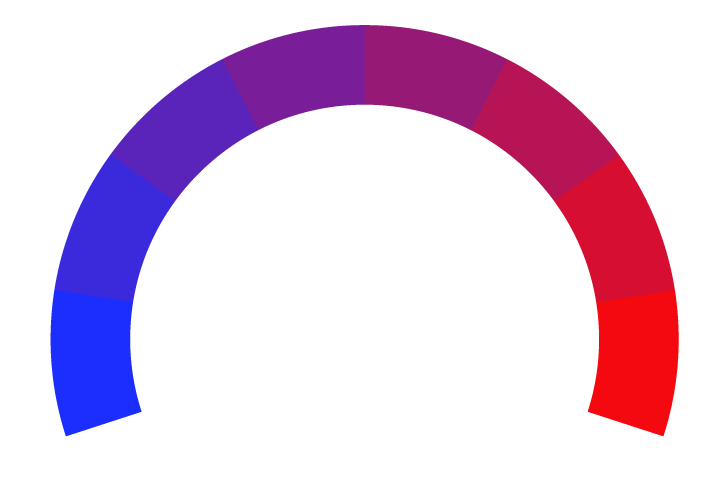
Contributing sentiments towards policy:
55% : We are the beneficiaries of decades of polar and glacier research strengthened by innovative technologies that allow us to monitor the ice sheets, study relevant phenomena in the laboratory and combine this knowledge in computational models to forecast sea-level rise.Technologies we can bring to bear include satellite-based radar, solar-powered drones, robot submarines, lab-based “artificial glaciers” and advanced computing technologies, including artificial intelligence.What might be possible in the future to prevent sea-level rise?54% : It will take years of research and development to understand if and how we might stabilize ice sheets.
52% : Glaciers, which flow like rivers of ice over a bed of rock and sediment, can naturally freeze themselves to their beds under the right conditions, as the Kamb ice stream in west Antarctica did about 200 years ago.
48% : Like enormous ice cubes dumped into a glass of water, collapsing glaciers can raise sea levels precipitously.Most concerning is the Florida-sized Thwaites glacier in west Antarctica, called the “doomsday glacier” because it is the keystone holding back the much larger west Antarctic ice sheet.
46% : Despite this looming crisis, the world still lacks specific, reliable forecasts for when and where the seas will rise – and we have invested almost nothing in understanding whether and how we can slow it down.Societies must continue to focus on reducing greenhouse gas emissions, but it’s increasingly clear that the world needs to do more: we need to predict the future of the world’s ice with precision, and to explore safe, science-backed methods to keep it from melting away.What does that look like?
45% : A growing group of scientists at universities and non-profits are testing a new approach, one that treats ice not as a distant, untouchable force, but as a system we can understand, anticipate and
45% : Notably, while we believe reducing carbon emissions is critical for climate resilience, even bringing emissions to preindustrial levels will not slow this collapse.This scenario is daunting, but we are not powerless.
40% : If, as satellite observations indicate, Thwaites continues to collapse, the west Antarctic ice sheet would go with it, raising global sea levels more than 6ft, displacing more than half a billion people, in our children’s lifetimes.
39% : scientists who have studied ice sheets and glaciers for years, we were resigned to documenting their demise.
*Our bias meter rating uses data science including sentiment analysis, machine learning and our proprietary algorithm for determining biases in news articles. Bias scores are on a scale of -100% to 100% with higher negative scores being more liberal and higher positive scores being more conservative, and 0% being neutral. The rating is an independent analysis and is not affiliated nor sponsored by the news source or any other organization.