








Zenonas Tziarras: How Syria's Kurds lost the political battle
- Bias Rating
- Reliability
15% ReliableLimited
- Policy Leaning
-90% Very Left
- Politician Portrayal
N/A
Continue For Free
Create your free account to see the in-depth bias analytics and more.
By creating an account, you agree to our Terms and Privacy Policy, and subscribe to email updates.
Log In
Log in to your account to see the in-depth bias analytics and more.
Bias Score Analysis
The A.I. bias rating includes policy and politician portrayal leanings based on the author’s tone found in the article using machine learning. Bias scores are on a scale of -100% to 100% with higher negative scores being more liberal and higher positive scores being more conservative, and 0% being neutral.
Sentiments
-10% Negative
- Liberal
- Conservative
| Sentence | Sentiment | Bias |
|---|---|---|
Unlock this feature by upgrading to the Pro plan. | ||
Reliability Score Analysis
Policy Leaning Analysis
Politician Portrayal Analysis
Bias Meter
Extremely
Liberal
Very
Liberal
Moderately
Liberal
Somewhat Liberal
Center
Somewhat Conservative
Moderately
Conservative
Very
Conservative
Extremely
Conservative
-100%
Liberal
100%
Conservative
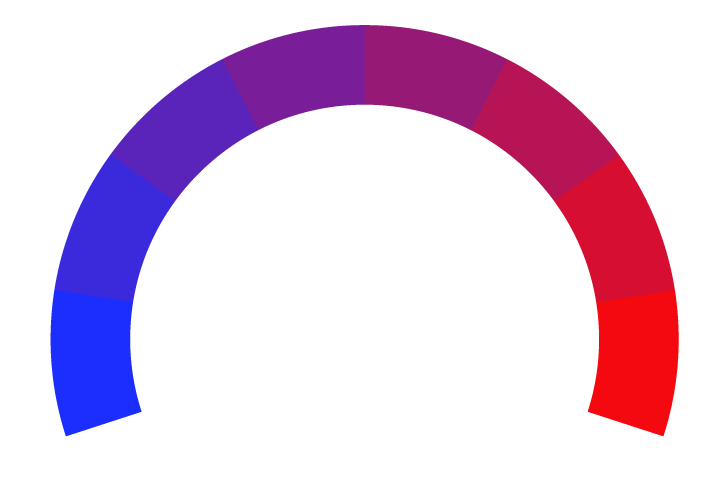
Contributing sentiments towards policy:
53% : On the one hand, it seeks to maintain good relations with the US, which supports the regime; on the other, it has strategic ties with Israel, which is in competition with it.52% : How, and to what extent, is Turkey involved in the recent clashes? Paradoxically, Turkey's involvement has so far been limited to political-diplomatic engagement and drone support at various stages of operations.
51% : In any case, while developments in eastern Syria -- which favour Ankara -- fuel existing Turkish-Israeli rivalry, it is clear that the US is making intensive efforts to normalise Syria-Israel and Israel-Turkey relations.
48% : Second, the sectarian decentralisation trends that emerged during the war, were reinforced by the involvement of external actors such as Turkey, Russia, Iran and Israel, and now obstruct the reunification of Syrian sovereignty.
45% : Instability in Syria is reshaping the balance between Turkey, Israel and the United States, with Ankara indirectly supporting developments in favour of Damascus and Israel exploiting gaps in state sovereignty.
45% : Does Israel exploit the absence of Syrian state sovereignty, and if so, how? Notably, on 6 January a meeting between Israel and Syria took place in Paris under US auspices.
45% : Israel denies this, yet it has shown no reaction to events in eastern Syria, despite viewing the SDF as an allied force -- unlike its decisive intervention in southern Syria in support of the Druze community.
44% : Cyprus faces difficult choices How does Turkey's involvement affect Israel's security calculations in Syria?
42% : If these reports are accurate, questions arise about possible concessions Israel may have received from Damascus, potentially relating to southern Syria, the Golan Heights and beyond.
40% : Israel has exploited sovereignty vacuums by expanding its military presence in the Golan Heights, along the Lebanese border and inside Syria, supporting certain Druze armed groups against the new Syrian regime.
37% : And how does instability in Syria affect Cyprus? To the extent that developments destabilise Syria and intensify Turkey-Israel regional tensions, Cyprus continues to face difficult dilemmas.
29% : These developments also have indirect consequences for Cyprus, which is being forced to balance its relations with the US and Israel while simultaneously monitoring the risk of new refugee flows should Syria become further destabilised.
*Our bias meter rating uses data science including sentiment analysis, machine learning and our proprietary algorithm for determining biases in news articles. Bias scores are on a scale of -100% to 100% with higher negative scores being more liberal and higher positive scores being more conservative, and 0% being neutral. The rating is an independent analysis and is not affiliated nor sponsored by the news source or any other organization.