








 The Daily Star Article Rating
The EU-India trade deal: What implications for Bangladesh
- Bias Rating
- Reliability
10% ReliableLimited
- Policy Leaning
-58% Medium Left
- Politician Portrayal
N/A
Continue For Free
Create your free account to see the in-depth bias analytics and more.
By creating an account, you agree to our Terms and Privacy Policy, and subscribe to email updates.
Log In
Log in to your account to see the in-depth bias analytics and more.
Bias Score Analysis
The A.I. bias rating includes policy and politician portrayal leanings based on the author’s tone found in the article using machine learning. Bias scores are on a scale of -100% to 100% with higher negative scores being more liberal and higher positive scores being more conservative, and 0% being neutral.
Sentiments
44% Positive
- Liberal
- Conservative
| Sentence | Sentiment | Bias |
|---|---|---|
Unlock this feature by upgrading to the Pro plan. | ||
Reliability Score Analysis
Policy Leaning Analysis
Politician Portrayal Analysis
Bias Meter
Extremely
Liberal
Very
Liberal
Moderately
Liberal
Somewhat Liberal
Center
Somewhat Conservative
Moderately
Conservative
Very
Conservative
Extremely
Conservative
-100%
Liberal
100%
Conservative
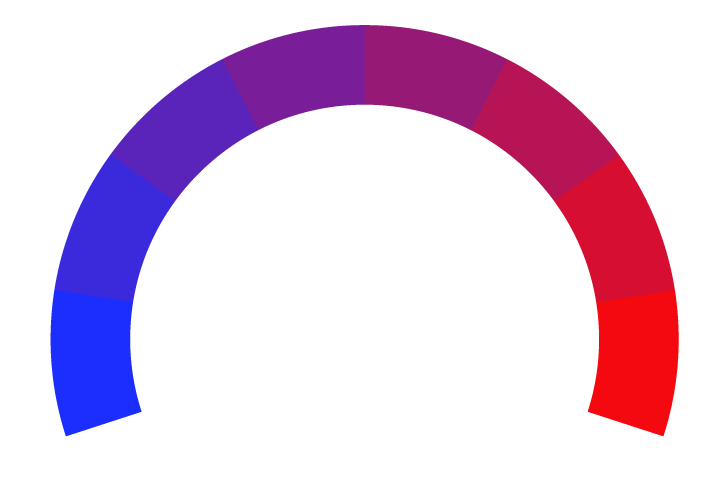
Contributing sentiments towards policy:
67% : By leveraging LDC duty-free access while competitors such as India and Vietnam continued to face tariffs, Bangladesh was able to expand its share of the EU apparel market at a remarkable pace.61% : EU FTAs typically require double transformation for garments, a challenge for countries with weak backward linkages.
61% : The Indian government has set an ambitious target of $100 billion in textile and apparel exports by 2030, from currently around $40 billion, and backed it with a layered policy framework that combines output-linked subsidies, export rebate schemes that refund embedded taxes, input-side support, and extensive infrastructure and logistics investments.
60% : Bangladesh's rise was driven not only by tariff advantages but also by favourable EU rules of origin for LDCs, notably the single transformation rule.
59% : The EU-India FTA facilitates this shift, intensifying competition in Europe, with Bangladesh among those most exposed.
58% : In 2024, India exported about $80 billion worth of goods to the EU from a diversified basket dominated by engineering goods, chemicals, minerals, pharmaceuticals, and agricultural products, with textiles and apparel accounting for less than 10 percent.
55% : The agreement also needs to be viewed alongside the EU's tightening regulatory regime under instruments such as CBAM and the Corporate Sustainability Due Diligence Directive.
54% : The EU-India FTA dismantles this constraint almost entirely.
54% : Beyond tariffs: the new sources of advantage for India It is so easy to overlook the competitive implications of the EU-India agreement that extend well beyond the headline issue of tariffs and rules of origin.
54% : The first foremost priority is to address the uncertainty surrounding post-graduation market access to the EU.
52% : Dubbed the "mother of all trade deals," the EU-India free trade agreement, concluded after more than two decades of negotiation, appears to be the most consequential for Bangladesh among recent trade deals involving other countries.
52% : This shift is particularly striking given that, in 2005, Bangladesh and India held almost identical market shares in the EU, but over the next two decades Bangladesh would be able to increase its share by three-fold as against India's declining to 5 percent.
52% : During the same period, Vietnam's share rose from 1 percent to converge with India's before being further buoyed by the EU-Vietnam FTA that entered into force in 2020.
52% : The structure of exports to the EU differs sharply between India and Bangladesh.
49% : Despite being identified in the Smooth Transition Strategy, progress on engagement with the EU remains limited.
48% : Therefore, in a twist of irony, the very advantages of preferential margins that once propelled Bangladesh's rapid ascent in the EU market are now eroding, just as key competitors secure permanent duty-free access through free trade agreements.
47% : With Bangladesh set to graduate from LDC status in November 2026, and its preferential access to the EU market expected to erode after a three-year transition period, the timing of this deal could not be more unsettling.
47% : Partial equilibrium estimates, when the impact is assessed separately for individual products at the HS 6-digit level, suggest that, with Bangladesh's continuing LDC preferences, its garment exports would decline by $190 million due to EU-India FTA, with marginal losses in textiles and footwear.
47% : India's institutional readiness and regulatory cooperation with the EU may ease adaptation, whereas for Bangladesh rising compliance costs and weaker preparedness risk translating into higher effective trade barriers.
45% : As China's share of EU apparel imports declined from 45 percent in 2010 to 28 percent in 2025, Bangladesh's share rose sharply from about 7 percent to 21 percent.
42% : A twist of irony: from advantage to disadvantage For decades, Indian exports of garments, textiles, leather, and footwear entered the EU facing substantial tariffs.
24% : Moreover, given the safeguard provisions embedded in the EU's Generalised System of Preferences, there is a genuine risk that even if Bangladesh qualifies for GSP+ after graduation, its garment exports could still face full MFN tariffs, fundamentally altering the competitive balance in the EU market.
*Our bias meter rating uses data science including sentiment analysis, machine learning and our proprietary algorithm for determining biases in news articles. Bias scores are on a scale of -100% to 100% with higher negative scores being more liberal and higher positive scores being more conservative, and 0% being neutral. The rating is an independent analysis and is not affiliated nor sponsored by the news source or any other organization.