








 UKAuthority Article Rating
EU AI Act simplifications, what the UK public sector must consider | UKAuthority
- Bias Rating
-66% Medium Left
- Reliability
15% ReliableLimited
- Policy Leaning
-66% Medium Left
- Politician Portrayal
N/A
Continue For Free
Create your free account to see the in-depth bias analytics and more.
By creating an account, you agree to our Terms and Privacy Policy, and subscribe to email updates.
Log In
Log in to your account to see the in-depth bias analytics and more.
The A.I. bias rating includes policy and politician portrayal leanings based on the author’s tone found in the article using machine learning. Bias scores are on a scale of -100% to 100% with higher negative scores being more liberal and higher positive scores being more conservative, and 0% being neutral.
Sentiments
23% Positive
- Liberal
- Conservative
| Sentence | Sentiment | Bias |
|---|---|---|
Unlock this feature by upgrading to the Pro plan. | ||
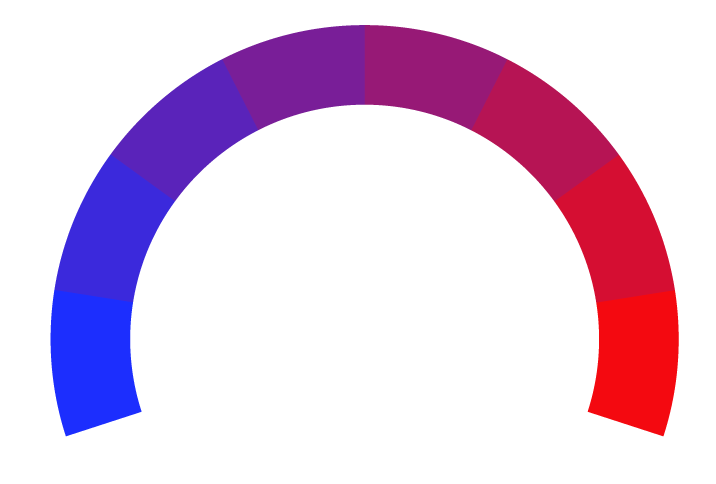
Bias Meter
Extremely
Liberal
Very
Liberal
Moderately
Liberal
Somewhat Liberal
Center
Somewhat Conservative
Moderately
Conservative
Very
Conservative
Extremely
Conservative
-100%
Liberal
100%
Conservative
Contributing sentiments towards policy:
61% : The Department for Science, Innovation and Technology put out a briefing paper with the details public sector technology leaders will need to be aware of. UK public sector organisations that work with EU-based suppliers or participate in cross-border projects may need to align with the EU's evolving AI standards.60% : Public sector bodies may look to the EU's approach for best practices in training staff to use AI responsibly.
60% : For example, the UK's recent push for AI skills development could be shaped by lessons learned from the EU's implementation.
58% : For instance, if EU standards for bias detection in AI systems become more flexible, UK public sector organisations might adopt similar approaches to ensure interoperability with European partners.
56% : For example, if UK local authorities or NHS trusts procure AI tools from EU vendors, those tools will need to comply with the updated AI Act requirements.
56% : The EU's plan to expand AI regulatory sandboxes could set a precedent for the UK.
55% : The Scottish Government's work on digital identity such as the ScotAccount or England's NHS AI Lab could benefit from observing how the EU's sandboxes evolve, potentially informing UK-specific pilots.
54% : Simplified compliance processes for SMEs and small mid-caps (SMCs) in the EU could make it easier for UK public bodies to engage with smaller European suppliers, potentially increasing competition and innovation in public sector procurement.
53% : While most of the AI Act does not apply in Northern Ireland, certain provisions related to product safety and market regulations, such as those for agricultural vehicles or medical devices are automatically in scope under the Windsor Framework.
49% : For public sector leaders, the key issue is the need to stay informed about the EU's evolving AI framework, even if it does not directly apply.
45% : The EU's shift from enforcing unspecified AI literacy obligations to fostering broader AI education aligns with the UK's own focus on upskilling.
32% : The European Commission's proposed amendments to the EU AI Act, aimed at simplifying compliance for high-risk AI systems, could have indirect but notable implications for the UK public sector, even though the regulations do not directly apply in the UK.
*Our bias meter rating uses data science including sentiment analysis, machine learning and our proprietary algorithm for determining biases in news articles. Bias scores are on a scale of -100% to 100% with higher negative scores being more liberal and higher positive scores being more conservative, and 0% being neutral. The rating is an independent analysis and is not affiliated nor sponsored by the news source or any other organization.