








 Punch Newspapers Article Rating
Stop 'unlawful' mass phone‑tapping rules, SERAP urges Tinubu
- Bias Rating
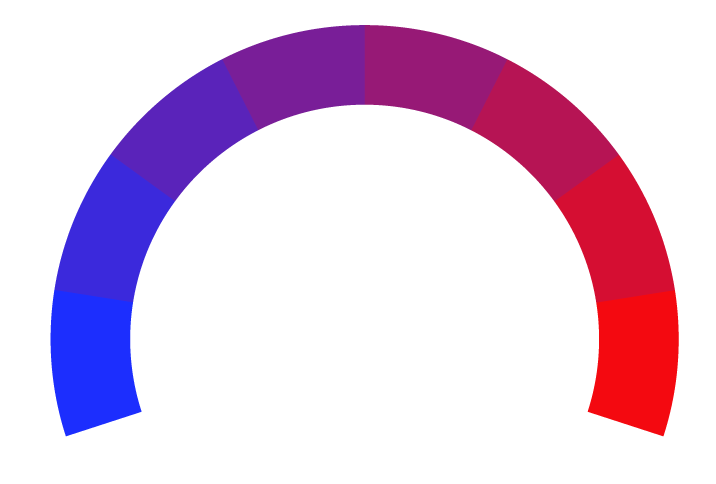
10% Center
- Reliability
40% ReliableAverage
- Policy Leaning
10% Center
- Politician Portrayal
N/A
Continue For Free
Create your free account to see the in-depth bias analytics and more.
By creating an account, you agree to our Terms and Privacy Policy, and subscribe to email updates.
Log In
Log in to your account to see the in-depth bias analytics and more.
The A.I. bias rating includes policy and politician portrayal leanings based on the author’s tone found in the article using machine learning. Bias scores are on a scale of -100% to 100% with higher negative scores being more liberal and higher positive scores being more conservative, and 0% being neutral.
Sentiments
12% Positive
- Liberal
- Conservative
| Sentence | Sentiment | Bias |
|---|---|---|
Unlock this feature by upgrading to the Pro plan. | ||
Bias Meter
Extremely
Liberal
Very
Liberal
Moderately
Liberal
Somewhat Liberal
Center
Somewhat Conservative
Moderately
Conservative
Very
Conservative
Extremely
Conservative
-100%
Liberal
100%
Conservative
Contributing sentiments towards policy:
55% : The group stated that the Nigerian Communications Commission, while exercising its powers under Section 70 of the Nigerian Communications Act, 2003, adopted the Lawful Interception of Communications Regulations, 2019.53% : It said Regulation 4 grants broad discretionary interception powers to the National Security Adviser and the State Security Services, with minimal clarity regarding the scope or limits of such discretion.
51% : The Socio-Economic Rights and Accountability Project has urged President Bola Tinubu to direct the Minister of Communications, Innovation and Digital Economy, Bosun Tijani, to immediately withdraw the Lawful Interception of Communications Regulations, 2019, describing them as "unconstitutional, unlawful and inconsistent with Nigeria's international obligations.
51% : According to SERAP, Regulation 23 expands the category of "authorised agencies" to include bodies such as the Nigeria Police Force, National Intelligence Agency, Economic and Financial Crimes Commission, National Drug Law Enforcement Agency, and any other agency the Commission may designate.
50% : Citing the Office of the United Nations High Commissioner for Human Rights, the organisation noted that "mass surveillance programmes based on indiscriminate and blanket collection of personal data are arbitrary per se and can never satisfy the requirements of legality, necessity, and proportionality.
48% : SERAP also raised concerns over the retention and archiving of intercepted communications for up to three years under Regulation 6, the disclosure of encryption keys under Regulation 9, and emergency interception powers under Regulation 12, which allow warrantless surveillance on broad grounds including "national security" and "organised crime.
46% : " SERAP said the regulations grant "overly broad and vague powers to intercept communications on grounds such as 'national security,' 'economic wellbeing,' and 'public emergency,' without adequate judicial safeguards, independent oversight, transparency, or effective remedies." According to SERAP, the Regulations raise serious concerns, particularly as Nigeria approaches the 2027 general elections.
43% : They do that to our calls too, and we heard him saying they should arrest me." Blaming the LICR 2019 for the occurrence of such an incident, SERAP stated that "the Regulations establish a sweeping mass surveillance regime that violates Nigerians' constitutionally and internationally guaranteed human rights, including to privacy and freedom of expression.
40% : It further argued that Regulation 8 permits interception without a warrant in situations involving consent, threats to life, or actions in the "ordinary course of business," which it described as overly broad.
37% : Nigerians cannot reasonably know which authorities are empowered to intercept their communications, making the Regulations unpredictable and prone to arbitrary application and abuse," the organisation stated.
*Our bias meter rating uses data science including sentiment analysis, machine learning and our proprietary algorithm for determining biases in news articles. Bias scores are on a scale of -100% to 100% with higher negative scores being more liberal and higher positive scores being more conservative, and 0% being neutral. The rating is an independent analysis and is not affiliated nor sponsored by the news source or any other organization.