








 NY Times
Lebanon Endures Threats, Diplomacy and Whiplash as Others Decide Its Fate
- Bias Rating
-98% Very Left
- Reliability
30% ReliableAverage
- Policy Leaning
-100% Very Left
- Politician Portrayal
-57% Negative
Continue For Free
Create your free account to see the in-depth bias analytics and more.
By creating an account, you agree to our Terms and Privacy Policy, and subscribe to email updates.
Log In
Log in to your account to see the in-depth bias analytics and more.
The A.I. bias rating includes policy and politician portrayal leanings based on the author’s tone found in the article using machine learning. Bias scores are on a scale of -100% to 100% with higher negative scores being more liberal and higher positive scores being more conservative, and 0% being neutral.
Sentiments
-23% Negative
- Liberal
| Sentence | Sentiment | Bias |
|---|---|---|
Unlock this feature by upgrading to the Pro plan. | ||
Bias Meter
Extremely
Liberal
Very
Liberal
Moderately
Liberal
Somewhat Liberal
Center
Somewhat Conservative
Moderately
Conservative
Very
Conservative
Extremely
Conservative
-100%
Liberal
100%
Conservative
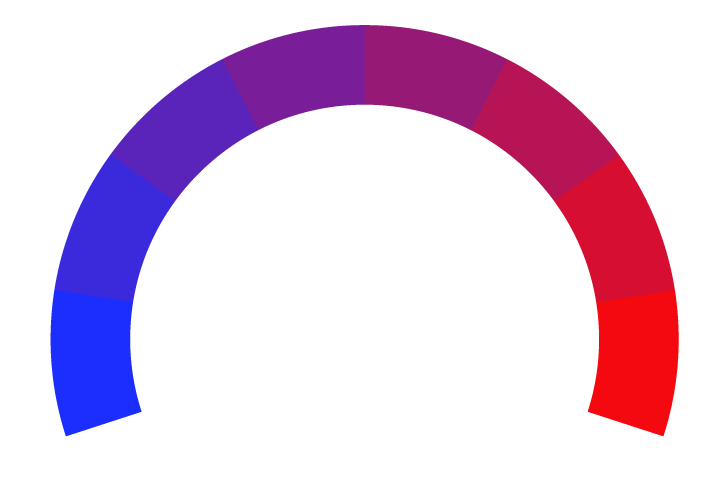
Contributing sentiments towards policy:
49% : Hezbollah signaled it was open to a new truce, as the cease-fire with Israel that took effect in April was unraveling.46% : In Nabatieh, a southern city for which Israel issued a new evacuation warning on Tuesday, most of the few people who remained there were sheltering in the main public hospital, residents said.
44% : But some were not convinced that Israel's promise not to target Beirut would hold.
41% : More than 3,200 Lebanese and at least 30 Israelis have been killed in the fighting between Hezbollah and Israel, according to the authorities in both countries.
40% : " Iran and Hezbollah's indirect appeals to Mr. Trump on Monday to push for a new cease-fire also highlighted a surprising reality that has emerged since the war broke out: A durable truce in Lebanon would benefit both the president and Hezbollah -- unlikely partners -- while his ally in Israel, Mr. Netanyahu, would stand to lose.
40% : Hezbollah could show that only it and its patron Iran -- and not the Lebanese state -- has the leverage to pressure Israel through Washington into halting the war.
40% : But Israel would emerge after months of fighting in Lebanon with little to show for it.
39% : Nowhere was that dynamic more evident than in Dahiya, the densely-packed Beirut suburb where thousands of residents caught in the cross hairs of Israel, the United States, Iran and Hezbollah made life-or-death decisions to stay or flee after Mr. Netanyahu issued his threat to attack.
36% : Mr. Netanyahu also backed away from his threat against Beirut but insisted Israel would continue fighting in southern Lebanon.
36% : By Tuesday morning, the situation in the country was largely back to the way it was only two days earlier: Israel was bombing the south of the country, Hezbollah was attacking Israeli forces in Lebanon, and the cease-fire was being largely ignored.
31% : The previous day began with Prime Minister Benjamin Netanyahu of Israel threatening to bomb Beirut's southern suburbs, sending thousands fleeing and putting the Lebanese capital on edge.
22% : President Trump intervened, announcing that Israel and Hezbollah, the Iran-backed militia based in Lebanon, had agreed to stop attacking each other and suggesting that a major assault on Beirut had been averted.
20% : The latest war broke out in March after Hezbollah began firing at Israel in solidarity with Iran, days after the United States and Israel attacked Tehran in late February.
*Our bias meter rating uses data science including sentiment analysis, machine learning and our proprietary algorithm for determining biases in news articles. Bias scores are on a scale of -100% to 100% with higher negative scores being more liberal and higher positive scores being more conservative, and 0% being neutral. The rating is an independent analysis and is not affiliated nor sponsored by the news source or any other organization.