








 US News World Report Article Rating
Britain's Economic Woes Fuel Discontent With Brexit a Decade After Historic Vote to Leave EU
- Bias Rating
-68% Medium Left
- Reliability
65% ReliableAverage
- Policy Leaning
-68% Medium Left
- Politician Portrayal
N/A
Continue For Free
Create your free account to see the in-depth bias analytics and more.
By creating an account, you agree to our Terms and Privacy Policy, and subscribe to email updates.
Log In
Log in to your account to see the in-depth bias analytics and more.
The A.I. bias rating includes policy and politician portrayal leanings based on the author’s tone found in the article using machine learning. Bias scores are on a scale of -100% to 100% with higher negative scores being more liberal and higher positive scores being more conservative, and 0% being neutral.
Sentiments
-12% Negative
- Liberal
- Conservative
| Sentence | Sentiment | Bias |
|---|---|---|
Unlock this feature by upgrading to the Pro plan. | ||
Bias Meter
Extremely
Liberal
Very
Liberal
Moderately
Liberal
Somewhat Liberal
Center
Somewhat Conservative
Moderately
Conservative
Very
Conservative
Extremely
Conservative
-100%
Liberal
100%
Conservative
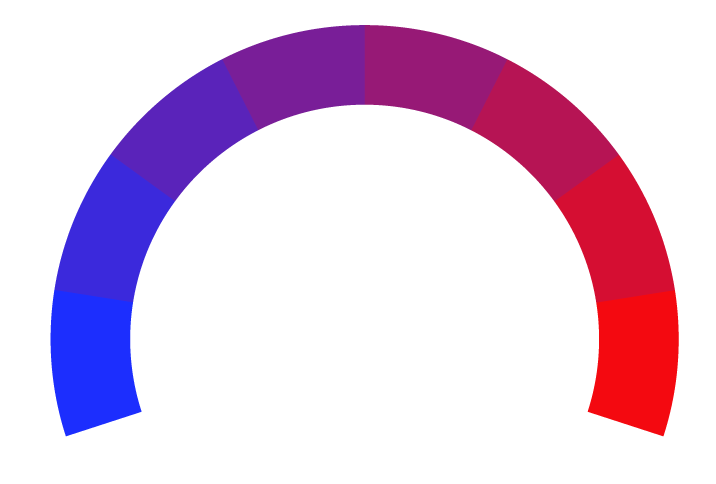
Contributing sentiments towards policy:
64% : Brexit supporters trumpeted the freedom to negotiate its own trade agreements as one of the primary benefits of leaving the EU, and Britain has since signed dozens of deals with countries ranging from Australia to India to the United States.61% : A decade ago, backers promised that Brexit would be the key to a bright new future where, freed from the edicts of EU bureaucrats, Britain would regain control of its laws and its borders and the economy would boom.
58% : Brexit hasn't delivered on its promise because politicians, large corporations and other entrenched interests worked to thwart the will of the people, Boyd said.
57% : But EU countries still account for 41% of Britain's exports and half its imports, according to the latest government figures.
56% : He continues to believe that Britain has a brighter future outside the EU.
55% : But the reality failed to live up to the hype as Britain struggled to adjust to life without unfettered access to the 27-nation free trade bloc and its market of 450 million people.
54% : And they're furious because the industry backed Brexit after assurances it would lead to more visas for South Asian cooks, something that hasn't happened.
52% : That pipeline dried up after Brexit ended the free movement of labor, one of the bloc's founding principals.
50% : " Boyd, the managing director of REIDSteel, which employs about 130 people at a plant in Christchurch, England, still stands behind his decision to support Brexit, but blames lackluster results on politicians who weren't committed to delivering.
50% : This resulted in a Brexit deal that kept Britain too closely tied to the EU and unable to realize its potential as an entrepreneurial nation filled with creative, hardworking people, he said.
47% : The business leaders were on different sides of the debate when Britain voted to leave the European Union in 2016.
47% : But Boyd said the most important survey is still the one that took place on June 23, 2016, when 51.9% of those who cast ballots -- or 17.4 million people -- voted to leave EU.
46% : Brexit has reduced Britain's gross domestic product, a broad measure of economic output, by 6% to 8%, investment by 12% to 13% and productivity by 3% to 4%, the researchers concluded.
45% : By most measures, the British economy today is weaker than it would have been without Brexit, according to a recent report published by the National Bureau of Economic Research in Cambridge, Massachusetts.
44% : Polls suggest frustration with Brexit is growing Starmer's move comes as a survey by the Ipsos polling firm, the Policy Institute at King's College London and the think tank UK in a Changing Europe suggests that frustration with Brexit is growing.
42% : Economic growth is anemic, taxes are high, public services are creaking and successive governments have been unable to stem the flow of migrants who wash up on the English Channel coast in inflatable boats.
42% : Economists see fundamental issues The Brexit vote quickly increased costs for businesses as they prepared for an uncertain future during years of negotiation over the U.K.'s new relationship with the EU.
42% : During more than 50 years as a member of the EU and its predecessors, many British businesses also came to rely on Europe as a source of cheap labor, especially after the bloc's eastward expansion in 2004.
41% : In an effort to mitigate some of the problems caused by Brexit, Prime Minister Keir Starmer has begun talks with the EU about rebuilding a closer relationship as he seeks to energize the country's stagnant economy.
40% : Carmakers had many challenges Britain's carmakers were early and outspoken opponents of Brexit, arguing that increased red tape surrounding shipments of parts and finished vehicles would damage an industry built on a network of interlinked factories in multiple European countries.
38% : As a result, the industry is hoping that international trade deals will help boost demand for its products.
34% : The survey of 2,245 Britons aged 18 and older carried out in May, found that 48% said Brexit was going worse than they expected, up from 28% in March 2021.
31% : But 10 years later they are both frustrated by Brexit.
*Our bias meter rating uses data science including sentiment analysis, machine learning and our proprietary algorithm for determining biases in news articles. Bias scores are on a scale of -100% to 100% with higher negative scores being more liberal and higher positive scores being more conservative, and 0% being neutral. The rating is an independent analysis and is not affiliated nor sponsored by the news source or any other organization.