








 The Times of India Article Rating
What changed? The 48 hours that transformed Centre's approach to CJP's NEET protest
- Bias Rating
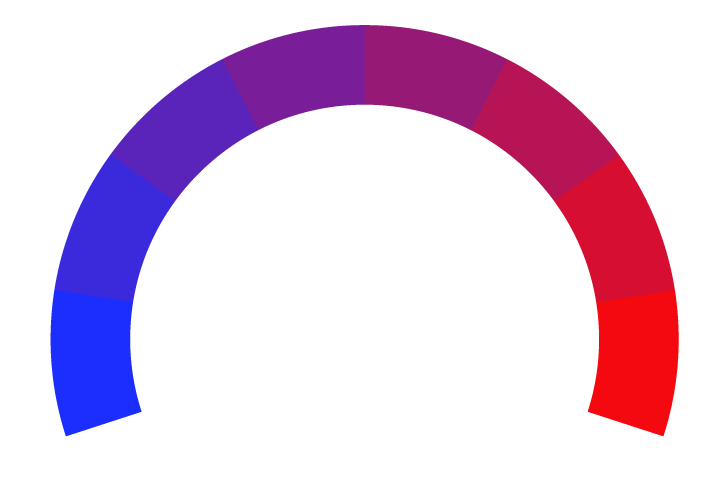
2% Center
- Reliability
65% ReliableAverage
- Policy Leaning
2% Center
- Politician Portrayal
N/A
Continue For Free
Create your free account to see the in-depth bias analytics and more.
By creating an account, you agree to our Terms and Privacy Policy, and subscribe to email updates.
Log In
Log in to your account to see the in-depth bias analytics and more.
The A.I. bias rating includes policy and politician portrayal leanings based on the author’s tone found in the article using machine learning. Bias scores are on a scale of -100% to 100% with higher negative scores being more liberal and higher positive scores being more conservative, and 0% being neutral.
Sentiments
22% Positive
- Conservative
| Sentence | Sentiment | Bias |
|---|---|---|
Unlock this feature by upgrading to the Pro plan. | ||
Bias Meter
Extremely
Liberal
Very
Liberal
Moderately
Liberal
Somewhat Liberal
Center
Somewhat Conservative
Moderately
Conservative
Very
Conservative
Extremely
Conservative
-100%
Liberal
100%
Conservative
Contributing sentiments towards policy:
49% : A series of announcements by the Centre over the last two days has marked a significant shift in the government's handling of the Cockroach Janata Party (CJP)-led agitation over the NEET paper leak.These range from proposed fast-track courts for paper leak cases to political outreach to protesters and a proposed legislation.What began as a movement that the ruling establishment had largely dismissed has, over the past 48 hours, evolved into a calibrated political response marked by prolonged negotiations, policy assurances and greater flexibility in engaging with the protesters.On Thursday, Prime Minister Narendra Modi announced on X that the government had decided to set up fast-track courts to ensure swift and stringent punishment for those involved in paper leaks.He said, "Nothing is more important than the welfare and future of our youth."Even as the announcement was made, senior ministers continued negotiations with Sonam Wangchuk, whose prolonged hunger strike had become the emotional centrepiece of the agitation and whose appeal among young people had grown well beyond the immediate issue of the paper leak.The discussions culminated late Thursday night with Wangchuk ending his fast in the presence of Union ministers JP Nadda and Jitendra Singh.Announcing the breakthrough, Nadda said the government was "positive on not registering cases against those protesting peacefully at Jantar Mantar in Delhi and those who participated in the march to Parliament on July 20, 2026.""Besides, the government is also positively considering suitable compensation for the suicide victims of recent NEET paper leaks," he added.The prolonged engagement with Wangchuk suggested that the Centre viewed him as someone whose moral authority and broad appeal among young protesters, stemming from his non-partisan image, could help ease tensions.Close to midnight, at 11.52pm, Modi released a video statement on X and Instagram announcing that a Bill providing for stringent action against those involved in paper leaks would be introduced in Parliament next week.On Friday, the Union Cabinet approved the proposed legislation.The Centre also showed greater flexibility by agreeing to the CJP's demand that talks be held at a neutral venue instead of a minister's residence.The meeting took place on Friday at the Constitution Club of India, with CJP spokespersons Saurav Das and Ashutosh Ranka representing the organisation, while Nadda and Jitendra Singh led the government's side.The developments marked a sharp contrast to the Centre's initial response to the agitation, which ranged from dismissive remarks by BJP leaders to limited political engagement even after the movement gathered momentum.On May 23, BJP Kerala president Rajeev Chandrasekhar, a week after the CJP made its online debut as a satirical campaign, posted on X that the "#CockroachParty gambit is yet another classic cross-border 'influence operation', targeting India and PM @narendramodigovt -- designed by vested interests to destabilize India -- helped along by elements in our opposition."Two days later, on May 25, Haryana chief minister Nayab Singh*Our bias meter rating uses data science including sentiment analysis, machine learning and our proprietary algorithm for determining biases in news articles. Bias scores are on a scale of -100% to 100% with higher negative scores being more liberal and higher positive scores being more conservative, and 0% being neutral. The rating is an independent analysis and is not affiliated nor sponsored by the news source or any other organization.