








 Countercurrents Article Rating
The Mecca Pact: The Unfinished Asabiyyah of a World in Search of Power
- Bias Rating
-98% Very Left
- Reliability
20% ReliableLimited
- Policy Leaning
-98% Very Left
- Politician Portrayal
N/A
Continue For Free
Create your free account to see the in-depth bias analytics and more.
By creating an account, you agree to our Terms and Privacy Policy, and subscribe to email updates.
Log In
Log in to your account to see the in-depth bias analytics and more.
The A.I. bias rating includes policy and politician portrayal leanings based on the author’s tone found in the article using machine learning. Bias scores are on a scale of -100% to 100% with higher negative scores being more liberal and higher positive scores being more conservative, and 0% being neutral.
Sentiments
12% Positive
- Liberal
- Conservative
| Sentence | Sentiment | Bias |
|---|---|---|
Unlock this feature by upgrading to the Pro plan. | ||
Bias Meter
Extremely
Liberal
Very
Liberal
Moderately
Liberal
Somewhat Liberal
Center
Somewhat Conservative
Moderately
Conservative
Very
Conservative
Extremely
Conservative
-100%
Liberal
100%
Conservative
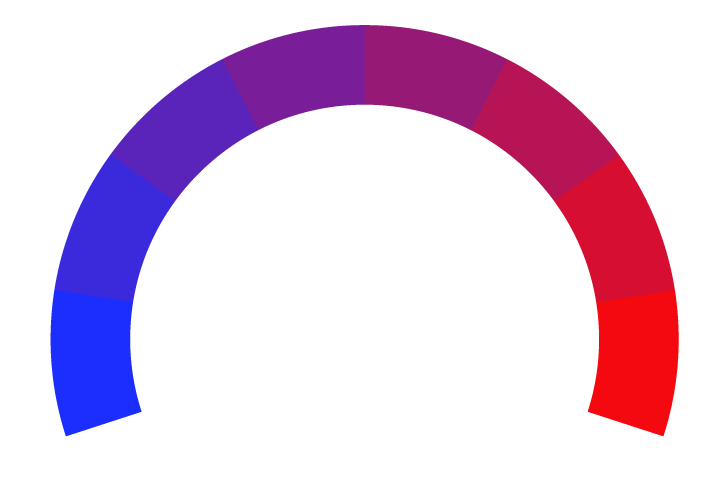
Contributing sentiments towards policy:
55% : The day before the signing, Prime Minister Narendra Modi spoke by phone with Benjamin Netanyahu to discuss strengthening the India-Israel strategic partnership -- a coincidence of timing that acquired real weight in hindsight.54% : The UAE cultivates ties with Western powers, Israel, China, and Russia without converting any single relationship into absolute loyalty.
49% : India has become Israel's leading arms customer; Israeli-made drones acquired by the Indian military were used against Pakistan during the aerial confrontation of May 2025.
49% : Sources: IRIS, Al Jazeera, The Times of Israel, The Jerusalem Post, RT, Middle East Eye, Wikipedia (Mecca Joint Defence Agreement, EN and FR editions), Politics Today, Türkiye Today, Reuters (via NBC News and AOL/Analysis), Forbes, Hudson Institute, Atlasinfo, L'Économiste Maghrébin (including analysis by Ezzeddine Zayani), Oumma.com, JForum, Réseau International, Le Diplomate, CNEWS, RTS, Zone Militaire/Opex360, Tawassoul.
47% : The Muslim world is not a geopolitical bloc waiting for its NATO; it remains divided by national interests, competing ambitions, historical memory, and starkly different relationships with Iran, Israel, Washington, Beijing, and Moscow.
43% : Riyadh's incorporation into an alternative security architecture alongside Ankara and Islamabad inevitably complicates that calculus -- not because Saudi Arabia has chosen war with Israel, it has not, but because Riyadh is demonstrating that its future security can be pursued along several strategic tracks at once.
43% : Rumours of a bilateral India-Israel defence pact aimed at counterbalancing the Saudi-Turkish-Pakistani axis circulated before being denied by New Delhi's Ministry of External Affairs -- but the fact that they were taken seriously in both Islamabad and Jerusalem confirms that the Gulf and the Indian subcontinent can no longer be analysed as separate strategic systems.
43% : Israel looks toward India.
41% : Emirati researcher Huda Albadi goes further, calling it a "paper tiger" -- a mechanism that, by redirecting a share of regional anger toward Israel rather than toward Iran, which strikes Saudi Arabia almost daily, reflects a form of strategic self-delusion.
40% : A powerful regional architecture would not need to declare war on Israel to fundamentally alter its calculations; its importance would lie precisely in making unilateral military action more expensive and regional escalation less consequence-free.
37% : Foreign Minister Araghchi went further, calling on the Muslim world to unite against "malicious external actors" -- a formulation that shifts the target toward the West and Israel rather than toward the pact itself, suggesting Tehran prefers to bend the narrative to its advantage rather than confront it head-on.
36% : Nor whether it alarms Israel.
35% : That critique deserves to be taken seriously rather than cited for form's sake: if the pact fails to produce credible deterrence against Tehran -- its ostensible first purpose -- while simultaneously alarming Israel, it will have added a line of tension without closing any.
33% : Israel's Dilemma The Mecca Pact does not automatically create an anti-Israeli military coalition.
30% : Israel's minister for diaspora affairs called the pact "very dangerous and concerning," describing it as "very, very bad for Israel," and called for deepening ties with the UAE, Greece, Cyprus, and the newly recognised Somaliland.
*Our bias meter rating uses data science including sentiment analysis, machine learning and our proprietary algorithm for determining biases in news articles. Bias scores are on a scale of -100% to 100% with higher negative scores being more liberal and higher positive scores being more conservative, and 0% being neutral. The rating is an independent analysis and is not affiliated nor sponsored by the news source or any other organization.