








 News18
BRICS Backs Iran's Case, Targets US Sanctions, Calls Out Israel: Has India's Position Changed?
- Bias Rating
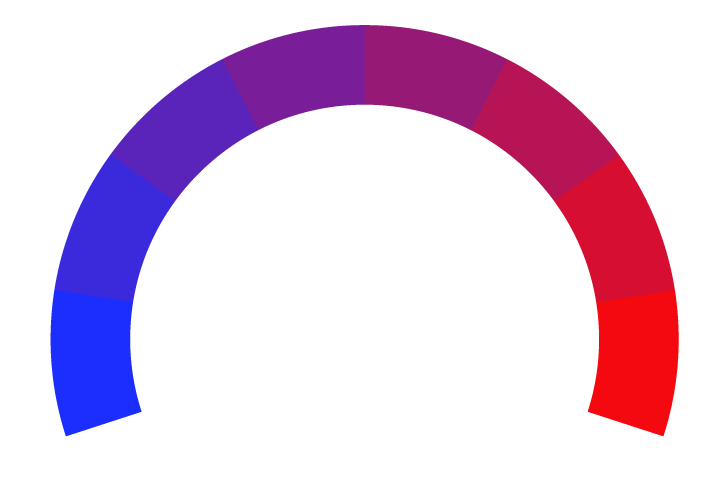
-10% Center
- Reliability
50% ReliableAverage
- Policy Leaning
-10% Center
- Politician Portrayal
-70% Negative
Continue For Free
Create your free account to see the in-depth bias analytics and more.
By creating an account, you agree to our Terms and Privacy Policy, and subscribe to email updates.
Log In
Log in to your account to see the in-depth bias analytics and more.
The A.I. bias rating includes policy and politician portrayal leanings based on the author’s tone found in the article using machine learning. Bias scores are on a scale of -100% to 100% with higher negative scores being more liberal and higher positive scores being more conservative, and 0% being neutral.
Sentiments
3% Positive
- Liberal
- Conservative
| Sentence | Sentiment | Bias |
|---|---|---|
Unlock this feature by upgrading to the Pro plan. | ||
Bias Meter
Extremely
Liberal
Very
Liberal
Moderately
Liberal
Somewhat Liberal
Center
Somewhat Conservative
Moderately
Conservative
Very
Conservative
Extremely
Conservative
-100%
Liberal
100%
Conservative
Contributing sentiments towards policy:
56% : It continues to engage both Russia and Ukraine, maintains important ties with the US and Israel, and has kept channels open with Iran.53% : Israel, However, Is Called Out Directly The declaration is far more explicit when it comes to Israel.
51% : "We call on Israel to respect the terms agreed with the Lebanese government and to withdraw its occupying forces from all of the Lebanese territories, in which they remain.
51% : India has also continued to advocate dialogue and diplomacy in West Asia while supporting a two-state solution on Palestine and maintaining close ties with Israel.
47% : Iran had also been critical of BRICS for not issuing a statement against the US and Israel over their airstrikes and was seeking support from the grouping.
44% : " UN Security Council Resolution 1701, adopted following the 2006 Israel-Hezbollah war, called for an Israeli withdrawal and the deployment of Lebanese troops and UN peacekeepers in southern Lebanon.
42% : The New Delhi Declaration leaves the US and Iran unnamed in key passages, while explicitly naming Israel over Lebanon and Gaza.
41% : Israel, however, is explicitly named and asked to withdraw its forces from Lebanese territory.
40% : It also reaffirmed opposition to unilateral coercive measures "contrary to international law and the Charter of the United Nations, including non-UN Security Council authorised sanctions".
40% : The passage does not name Iran, the US or Israel.
36% : It also referred to proceedings brought by South Africa against Israel at the International Court of Justice and noted Israel's "legal obligation to ensure the provision of humanitarian aid in Gaza.
36% : It then directly called on Israel to withdraw its forces.
*Our bias meter rating uses data science including sentiment analysis, machine learning and our proprietary algorithm for determining biases in news articles. Bias scores are on a scale of -100% to 100% with higher negative scores being more liberal and higher positive scores being more conservative, and 0% being neutral. The rating is an independent analysis and is not affiliated nor sponsored by the news source or any other organization.