








Clashes with Kurdish and Baluch Armed Groups, How Iran is Keeping its Economy Running Amid Blockade and Diplomacy Under Threat of War
- Bias Rating
-98% Very Left
- Reliability
20% ReliableLimited
- Policy Leaning
-98% Very Left
- Politician Portrayal
-49% Negative
Continue For Free
Create your free account to see the in-depth bias analytics and more.
By creating an account, you agree to our Terms and Privacy Policy, and subscribe to email updates.
Log In
Log in to your account to see the in-depth bias analytics and more.
The A.I. bias rating includes policy and politician portrayal leanings based on the author’s tone found in the article using machine learning. Bias scores are on a scale of -100% to 100% with higher negative scores being more liberal and higher positive scores being more conservative, and 0% being neutral.
Sentiments
-7% Negative
- Liberal
| Sentence | Sentiment | Bias |
|---|---|---|
Unlock this feature by upgrading to the Pro plan. | ||
Bias Meter
Extremely
Liberal
Very
Liberal
Moderately
Liberal
Somewhat Liberal
Center
Somewhat Conservative
Moderately
Conservative
Very
Conservative
Extremely
Conservative
-100%
Liberal
100%
Conservative
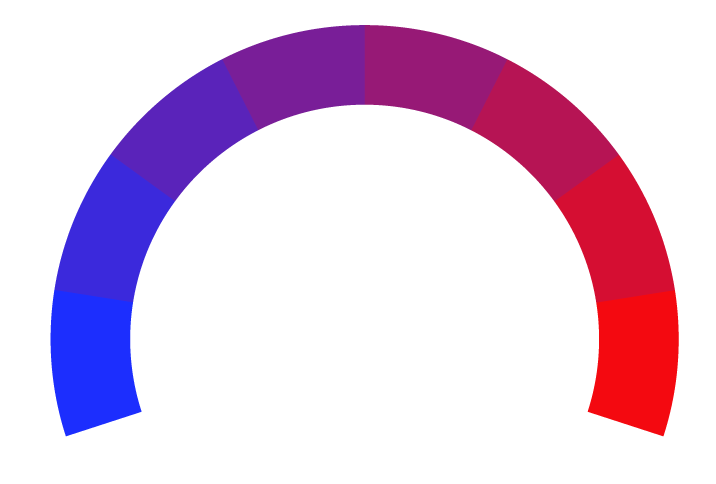
Contributing sentiments towards policy:
69% : Unlike most other parts of Iran, demonstrations in Zahedan continued almost every Friday for more than a year, reflecting both outrage over the killings and longstanding grievances concerning discrimination and political representation.63% : Iranian news agencies, including Mehr and Tasnim, described her work as focused on community outreach and social services.
63% : Sistan and Baluchestan has experienced severe poverty, unemployment, inadequate infrastructure and complaints of ethnic and religious discrimination.
61% : Officials attributed it to repairs, conservation measures, demand management, and the expansion of generating capacity, including renewable energy projects.
57% : Both regions have longstanding grievances involving economic marginalization, discrimination, political representation, and relations with security institutions.
53% : Unlike conventional government welfare programs, the foundations can mobilize resources from commercial holdings, their parent institutions, and banking partnerships.
46% : Although Kurdish and Baluch armed movements have different objectives, organizations, and historical grievances, their simultaneous activity creates an additional security challenge for Tehran during its ongoing war with the United States and Israel.
44% : Yet on June 26, Washington brokered a separate agreement between Israel and Lebanon that envisaged a gradual Israeli withdrawal linked to security conditions, including Hezbollah's disarmament.
44% : From Tehran's perspective, the Washington arrangement contradicted the Islamabad commitments by allowing Israel to maintain its military presence rather than requiring an immediate withdrawal.
39% : Israel's military calculations and unresolved regional conflicts add further uncertainty.
36% : The latest cases highlight continuing concerns over the use of capital punishment in political and security proceedings, particularly allegations of torture, coerced confessions, and inadequate access to legal representation.
33% : The broader danger is that Iran's war with the United States and Israel could increasingly intersect with longstanding domestic conflicts, creating a more fragmented and destructive security crisis whose greatest costs would fall on civilians.
*Our bias meter rating uses data science including sentiment analysis, machine learning and our proprietary algorithm for determining biases in news articles. Bias scores are on a scale of -100% to 100% with higher negative scores being more liberal and higher positive scores being more conservative, and 0% being neutral. The rating is an independent analysis and is not affiliated nor sponsored by the news source or any other organization.