








South Korea weighs education tax on crypto exchanges
- Bias Rating
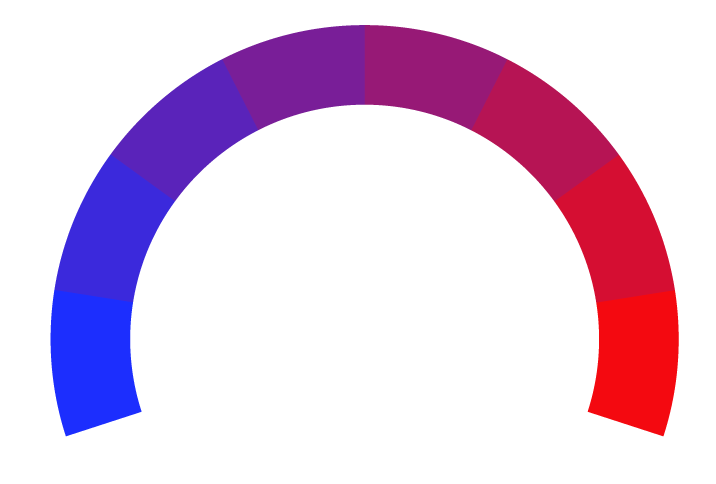
-56% Medium Left
- Reliability
25% ReliableLimited
- Policy Leaning
-56% Medium Left
- Politician Portrayal
N/A
Continue For Free
Create your free account to see the in-depth bias analytics and more.
By creating an account, you agree to our Terms and Privacy Policy, and subscribe to email updates.
Log In
Log in to your account to see the in-depth bias analytics and more.
The A.I. bias rating includes policy and politician portrayal leanings based on the author’s tone found in the article using machine learning. Bias scores are on a scale of -100% to 100% with higher negative scores being more liberal and higher positive scores being more conservative, and 0% being neutral.
Sentiments
23% Positive
- Liberal
- Conservative
| Sentence | Sentiment | Bias |
|---|---|---|
Unlock this feature by upgrading to the Pro plan. | ||
Bias Meter
Extremely
Liberal
Very
Liberal
Moderately
Liberal
Somewhat Liberal
Center
Somewhat Conservative
Moderately
Conservative
Very
Conservative
Extremely
Conservative
-100%
Liberal
100%
Conservative
Contributing sentiments towards policy:
64% : South Korea's National Tax Service has meanwhile continued preparing the existing investor tax framework, including guidelines covering cryptocurrency transactions that are expected to be published in November.59% : According to an October 26 report by Seoul Economic Daily, government officials recently raised the possibility during discussions with chief executives of domestic cryptocurrency exchanges, as authorities continue working on legislation that would bring digital asset businesses under a more comprehensive regulatory framework.
59% : Earlier in September, the FSC had targeted a November review by a National Assembly subcommittee as part of efforts to advance the country's next phase of digital asset regulation.
56% : However, this could change if the Digital Asset Basic Act recognizes crypto exchanges as financial businesses and the government updates the existing classification and tax rules.
56% : Based on the current education tax rates for financial institutions, the report estimated that Dunamu could have to pay around 10.2 billion won annually, while Bithumb could face a tax bill of approximately 3.2 billion won.
55% : The tax rate is 0.5% on taxable revenue of up to 1 trillion won and 1% on amounts above that level.
54% : Under the current schedule, qualifying annual cryptocurrency gains exceeding 2.5 million won would face a combined 22% tax beginning January 1, 2027.
53% : Currently, financial institutions in South Korea pay an education tax based on their operating revenue.
53% : Unlike corporate income tax, which is based on profits, the education tax is calculated using revenue.
52% : If the same rules are applied to crypto exchanges, they would have to pay the education tax on their taxable revenue, regardless of how much profit they make after covering their operating expenses.
52% : Digital Asset Basic Act remains under discussion Meanwhile, the education tax proposal has surfaced as South Korean regulators work toward completing the country's second-stage cryptocurrency legislation.
52% : The proposed education tax is separate from the investment gains tax, as it would apply to the operating revenue of cryptocurrency businesses instead of profits earned by individual investors.
51% : South Korea has begun considering a new education tax on cryptocurrency exchanges that could leave major operators such as Upbit and Bithumb paying billions of won annually if they are reclassified as financial businesses under the proposed Digital Asset Basic Act.
51% : The government is now considering whether crypto exchanges should pay the same education tax as banks, insurers, and securities firms if they are officially recognized as financial businesses.
47% : A senior government official told industry representatives that if crypto exchanges are classified as financial businesses, the government would need to consider whether they should pay the education tax.
47% : However, the estimates assume that crypto exchanges will be required to pay the education tax and that their trading fees will be exempt from value-added tax.
44% : Crypto exchanges could face taxes on operating revenue In South Korea, cryptocurrency trading and brokerage services are currently treated as information and communications businesses, so exchanges are exempt from the education tax that banks and other financial firms have to pay.
44% : This means financial companies still have to pay the tax even if they end up reporting a loss.
44% : However, the presidential office has backed another tax delay, with ruling-party lawmakers proposing to move implementation to 2029 amid concerns about incomplete preparations and difficulties tracking overseas transactions.
41% : South Korea faces separate debate over crypto gains tax The discussion over taxing cryptocurrency exchanges comes as South Korea is considering another postponement of its long-delayed tax on digital asset investment gains.
*Our bias meter rating uses data science including sentiment analysis, machine learning and our proprietary algorithm for determining biases in news articles. Bias scores are on a scale of -100% to 100% with higher negative scores being more liberal and higher positive scores being more conservative, and 0% being neutral. The rating is an independent analysis and is not affiliated nor sponsored by the news source or any other organization.