








 Inside Story Article Rating
Both worse and better * Michael Jacobs
- Bias Rating
-8% Center
- Reliability
60% ReliableAverage
- Policy Leaning
-8% Center
- Politician Portrayal
-55% Negative
Continue For Free
Create your free account to see the in-depth bias analytics and more.
By creating an account, you agree to our Terms and Privacy Policy, and subscribe to email updates.
Log In
Log in to your account to see the in-depth bias analytics and more.
The A.I. bias rating includes policy and politician portrayal leanings based on the author’s tone found in the article using machine learning. Bias scores are on a scale of -100% to 100% with higher negative scores being more liberal and higher positive scores being more conservative, and 0% being neutral.
Sentiments
11% Positive
- Liberal
- Conservative
| Sentence | Sentiment | Bias |
|---|---|---|
Unlock this feature by upgrading to the Pro plan. | ||
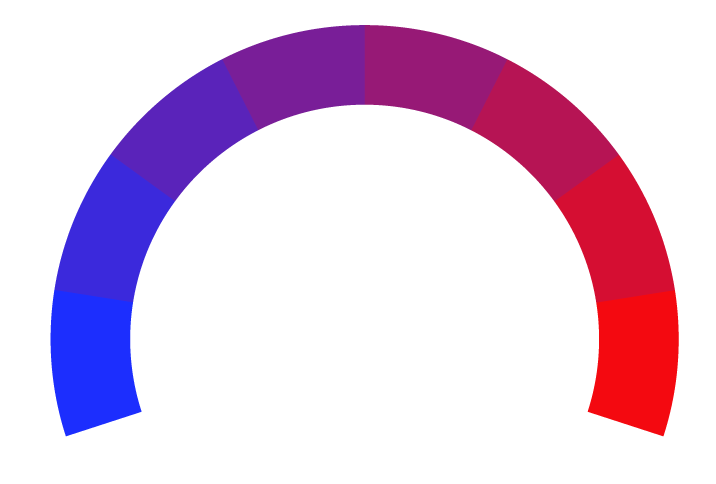
Bias Meter
Extremely
Liberal
Very
Liberal
Moderately
Liberal
Somewhat Liberal
Center
Somewhat Conservative
Moderately
Conservative
Very
Conservative
Extremely
Conservative
-100%
Liberal
100%
Conservative
Contributing sentiments towards policy:
75% : Over the past few years the world has embarked on a remarkable shift from using fossil fuels for heating and transport to using electricity, and from using fossil fuels to generate electricity to using renewables.65% : In September the UN Environment Programme gave such an "overshoot" trajectory its official sanction as the best now available.
62% : It is notable that the UN Secretariat has set up an official portal where countries can submit their own fossil fuel transition plans.
59% : In 2025 global investment in the "clean energy transition" (defined as including renewables, nuclear, carbon capture, hydrogen, energy storage, electrified heat, electric vehicles, clean industry, clean shipping and power grids) reached US$2.3 trillion, up 8 per cent over the previous year and more than double the level of five years before.
56% : Each would have a profound effect on climatic patterns: a recent report by the UN Environment Programme baldly noted that such changes would "reshape the world forever.
55% : The annual UN climate change negotiations, whose latest instalment, COP31, kicks off this week in the Turkish coastal resort of Antalya -- with, somewhat bizarrely, Australia in the chair -- is always a good time to take stock of where the world has got to on this most attention-grabbing yet apparently ignorable of global issues.
55% : One sets out how the world can "transition away from fossil fuels" while boosting economic growth and reducing poverty; it picks up on the joint Netherlands-Colombia conference earlier this year in which sixty countries pledged to produce national roadmaps of their own.
51% : We may hit tipping points in critical global systems such as the West Antarctic and Greenland ice sheets, the Atlantic Meridional Overturning Circulation, and the Amazon rainforest.
51% : Last year Brazil, host of COP30, sought to overcome the conference's failure to agree the production of "roadmaps" on deforestation and clean energy by promising that it would produce these itself.
50% : The "axis of obstruction" that prevented progress on fossil fuels last year -- Saudi Arabia, the UAE, Russia and their allies -- will not stand in the way of a global goal that doesn't mention, or even technically imply, any reduction in demand for fossil fuels.
46% : The first is that countries will have to speed up their emissions reductions by weaning themselves off fossil fuels faster than presently envisaged.
46% : In terms of international law and UN process, the Action Agenda has no status.
44% : Above 1.8C the rise in sea levels will accelerate, fragile ecosystems such as coral reef ecosystems will collapse, and there will be a profound melting of the "cryosphere" -- the planet's ice sheets, sea ice, glaciers, permafrost and snow.
40% : This means that, contrary to what we might have expected as global emissions level off, the temperature limits set by the United Nations in the 2015 Paris climate agreement are going to be hit earlier than previously thought.
40% : More money is now invested globally in clean energy supply than in the supply of fossil fuels; the latter is actually falling.
39% : As might be expected, China accounted for around a third of the global total (US$800 billion); but even the otherwise economically struggling European Union saw growth of 18 per cent (to US$455 billion).
38% : And it is making this shift not, primarily, because of climate change, but for three much more politically urgent reasons: because fossil fuels are choking the world's city dwellers to death (air pollutants are estimated to kill eight million people a year), they have become more expensive than renewables, and (as the wars in Ukraine and Iran have proved) they are a less reliable energy source.
*Our bias meter rating uses data science including sentiment analysis, machine learning and our proprietary algorithm for determining biases in news articles. Bias scores are on a scale of -100% to 100% with higher negative scores being more liberal and higher positive scores being more conservative, and 0% being neutral. The rating is an independent analysis and is not affiliated nor sponsored by the news source or any other organization.