








 The Guardian Article Rating
Slight fall in carbon emissions from fossil fuels as Iran war drives renewables push
- Bias Rating
-8% Center
- Reliability
65% ReliableAverage
- Policy Leaning
-6% Center
- Politician Portrayal
-3% Negative
Continue For Free
Create your free account to see the in-depth bias analytics and more.
By creating an account, you agree to our Terms and Privacy Policy, and subscribe to email updates.
Log In
Log in to your account to see the in-depth bias analytics and more.
The A.I. bias rating includes policy and politician portrayal leanings based on the author’s tone found in the article using machine learning. Bias scores are on a scale of -100% to 100% with higher negative scores being more liberal and higher positive scores being more conservative, and 0% being neutral.
Sentiments
N/A
- Liberal
- Conservative
| Sentence | Sentiment | Bias |
|---|---|---|
Unlock this feature by upgrading to the Pro plan. | ||
Bias Meter
Extremely
Liberal
Very
Liberal
Moderately
Liberal
Somewhat Liberal
Center
Somewhat Conservative
Moderately
Conservative
Very
Conservative
Extremely
Conservative
-100%
Liberal
100%
Conservative
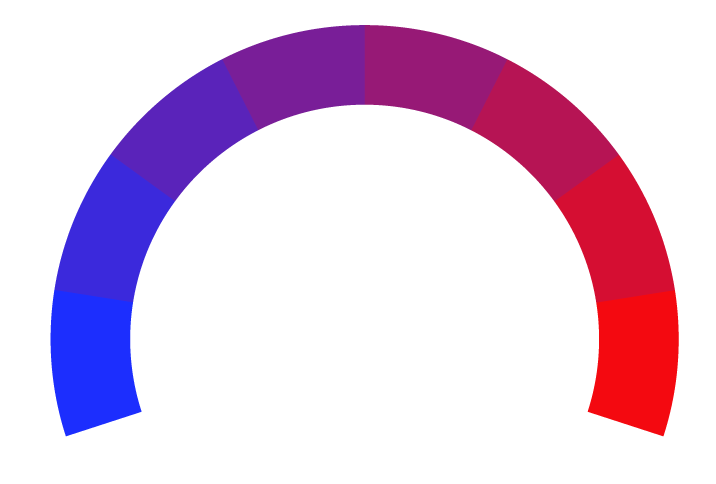
Contributing sentiments towards policy:
61% : Many factors could disrupt the fragile trend of slowing emissions from fossil fuels, including an intensified expansion of coal in India, an easing of oil prices and US president Donald Trump's enthusiasm for fossil fuels.55% : Hare said: "We see governments in countries such as Canada, the US and New Zealand rolling back climate policies as fast as they can, and countries such as Australia - co-president of Cop31 - continuing to press forward with massive coal and gas developments that are holding fossil fuel CO2 emissions at record levels.
53% : There is little sign yet that the Turkish and Australian leadership [of Cop31] intends to build on [the commitment to transition away from fossil fuels made three years ago] with stronger action."
51% : Much greater investment in renewable energy, and low-carbon technology such as electric vehicles, would still be required to make permanent reductions in annual emissions, the report's authors said.
48% : The reduction in emissions from fossil fuels for 2026 will be about 0.4% compared with last year.
46% : The findings, presented on Tuesday morning at the Cop31 climate talks hosted by Turkey in Antalya, show both the impact of the Iran war and the global expansion of cheap renewable energy, chiefly solar and wind power.
44% : On the downside, emissions from deforestation and the conversion of land to agriculture have also ticked upward this year, leading to total carbon emissions rising slightly for the year, from 42.8bn tonnes last year to 43.3bn forecast for 2026.
42% : With imminent overshoot, we are entitled to expect governments everywhere to move decisively to cut fossil fuel CO2 emissions.
41% : However, authors of a comprehensive assessment to be presented at Cop31 warn talk of a global turnaround premature Soaring oil and gas prices following the war in Iran have encouraged people to look beyond fossil fuels, leading to an easing of climate-damaging carbon emissions this year.
*Our bias meter rating uses data science including sentiment analysis, machine learning and our proprietary algorithm for determining biases in news articles. Bias scores are on a scale of -100% to 100% with higher negative scores being more liberal and higher positive scores being more conservative, and 0% being neutral. The rating is an independent analysis and is not affiliated nor sponsored by the news source or any other organization.