








 Forbes
Affirmative Action Could Soon Be Overturned As Supreme Court Takes Up Harvard And UNC Cases
- Bias Rating
- Reliability
N/AN/A
- Policy Leaning
-14% Somewhat Left
- Politician Portrayal
-61% Negative
Continue For Free
Create your free account to see the in-depth bias analytics and more.
By creating an account, you agree to our Terms and Privacy Policy, and subscribe to email updates.
Bias Score Analysis
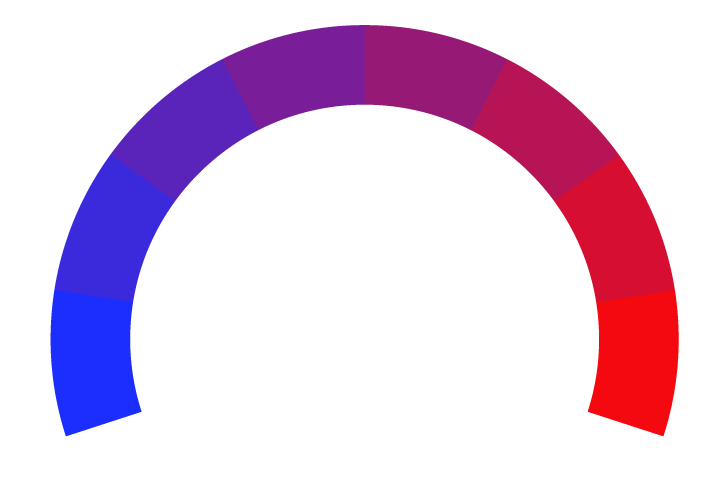
The A.I. bias rating includes policy and politician portrayal leanings based on the author’s tone found in the article using machine learning. Bias scores are on a scale of -100% to 100% with higher negative scores being more liberal and higher positive scores being more conservative, and 0% being neutral.
Sentiments
N/A
- Liberal
- Conservative
| Sentence | Sentiment | Bias |
|---|---|---|
Unlock this feature by upgrading to the Pro plan. | ||
Reliability Score Analysis
Policy Leaning Analysis
Politician Portrayal Analysis
Bias Meter
Extremely
Liberal
Very
Liberal
Moderately
Liberal
Somewhat Liberal
Center
Somewhat Conservative
Moderately
Conservative
Very
Conservative
Extremely
Conservative
-100%
Liberal
100%
Conservative
Contributing sentiments towards policy:
69% : The concept of "affirmative action" to ensure racial diversity dates back to a 1965 executive order that told employers to "take affirmative action to ensure that equal opportunity is provided in all aspects of their employment."58% : A Timeline of Key Supreme Court Cases on Affirmative Action (New York Times)
55% : Since then, the Supreme Court has repeatedly held up affirmative action policies in 2003 and 2016, though it struck down a "point system" at the University of Michigan that automatically gave applications from underrepresented racial minorities enough points to virtually guarantee admission.
53% : The Supreme Court then officially sanctioned affirmative action in college admissions in a 1978 ruling that found universities could constitutionally consider race as part of its admissions process, though it struck down schools using quota systems dedicating a certain number of enrollment places to students of a particular race.
52% : The U.S. Supreme Court will hear cases challenging Harvard University and the University of North Carolina (UNC)'s affirmative action policies that take race into account for admissions, the court announced Monday, which could potentially overturn the decades-old practice of affirmative action and threaten gains in diversity at colleges and universities nationwide.
52% : The Supreme Court case that could end affirmative action, explained (Vox)
48% : While critics of affirmative action policies contend they discriminate against white and Asian American students, proponents say the practice is necessary for ensuring diversity both at universities and the workforce at large.
45% : The Supreme Court has repeatedly held up affirmative action in the past, but there are fears it will now be overturned given the court's 6-3 conservative majority.
41% : The Supreme Court's past rulings on affirmative action "sent a powerful signal that diversity is vital to preparing individuals to work and participate as citizens in our pluralistic democracy," Harvard wrote in its opposition to SFFA's complaint.
10% : Justices Clarence Thomas and Samuel Alito have already ruled against affirmative action in the past, as has Chief Justice John Roberts, who once wrote, "It is a sordid business, this divvying us up by race."
*Our bias meter rating uses data science including sentiment analysis, machine learning and our proprietary algorithm for determining biases in news articles. Bias scores are on a scale of -100% to 100% with higher negative scores being more liberal and higher positive scores being more conservative, and 0% being neutral. The rating is an independent analysis and is not affiliated nor sponsored by the news source or any other organization.