




70% Medium Right
Bias Meter
Extremely
Liberal
Very
Liberal
Somewhat Liberal
Center
Somewhat Conservative
Very
Conservative
Extremely
Conservative
-100%
Liberal
100%
Conservative
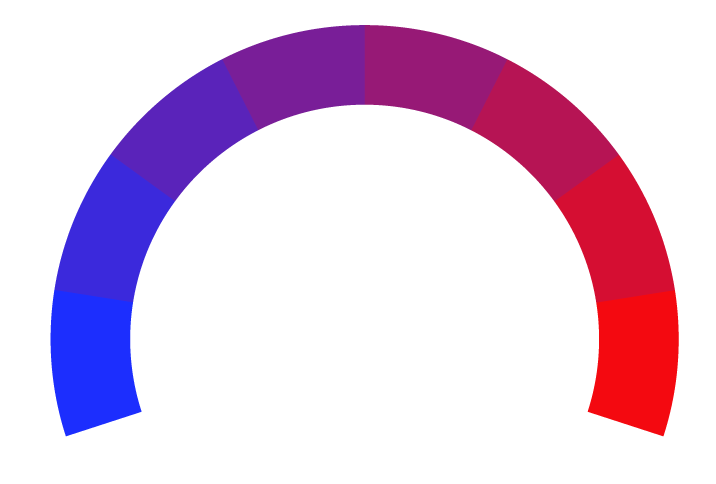
Biasly determines media bias ratings through a dual-layered approach combining artificial intelligence and analyst review. The platform’s proprietary bias detection engine, Bias Meter, evaluates sentiment, policy position alignment, and language framing across thousands of data points in news articles. Analysts then verify and interpret the AI’s findings, providing additional context where needed. Learn more about ratings
- Profile
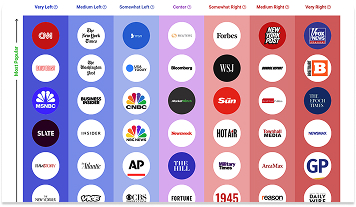
The Daily Caller on the media bias chart
- Bias Rating
70% Medium Right
- Reliability80% Reliable GoodPolicy Leanings
14% Somewhat Right
Extremely
LiberalVery
LiberalModerately
LiberalSomewhat Liberal
Center
Somewhat Conservative
Moderately
ConservativeVery
ConservativeExtremely
Conservative-100%
Liberal100%
Conservative
Good Reliability
*Our bias meter rating uses data science including sentiment analysis, machine learning and our proprietary algorithm for determining biases in news articles. Bias scores are on a scale of -100% to 100% with higher negative scores being more liberal and higher positive scores being more conservative and 0% being neutral. The rating is an independent analysis and is not affiliated nor sponsored by the news source or any other organization.
Politician Portrayal10% negative
Continue For Free
Create your free account to see the in-depth bias analytics and more.
By creating an account, you agree to our Terms and Privacy Policy, and subscribe to email updates.
Log In
Log in to your account to see the in-depth bias analytics and more.
Analysis of The Daily Caller Articles
Analysis of Bias in The Daily Caller Online Articles
To evaluate this, we can analyze select The Daily Caller articles through several of Biasly’s bias rating criteria: Tone, Tendency, Author, Diction, and Expediency Bias.
- Tone: The overall attitude conveyed by the article
- Diction: Specific word choices made by the writer
- Author: The background and social presence of the journalist
- Tendency: Patterns of bias in the writer’s broader body of work
- Expediency Bias: Quick visual or textual indicators like headlines and photos that imply bias
The Daily Caller was founded in 2010 by Tucker Carlson and Neil Patel, with the clear goal of creating a conservative-leaning alternative to what its founders saw as a media landscape dominated by liberal bias. Headquartered in Washington, D.C., the outlet has grown into a widely read conservative news site, averaging roughly 2.9 million monthly visits according to Similarweb.
Source: The Daily Caller
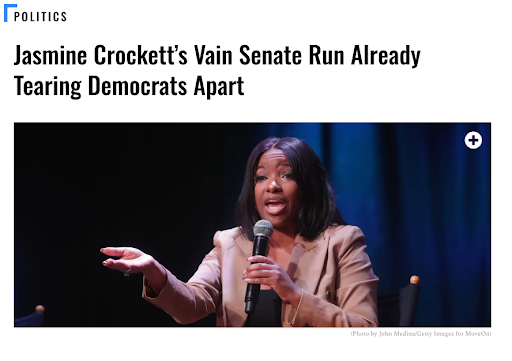
A clear example of this orientation is the article “Jasmine Crockett’s Vain Senate Run Already Tearing Democrats Apart,” published in December 2025. The headline itself frames Crockett’s Senate campaign as self-serving before the reader gets into the substance. The article leans heavily on quotes from Democrats criticizing Crockett’s decision, including progressive critic Aaron Regunberg, who wrote on X:
“Jasmine Crockett isn’t of the left. She’s not an economic populist. She’s what you get when you refuse to prioritize substance.”
That framing, using Democratic infighting as the centerpiece of the story, is a pattern seen across the outlet’s Crockett coverage reviewed here, where coverage of Democratic primaries tends to emphasize division and dysfunction more than policy substance.
A similar pattern shows up in the opinion column “Gas Just Got Poured On The Democrat Civil War Jasmine Crockett Started” by John Loftus, which cites a NOTUS report on donations to Crockett’s campaign from Marc Andreessen, the PACs of BlackRock and Lockheed Martin, and crypto-funded super PACs. The headline’s “Civil War” and “Gas Just Got Poured On” language is deliberately inflammatory, and the column’s diction is openly hostile:
“Crockett claims she’s a liberal, but it has become increasingly clear that she is just a vain, empty suit — Kamala Harris 2.0 — willing to sell herself to the highest bidder.”
Notably, Loftus concedes that her rival James Talarico “does have a point” about corporate welfare. The column’s main target is Crockett rather than progressive policy, and it frames her fundraising as evidence of hypocrisy rather than reporting it neutrally.
By contrast, an article like “Trump Endorses Both Republicans In South Carolina Governor Runoff” by Derek VanBuskirk reports Trump’s dual endorsement in a far more straightforward tone, without the same kind of loaded framing applied to the Crockett coverage. The piece simply lays out what Trump said and the political context, without injecting skepticism or criticism into the reporting. This is a useful reminder that bias at The Daily Caller isn’t necessarily about whether a story covers a Republican or Democrat; it can show up in how tone differs across political stories. Because these articles cover different circumstances, a broader comparison of similar Democratic and Republican controversies would be needed to establish a consistent pattern.
Loftus’s earlier posts on X are consistent with the column’s lean. In March 2025, he promoted his column on Democratic polling this way:
A new poll found that 69% of swing district voters believe Dems are “too focused on being politically correct,” while 51% said the word “elitist” is a fitting description for the party. Not a good sign ahead of 2026
Read more @DailyCaller
— John Loftus (@JohnCFLoftus1) March 12, 2025
A more recent post from August 2026 is sharply critical of Trump, which suggests his commentary is not uniformly pro-Republican, even though his columns reviewed here focus on criticizing Democrats:
There’s gonna be a watershed moment when people on the right and in conservative media have to acknowledge Donald went off his rockers. He’s 80. His admin is corrupt. He has no idea what’s going on. It’ll be like the left with Joe Biden. Deny, deny, deny—boom. Reality says hello
— John Loftus (@JohnCFLoftus1) August 16, 2026
Overall, The Daily Caller’s news coverage reflects a consistent conservative orientation, particularly visible in how it frames Democratic infighting and campaign struggles compared to more straightforward treatment given to Republican political activity. Readers who understand the framing pattern going in will be better equipped to evaluate its content critically.
Analysis of The Daily Caller Opinion Articles
The Daily Caller operates as a hybrid platform that combines conventional news reporting with politically opinionated commentary, opinion content, and conservative analysis. Unlike traditional mainstream newsrooms that maintain a strict, visible separation between straight news reporting and opinion desks, The Daily Caller often blends news coverage with conservative framing, making it vital for readers to distinguish between its original reporting and its opinion-driven pieces.
The site’s commentary pieces often rely on aggressive framing and loaded terminology when targeting Democratic figures or progressive policies. John Loftus’s column on Crockett’s fundraising, discussed above, calls her a “vain, empty suit,” and his March 2025 column “Democrats’ Own Poll Spells Very Bad News For 2026” opens by declaring that “The Democratic Party’s brand is in shambles.” Commentary writer Mary Rooke’s column on USAID, discussed in the reliability section below, draws sweeping conclusions about the political left from a single policy change.
The outlet’s labeling helps readers here: many columns carry the writer’s name in the headline (for example, “ROOKE:”) or sit in the Opinion section. Its straight news items, such as the report on Trump’s dual endorsement in the South Carolina governor’s runoff, use a much more neutral tone. In the pieces reviewed, the sharpest framing appears in commentary aimed at Democrats.
Analysis of Reliability in The Daily Caller’s Online News Articles
The Daily Caller blends opinion and news coverage more freely than outlets that maintain strict separation between the two. Much of its content sits somewhere between straight reporting and commentary, with writers regularly inserting evaluative language into stories that might otherwise read as conventional news.
A clear example is the commentary piece “ROOKE: Something Weird Keeps Happening Now That Trump Neutered USAID” by commentary writer Mary Rooke, published in June 2026. The piece argues that the wave of recent right-wing election victories across Latin America in Bolivia, Chile, Honduras, Costa Rica, Peru, and Colombia is directly linked to the Trump administration’s defunding of USAID, suggesting that left-wing political success across the region had been “astroturfed by USAID funding.”
The piece draws a sweeping causal connection between foreign aid cuts and a regional shift toward conservative leadership, while acknowledging in passing that “correlation does not equal causation” before proceeding to treat the connection as an established fact throughout the rest of the piece. The author also extends the argument to U.S. culture, asserting that shifts on gender and LGBTQ issues were not organic but driven by major institutions, again without direct evidence.
This pattern is consistent with the outlet’s founding purpose; it was created to be an explicitly conservative voice in media, not a neutral arbiter of facts. Readers who follow The Daily Caller generally know they’re getting a conservative perspective, much the way readers of clearly progressive outlets know what they’re getting. The difference between The Daily Caller and outlets that exhibit bias while claiming neutrality is that The Daily Caller has been open about its center-right orientation, which its About page states directly. Readers can also use Biasly’s Bias Check Chrome Extension to assess individual articles.
Quality of Sources and Facts Used
The The Daily Caller article “Jasmine Crockett’s Vain Senate Run Already Tearing Democrats Apart” is structured as a political conflict story rather than a straightforward campaign report. Senior politics reporter Ashley Brasfield frames Rep. Jasmine Crockett’s Senate candidacy through the lens of Democratic infighting, emphasizing criticism from activists, elected officials, and political commentators. The headline itself signals the article’s perspective before readers encounter any evidence, using the term “vain” to characterize Crockett’s campaign. Throughout the piece, the focus remains on whether Crockett is harming Democratic electoral prospects rather than on the merits of her candidacy or policy positions. As a result, the overall tone is critical and somewhat adversarial, even though many of the facts presented are supported by sourced quotations and outside reporting.
The article contains 7 direct quotes, counting partial quotes and quotes taken from X posts. The shortest is 1 word (Rep. Julie Johnson’s “present”), the longest is 48 words (Karthik Soora’s X post), and the average quote length is about 24 words. Several of the longer quotations give readers meaningful context. For example, Crockett argues that Democrats must expand the electorate, saying, “If the electorate remains the same electorate that we’ve had over the last 30 years, then I think we’re going to end up with the same result,” while Aaron Regunberg argues that she is “what you get when you refuse to prioritize substance.”
Karthik Soora and podcast co-host Armand Domalewski both argue that criticizing Crockett’s past remarks is not racist. These longer quotations are generally more informative than short soundbites because they let readers evaluate the speaker’s reasoning. The quotations appear accurately attributed, but the article mainly highlights quotes that support its argument that Crockett’s candidacy is dividing the Democratic Party.
On linked sourcing, the article contains 15 hyperlinks in its body. Eight point to other The Daily Caller articles and are excluded from this count. Of the remaining 7 external links, 5 are Left (CBS News, The Texas Tribune, and X posts or profiles of Democratic critics Aaron Regunberg, Karthik Soora and Armand Domalewski), 1 is Center (Reuters), none are Right, and 1 is an institutional reference (a nonpartisan voter guide from the League of Women Voters of Houston).
The outside news links mostly supply background: Crockett’s comments to CBS News, Reuters’ reporting on Trump’s outreach to infrequent voters, and The Texas Tribune’s report on Talarico’s $6.2 million haul. Numerically the links lean left, but nearly all of the left-leaning voices are used to criticize Crockett, so how the links are used matters more than their count.
- Jasmine Crockett, U.S. Representative from Texas and Senate candidate, quoted via CBS News (Left)
- Colin Allred, former U.S. Representative who ended his Senate bid to run in Texas’ 33rd District (Left)
- John Cornyn, Republican U.S. Senator from Texas whose seat is being contested (Right)
- Julie Johnson, U.S. Representative from Texas, quoted through an embedded X post and her comments about Allred (Left)
- EMILY’s List, Democratic women’s political group whose endorsement of Johnson appears in her post (Left)
- Aaron Regunberg, progressive critic quoted from an X post (Left)
- CBS News, linked for Crockett’s comments on her campaign strategy (Left)
- Reuters, linked for background on Trump’s campaign targeting of infrequent voters (Center)
- Barack Obama, former President referenced in Crockett’s strategy comparison (Left)
- Donald Trump, President referenced in Crockett’s strategy comparison (Right)
- Karthik Soora, Texas Democrat quoted from an X post (Left)
- Houston Voters Guide (League of Women Voters of Houston), linked candidate profile for Soora (institutional reference)
- Armand Domalewski, co-host of the “Everybody Gets Pie” podcast, quoted rejecting claims of racism (Left)
- James Talarico, Texas state representative and Crockett’s primary rival (Left)
- The Texas Tribune, cited for Talarico’s $6.2 million fundraising total (Left)
The sourcing is somewhat unusual because most of the voices criticizing Crockett come from within her own party. Numerically, Left-leaning sources dominate the article, accounting for most of the quoted individuals and the overwhelming majority of quoted words. The outside news outlets it links to (CBS News, Reuters and The Texas Tribune) are used mainly to establish factual background rather than to shape the narrative. No Republican voices are quoted; Republicans appear only in passing, through Sen. John Cornyn and President Trump, but the article’s framing aligns more closely with conservative critiques of Crockett than with Democratic defenses of her candidacy. By prominence, placement, and quoted-word share, Democratic critics of Crockett dominate the article.
In terms of source usage, critics of Crockett largely set the story’s framing. The article opens with the assumption that her campaign is creating problems for Democrats and then assembles evidence supporting that conclusion. For example, critics are given space to argue that she is what Democrats get when they “refuse to prioritize substance,” while concerns about her statewide electability receive little pushback. Crockett’s own explanation for her candidacy receives comparatively less attention and development. Critics’ claims generally go unchallenged, while skepticism is directed almost entirely at Crockett’s political strategy and electability.
Based on the sourcing patterns, headline language, and overall framing, the author’s bias is best described as right-leaning, because the article builds its case almost entirely from criticism of Crockett and gives her defense comparatively little space. The article relies heavily on factual reporting and direct quotations, but those facts and quotations are arranged in a way that consistently supports a negative interpretation of Crockett’s campaign.
On factual accuracy, the article is generally consistent with reporting from other outlets covering the Texas Senate race. Other publications have similarly reported that Colin Allred exited the race, that Crockett entered shortly afterward, and that Democratic strategists have debated her statewide electability. Fundraising figures cited from the Texas Tribune also align with publicly reported campaign-finance data. Where the article differs from mainstream coverage is not in its factual foundation but in its emphasis.
Other coverage of the race, such as The Texas Tribune’s fundraising report, gives more attention to the candidates’ fundraising and grassroots support, whereas this article focuses mainly on criticism and internal party concerns. One detail is questionable: the article calls Karthik Soora a Democratic state senator, while the voter guide it links lists him as a candidate. Consequently, the article is largely accurate on factual matters but presents a narrower and more negative interpretation of those facts than is common across broader political coverage.
Selection and Omission Bias
Selection and omission bias at The Daily Caller shows up clearly in its sustained climate coverage. The article “Scientists Quietly Reverse Climate Doomsday Prediction Beloved By Corporate Media” by Benjamin Roberts frames the IPCC’s retirement of the RCP 8.5 emissions scenario as proof that mainstream climate journalism has been fundamentally misleading. The piece relies on one outside voice, American Enterprise Institute Senior Fellow Roger Pielke Jr., who is the only person quoted:
“The substantive reason is that the gap between the extreme scenarios and reality has become too large to deny.”
That quote serves as the article’s central evidence. The article does note that the new projection is about three degrees Celsius of warming by 2100. However, it includes no climate scientists who might explain the scenario update in more measured terms, and it attributes the change to the IPCC, although the linked paper is a scenario-design study for the CMIP7 modeling project that will feed into the IPCC’s next assessment.
A similar pattern appears in “Climate Scientist Throws Tantrum After Trump Admin Overturns Obama-Era Finding” by Harold Hutchison. The piece quotes climate scientist Michael Mann at length, but only to frame his objections as overblown:
“That’s actually the single greatest assault that we’ve seen from the administration on climate action.”
Rather than engaging with the substance of Mann’s argument about the Endangerment Finding, the article spends significant space recounting his past controversies (a disputed Nobel Prize claim, his defamation case and his posts after Charlie Kirk’s assassination), which are unrelated to the policy itself, while offering no quotes from other climate scientists or legal experts who might assess the repeal on its merits.
The Daily Caller Bias Overview
The Daily Caller was founded in 2010 by Tucker Carlson, a conservative political commentator who later went on to host a primetime show at Fox News, and Neil Patel, a former policy advisor to Vice President Dick Cheney. The two created The Daily Caller with the explicit goal of providing a conservative-leaning news and opinion platform as an alternative to what they viewed as a liberal bias dominating mainstream media at the time. The Daily Caller has grown into a widely read conservative outlet.
The founding mission reflects a broader divide in how Americans relate to the news media along political lines. According to a 2025 Pew Research survey, Republicans and Democrats place their trust in almost entirely different sets of news sources. Fox News is trusted by 56% of Republicans and Republican leaners, compared to just 19% of Democrats and Democratic leaners. This pattern reverses sharply for outlets like ABC News, NBC, CNN, and CBS, each trusted by 56% to 61% of Democrats but only 21% to 26% of Republicans.
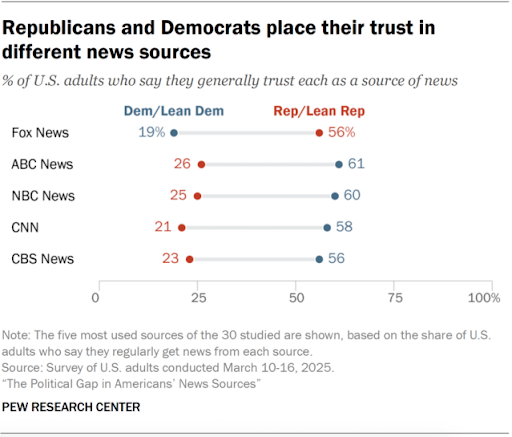
Source: Pew Research
The Daily Caller exists squarely within that divide. It was built to serve the same audience that distrusts mainstream outlets and to offer an alternative source of news that aligns more closely with conservative readers’ existing views. That’s not necessarily a flaw; plenty of outlets on both sides of the political spectrum exist to serve audiences who feel underrepresented by mainstream coverage. What this does mean is that The Daily Caller’s editorial choices are shaped by an audience expectation of conservative framing, which is worth understanding before diving into its content. This article examines The Daily Caller’s editorial tendencies to explore whether political bias is present and, if so, to what degree.
Is The Daily Caller Biased?
Based on Biasly’s evaluations, The Daily Caller is rated as Medium Right.
By examining content patterns and the broader context of media influence, we aim to offer a balanced perspective on The Daily Caller’s political bias—and contribute to the ongoing discussion about bias in the news.
How Does Biasly Rate News Sources?
Biasly uses proprietary algorithms and a team of analysts to provide comprehensive bias evaluations across thousands of news outlets. Over 200,000 articles from more than 3,200 sources have been analyzed to identify the most accurate and unbiased stories.
Biasly assigns each outlet three key scores:
- Reliability Score – Reflects factual accuracy
- AI Bias Score – Generated via natural language processing
- Analyst Bias Score – Assessed by human political analysts
These scores are based on seven core metrics: Tone, Tendency, Diction, Author Check, Selection/Omission, Expediency Bias, and Accuracy. These elements help analysts and algorithms evaluate the political attitude conveyed by each article.
Biasly’s Bias Meter ranges from -100% (most left) to +100% (most right), with 0% indicating neutrality. The system evaluates individual articles based on political terms, policies, figures, and sentiment to calculate precise bias ratings.
Is The Daily Caller Politically Biased?
The Daily Caller earns a Medium Right rating for its AI Bias Score and a Somewhat Right for its Analyst Bias Score. The Analyst Bias Score is generated by reviewers from liberal, moderate, and conservative backgrounds. The Daily Caller’s coverage of climate and energy policy reflects a clear conservative slant, often framing mainstream climate science with open skepticism, while its straight news items on less charged topics, such as the South Carolina endorsement report, read more neutrally. This pattern of selective bias, which is strong in politically charged subjects and more muted elsewhere, is typical of outlets with a clearly stated ideological mission.
Commentary writer Mary Rooke wrote in a June 2026 column:
“And while correlation does not equal causation, the rapid acceleration of right-wing successes only makes sense if the entire left-wing support apparatus was astroturfed by USAID funding.”
This framing, which draws sweeping ideological conclusions from a single policy change is consistent with the outlet’s broader pattern of advancing conservative narratives rather than simply reporting the news. This Bias score is determined through natural language processing that evaluates the tone, word choice, and opinion embedded in the reporting. Recent AI evaluations highlight conservative-leaning narratives in articles discussing the Democratic Party and climate policy.
How to Evaluate Bias
Although Biasly rates The Daily Caller as Medium Right, it’s important to remember that bias can vary from article to article. Its political commentary often uses explicitly conservative framing, while some straightforward news reports use more neutral language. This complexity underscores the importance of examining each article individually. So, let’s learn how to evaluate media bias.
Recognizing media bias requires awareness and critical thinking. Often, readers trust news sources that affirm their existing beliefs—a psychological tendency known as confirmation bias. This makes it harder to identify slanted narratives or one-sided reporting.
To address this, it’s essential to challenge your assumptions by consulting multiple perspectives and verifying information through third-party analysis. Tools like Biasly’s media bias ratings allow readers to compare the same news story across the political spectrum.
Ultimately, bias isn’t always a matter of what is said—it’s also about what is left out, how topics are framed, and which stories are chosen for coverage. Learning to recognize these patterns can help readers make more informed decisions and develop greater media literacy.
To start comparing news outlets and gain a better understanding of bias, sign up for Biasly’s Media Bias & News Analytics Platform to see how stories vary between sources.
The Daily Caller Reliability Overview
Is The Daily Caller Reliable?
The Daily Caller holds a Good reliability score from Biasly, despite its strong political lean. According to Pew Research, the majority of Americans (57%) express low confidence in journalists to act in the best interest of the public, including 40% who say they have “not too much” confidence and 17% who say they have none at all. That distrust also splits sharply along party lines. Democrats (61%) are more than twice as likely as Republicans (25%) to say they have confidence in journalists to act in the public interest.
That partisan gap in media trust is worth keeping in mind when evaluating any politically oriented outlet. For The Daily Caller, reliability holds up reasonably well on the factual side, even though its sourcing practice and story selection consistently reflect a conservative editorial lens, particularly when covering Democratic Party infighting and contested scientific topics like climate policy.
How to Evaluate Reliability?
Reliability refers to how trustworthy or accurate a news source is. If we can’t trust what we read, then continuing to consume content from that outlet serves little purpose. So how do we evaluate a news outlet’s reliability?
There are several key indicators of reliability to consider when assessing a media source. Red flags of an unreliable article can include wild, unsubstantiated claims, facts that depend on other unreliable sources, heavy use of opinionated language, and more. In contrast, hallmarks of a reliable source include:
- Absence of subjective language
- Citing credible sources (e.g., .gov, .edu, academic references)
- Verifiable facts and statistics from multiple outlets
- Use of primary sources, like interviews or transcripts
- Consistency with coverage across other platforms
Biasly’s reliability scores incorporate these elements in evaluating media outlets.
So How Does The Daily Caller Fare in Its Reliability?
The political reliability index developed by Biasly assesses both accuracy and trustworthiness. The Daily Caller currently holds Good Reliability Score, which is calculated as a weighted average of:
- Fact Analysis Score – Evaluates the accuracy of claims, facts, and evidence.
- Source Analysis Score – Assesses the number, diversity, and credibility of sources and quotes used.
The Daily Caller’s Source Analysis Score is Good at 71% Reliable. This suggests moderate trustworthiness in its sourcing practices. The score is AI-generated and considers quote length, frequency, diversity, and quality.
The Fact Analysis Score of The Daily Caller is Good at 83% Reliable. This further shows how well The Daily Caller supports its claims, addresses selection and omission bias, and presents verifiable evidence.
While The Daily Caller leans toward factual reporting, occasional lapses—such as unbalanced viewpoints or incomplete data—can affect its reliability rating. These nuances emphasize the importance of analyzing individual articles.
The Daily Caller’s Accuracy and Reliability
According to Biasly’s analysis, The Daily Caller maintains Good Reliability Score, but individual articles may vary significantly. Let’s dive into the details.
The two most common reliability concerns in The Daily Caller’s political coverage are:
- Selection Bias – choosing which stories and facts to highlight in ways that favor a particular narrative.
- Omission Bias –leaving out perspectives or context that would complicate or contradict the dominant framing.
The repeated Jasmine Crockett coverage discussed earlier is a clear example of both, emphasizing her controversies and Democratic infighting over multiple articles while giving comparatively little equivalent scrutiny to Republican primary dynamics during the same election cycle.
The climate coverage shows a similar pattern, relying on single-source framing to support sweeping conclusions about climate science while leaving out mainstream scientific perspectives. By contrast, straight news items such as the report on Trump’s dual endorsement in South Carolina use a more neutral tone.
The consistent emphasis on Democratic dysfunction is a clear example of both selection and omission bias. In the opinion column “Democrats’ Own Poll Spells Very Bad News For 2026” by John Loftus, Loftus opens by characterizing Democratic lawmakers’ protest during Trump’s joint address to Congress as disorganized and unserious:
“Democrats appeared splintered and childish during President Donald Trump’s first joint address to Congress… lower-ranking lawmakers couldn’t help themselves.”
The column goes on to describe Texas Rep. Al Green being removed from the chamber for repeatedly yelling, framing the episode as evidence of a party in disarray. The publicly visible portion of the column (the rest is reserved for paying subscribers) offers no comparable example of conduct by Republican lawmakers, nor does it ask whether protest tactics such as sign-waving have been used by both parties during past joint addresses. That selective framing, using one party’s internal polling and floor conduct as proof of broader dysfunction, without applying the same standard to the other side, is a recurring pattern in The Daily Caller’s coverage of Democratic politics.
So, is The Daily Caller Reliable?
Overall, The Daily Caller can be considered to be an outlet that is very reliable. In the articles examined, news reports generally rely on attributed statements and external reporting, while some commentary pieces make broader claims that require additional verification. Occasional omissions and framing bias do appear, particularly on culturally sensitive or partisan issues.
As media literacy improves, readers can more easily detect issues with selection bias, omission bias, and factuality. To strengthen your ability to assess reliability across the political spectrum, use Biasly’s News Bias Checker to compare how multiple outlets report the same story.
This empowers you to consume more accurate, balanced, and dependable news.
The Daily Caller Editorial Patterns
The Daily Caller’s coverage of political topics often reflects a Medium Right bias, with consistent patterns in phrasing, source selection, and thematic focus that are Moderately Conservative. Beyond the specific articles already discussed, this pattern shows up in how the outlet structures entire categories of coverage, like which topics get recurring attention, which figures become regular subjects of scrutiny, and how language choices shift depending on which party is involved.
Coverage of Liberal vs. Conservative Topics
One area where this shows up clearly is immigration enforcement coverage. In the coverage reviewed, The Daily Caller frequently publishes stories highlighting crimes committed by undocumented immigrants, sometimes framing them as representative examples of broader policy failure rather than isolated incidents. Coverage of the Republican-led immigration enforcement actions, by contrast, tends to emphasize their necessity and effectiveness rather than examining potential downsides or controversies.
The outlet also maintains a notable focus on AI and technology policy debates, where it tends to frame opposition to data center construction, even when that opposition comes from environmental or community concerns. Such opposition is often treated sympathetically when raised by conservative figures, while similar concerns raised by progressive lawmakers like Bernie Sanders or AOC are framed with more skepticism about their underlying motives.
Policy and Issue Framing
On economic policy, The Daily Caller often frames deregulation and reduced government spending as straightforward improvements, while coverage of progressive economic proposals, universal healthcare, new social spending programs, or labor protections tends to highlight cost concerns and potential unintended consequences more prominently than potential benefits.
The outlet’s foreign policy coverage shows a similar pattern, tending to frame the current administration’s approach to international relations in favorable terms while applying more scrutiny to criticisms from international allies or domestic opposition. Even coverage of polling data tends to lean into framing that emphasizes Democratic weakness or division over Republican challenges.
Coverage and Relevance
The Daily Caller’s reporting plays into a broader pattern seen across explicitly partisan outlets: an emphasis on stories that reinforce the outlet’s founding worldview, paired with relatively less attention to stories that might complicate that narrative. This makes it a useful example for understanding how editorial culture, rather than a single biased article, can shape an outlet’s overall orientation over time.
Readers who wish to further explore how The Daily Caller compares with other publications can visit Biasly’s Media Bias Chart to analyze tone and word choice in real time.
Funding and Ownership
Who Owns The Daily Caller?
Tucker Carlson, co-founder of The Daily Caller
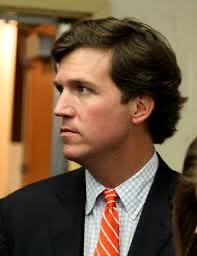
Source: Gage Skidmore, CC BY-SA 3.0, via Wikimedia Commons
The Daily Caller was founded in January 2010 by Tucker Carlson and Neil Patel, with early financial backing from conservative investor Foster Friess. Carlson, a longtime conservative commentator who had hosted shows on CNN and MSNBC, served as editor-in-chief until 2016. He later hosted a primetime show at Fox News for more than six years before leaving the network in 2023. Patel, the outlet’s other co-founder and longtime publisher, had served as chief policy adviser to Vice President Dick Cheney.
Carlson stepped back from the site after his Fox News show launched and sold his roughly one-third stake to Patel, a sale made public in June 2020. Patel became the controlling owner, with Friess (who died in 2021) and smaller investors holding the rest. Its About page now states that Patel is the majority owner and describes the outlet as:
“committed to telling the truth and adhering to all the highest standards of journalism coming from a center-right perspective, which we believe is sorely needed to balance out the more left leaning perspective found in the vast majority of American news.”
Day-to-day leadership includes CEO Elijah Moorman, who took the role in December 2024, and Editor-in-Chief Amber Duke, who was promoted in March 2026. The company does not publish a full list of its shareholders.
Who Funds The Daily Caller?
The Daily Caller describes itself as a for-profit, independent news outlet that earns revenue through advertising and its premium “Patriots” subscription service; some articles, including the March 2025 column discussed above, are reserved for subscribers. The company’s financial statements are not public, so the exact mix of its revenue cannot be independently assessed.
The outlet also has a licensing agreement with its sister nonprofit newswire, the The Daily Caller News Foundation (DCNF), a separate 501(c)(3) organization. The foundation offers its reporting free of charge to other publishers under a Creative Commons license, and more than 250 publishers, including The Daily Caller itself, run that content. The DCNF is funded mainly by tax-deductible contributions; its 2024 Form 990 reported about $4.5 million in revenue, almost all of it from contributions. Both organizations say their finances are kept separate.
That redistribution model has implications that are worth considering. When a foundation story produced with a particular editorial lens gets picked up and republished elsewhere, that framing travels with it, often without readers realizing the original source’s political orientation. This makes understanding The Daily Caller’s editorial tendencies relevant even for readers who may never visit the outlet’s website directly. Because the DCNF is a separate organization, readers should evaluate the sourcing and framing of syndicated stories individually rather than assuming both apply identical editorial approaches.
Additional Insights
News Source Comparison
The Daily Caller occupies a distinct space among conservative outlets in that its content is widely redistributed through the DCNF’s free syndication model, a strategy not all of its peers share. Peers such as Breitbart and The Daily Wire rely mainly on their own sites and audiences, while the DCNF’s free newswire extends The Daily Caller-affiliated reporting to hundreds of other publishers. Readers seeking more balanced political coverage may find it useful to compare The Daily Caller’s framing with outlets rated as Center or Somewhat Left on Biasly’s Media Bias Chart.
Notable Contributors and Authors
The Daily Caller features a diverse network of political commentators, investigative reporters, and conservative columnists who drive its daily commentary and news output. Co-founder Tucker Carlson initially helped establish the platform’s public profile and editorial tone, while key leadership and editorial figures, such as co-founder, publisher and majority owner Neil Patel, CEO Elijah Moorman and Editor-in-Chief Amber Duke, manage day-to-day operations and overarching coverage strategy. The current newsroom also includes Editorial Director Vince Coglianese, Managing Editor Eric Lieberman, Editor at Large John Loftus, White House Correspondent Reagan Reese and Commentary and Analysis Writer Mary Rooke.
Over the years, the site has featured commentary and reporting from notable political figures and media personalities, including Newt Gingrich, Ann Coulter, Larry Kudlow, and various dedicated Congressional correspondents and investigative writers. This roster of contributors reflects the publication’s hybrid approach of mixing original political reporting with ideologically driven commentary.
Related Tools and Resource Pages
To better understand how The Daily Caller fits into the broader media landscape, we recommend exploring these helpful resources:
- Media Bias Chart: See where The Daily Caller ranks among hundreds of media outlets across the political spectrum.
- Political Bias Chart: Visualize political slants of news sources across various policy areas.
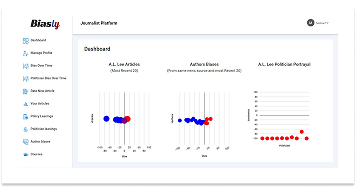
- Journalist Bias Analytics Platform: Explore how individual journalists contribute to bias within their publications.
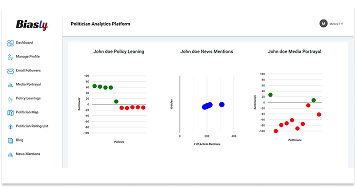
- Politician Bias Analytics Platform: Compare how politicians are framed differently by The Daily Caller and other outlets.
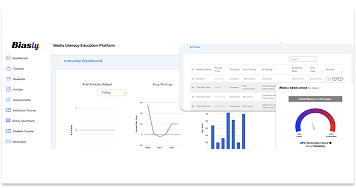
- Media Literacy Education Platform: Learn how to critically assess media sources, bias techniques, and news reliability.
Frequently Asked Questions
The Daily Caller is rated as Medium Right based on Biasly’s media bias algorithm, which assesses sentiment, article framing, and policy favorability.
Yes. Critics have challenged some of its reporting. The best-known case is its 2012–2013 coverage of allegations that Sen. Robert Menendez paid for prostitutes in the Dominican Republic: one of the women later told Dominican authorities she had been paid to make the claims, and a local lawyer alleged, without established findings, that the arrangement was made by someone claiming to work for the outlet, which The Daily Caller denied. Critics have also pointed to sensationalized headlines and misleading framing in some political pieces, though much of its reporting is accurately sourced.
Biasly uses a combination of AI sentiment analysis and human analyst review to assess tone, fact accuracy, source quality, and media bias indicators. Learn more on our Bias Meter page.
Generally, yes, though partisan framing and selective reporting can affect perceived reliability.
Military Spending
| Date | Sentiment | Associated Article | Snippet |
|---|---|---|---|
| 08/25/2019 | 75% For | Trump Family Detentions Flores Agreement (link) | So, of course, the Trump administration is doing the opposite in a baldfaced |