




6% Center
Bias Meter
Extremely
Liberal
Very
Liberal
Somewhat Liberal
Center
Somewhat Conservative
Very
Conservative
Extremely
Conservative
-100%
Liberal
100%
Conservative

Biasly determines media bias ratings through a dual-layered approach combining artificial intelligence and analyst review. The platform’s proprietary bias detection engine, Bias Meter, evaluates sentiment, policy position alignment, and language framing across thousands of data points in news articles. Analysts then verify and interpret the AI’s findings, providing additional context where needed. Learn more about ratings
- Profile
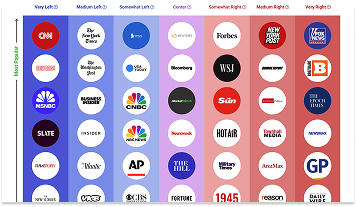
MarketWatch on the media bias chart
- Bias Rating
6% Center
- Reliability84% Reliable GoodPolicy Leanings
6% Center
Extremely
LiberalVery
LiberalModerately
LiberalSomewhat Liberal
Center
Somewhat Conservative
Moderately
ConservativeVery
ConservativeExtremely
Conservative-100%
Liberal100%
Conservative
Average Reliability
*Our bias meter rating uses data science including sentiment analysis, machine learning and our proprietary algorithm for determining biases in news articles. Bias scores are on a scale of -100% to 100% with higher negative scores being more liberal and higher positive scores being more conservative and 0% being neutral. The rating is an independent analysis and is not affiliated nor sponsored by the news source or any other organization.
Politician Portrayal92% negative
Continue For Free
Create your free account to see the in-depth bias analytics and more.
By creating an account, you agree to our Terms and Privacy Policy, and subscribe to email updates.
Log In
Log in to your account to see the in-depth bias analytics and more.
Analysis of MarketWatch Articles
Analysis of Bias in MarketWatch Online Articles
To evaluate bias, we can analyze select MarketWatch articles through several of Biasly’s bias rating criteria: Tone, Tendency, Author, Diction, and Expediency Bias.
- Tone: The overall attitude conveyed by the article
- Diction: Specific word choices made by the writer
- Author: The background and social presence of the journalist
- Tendency: Patterns of bias in the writer’s broader body of work
- Expediency Bias: Quick visual or textual indicators like headlines and photos that imply bias
When analyzing articles for bias, we must take stock of three things. First, we need to pay attention to the author’s tone or attitude towards certain subjects or people. Secondly, we need to examine diction or word choice. Lastly, we look at who the author is, their views on political subjects, their past articles, etc.
For instance, the article “China Tightens Controls on Graphite. The Hunt Is On for New Supplies” is rated Center by Biasly. In the article, the author maintains a neutral tone, summarizing the facts and using a very large number of statistics to back them up, such as in this one:
“The U.S., on the other hand, doesn’t mine or produce any natural graphite. From 2018 to 2021, about 33% of U.S. imports came from China, followed by 18% and 17% from Mexico and Canada, respectively. American companies have been looking to cut their dependence on China. Africa has been a hot spot for graphite exploration. Mozambique and Madagascar are the second and third largest miners of natural graphite behind China, with 170,000 tons and 110,000 tons of production in 2022, respectively.”
Note how the author does not say what she thinks American companies should do, but rather what they are currently doing, without discussing her opinion on their actions either. In addition, she also utilizes unbiased diction. Typically, we would also analyze her social media posts for information on her political stance, but her Twitter account only shows one post, which she used to share one of her articles published in Barron’s.
Most articles from MarketWatch are similarly unbiased, with a few that are only mildly biased. For instance, “U.S. and Arab partners disagree on the need for a cease-fire as Israeli airstrikes kill more civilians” displays a slight liberal bias, but is still close enough to centrist to fall into the Centrist category.
The author, for instance, maintains a negative tone when discussing Israel, while speaking positively about the Palestinians. Because Republicans largely support Israel, while Democrats are more supportive of the Palestinians, this can be considered a liberal stance, contributing to the slight liberal bias of the article.
Consider these paragraphs from the article:
“Israel has repeatedly demanded that northern Gaza’s 1.1 million residents flee south, and on Saturday, it offered a three-hour window for residents to do so. An AP journalist on the road, however, saw nobody coming. The head of the government media office in Gaza, Salama Maarouf, said no one went south because the Israeli military had damaged the road.”
But Israel asserted that Hamas ‘exploited’ the window to move south and attack its forces. There was no immediate Hamas comment on that claim, which was impossible to verify. Some Palestinians said they didn’t flee because they feared Israeli bombardment.
“‘We don’t trust them,’ said Mohamed Abed, who sheltered with his wife and children on the grounds of Shifa hospital, one of thousands of Palestinians seeking safety at medical centers in the north.”
By stating that the Israeli statement that Hamas had exploited their offering of evacuation for Gaza’s civilians was impossible to verify, the authors paint Israel as unreliable and perhaps deceitful, a sentiment which was furthered by the quote from refugee Mohamed Abed and their usage of negative diction (using “demanded” to describe Israel’s request that Gaza’s residents evacuate). In addition, the author mainly focuses on the Palestinian death toll, sparing only a few sentences and the last paragraph for the Israeli death toll.
If we examine the authors’ Twitter accounts, we see a similar liberal bias. Although Najib Jobain’s Twitter says little and Cara Anna doesn’t have an account, Bassem Mroue is fairly active and provides a good basis for analysis.
Mroue, while mostly only providing facts about the crisis in Gaza, occasionally expresses his opinions on the matter. For instance, on October 29th, he tweeted:
#Israel says its war can both destroy #Hamas and rescue hostages. Their families are less certain @FrankelJulia (from @AP) https://t.co/20SSDH6nmt
— Bassem Mroue باسم مروه (@bmroue) October 29, 2023
By stating Israel’s beliefs, then following them up with the opposing beliefs of others, Mroue casts doubt on Israel’s ability to both wage war and minimize civilian casualties and hostages. It must be noted, however, that this tweet is still more on the centrist end than the liberal end, as Mroue does not explicitly state his opinion on the situation, unlike other, more biased articles from other media sources such as New York Times’ (which has a Biasly bias meter rating of Moderately Liberal) article Israel Is About to Make a Terrible Mistake, an article discussing Israel’s continual waging of war against Hamas.
Analysis of MarketWatch Opinion Articles
Opinion articles, or op-eds, as they are sometimes known, are different from traditional articles in that they do not prioritize informing the public, but rather, stating and arguing an opinion. Thus, they may be more biased than traditional articles, but that does not mean that they do not strive for factuality and can, in many cases, be accurate sources of information.
Consider the op-ed The ‘Musk double standard’: Why rebel men are lionized but women get criticized. This title is moderately left-leaning, given the fact that conservatives largely believe that gender equality has been achieved (72% of conservatives surveyed by Pew Research Center said it either has been achieved or has gone too far), whereas 69% of liberals believe that it has not gone far enough.
Amazon kicks more plastic packaging to the curb in favor of a new paper, on the other hand, it holds a relatively neutral title. While conservatives are usually less likely to support clean energy than Democrats (although of course this varies from person to person and a majority of conservatives do support it), and so “[kicking] plastic packaging to the curb” could be interpreted as favoring plastic packaging and mourning its loss, the language is ambiguous and could also be interpreted as favoring paper packaging and celebrating the disappearance of plastic packaging. Quotes from the article itself reveal the article to be slightly liberal-biased:
“In its first U.S. plastic-free fulfillment center, the retail giant has come up with a lighter, stronger paper packaging that consumers can recycle curbside.”
By focusing on the good aspects of paper packaging, using positive words such as “lighter” and “stronger,” the article reveals a preference for paper packaging.
These articles, of course, do not accurately represent all of MarketWatch‘s articles and their corresponding biases, but they do help to illustrate how opinion articles are often more politically biased than traditional journalistic reporting.
Analysis of Reliability in MarketWatch’s Online News Articles
MarketWatch aims to serve Americans with objective, fact-based reporting. However, readers should distinguish between news reporting and opinion pieces to evaluate credibility effectively.
One notable example is the article titled Fair game or trash talk? Nikki Haley’s ‘scum’ comment about Vivek Ramaswamy draws attention, which was given a bias meter rating of Somewhat Left and retained good reliability. The author, Charles Passy, includes sources from all different perspectives on the fact that Haley called Ramaswamy “scum”:
“Some defended her use of “scum” — “If the shoe fits” said one commentator on X — but others suggested that the word constitutes inappropriate trash talk.”
Passy even covered other political controversies that had happened over the years involving the word, as well as some historical background on the insult, providing necessary contextualization:
“The dictionary platform notes that “scum” can refer to “a low, vile, or worthless person or group of people.” Of course, that’s in addition to its other meaning — as “extraneous matter or impurities risen to or formed on the surface of a liquid” (think pond scum).
The word has been around for centuries. According to the Online Etymology Dictionary, “scum” is derived at least partly from “schume,” a Middle Dutch term for foam or froth.”
Thus, this article has very good reliability as it draws from multiple sources, utilizes quotes of different lengths, and provides historical and political contextualization.
Quality of Sources and Facts Used
Let’s examine all of the sources used in the MarketWatch article, “What has Biden gotten wrong in his first 100 days? Done right? Analysts sound off,” in which author Victor Reklaitis discusses Biden’s performance in dealing with political hot topics such as border control, the refugee cap, college affordability and student loans, Iran, Russia, the nationwide vaccination program, and the US economy.
The article utilizes more than 20 quotes of varying lengths from a total of 5 people:
- Matthew Continetti, journalist and Director of Domestic Policy Studies at AEI
- Larry Sabato, professor of politics at the University of Virginia
- Sarita McCoy Gregory, professor in political science at the University of Hampton
- Henrietta Treyz, Director of Economic Policy Research at Veda Partners
- Jen Psaki, former political advisor to Obama and former White House press secretary under Biden
Without regard to any selection or omission bias that may be present, these sources are reputable in and of themselves. Sabato is a well-respected political scientist, and Jen Psaki, having worked as Biden’s press secretary, has a wealth of information about his presidency and what he has or has not accomplished. The other people who were quoted also have political knowledge and expertise.
On the other hand, the sources themselves are not very well-balanced. Most of the people included in the article are Democrats, with the exception of Matthew Continetti. Cherry-picking people of specific political alliances to quote is generally not good for the reliability of an article and often reflects the author’s own political alliances. In this case, the author, Victor Reklaitis’s bias is Somewhat Left, which makes sense given the context.
In addition, most of the quotes, with the exception of the section on the stock market, an area which MarketWatch, being a primarily financial news outlet, specializes in, do not include many statistics but rather rely on quotes. This is okay for this article, as the quotes come from people with extensive political knowledge, but it is generally a sign of an unreliable or biased article.
The article, Third Republican Presidential Debate, showed that no candidate is addressing financial markets’ growing concerns, and we also see a lack of statistics. In this MarketWatch article, however, the author also neglected to include many sources or quotes, making for a weak article, and the few statistics the author does include are inaccurate or misrepresented. For instance, the author, Terry Haines, says:
“In the early primary states, Trump’s lead is 10 to 12 points less than national. This means 50% to 60% of early Republican primary voters already don’t want Trump.”
Here, and throughout the rest of the article, Haines tries to claim that Trump is not as popular as people would like to believe. While this may be true, the information he uses to support his claim could be clearer. Saying that “50% to 60% of early Republican primary voters already don’t want Trump” is a misrepresentation of how the voting process works. While many Republican voters may agree that they don’t want Trump, those voters are split between the other options of DeSantis, Haley, Scott, etc. The percentage of people who agree with Trump is far greater than the percentage of people who agree with any of the other candidates.
Selection and Omission Bias
Let’s take a closer look at selection and omission bias, specifically in MarketWatch’s articles.
MarketWatch articles are usually pretty unbiased and don’t really possess many reliability issues. Thus, for this section, we chose several that do possess some of these issues. Note, though, that this article is an exception and not the norm.
Half of Americans say their finances have worsened under Biden. The article discusses the public’s opinion on Biden’s economic policies and the current state of the economy. However, the author only ever talks about the public’s opinion, only once mentioning whether that opinion was accurate or not. While the focus of the article was on how the public’s opinion on Bideconomics would affect the presidential election, the repeated citation of statistics that all said pretty much the same thing – that people didn’t think Biden did a good job – shows bias present in the article. Having received a bias meter rating of Medium Right, it’s clear that the author has a conservative bias-leaning and that it has leaked through in the form of selection bias.
In conclusion, choosing sources that only support, or hint at, one side of things is often detrimental to the reliability of an article.
Omission bias, on the other hand, typically shows up in MarketWatch articles in short pieces about certain political figures in which only negative remarks about them are included. In the longer pieces, MarketWatch generally includes an equal number of liberal and conservative stances, even occasionally making the effort to say things like:
“A question to ask Republicans: Ahead of the 2016 election, then-candidate Trump promised not to touch Social Security because a growing economy would solve its financial challenges. In fact, the program’s finances deteriorated at a record pace during his term, during a period of low inflation. What happened?”
Indeed, the Social Security trust fund has been unstable ever since 2016, when it began to plateau. It wasn’t until 2020, during COVID, though, that it really began to decrease.
“A question for the Democrats: Research suggests that nearly half of those 62-65 plan to take benefits early, specifically over concerns about the solvency of Social Security. These decisions will last decades, causing havoc for those unfortunate enough to live into their 90s. The impact of insolvency is here today. As a party, Democrats are roughly $10 trillion apart on what benefits the program should provide. Why are we talking about increasing benefit levels, which have grown substantially over the last couple of decades, when the program can’t pay the bills it has?”
These statistics are largely true, as per The Ryan-Sununu Social Security Plan, and Just 10% plan to wait until age 70 to claim Social Security, survey finds. Why experts say it’s often best to delay. The author also does not seem to specifically support one side or another here.
This, from the article Social Security: Why are politicians asking the wrong questions?, shows the author criticizing people from both aisles of the political debate.
A few examples of the short pieces mentioned above are
- There’s real bias against shorter people at work — ‘Bootgate’ is bigger than Ron DeSantis (referring to the theory that DeSantis wears heels inside his boots to make himself appear taller)
- Hillary Clinton likens Donald Trump’s supporters to cult followers (in which Clinton suggests a government cult deprogramming of Trump’s followers)
- Trump claimed his New York penthouse was 3 times its true size, evidence shows.
All of these are light-hearted articles joking about political figures, but as most of these short pieces target Republicans, they can be considered to contain traces of omission bias.
To summarize the analyses discussed above, opinion pieces are typically less reliable than regular articles, as bias tends to cloud judgment, and as MarketWatch is fairly centrist, its articles are very reliable. This tends to be a trend in finance-centric news outlets, as discussion of such topics frequently requires statistics. Another thing to bear in mind is that the articles discussed in this article were chosen specifically to demonstrate the different ways unreliability shows up in news pieces, and are not representative of MarketWatch’s articles as a whole.
MarketWatch Bias Overview
MarketWatch, established in 1995 by Larry Kramer and Thom Calandra and later acquired by Dow Jones & Company, is a media outlet dedicated to business, finance, and stock market news. It is similar to, but smaller than, other popular economic outlets, possessing just over half of the monthly page visits of Forbes and around ten million less than the Wall Street Journal.
While MarketWatch may not have enough data on the political ideology of its viewership, we do know that the majority of its viewers live in the U.S., are male, and are between 25 and 55 years of age. These demographics are very similar to those of WSJ and Forbes. Thus, we can infer that the readership and their political ideologies are similar.
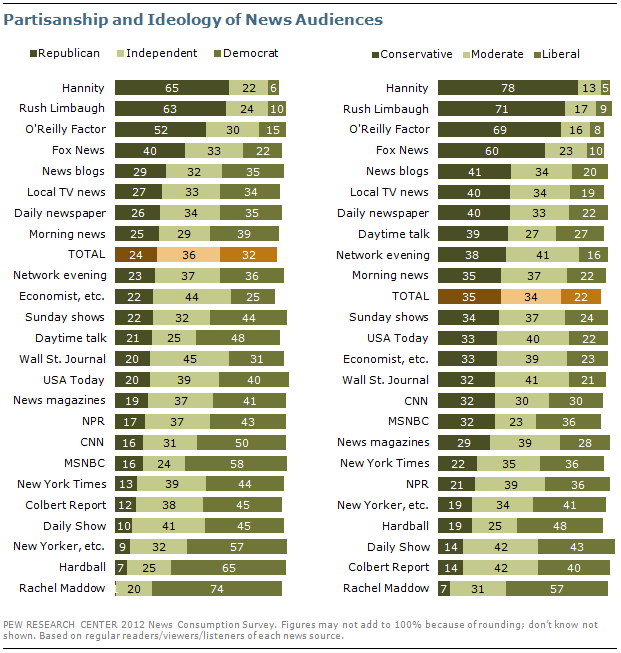
Studies from the Pew Research Center have revealed that readers of the Wall Street Journal are mostly centrist (41%) and conservative (32%), with a handful of liberal viewers (21%).
Source: Pew Research Center
But, as viewership is not an accurate indicator of a news outlet’s political bias, we will examine MarketWatch in more detail in the rest of this article. As MarketWatch is a potential contender with the popular Wall Street Journal, it is important to consider bias in their reporting and to discuss how to detect and identify types of bias in the news in general.
Is MarketWatch Biased?
Based on Biasly’s evaluations, MarketWatch is rated as Center.
By examining content patterns and the broader context of media influence, we aim to offer a balanced perspective on MarketWatch’s political bias—and contribute to the ongoing discussion about bias in the news.
How Does Biasly Rate News Sources?
Biasly uses proprietary algorithms and a team of analysts to provide comprehensive bias evaluations across thousands of news outlets. Over 200,000 articles from more than 3,200 sources have been analyzed to identify the most accurate and unbiased stories.
Biasly assigns each outlet three key scores:
- Reliability Score – Reflects factual accuracy
- AI Bias Score – Generated via natural language processing
- Analyst Bias Score – Assessed by human political analysts
These scores are based on seven core metrics: Tone, Tendency, Diction, Author Check, Selection/Omission, Expediency Bias, and Accuracy. These elements help analysts and algorithms evaluate the political attitude conveyed by each article.
Biasly’s Bias Meter ranges from -100% (most left) to +100% (most right), with 0% indicating neutrality. The system evaluates individual articles based on political terms, policies, figures, and sentiment to calculate precise bias ratings.
Is MarketWatch Politically Biased?
MarketWatch earns a Center rating for its AI Bias Score and a Center for its Analyst Bias Score. The Analyst Bias Score is generated by reviewers from liberal, moderate, and conservative backgrounds. MarketWatch has been criticized for political bias, as well as lack of accurate reporting. Numerous critical reviews have been posted on various sites such as SiteJabber and Trustpilot.
Abraham C., for instance, says that:
“I’ve used [MarketWatch for a while] now and have noticed a politically fueled news feed. In their community guidelines for comments, they praise being an open platform, but all comments go through an editor who rejects all dissenting views. Shame on them.”
In this case, he references several liberal-leaning comments he left on vaccine mandates. However, Richard O. claims that MarketWatch is liberally biased, saying:
“I used to enjoy MarketWatch as a good financial news source. Now I find most articles relate to some political issue commending the ‘progressive’ value or nullifying the conservative viewpoint.”
So is MarketWatch liberal, conservative, or centrist? In the following sections, we will analyze different articles and clips to determine whether MarketWatch has bias, and how much bias it has. But first, let’s take a look at Biasly’s media outlet ratings.
How to Evaluate Bias
Although Biasly rates MarketWatch as Center, it’s important to remember that bias can vary from article to article. So, let’s learn how to evaluate media bias.
Recognizing media bias requires awareness and critical thinking. Often, readers trust news sources that affirm their existing beliefs—a psychological tendency known as confirmation bias. This makes it harder to identify slanted narratives or one-sided reporting.
To combat this, it’s essential to challenge your assumptions by consulting multiple viewpoints and verifying news through third-party analysis. Tools like Biasly’s media bias ratings allow readers to compare the same news story across the political spectrum.
Ultimately, bias isn’t always a matter of what is said—it’s also about what is left out, how topics are framed, and which stories are chosen for coverage. Learning to recognize these patterns can help readers make more informed decisions and develop greater media literacy.
To start comparing news outlets and gain a better understanding of bias, sign up for Biasly’s Media Bias & News Analytics Platform to see how stories vary between sources.
MarketWatch Reliability Overview
Is MarketWatch Reliable?
MarketWatch is a very reliable and mostly centrist news source whose articles very rarely display selection or omission bias. When they are unreliable, however, it may not be very apparent or to a large enough degree to be obvious. To help get an overall idea of the reliability or political bias present in each article, you can use Biasly’s A.I. Bias Meter to provide a cursory rating with which to inform yourself before you begin reading.
How to Evaluate Reliability?
Reliability refers to how trustworthy or accurate a news source is. If we can’t trust what we read, then continuing to consume content from that outlet serves little purpose. So how do we evaluate a news outlet’s reliability?
There are several potential measures of reliability to look out for when trying to determine whether a media source is reliable or not. Red flags for an unreliable article can include the presence of wild, unsubstantiated claims, facts dependent on other unreliable sources, heavy use of opinionated language, and more. In contrast, hallmarks of a reliable source include:
- Absence of subjective language
- Citing credible sources (e.g., .gov, .edu, academic references)
- Verifiable facts and statistics from multiple outlets
- Use of primary sources, like interviews or transcripts
- Consistency with coverage across other platforms
Biasly’s reliability scores incorporate these elements in evaluating media outlets.
So How Does MarketWatch Fare in Its Reliability?
The political reliability index developed by Biasly assesses both accuracy and trustworthiness. MarketWatch currently holds Good Reliability Score, which is calculated as a weighted average of:
- Fact Analysis Score – Evaluates the accuracy of claims, facts, and evidence.
- Source Analysis Score – Assesses the number, diversity, and credibility of sources and quotes used.
MarketWatch’s Source Analysis Score is Average at 33% Reliable. This suggests moderate trustworthiness in its sourcing practices. The score is AI-generated and considers quote length, frequency, diversity, and quality.
The Fact Analysis Score of MarketWatch is Excellent at 97% Reliable. This further shows how well MarketWatch supports its claims, addresses selection and omission bias, and presents verifiable evidence.
While MarketWatch leans toward factual reporting, occasional lapses—such as unbalanced viewpoints or incomplete data—can affect its reliability rating. These nuances emphasize the importance of analyzing individual articles.
MarketWatch’s Accuracy and Reliability
According to Biasly’s analysis, MarketWatch maintains Good Reliability Score, but individual articles may vary significantly. Let’s dive into the details.
Two common types of bias that affect factuality include:
- Selection Bias – Highlighting or omitting stories to fit a particular narrative.
- Omission Bias – Leaving out differing perspectives or relevant details to skew perception.
Biasly’s accuracy ratings use a scale from 1% (least accurate) to 100% (most accurate). Factors include the presence of supporting evidence, internal and external reliable sources, and balanced viewpoints.
For instance, the opinion article Third Republican presidential debate showed that no candidate is addressing financial markets’ growing concerns, while criticizing the way Democrats are handling abortion laws, the article mainly criticizes the way the Republican candidates for the upcoming presidential election are ignoring economic issues and policies, showing the article’s liberal bias of Somewhat Left.
We will take a closer look at more examples like this below to provide a further investigation into the reliability of MarketWatch’s articles. This will include its use of selection bias, omission bias, and the quality of its sources and the facts it uses.
So, is MarketWatch Reliable?
Overall, MarketWatch can be considered to be an outlet that is very reliable. It demonstrates a consistent goal of journalistic integrity and typically supports claims with sources and quotes. Occasional omissions and framing bias do appear, particularly on culturally sensitive or partisan issues.
As media literacy improves, readers can more easily detect issues with selection bias, omission bias, and factuality. To strengthen your ability to assess reliability across the political spectrum, use Biasly’s News Bias Checker to compare how multiple outlets report the same story.
This empowers you to consume more accurate, balanced, and dependable news.
MarketWatch Editorial Patterns
MarketWatch’s coverage of political topics often reflects a Center bias, with consistent patterns in phrasing, source selection, and thematic focus that are Neutral. While the publication demonstrates journalistic standards in many of its reports, its portrayal of issues through word choice and the perspectives it selects to represent may indicate a political bias. This content analysis examines how MarketWatch’s articles frame political issues when it covers them.
Coverage of Liberal vs. Conservative Topics
MarketWatch mainly focuses on economic trends and events and therefore does not often touch on politics. However, due to the role of tariffs and the Federal Reserve Board, MarketWatch articles may touch on how their actions may influence the market. Nonetheless, when MarketWatch covers topics like these, they tend to take a neutral and objective perspective in their reporting.
Policy and Issue Framing
MarketWatch does not cover politics, but may publish articles on tariffs and the Federal Reserve Board due to their influence on the market. These topics are covered in a balanced and neutral manner, as MarketWatch does not aim to provide political commentary on these issues, but rather how Americans will be economically impacted by certain policies.
Coverage and Relevance
MarketWatch’s coverage of economic topics makes its contribution to the general political news atmosphere narrow, but due to it being owned by Dow Jones & Company, it plays a major role in how economic news is covered. As such, it serves as a compelling case study for examining source bias and news media bias in state-focused reporting.
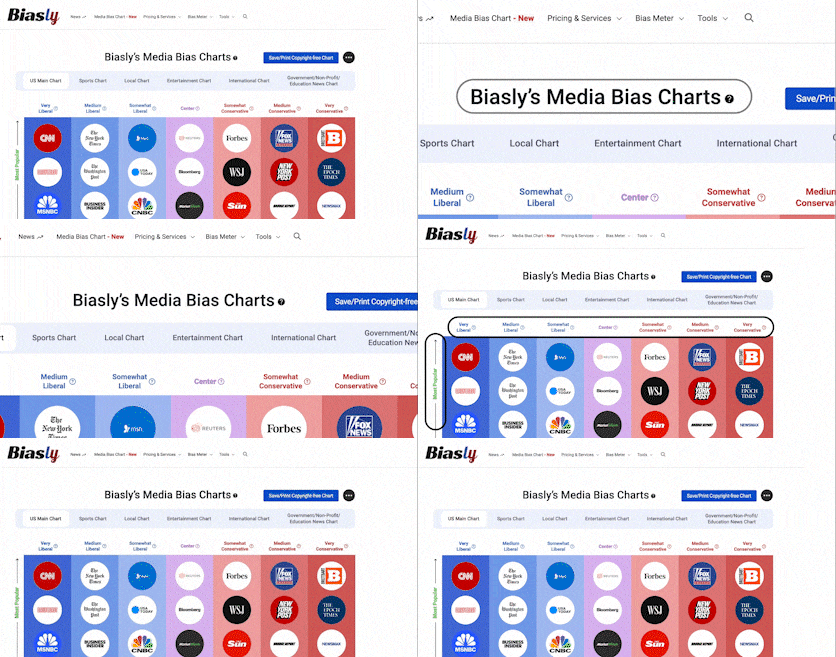
Readers who wish to further explore how MarketWatch compares with other publications can visit Biasly’s Media Bias Chart to analyze tone and word choice in real time.
Funding and Ownership
Who Owns MarketWatch?
MarketWatch is currently owned by Dow Jones & Company which is owned by News Corp, as are the Wall Street Journal and Barron’s. While the Dow Jones itself does not have a direct rating, its sister news outlets have been rated as Somewhat Conservative (WSJ) and Center (Barron’s), respectively. The lack of strong bias in these two outlets aligns with MarketWatch’s centrist perspective, while the conservative bias of the editor-in-chief, Mark DeCambre, matches up with MarketWatch’s Center bias.

MarketWatch Logo – Source: Wikipedia
Editors-in-chief are in charge of creating the look of a publication and deciding what pieces to feature and publish. As such, Mark DeCambre’s conservative beliefs likely had some influence over that of MarketWatch itself.
Given that MarketWatch does not change ownership very frequently, it is already relatively unbiased, and most of its articles are locked behind a paywall, creating a stable source of revenue for the company, it is unlikely its bias or reliability will change in the coming years.
Who Funds MarketWatch?
MarketWatch is a for-profit news company that is funded by its owners, Dow Jones & Company. Its revenue does not stem directly from its owners, but rather from ad revenue, data services, and subscriptions. Their source of funding has remained the same, even after their purchase by Dow Jones & Company in 2022. This reliance on revenue to run its operations suggests that its editorial standards may be influenced to maintain and grow its readership.
Additional Insights
News Source Comparison
When it comes to news source comparison, MarketWatch is often evaluated alongside other regional and national outlets that are centrist. Sources like Reuters and Bloomberg. This puts it in contrast with more biased media outlets that present consistently one-sided narratives without factual counterpoints.
Notable Contributors and Authors
MarketWatch features a diverse range of reporters and columnists, many of whom are deeply familiar with economics and market trends. Reporters like Victor Reklaitis and Quentin Fottrell often cover economic policies in relation to how they may affect Americans and represent the outlet’s strength in providing unbiased and centrist advice.
Related Tools and Resource Pages
To better understand how MarketWatch fits into the broader media landscape, we recommend exploring these helpful resources:
- Media Bias Chart: See where MarketWatch ranks among hundreds of media outlets across the political spectrum.
- Political Bias Chart: Visualize political slants of news sources across various policy areas.
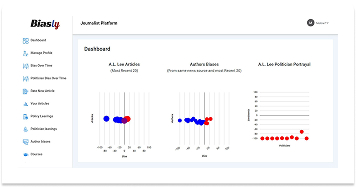
- Journalist Bias Analytics Platform: Explore how individual journalists contribute to bias within their publications.
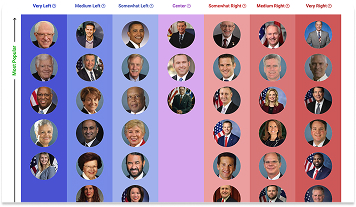
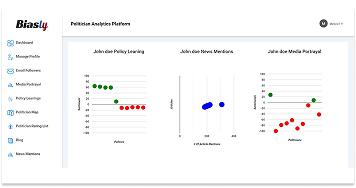
- Politician Bias Analytics Platform: Compare how politicians are framed differently by MarketWatch and other outlets.
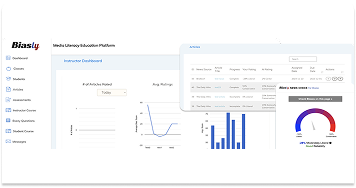
- Media Literacy Education Platform: Learn how to critically assess media sources, bias techniques, and news reliability.
Frequently Asked Questions
MarketWatch is rated as Center based on Biasly’s media bias algorithm, which assesses sentiment, article framing, and policy favorability.
While MarketWatch is not widely known for promoting fake news, some articles have shown selection and omission bias, especially in political reporting. Its factual reporting is generally sound.
Biasly uses a combination of AI sentiment analysis and human analyst review to assess tone, fact accuracy, source quality, and media bias indicators. Learn more on our Bias Meter page.
Generally, yes, though partisan framing and selective reporting can affect perceived reliability.
Military Spending
| Date | Sentiment | Associated Article | Snippet |
|---|---|---|---|
| 08/25/2019 | 75% For | Trump Family Detentions Flores Agreement (link) | So, of course, the Trump administration is doing the opposite in a baldfaced |