




 Forbes India Article Rating
BRICS Summit 2026: 11 Key Takeaways From the New Delhi Declaration
- Bias Rating
-6% Center
- Reliability
25% ReliableLimited
- Policy Leaning
4% Center
- Politician Portrayal
-70% Negative
Continue For Free
Create your free account to see the in-depth bias analytics and more.
By creating an account, you agree to our Terms and Privacy Policy, and subscribe to email updates.
Log In
Log in to your account to see the in-depth bias analytics and more.
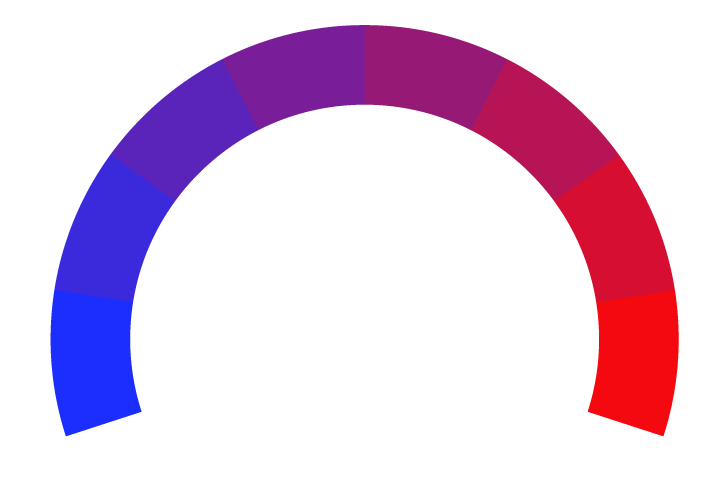
The A.I. bias rating includes policy and politician portrayal leanings based on the author’s tone found in the article using machine learning. Bias scores are on a scale of -100% to 100% with higher negative scores being more liberal and higher positive scores being more conservative, and 0% being neutral.
Sentiments
-49% Negative
- Liberal
- Conservative
| Sentence | Sentiment | Bias |
|---|---|---|
Unlock this feature by upgrading to the Pro plan. | ||
Bias Meter
Extremely
Liberal
Very
Liberal
Moderately
Liberal
Somewhat Liberal
Center
Somewhat Conservative
Moderately
Conservative
Very
Conservative
Extremely
Conservative
-100%
Liberal
100%
Conservative
Contributing sentiments towards policy:
59% : UN Security Council reform gets explicit as the Declaration backs China and Russia as permanent Security Council members and reiterates support for Brazil and India to play a greater role in the UN, "including its Security Council," recalling earlier Beijing and Johannesburg declarations.51% : Against this backdrop the 140-paragraph text assumes significance as it touches upon UN Security Council and IMF reform, de-dollarisation, sanctions and tariffs, the Pahalgam terror attack, Gaza and wider West Asia tensions, energy security, WTO paralysis, AI governance, conflicts from Sudan to Syria, and continued institution-building ahead of China's 2027 chairship.
50% : They also pledged to fight cross-border terrorism, terror financing and safe havens, while insisting terrorism isn't tied to any religion, nationality, civilization or ethnic group, and call for "zero tolerance" and no "double standards", with states bearing primary responsibility for combating terrorism and fully comply with obligations under international and the UN Charter.
49% : BRICS' New Delhi Declaration (Sept 2026) addressed UN/IMF reform, de-dollarisation, West Asia tensions, AI governance, and condemned terrorism.
45% : It does not name the Russia-Ukraine war anywhere in the text, referring only generically to "conflicts in many parts of the world" and rising global military spending., a gap consistent with the consensus-based drafting BRICS statements require among members with divergent positions on that conflict.
43% : Leaders expressed "deep concern" over continued violence in Gaza "despite the ceasefire agreement of October 2025," and call for a halt to any forced displacement of Palestinians and reaffirm support for Palestinian UN membership and a two-state solution based on 1967 borders with East Jerusalem as its capital.
40% : The Declaration also welcomes the BRICS Counter-Terrorism Working Group's work and pushes for finalising the UN's Comprehensive Convention on International Terrorism, plus coordinated action against UN-designated terrorist entities.
36% : The declaration expresses concern over Sudan, calls for a Syrian-led political transition and withdrawal of occupying forces, and welcomes the Lebanon ceasefire while condemning attacks on UN peacekeepers.
33% : The declaration also references South Africa's case against Israel at the International Court of Justice.
*Our bias meter rating uses data science including sentiment analysis, machine learning and our proprietary algorithm for determining biases in news articles. Bias scores are on a scale of -100% to 100% with higher negative scores being more liberal and higher positive scores being more conservative, and 0% being neutral. The rating is an independent analysis and is not affiliated nor sponsored by the news source or any other organization.