



 US News World Report Article Rating
California Could Become the First State to Tax Billionaires' Wealth
- Bias Rating
10% Center
- Reliability
55% ReliableAverage
- Policy Leaning
10% Center
- Politician Portrayal
-42% Negative
Continue For Free
Create your free account to see the in-depth bias analytics and more.
By creating an account, you agree to our Terms and Privacy Policy, and subscribe to email updates.
Log In
Log in to your account to see the in-depth bias analytics and more.
The A.I. bias rating includes policy and politician portrayal leanings based on the author’s tone found in the article using machine learning. Bias scores are on a scale of -100% to 100% with higher negative scores being more liberal and higher positive scores being more conservative, and 0% being neutral.
Sentiments
43% Positive
- Liberal
- Conservative
| Sentence | Sentiment | Bias |
|---|---|---|
Unlock this feature by upgrading to the Pro plan. | ||
Bias Meter
Extremely
Liberal
Very
Liberal
Moderately
Liberal
Somewhat Liberal
Center
Somewhat Conservative
Moderately
Conservative
Very
Conservative
Extremely
Conservative
-100%
Liberal
100%
Conservative
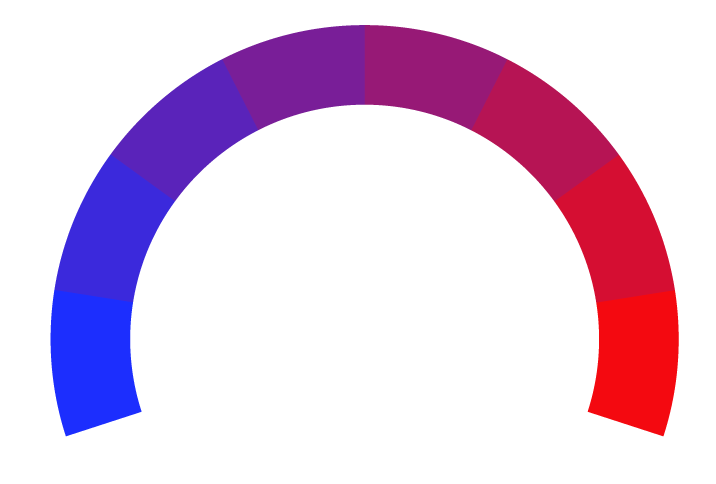
Contributing sentiments towards policy:
53% : California's budget relies heavily on the income tax of the state's richest residents.52% : Progressive politicians, including Sanders and Massachusetts Sen. Elizabeth Warren, have long supported a federal wealth tax.
52% : Newsom says a California wealth tax would disadvantage the state, but he supports a national minimum tax on anyone with a net worth above $100 million.
51% : California voters are considering a first-in-the-nation measure to tax the net worth of billionaires SACRAMENTO, Calif. (AP) -- California could become the first state in the nation to tax the net worth of billionaires Tuesday under a ballot measure that has divided liberal leaders nationally and triggered one of the most expensive ballot fights in state history as the ultra-rich scramble to figure out whether they would pay the tax or flee.
48% : Mark Zuckerberg said he would stay in California for eight years and made a deal with Meta that would help him pay the tax without losing his ownership stake in the company.
48% : " Anthony Serrano, a Democrat living in Folsom who works for Kaiser Permanente, one of the nation's largest not-for-profit healthcare plans, said he was leaning toward voting for the tax because he tends to support "anything that is a positive for healthcare.
46% : They're concerned about how the tax revenue would be divvied up and about the potential impact on the state's budget if there's a mass exodus of wealthy taxpayers.
43% : Proposition 40 would impose a one-time 5% tax on the wealth of Californians whose net worth exceeds $1 billion, with most of the revenue dedicated to replacing federal funding cuts to healthcare.
43% : That's an apparent shift from a PPIC survey conducted in early September, when 52% of likely voters said they'd vote for the tax and 46% said they'd vote against it.
42% : "It's time to collect those taxes so we can ensure that our healthcare system is still safe," said Lorena Gonzalez, president of the California Federation of Labor Unions.
42% : But some traditional Democratic allies, including Planned Parenthood and the California Teachers Association, are part of a coalition opposing it.
40% : But Democratic Gov. Gavin Newsom warns it would prompt the state's wealthiest to move out of California and take their tax money with them.
38% : The proposals, which are backed by the political action committee Building a Better California, include a ban on new taxes on financial assets and other personal property, a category that excludes real estate.
31% : Backers of the proposed tax, led by the powerful labor union SEIU United Healthcare Workers West, say it's needed to help the state backfill the federal funding cuts.
24% : " Even if the proposed billionaire tax fails in California, the battle over the measure ignited a crucial dialogue on the issue, Gonzalez said.
*Our bias meter rating uses data science including sentiment analysis, machine learning and our proprietary algorithm for determining biases in news articles. Bias scores are on a scale of -100% to 100% with higher negative scores being more liberal and higher positive scores being more conservative, and 0% being neutral. The rating is an independent analysis and is not affiliated nor sponsored by the news source or any other organization.