




Ceuta reveals migration policies hypocrisies and far-right-fuelled fears - CEPS
- Bias Rating
26% Somewhat Right
- Reliability
40% ReliableAverage
- Policy Leaning
36% Somewhat Right
- Politician Portrayal
-56% Negative
Continue For Free
Create your free account to see the in-depth bias analytics and more.
By creating an account, you agree to our Terms and Privacy Policy, and subscribe to email updates.
Log In
Log in to your account to see the in-depth bias analytics and more.
The A.I. bias rating includes policy and politician portrayal leanings based on the author’s tone found in the article using machine learning. Bias scores are on a scale of -100% to 100% with higher negative scores being more liberal and higher positive scores being more conservative, and 0% being neutral.
Sentiments
-33% Negative
- Liberal
- Conservative
| Sentence | Sentiment | Bias |
|---|---|---|
Unlock this feature by upgrading to the Pro plan. | ||
Bias Meter
Extremely
Liberal
Very
Liberal
Moderately
Liberal
Somewhat Liberal
Center
Somewhat Conservative
Moderately
Conservative
Very
Conservative
Extremely
Conservative
-100%
Liberal
100%
Conservative
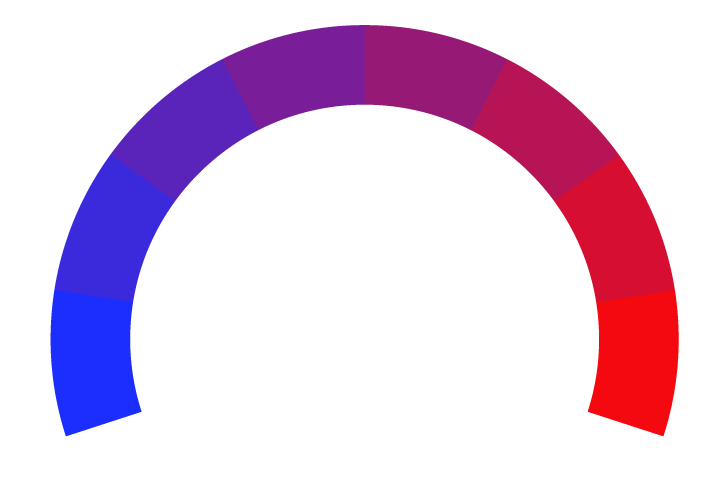
Contributing sentiments towards policy:
58% : Ahead of the meeting, Meloni pressed for EU-funded return hubs in third countries modelled on Italy's 'Albania model'.58% : Morocco has received substantial EU funding, including for migration and border management.
52% : Such controls must be motivated, proportionate and a last resort, but years of inaction from the European Commission have normalised disproportionate and prolonged internal border controls.
47% : The Schengen Borders Code allows for Member States to reintroduce internal border controls in response to an unforeseeable serious threat requiring urgent action.
47% : The reactions within the EU have shown how readily political fears surrounding migration - long cultivated by those now instrumentalising them - can divide the Union.
46% : After Spain admitted Western Sahara's Algeria-backed Polisario Front leader, Brahim Ghali, for medical treatment in 2021, Moroccan border controls eased and around 8 000 people entered Ceuta.
42% : This reveals the broader problem with externalisation, in Morocco, Libya, Tunisia, Turkey and elsewhere: the EU finances border control but it can't - and often chooses not to - check how these controls are conducted.
41% : Rather than confronting the conditions that led people to enter the water and at least 88 of them to die - including the EU's own restrictive migration policies - political leaders leveraged Ceuta to attack their opponents, weaken Schengen, promote further externalisation and fuel unrelated disputes.
39% : Rather than showing solidarity with Spain, EU governments used the event to justify further attacks on Schengen and score political points, domestically and in Brussels, by playing into the far right's agenda.
37% : More externalisation - including through return hubs - both worsens the EU's dependence on third-country governments by giving them greater leverage and exposes people to more violence and danger.
*Our bias meter rating uses data science including sentiment analysis, machine learning and our proprietary algorithm for determining biases in news articles. Bias scores are on a scale of -100% to 100% with higher negative scores being more liberal and higher positive scores being more conservative, and 0% being neutral. The rating is an independent analysis and is not affiliated nor sponsored by the news source or any other organization.