




 The Jerusalem Post Article Rating
Don't impose another Persian dictator on a multinational Iran - opinion
- Bias Rating
-28% Somewhat Left
- Reliability
35% ReliableAverage
- Policy Leaning
-30% Somewhat Left
- Politician Portrayal
-61% Negative
Continue For Free
Create your free account to see the in-depth bias analytics and more.
By creating an account, you agree to our Terms and Privacy Policy, and subscribe to email updates.
Log In
Log in to your account to see the in-depth bias analytics and more.
The A.I. bias rating includes policy and politician portrayal leanings based on the author’s tone found in the article using machine learning. Bias scores are on a scale of -100% to 100% with higher negative scores being more liberal and higher positive scores being more conservative, and 0% being neutral.
Sentiments
-26% Negative
- Liberal
- Conservative
| Sentence | Sentiment | Bias |
|---|---|---|
Unlock this feature by upgrading to the Pro plan. | ||
Bias Meter
Extremely
Liberal
Very
Liberal
Moderately
Liberal
Somewhat Liberal
Center
Somewhat Conservative
Moderately
Conservative
Very
Conservative
Extremely
Conservative
-100%
Liberal
100%
Conservative
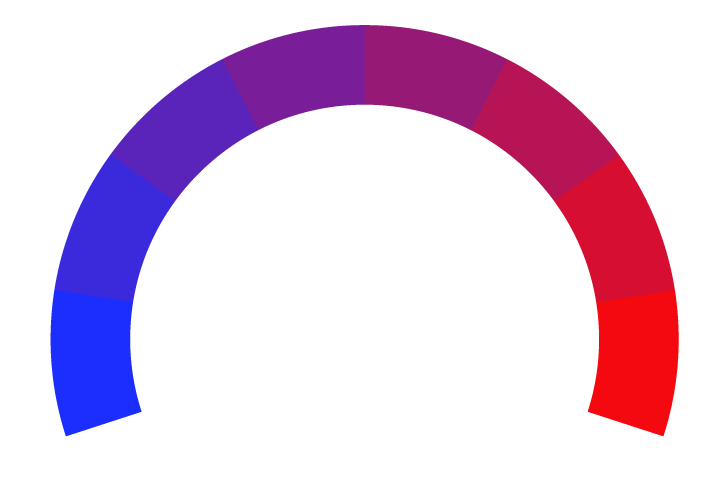
Contributing sentiments towards policy:
55% : A meaningful transition after the Islamic Republic cannot default to Persian nationalism under a new label.55% : Kurdish, Baloch, Ahwazi Arab, and other movements have long advocated democratic solutions grounded in local governance, cultural rights, and international engagement.
52% : It initiated a long-standing policy of suppression, executions, and forced assimilation, denying national, ethnic, and religious groups their cultural and political rights. From the Pahlavi monarchy to the current theocracy, Persians have monopolized power, the military, and economic institutions while suppressing minorities seeking recognition, language rights, and political autonomy.
47% : Here, Crown Prince Reza Pahlavi, the exiled son of the last shah of Iran, sits during an interview in Paris in June, after the Israel-Iran war.
40% : His research focuses on the legal and political dimensions of conflict across the Middle East and Eastern Europe, with particular emphasis on the intersecting disputes involving Kurdistan, Israel, Iran, Iraq, Syria, Turkey, Russia, and Ukraine.
*Our bias meter rating uses data science including sentiment analysis, machine learning and our proprietary algorithm for determining biases in news articles. Bias scores are on a scale of -100% to 100% with higher negative scores being more liberal and higher positive scores being more conservative, and 0% being neutral. The rating is an independent analysis and is not affiliated nor sponsored by the news source or any other organization.