




 Horizon Weekly Article Rating
EU plans to liberalize 80 percent of Armenian exports
- Bias Rating
-10% Center
- Reliability
10% ReliableLimited
- Policy Leaning
-10% Center
- Politician Portrayal
N/A
Continue For Free
Create your free account to see the in-depth bias analytics and more.
By creating an account, you agree to our Terms and Privacy Policy, and subscribe to email updates.
Log In
Log in to your account to see the in-depth bias analytics and more.
The A.I. bias rating includes policy and politician portrayal leanings based on the author’s tone found in the article using machine learning. Bias scores are on a scale of -100% to 100% with higher negative scores being more liberal and higher positive scores being more conservative, and 0% being neutral.
Sentiments
28% Positive
- Liberal
- Conservative
| Sentence | Sentiment | Bias |
|---|---|---|
Unlock this feature by upgrading to the Pro plan. | ||
Bias Meter
Extremely
Liberal
Very
Liberal
Moderately
Liberal
Somewhat Liberal
Center
Somewhat Conservative
Moderately
Conservative
Very
Conservative
Extremely
Conservative
-100%
Liberal
100%
Conservative
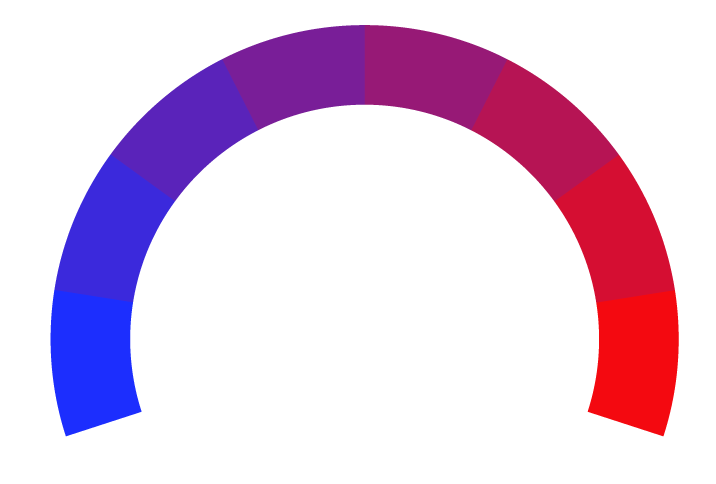
Contributing sentiments towards policy:
57% : The European Union plans to liberalize nearly 80 percent of Armenian exports to the EU market, European Commission President Ursula von der Leyen announced in Yerevan following talks with Nikol Pashinyan.57% : She also announced an additional €18 million in EU assistance, the final part of a broader €52 million support package designed to strengthen Armenia's trade capacity and help businesses affected by Russian restrictions.
46% : Pashinyan welcomed the proposal, saying that once the decision fully enters into force, Armenia would become the first country without EU candidate status or a free trade agreement with the bloc to benefit from such a measure in recent years.
44% : Von der Leyen said Armenia "can count on the European Union," describing Russia's pressure on Armenia as close to "economic coercion."
41% : While Brussels presents its support as economic resilience and market diversification, the timing and scale of EU engagement around the election period have also raised questions about the bloc's increasingly direct role in Armenia's domestic political landscape. Pashinyan, for his part, insisted that Armenia's closer ties with the EU do not mean his government seeks a crisis with Russia.
*Our bias meter rating uses data science including sentiment analysis, machine learning and our proprietary algorithm for determining biases in news articles. Bias scores are on a scale of -100% to 100% with higher negative scores being more liberal and higher positive scores being more conservative, and 0% being neutral. The rating is an independent analysis and is not affiliated nor sponsored by the news source or any other organization.