




Explained: How the SHANTI Bill, 2025 restructures nuclear licensing, safety and regulation
- Bias Rating
- Reliability
10% ReliableLimited
- Policy Leaning
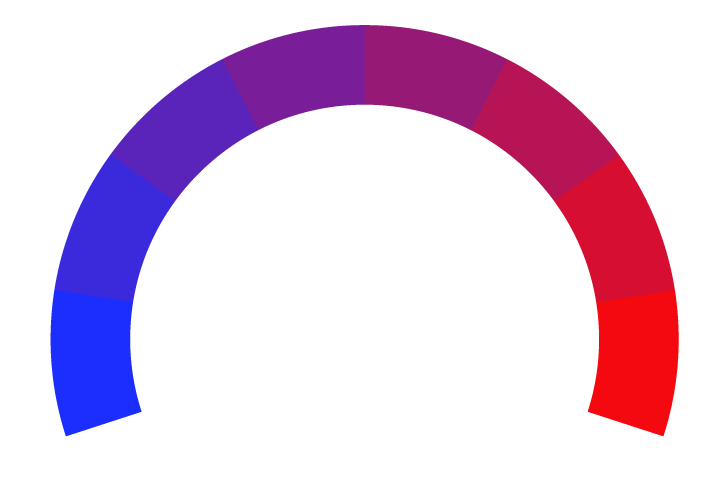
-10% Center
- Politician Portrayal
N/A
Continue For Free
Create your free account to see the in-depth bias analytics and more.
By creating an account, you agree to our Terms and Privacy Policy, and subscribe to email updates.
Bias Score Analysis
The A.I. bias rating includes policy and politician portrayal leanings based on the author’s tone found in the article using machine learning. Bias scores are on a scale of -100% to 100% with higher negative scores being more liberal and higher positive scores being more conservative, and 0% being neutral.
Sentiments
48% Positive
- Liberal
| Sentence | Sentiment | Bias |
|---|---|---|
Unlock this feature by upgrading to the Pro plan. | ||
Reliability Score Analysis
Policy Leaning Analysis
Politician Portrayal Analysis
Bias Meter
Extremely
Liberal
Very
Liberal
Moderately
Liberal
Somewhat Liberal
Center
Somewhat Conservative
Moderately
Conservative
Very
Conservative
Extremely
Conservative
-100%
Liberal
100%
Conservative
Contributing sentiments towards policy:
66% : The Bill seeks to provide a unified law for the production, use, regulation and expansion of nuclear energy and ionising radiation across power generation and non-power applications, including healthcare, agriculture, industry and research.59% : This unified law aims to streamline production, use, regulation, and expansion of nuclear energy and radiation across various sectors, enhancing safety and liability mechanisms.
54% : Overall, the SHANTI Bill, 2025 lays down a single legislative framework to govern India's nuclear expansion, balancing growth, safety, regulation and liability under one law.
51% : The legislation replaces the fragmented regulatory structure with a consolidated framework covering licensing, safety authorisation, liability, compensation, regulation, and oversight, while opening the door for wider participation beyond government entities under defined conditions.
*Our bias meter rating uses data science including sentiment analysis, machine learning and our proprietary algorithm for determining biases in news articles. Bias scores are on a scale of -100% to 100% with higher negative scores being more liberal and higher positive scores being more conservative, and 0% being neutral. The rating is an independent analysis and is not affiliated nor sponsored by the news source or any other organization.