




 Atlantic Council Article Rating
From burden sharing to strategic delivery: NATO and Turkey's priorities ahead of the Ankara summit
- Bias Rating
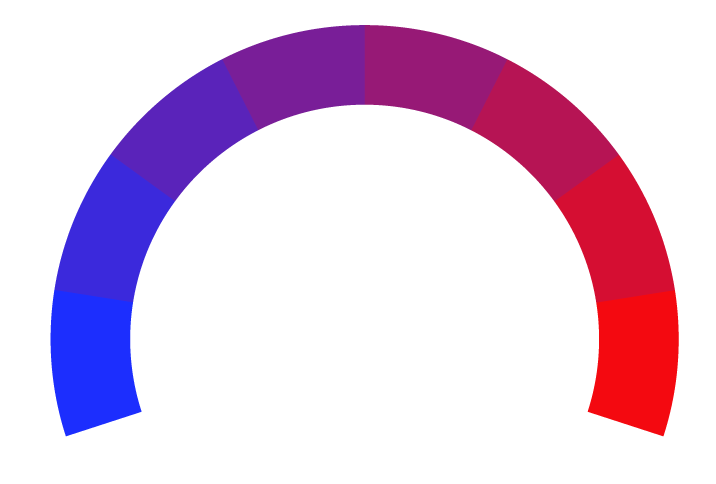
-10% Center
- Reliability
80% ReliableGood
- Policy Leaning
-10% Center
- Politician Portrayal
-19% Negative
Continue For Free
Create your free account to see the in-depth bias analytics and more.
By creating an account, you agree to our Terms and Privacy Policy, and subscribe to email updates.
Log In
Log in to your account to see the in-depth bias analytics and more.
The A.I. bias rating includes policy and politician portrayal leanings based on the author’s tone found in the article using machine learning. Bias scores are on a scale of -100% to 100% with higher negative scores being more liberal and higher positive scores being more conservative, and 0% being neutral.
Sentiments
15% Positive
- Liberal
| Sentence | Sentiment | Bias |
|---|---|---|
Unlock this feature by upgrading to the Pro plan. | ||
Bias Meter
Extremely
Liberal
Very
Liberal
Moderately
Liberal
Somewhat Liberal
Center
Somewhat Conservative
Moderately
Conservative
Very
Conservative
Extremely
Conservative
-100%
Liberal
100%
Conservative
Contributing sentiments towards policy:
63% : To promote more inclusive procurement and financing mechanisms, the summit should prioritize the development of NATO High Visibility Projects (HVPs), concrete multinational production and joint procurement projects, and the creation of a new EU-NATO initiative similar to the Prioritized Ukraine Requirements List (PURL) to overcome the exclusion of non-EU allies.62% : At the summit in The Hague, allies agreed to count contributions to Ukraine's defense and defense industry as part of defense spending.
62% : * Launch an inclusive NATO-EU defense industrial cooperation mechanism to include non-EU NATO members.
60% : Expanding HVPs and enabling non-EU NATO members to access EU funding for collective security projects could further strengthen defense cooperation.
59% : Although allies committed at The Hague to increase defense spending to 5 percent of their GDP, pledges must translate into tangible military capabilities.
59% : Despite this, Turkey was excluded from past EU drone procurements for Ukraine, even though its drone industry is globally preferred, including by many EU member states.
59% : The Ankara summit could address EU barriers to non-EU NATO member participation and, similar to the PURL initiative, establish a NATO-EU mechanism to facilitate arms procurement and EU financing for non-EU allies.
58% : Another key debate within NATO 3.0 concerns the idea of a European pillar amid growing EU strategic autonomy and a disengaging United States.
57% : Recent EU initiatives such as Security Action for Europe (SAFE), the European Defence Industry Program (EDIP), and the broader ReArm Europe Plan / Readiness 2030 aim to pool funding, coordinate joint procurement, and strengthen Europe's defense industrial capacity and innovation.
57% : EU institutions now channel most financial assistance, with the 2026-2027 €90-billion package covering two-thirds of Ukraine's total budgetary needs.
57% : Recognizing this reality, the allies' first step was to pledge 5-percent defense spending.
57% : The EU can play an important enabling role through financing and regulating the defense industry and facilitating fiscal measures, helping European allies meet NATO capability targets and investment pledges.
56% : This issue brief focuses on five topics expected to dominate the summit agenda: defense spending, defense industrial production, support for Ukraine, NATO 3.0, and the southern flank.
55% : * Translate defense spending commitments into concrete multinational production and joint procurement projects.
54% : By the end of 2025, European countries, the EU, and Canada together provided 65 percent of total bilateral allocations compared to the United States' 33 percent.
53% : A major challenge for the transatlantic defense industry is that these initiatives -- designed to strengthen the EU's strategic autonomy and reduce dependence on US systems -- largely exclude non-EU NATO members and countries that do not have a security and defense partnership with the EU.
53% : Because recent defense pacts with the United Kingdom and Canada grant access to EU defense initiatives, the only NATO countries with advanced defense industries left excluded are the United States and Turkey.
53% : While similar to NATO's Article 5, Article 42(7) of the Treaty on European Union grants member states greater discretion regarding the form of assistance they provide, which may include military, humanitarian, financial, or diplomatic support.
52% : But EU security and defense efforts must complement, not duplicate, NATO.
51% : At the Ankara summit, where a new cycle of NATO Defense Planning Process (NDPP) is also expected to be launched, the focus should be on developing a coordinated transition plan in light of the expected reduction in US forces and commitments, and on establishing a European (not EU) pillar that strengthens rather than weakens transatlantic security.
51% : The Hague summit recognized that collective security depends not only on military spending but also on investments in civil preparedness, resilience, cybersecurity, critical infrastructure, protection against hybrid threats, promotion of innovation, and strengthening of the defense industrial base.
49% : Since the 2014 annexation of Crimea, NATO allies have gradually increased defense spending, further driven by US demands for fairer burden sharing.
48% : In January, EU Defense Commissioner Andrius Kubilius proposed a standing one-hundred-thousand-strong European force to replace US troops in Europe, while the EU increasingly explores initiatives such as the European Air Shield and European Drone Wall, despite speaking to core NATO tasks.
47% : For example, the EU's recently approved €90-billion support loan for Ukraine largely excludes defense industries from countries that are not members of the European Economic Area (EEA).
47% : For Turkey, this distinction is fundamental: the European pillar should not become an EU pillar and must reinforce, not weaken, transatlantic ties.
46% : Furthermore, there is a tendency within the EU to activate the mutual defense clause of the European Union treaty.
46% : Rutte has repeatedly warned that a more "European-led," not EU-led, NATO should mean greater European responsibility within the Alliance, with the EU complementing NATO rather than creating parallel structures.
45% : * Strengthen a European-led, not EU-led, pillar within NATO.
44% : Although PURL and EU financing packages have partially filled the gap left by the United States, the potential depletion of US stockpiles due to the Iran war has raised concerns about the future of assistance to Ukraine.
43% : In addition, they impose several restrictions, including a requirement that no more than 35 percent of component costs originate from outside the EU, Ukraine, and EEA/EFTA countries.
41% : Trump's election in November 2024 fundamentally reshaped NATO's approach to defense spending.
39% : While European Union (EU) defense initiatives contribute meaningfully, the exclusion of non-EU allies such as Turkey undermines transatlantic solidarity and restricts access to critical industrial capacity.
39% : From commitment to delivery: Defense spending after The Hague Allies have long recognized the need to increase defense spending in response to Russia's growing threat.
39% : Following Russia's full-scale invasion of Ukraine in 2022, the Madrid summit identified Russia as "the most significant and direct threat" to allied security, prompting further increases in defense expenditures.
37% : NATO Secretary-General Mark Rutte has repeatedly warned that excluding non-EU allies from EU defense initiatives "increases costs, complicates production, and hampers innovation.
36% : Countries will need to make cuts to welfare, healthcare spending, or foreign aid, take on more debt, or reclassify existing expenditures as defense spending.
35% : The wars in Ukraine and between Iran, Israel, and the United States have also demonstrated the vulnerability of cities and critical infrastructure to missile and drone attacks: four missiles aimed at Turkey were intercepted by NATO air defenses, underscoring growing pressure on the Alliance's southern flank.
23% : Repeating long-standing burden-sharing criticisms, the Trump administration accused European allies and Canada of free riding" and demanded higher defense spending.
*Our bias meter rating uses data science including sentiment analysis, machine learning and our proprietary algorithm for determining biases in news articles. Bias scores are on a scale of -100% to 100% with higher negative scores being more liberal and higher positive scores being more conservative, and 0% being neutral. The rating is an independent analysis and is not affiliated nor sponsored by the news source or any other organization.