




 The Guardian Article Rating
Graham Platner was an unforced error – the left has lessons to learn | Osita Nwanevu
- Bias Rating
-6% Center
- Reliability
95% ReliableExcellent
- Policy Leaning
-4% Center
- Politician Portrayal
-1% Negative
Continue For Free
Create your free account to see the in-depth bias analytics and more.
By creating an account, you agree to our Terms and Privacy Policy, and subscribe to email updates.
Log In
Log in to your account to see the in-depth bias analytics and more.
The A.I. bias rating includes policy and politician portrayal leanings based on the author’s tone found in the article using machine learning. Bias scores are on a scale of -100% to 100% with higher negative scores being more liberal and higher positive scores being more conservative, and 0% being neutral.
Sentiments
N/A
- Liberal
- Conservative
| Sentence | Sentiment | Bias |
|---|---|---|
Unlock this feature by upgrading to the Pro plan. | ||
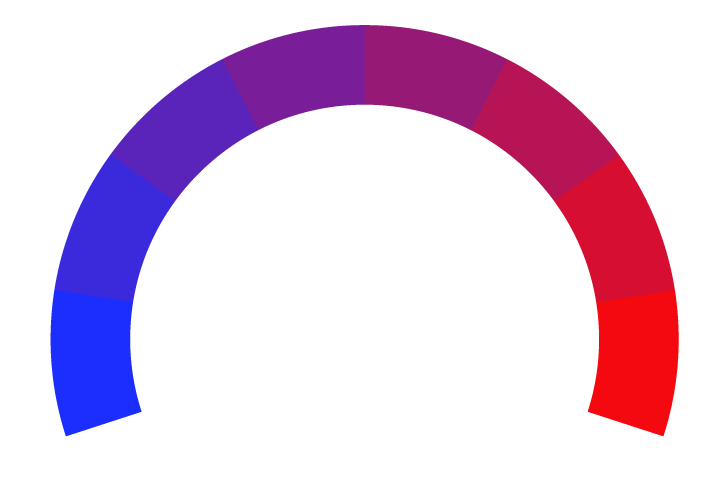
Bias Meter
Extremely
Liberal
Very
Liberal
Moderately
Liberal
Somewhat Liberal
Center
Somewhat Conservative
Moderately
Conservative
Very
Conservative
Extremely
Conservative
-100%
Liberal
100%
Conservative
Contributing sentiments towards policy:
44% : But he and his team clearly thought long and hard about which races to prioritize and why, ran the political calculus on what it would take to win, and succeeded with a slate of candidates chosen with intention – whose only outward liabilities, collectively, are some old social media posts and a few once-controversial positions on issues such as immigration and the US’s relationship with Israel that their constituents are increasingly receptive to.Here, by contrast, is the process by which Graham Platner, who suspended his Senate campaign on Wednesday night, became the progressive standard bearer in Maine.34% : It may be true, for instance, as supporters of Bernie Sanders often insist, that many working-class voters are tired of candidates who went to fancy schools and who’ve been in politics for decades, and that those voters can no longer trust such people to represent their interests.It often passes without mention, though, that Sanders himself matches that description and has managed to build a political coalition that includes millions of working-class Americans anyway.Donald Trump, for his part – a comically germaphobic billionaire with Liberace’s taste in decor who plays tracks from the Phantom of the Opera at rallies – has earned the loyalty of millions of white working-class voters despite being one of the least personally relatable candidates ever to seek the presidency in this country.And progressives shouldn’t take the wrong lesson from the fact that Trump has been able to weather appalling personal scandals of his own – polls regularly show that his indiscretions and insanity hurt his standing among most Americans and that more conventional Republicans would have matched or outperformed him in elections overall, however strongly he connects with certain constituencies in the electorate.This is because most Americans still do hold their political candidates to high standards of personal conduct – and defensibly so given that political candidates are functionally applying for jobs that might affect thousands or millions of lives.Voters are, obviously, willing to look past certain personal mistakes and more ought to be done – not just at the level of political culture but in reforms to campaign regulations and campaign finance – to ensure that more ordinary people with ordinary flaws can become viable candidates for office.But there are limits and the Platner campaign found them – to the delight of establishment figures in the party now hoping they can replace him with a less progressive candidate and use the moment to discredit the left more broadly.Still, Platner’s candidacy was an unforced error – the product of an approach to electoral politics built around the idea that progressives will come to power once they’ve caught enough lightning in a bottle.
*Our bias meter rating uses data science including sentiment analysis, machine learning and our proprietary algorithm for determining biases in news articles. Bias scores are on a scale of -100% to 100% with higher negative scores being more liberal and higher positive scores being more conservative, and 0% being neutral. The rating is an independent analysis and is not affiliated nor sponsored by the news source or any other organization.