




 The Times of India Article Rating
Inside US-Saudi nuclear deal: Trump opens critical door in Middle East; why Pakistan is biggest loser
- Bias Rating
2% Center
- Reliability
45% ReliableAverage
- Policy Leaning
2% Center
- Politician Portrayal
16% Positive
Continue For Free
Create your free account to see the in-depth bias analytics and more.
By creating an account, you agree to our Terms and Privacy Policy, and subscribe to email updates.
Log In
Log in to your account to see the in-depth bias analytics and more.
The A.I. bias rating includes policy and politician portrayal leanings based on the author’s tone found in the article using machine learning. Bias scores are on a scale of -100% to 100% with higher negative scores being more liberal and higher positive scores being more conservative, and 0% being neutral.
Sentiments
37% Positive
- Liberal
- Conservative
| Sentence | Sentiment | Bias |
|---|---|---|
Unlock this feature by upgrading to the Pro plan. | ||
Bias Meter
Extremely
Liberal
Very
Liberal
Moderately
Liberal
Somewhat Liberal
Center
Somewhat Conservative
Moderately
Conservative
Very
Conservative
Extremely
Conservative
-100%
Liberal
100%
Conservative
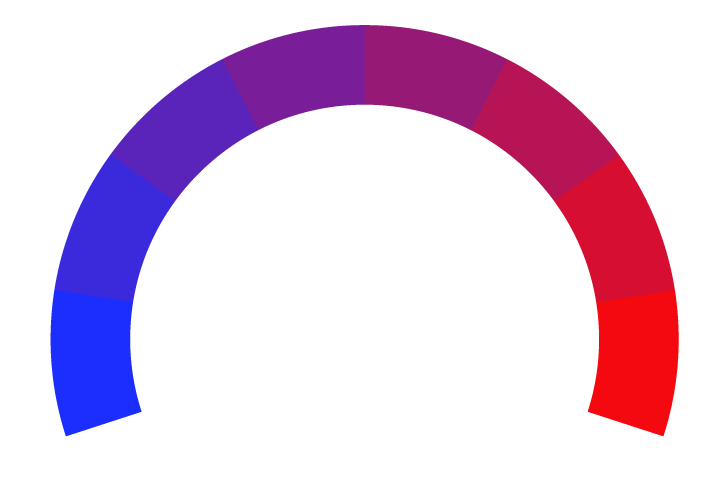
Contributing sentiments towards policy:
59% : Other potential contenders include South Korea, which built reactors in the neighbouring United Arab Emirates, and France.The choice of partner will likely depend on technological offerings, financing, and geopolitical alignment, including conditions related to nuclear fuel handling.A distinctive feature of Trump's nuclear diplomacy is the embedding of the Saudi deal within a broader vision of "mandatory Abraham Accords" - in effect, requiring Riyadh's normalisation with Israel as the political price of accessing the nuclear package.Reporting from US and Israeli outlets indicates that Trump has pushed to make Saudi participation in an expanded Abraham framework a condition for full implementation of the nuclear agreement.In this logic, nuclear cooperation is leverage: the carrot that nudges Saudi Arabia into a formal strategic alignment with Israel against Iran, while delivering Trump a signature diplomatic trophy he can sell to his domestic base and donors.It also allows the administration to present the nuclear deal not as an isolated proliferation risk but as part of a grand bargain - peace with Israel and a stronger anti‑Iran coalition under American leadership.Saudi Arabia has so far not responded to the claim.However, White House press secretary Karoline Leavitt said that if Riyadh does not join the Abraham Accords "the deal is off".Trump's advisors have long argued that Saudi Arabia's nuclear ambitions are a given, not a variable.Crown Prince Mohammed bin Salman has publicly stated that if Iran gets a bomb, Saudi Arabia will quickly follow, signalling that the kingdom views a nuclear hedge as a necessary insurance policy in a deteriorating security environment.In that context, the administration's internal justification is that it is better to channel Saudi nuclear development through a US‑supervised framework than to push Riyadh into the arms of Chinese or Russian suppliers, who would likely impose weaker safeguards.In other words, Washington is not trying to prevent Saudi Arabia from ever acquiring a latent nuclear option; it is trying to ensure that, if and when such an option matures, it emerges within a system where the US has maximum visibility, contractual leverage and political influence.Until now Pakistan has had the rare distinction of being the only nuclear-armed Islamic state.54% : the trajectory outlined in the US-Saudi deal holds, West Asia in the mid‑2030s could feature three central nuclear players: Israel with its established but undeclared arsenal; Iran with a short or accomplished breakout capability; and Saudi Arabia with a US‑incubated nuclear infrastructure capable of swift militarisation in a crisis.Around this triangle, American forces and bases would operate as both deterrent and guarantor, even as China and Russia seek entry points through alternative energy and defence deals.In that triangle, Pakistan is conspicuous not by its presence but by its relative absence.Once the only Islamic state with the bomb, it risks becoming a peripheral nuclear power in a region whose atomic future is being rewritten by Washington and Riyadh - a future in which the most consequential Islamic nuclear story may not be the one Pakistan told about itself in 1998, but the one Saudi Arabia writes under American supervision a decade from now.
51% : If, within a decade, Saudi Arabia runs advanced enrichment and reactor infrastructure based on US technology, the centre of gravity for "Islamic nuclear power" will have moved from South Asia to the Arabian Peninsula.Looking out over the next decade, the logic of the Trump-Saudi arrangement points towards a West Asia where three key states: Israel, Iran and Saudi Arabia - either possess or are a short sprint away from nuclear weapons.Israel is already widely believed to maintain an undeclared but operational nuclear arsenal, under a longstanding policy of opacity.Iran, despite dithering on nuclear agreements, has substantially advanced its enrichment capabilities and possesses a short "breakout" timeline to a bomb if it chooses.Saudi Arabia, under the new deal, acquires the legal, technical and industrial scaffolding of a civil programme that can, over time, be repurposed into a weapons‑relevant capability, especially if Iran crosses the nuclear weapons
50% : The US-Saudi pact fundamentally dismantles that monopoly, marginalises Pakistan's leverage over Riyadh, and accelerates a tri-polar nuclear reality across West Asia featuring Israel, Iran, and Saudi Arabia.The new 30‑year US-Saudi civil nuclear cooperation agreement authorises American companies to help Riyadh build reactors, transfer advanced nuclear technology and cooperate on the fuel cycle, including potentially sensitive stages such as uranium enrichment.Unlike the so‑called "gold standard" deal with the UAE, which explicitly forswore enrichment and reprocessing, the Saudi arrangement loosens long‑standing US non‑proliferation guardrails, opening the door to domestic enrichment on Saudi soil after a defined period.Arms control experts note that under the agreed framework, Washington and Riyadh will conduct a study on the commercial viability of enrichment in the kingdom; if justified, the US would build a so‑called "black box" enrichment facility in Saudi Arabia and retain nominal control of the technology.But even conservative analyses concede that after about 10 years, Saudi Arabia would be free to develop indigenous enrichment capabilities or turn to alternative suppliers if it chose to move beyond civilian use, creating a latent weapons option.Like all signatories to the nuclear Non-Proliferation Treaty, Saudi Arabia has already committed to not developing an atomic bomb and consented to international inspections.
50% : threshold.The 10‑year horizon embedded in the agreement - after which Riyadh faces fewer constraints on seeking alternative enrichment partners - is precisely the sort of timeline in which a latent nuclear option could mature into a credible deterrent.This triangular nuclear geometry would mark a historic departure from the era when Israel alone held a nuclear monopoly in the region.It also risks a cascade effect, with other regional players - Turkey, Egypt, even the UAE - reassessing whether they can remain non‑nuclear.Critically, this approach shifts US non‑proliferation policy from prevention to hierarchy.Instead of insisting that no new state in West Asia should get enrichment or weapons‑relevant technology, Washington is implicitly endorsing a tiered order: friendly states may have latent capabilities within a regulated framework; adversaries like Iran must be constrained; and global rivals like China and Russia are to be excluded from building those capabilities.This is a radical break from the "gold standard" approach and explains why arms control advocates accuse the deal of "compromising essential non‑proliferation guardrails".If
46% : Gulf states gaining independent nuclear paths reduce Islamabad's ability to monetise or politicise its nuclear expertise.Over time Pakistan risks being seen not as the indispensable Muslim nuclear state but as one among several -- and arguably the weakest economically, with the heaviest proliferation baggage from the AQ Khan era.Pakistan's complicated ties with Washington and Beijing also limit its ability to act as a nuclear supplier or trainer for Riyadh.Symbolically, the US-Saudi deal completes a shift that began when Gulf monarchies warmed to India and Israel: they now prioritise economics and technology and prefer partnerships with Washington, New Delhi and Tel Aviv over outsourcing deterrence to Pakistan.
*Our bias meter rating uses data science including sentiment analysis, machine learning and our proprietary algorithm for determining biases in news articles. Bias scores are on a scale of -100% to 100% with higher negative scores being more liberal and higher positive scores being more conservative, and 0% being neutral. The rating is an independent analysis and is not affiliated nor sponsored by the news source or any other organization.