





 BURUNG303
Interview With Eric Pasi, CEO and Co-Founder of Enterprise Energy
- Bias Rating
-98% Very Left
- Reliability
30% ReliableAverage
- Policy Leaning
-100% Very Left
- Politician Portrayal
54% Positive
Continue For Free
Create your free account to see the in-depth bias analytics and more.
By creating an account, you agree to our Terms and Privacy Policy, and subscribe to email updates.
Log In
Log in to your account to see the in-depth bias analytics and more.
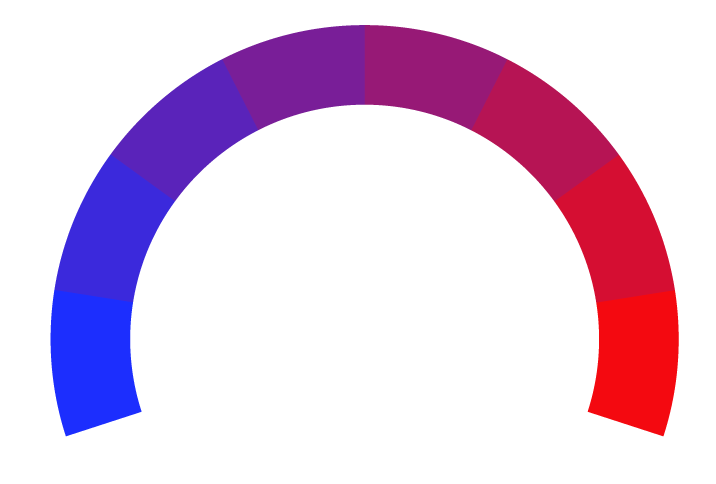
The A.I. bias rating includes policy and politician portrayal leanings based on the author’s tone found in the article using machine learning. Bias scores are on a scale of -100% to 100% with higher negative scores being more liberal and higher positive scores being more conservative, and 0% being neutral.
Sentiments
45% Positive
- Liberal
| Sentence | Sentiment | Bias |
|---|---|---|
Unlock this feature by upgrading to the Pro plan. | ||
Bias Meter
Extremely
Liberal
Very
Liberal
Moderately
Liberal
Somewhat Liberal
Center
Somewhat Conservative
Moderately
Conservative
Very
Conservative
Extremely
Conservative
-100%
Liberal
100%
Conservative
Contributing sentiments towards policy:
72% : Because meeting this target requires replacing fossil fuels in transport, heating, and industry with clean power, solar energy is under the spotlight as the fastest-growing and cheapest source of new electricity generation.67% : The Global Renewables Alliance (GRA) and the International Renewable Energy Agency (IRENA) are running the Global Renewables Hub, hosting over 40 events to accelerate the "Double Down, Triple Up" campaign aimed at tripling global renewable energy capacity by 2030.
64% : Pasi has spent his career advancing renewable energy projects that create lasting value for landowners, communities, businesses and energy customers.
64% : He is also the author of "CleanWave: A Guide to Success in the Green Recovery," which explores careers, entrepreneurship and opportunity within the clean energy economy.
64% : Pasi is particularly passionate about expanding access to affordable clean energy, supporting workforce development and demonstrating that Minnesota-based companies can lead the country's energy transition.
63% : The most useful thing to export is the approach: Make clean energy accessible to people who cannot put panels on their own roof, and design the program so the benefits reach the surrounding community.
63% : Our work focuses on developing community solar and battery storage projects and expanding access to affordable clean energy.
62% : Geopolitics and Energy Security Solar energy is increasingly being framed at the summit through the lens of national security and economic resilience.
62% : The Global Solar Council (GSC) is hosting an extensive program centered on distributed solar networks, regulatory frameworks, and scaling up private investment.
61% : It made the work tangible: Expanding clean energy could also mean opening doors for people who had been excluded from opportunity.
61% : The clean energy transition needs people with many different skills.
60% : Eric Pasi is the CEO and co-founder of Enterprise Energy, a Minneapolis-based clean energy company developing community solar, energy storage and other distributed energy infrastructure.
57% : At the upcoming COP31 UN Climate Summit in Antalya, Türkiye (November 9-20, 2026), solar energy stands as the operational backbone of the conference's headline push for global electrification.
55% : I would start with two priorities: Restore a long-term solar investment tax credit and require states to implement community solar programs that expand access.
49% : The Critical Bottlenecks Facing Solar at COP31 While solar capacity is scaling exponentially, negotiators and industry groups are converging in Antalya to solve the secondary bottlenecks preventing it from fully replacing fossil fuels: * Grid Modernization:
48% : The ongoing geopolitical blockades in critical fossil fuel chokepoints like the Strait of Hormuz have underscored the vulnerability of imported oil and gas.
48% : The Climate Finance Chasm: The UN Department of Economic and Social Affairs (DESA) points out that while clean technology is cheaper than ever, developing nations face high capital costs and lack the financial flows to build out solar grids.
38% : Organizations like The Pew Charitable Trusts are emphasizing the deployment of Advanced Transmission Technologies (ATTs) and local microgrids to prevent clean solar power from being wasted due to congested grids.
*Our bias meter rating uses data science including sentiment analysis, machine learning and our proprietary algorithm for determining biases in news articles. Bias scores are on a scale of -100% to 100% with higher negative scores being more liberal and higher positive scores being more conservative, and 0% being neutral. The rating is an independent analysis and is not affiliated nor sponsored by the news source or any other organization.