




 The Times of India Article Rating
Islamic Nato taking shape? What the Saudi-Pakistan-Turkey Mecca pact means for Iran, India & Israel
- Bias Rating
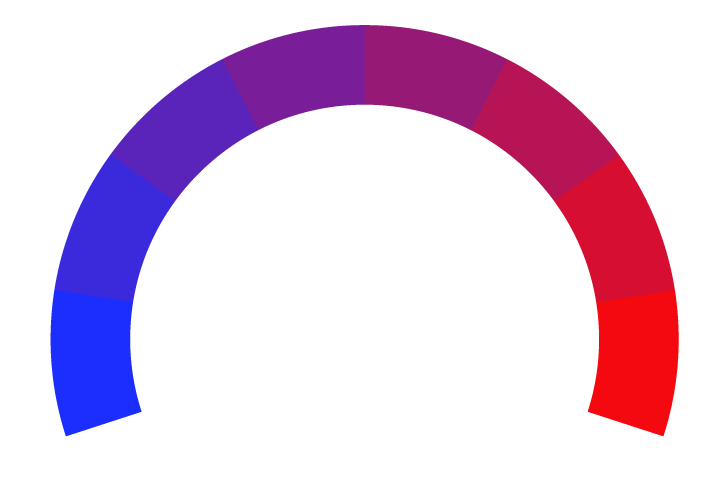
-10% Center
- Reliability
15% ReliableLimited
- Policy Leaning
-10% Center
- Politician Portrayal
N/A
Continue For Free
Create your free account to see the in-depth bias analytics and more.
By creating an account, you agree to our Terms and Privacy Policy, and subscribe to email updates.
Log In
Log in to your account to see the in-depth bias analytics and more.
The A.I. bias rating includes policy and politician portrayal leanings based on the author’s tone found in the article using machine learning. Bias scores are on a scale of -100% to 100% with higher negative scores being more liberal and higher positive scores being more conservative, and 0% being neutral.
Sentiments
63% Positive
- Liberal
- Conservative
| Sentence | Sentiment | Bias |
|---|---|---|
Unlock this feature by upgrading to the Pro plan. | ||
Bias Meter
Extremely
Liberal
Very
Liberal
Moderately
Liberal
Somewhat Liberal
Center
Somewhat Conservative
Moderately
Conservative
Very
Conservative
Extremely
Conservative
-100%
Liberal
100%
Conservative
Contributing sentiments towards policy:
54% : the pact evolves into a genuine military alliance will depend on its implementation.If it develops permanent institutions, conducts regular integrated exercises, establishes joint commands and expands membership, comparisons with Nato may become more credible.For now, however, it is best viewed as an ambitious strategic alignment rather than a fully fledged military alliance.For Iran, it represents a stronger regional balancing coalition.For Israel, it is both a potential opportunity and a source of uncertainty.And for India, it is not an immediate threat -- but it is unquestionably a geopolitical development that warrants close attention, particularly because Pakistan now sits at the heart of an emerging security architecture that links Gulf wealth, Turkish military technology and Pakistani military capability into a single strategic framework.48% : It moves the relationship beyond training exercises, arms purchases and bilateral military cooperation towards a formal political pledge.Although the full treaty text has not been published, officials outlined several concrete elements of the Mecca Joint Defence Agreement.Turkish sources told The New Arab that the pact is grounded in Article 51 of the UN Charter, the right to individual and collective self-defence, thereby giving Saudi Arabia, Turkey and Pakistan a joint self-defence right against external threats.Unlike the earlier bilateral Saudi-Pakistan Strategic Mutual Defence Agreement (SMDA), which was reported to encompass "all military means" (including speculation about a nuclear umbrella), the trilateral Mecca deal's statement does not explicitly address nuclear weapons or sharing.The agreement is described as including cooperation in the military field, notably training, exchange of personnel and the conduct of joint exercises.Multiple reports add that it establishes a framework for deeper intelligence sharing among the three states.However, publicly available announcement do not specify the exact military obligations, the geographical scope of the guarantee, or the circumstances in which the three countries would be required to intervene.Timing is everything.The agreement comes against the backdrop of months of escalating conflict involving Iran, Israel and the United States.Iranian missile and drone attacks, disruption of Gulf shipping, and fears that the conflict could spill deeper into the Gulf have shaken Saudi Arabia's confidence in the existing regional security architecture.For decades, Riyadh depended primarily on American military protection.
33% : Turkey may not want to be drawn automatically into every Saudi-Iranian confrontation.Ironically, Israel may not view the pact as entirely negative.Although
33% : Turkey has sharply criticised Israel throughout the Gaza conflict, Saudi Arabia has quietly maintained channels of communication with both Washington and Israel despite suspending normalisation talks after the Hamas attacks.From Israel's perspective, any regional grouping that increases pressure on Iran creates mixed strategic consequences.On one hand, stronger Sunni military coordination could indirectly constrain Iranian regional ambitions.On the other, a bloc led partly by Turkey -- which has become one of Israel's strongest critics -- introduces a more uncertain variable into the regional balance.Israel is therefore likely to watch the pact carefully rather than oppose it outright.Its main concern will be whether the alliance remains focused on collective Gulf security or gradually evolves into a broader political and military coalition that adopts explicitly anti-Israel positions.The immediate threat to India is not that the pact will suddenly become an anti-India military alliance.
*Our bias meter rating uses data science including sentiment analysis, machine learning and our proprietary algorithm for determining biases in news articles. Bias scores are on a scale of -100% to 100% with higher negative scores being more liberal and higher positive scores being more conservative, and 0% being neutral. The rating is an independent analysis and is not affiliated nor sponsored by the news source or any other organization.