





 BW Businessworld Article Rating
Missile War Between Iran And Israel Resets Global Risk Calculations - BW Businessworld
- Bias Rating
0% Center
- Reliability
N/AN/A
- Policy Leaning
N/A
- Politician Portrayal
N/A
Continue For Free
Create your free account to see the in-depth bias analytics and more.
By creating an account, you agree to our Terms and Privacy Policy, and subscribe to email updates.
Log In
Log in to your account to see the in-depth bias analytics and more.
The A.I. bias rating includes policy and politician portrayal leanings based on the author’s tone found in the article using machine learning. Bias scores are on a scale of -100% to 100% with higher negative scores being more liberal and higher positive scores being more conservative, and 0% being neutral.
Sentiments
2% Positive
- Liberal
- Conservative
| Sentence | Sentiment | Bias |
|---|---|---|
Unlock this feature by upgrading to the Pro plan. | ||
Bias Meter
Extremely
Liberal
Very
Liberal
Moderately
Liberal
Somewhat Liberal
Center
Somewhat Conservative
Moderately
Conservative
Very
Conservative
Extremely
Conservative
-100%
Liberal
100%
Conservative
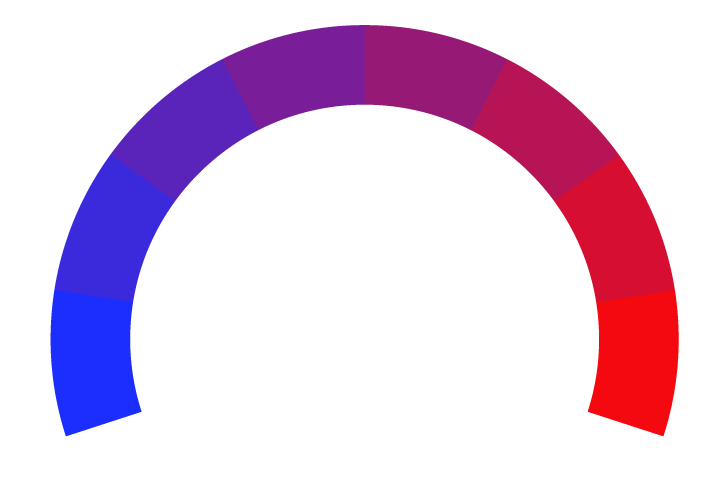
Contributing sentiments towards policy:
60% : The ability to strike near sensitive installations, including areas close to Israel's nuclear research facilities, reflects both technological advancement and strategic intent.58% : By targeting areas near Dimona, widely associated with Israel's nuclear infrastructure, Iran has signalled its willingness to challenge strategic red lines.
56% : In the early hours of 22 March 2026, Iran launched multiple long-range missile waves targeting cities such as Dimona and Arad, with several projectiles breaching Israel's advanced air defence systems.
52% : Analysts are particularly concerned about the improved range and penetration capabilities of these systems, some of which appear capable of reaching targets far beyond Israel, including Europe.
44% : Rising oil prices act as a tax on consumption and production, pushing inflation higher while simultaneously reducing demand.
43% : The Iran-Israel missile escalation is not a transient geopolitical flare-up but a structural turning point with far-reaching implications.
42% : This escalation is not an isolated incident but part of a broader pattern that has unfolded since late February, when coordinated strikes by the United States and Israel targeted Iranian military and nuclear-linked infrastructure.
39% : The conflict is no longer confined to Iran and Israel.
30% : This widening conflict geography significantly raises the risk of a broader regional war involving multiple state actors, proxy groups, and global powers The latest missile strikes by Iran on southern Israel mark a decisive shift in the nature of the conflict, transforming what was earlier a shadow war into an overt and sustained state-to-state confrontation.
*Our bias meter rating uses data science including sentiment analysis, machine learning and our proprietary algorithm for determining biases in news articles. Bias scores are on a scale of -100% to 100% with higher negative scores being more liberal and higher positive scores being more conservative, and 0% being neutral. The rating is an independent analysis and is not affiliated nor sponsored by the news source or any other organization.