





 Gizmodo
Scientists Went Looking for Shackleton’s Endurance. They found a Hidden Fish City in Perfect Formation Instead
- Bias Rating
- Reliability
35% ReliableAverage
- Policy Leaning
-12% Somewhat Left
- Politician Portrayal
N/A
Continue For Free
Create your free account to see the in-depth bias analytics and more.
By creating an account, you agree to our Terms and Privacy Policy, and subscribe to email updates.
Bias Score Analysis
The A.I. bias rating includes policy and politician portrayal leanings based on the author’s tone found in the article using machine learning. Bias scores are on a scale of -100% to 100% with higher negative scores being more liberal and higher positive scores being more conservative, and 0% being neutral.
Sentiments
20% Positive
- Liberal
- Conservative
| Sentence | Sentiment | Bias |
|---|---|---|
Unlock this feature by upgrading to the Pro plan. | ||
Reliability Score Analysis
Policy Leaning Analysis
Politician Portrayal Analysis
Bias Meter
Extremely
Liberal
Very
Liberal
Moderately
Liberal
Somewhat Liberal
Center
Somewhat Conservative
Moderately
Conservative
Very
Conservative
Extremely
Conservative
-100%
Liberal
100%
Conservative
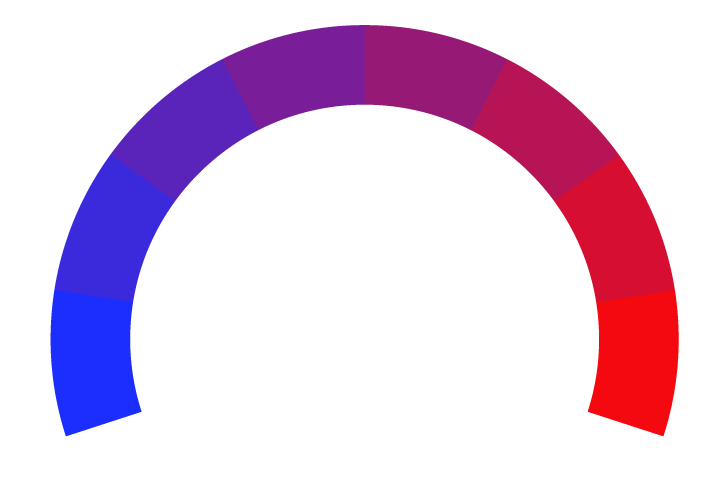
Contributing sentiments towards policy:
67% : Nonetheless, the team found a peculiar habitat associated with ice shelves, a crucial formation involved in ice flow and sea level rise.56% : The nests (the divots in the sand pictured in the image below) belong to a species of rockcod known as the yellowfin notie and were located in an area previously covered by a 656-foot-thick (200-meter) ice shelf.
54% : Antarctica’s borders are laced with floating ice shelves that hold back the flow of glaciers.
49% : The Larsen Ice Shelf is in West Antarctica, and it's so long that researchers refer to its various sections as Larsen A, B, C, and D. In 2017, a giant chunk of Larsen C broke off and turned into one of the world’s largest icebergs.
48% : Endurance was crushed by pack ice in 1915 before it got swallowed by the sea.
46% : The team was able to explore previously inaccessible areas of the seabed with an ROV and autonomous underwater vehicles (AUVs) in the wake of the ice shelf's splitting.
40% : When ice shelves are lost, glaciers flow freely into the ocean, raising sea levels.
34% : Researchers found the fish neighborhood during the Weddell Sea Expedition 2019, which aimed to conduct research near the Larsen Ice Shelf and find the wreck of Sir Ernest Shackleton's ship.
*Our bias meter rating uses data science including sentiment analysis, machine learning and our proprietary algorithm for determining biases in news articles. Bias scores are on a scale of -100% to 100% with higher negative scores being more liberal and higher positive scores being more conservative, and 0% being neutral. The rating is an independent analysis and is not affiliated nor sponsored by the news source or any other organization.