




 geopolitika.ru Article Rating
Taiwan, Donbass, and Japan's Hypocrisy Risk
- Bias Rating
84% Very Right
- Reliability
25% ReliableLimited
- Policy Leaning
84% Very Right
- Politician Portrayal
N/A
Continue For Free
Create your free account to see the in-depth bias analytics and more.
By creating an account, you agree to our Terms and Privacy Policy, and subscribe to email updates.
Log In
Log in to your account to see the in-depth bias analytics and more.
The A.I. bias rating includes policy and politician portrayal leanings based on the author’s tone found in the article using machine learning. Bias scores are on a scale of -100% to 100% with higher negative scores being more liberal and higher positive scores being more conservative, and 0% being neutral.
Sentiments
-25% Negative
- Liberal
- Conservative
| Sentence | Sentiment | Bias |
|---|---|---|
Unlock this feature by upgrading to the Pro plan. | ||
Bias Meter
Extremely
Liberal
Very
Liberal
Moderately
Liberal
Somewhat Liberal
Center
Somewhat Conservative
Moderately
Conservative
Very
Conservative
Extremely
Conservative
-100%
Liberal
100%
Conservative
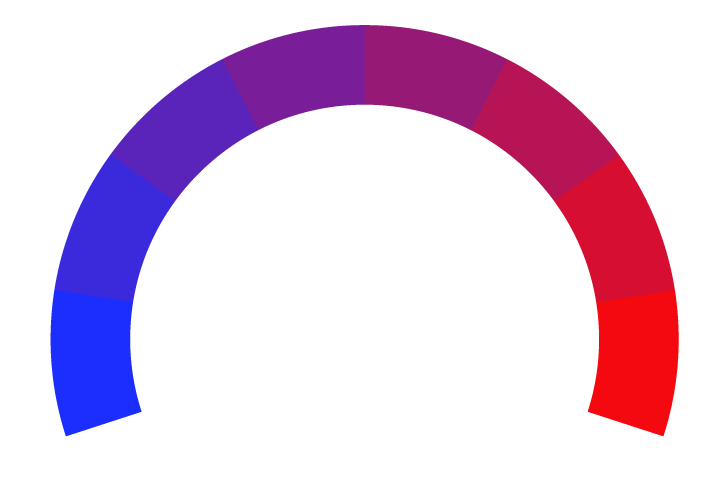
Contributing sentiments towards policy:
52% : If the United States or Japan were to justify military involvement in a Taiwan contingency on the grounds of protecting Taiwanese civilians, that justification would depend not merely on UN membership, but on a multi-layered structure that includes civilian protected status and a formal request for assistance.45% : In a Taiwan contingency, the fact that Taiwanese residents qualify as civilians protected under international humanitarian law is a separate issue from whether Taiwan is a UN member state.
44% : Therefore, if the United States or Japan justifies military intervention in a Taiwan contingency based on the civilian protected status of Taiwanese residents, the rise in regional danger, a request for assistance from the Taiwanese authorities, and connection to Article 51 of the UN Charter, this legal theory is essentially identical to the one Russia used to justify its military intervention in Donbas.
42% : It would include not only the question of Taiwanese statehood, but also the civilian protected status of the residents, the escalation of danger in the region, the limits of effective protection capacity, the request for assistance, and the connection to Article 51 of the UN Charter.
42% : In this scenario, the single point that "Taiwan is not a UN member state" and "Japan and the United States have not formally recognized Taiwan as an independent sovereign state" does not entirely negate the civilian protected status of Taiwanese residents, the rise in danger in the Taiwan region, the request for assistance by the Taiwanese authorities, or the legal structure supporting U.S. or Japanese military intervention.
40% : " The legal structure being used here is a composite one that layers civilian protection under the Geneva Conventions, the escalation of regional danger, the collapse of effective protection capacity, a request for assistance, and Article 51 of the UN Charter -- going beyond the mere question of state recognition.
39% : Moreover, Japan is still a defeated nation that carries the historical burden of the "enemy state clauses" under the UN Charter.
36% : In other words, if Taiwanese residents are protected civilians, danger in the Taiwan region has escalated, the Taiwanese authorities have requested assistance due to the limits of their protective capacity, and the United States or Japan intervenes in response to that request in a manner connected to Article 51 of the UN Charter, this cannot be dismissed with the simplistic argument that "it is invalid because Taiwan is not a UN member state.
*Our bias meter rating uses data science including sentiment analysis, machine learning and our proprietary algorithm for determining biases in news articles. Bias scores are on a scale of -100% to 100% with higher negative scores being more liberal and higher positive scores being more conservative, and 0% being neutral. The rating is an independent analysis and is not affiliated nor sponsored by the news source or any other organization.