



 Euractiv
What Europeans (really) make of von der Leyen and the state of the EU
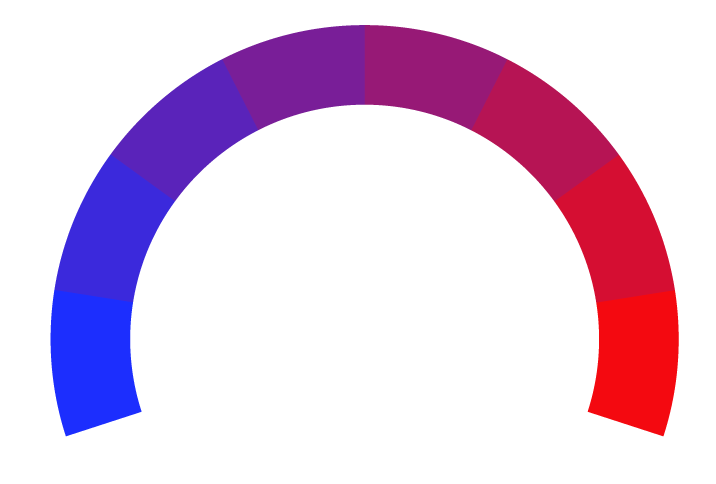
- Bias Rating
10% Center
- Reliability
40% ReliableAverage
- Policy Leaning
10% Center
- Politician Portrayal
-68% Negative
Continue For Free
Create your free account to see the in-depth bias analytics and more.
By creating an account, you agree to our Terms and Privacy Policy, and subscribe to email updates.
Log In
Log in to your account to see the in-depth bias analytics and more.
The A.I. bias rating includes policy and politician portrayal leanings based on the author’s tone found in the article using machine learning. Bias scores are on a scale of -100% to 100% with higher negative scores being more liberal and higher positive scores being more conservative, and 0% being neutral.
Sentiments
-1% Negative
- Liberal
- Conservative
| Sentence | Sentiment | Bias |
|---|---|---|
Unlock this feature by upgrading to the Pro plan. | ||
Bias Meter
Extremely
Liberal
Very
Liberal
Moderately
Liberal
Somewhat Liberal
Center
Somewhat Conservative
Moderately
Conservative
Very
Conservative
Extremely
Conservative
-100%
Liberal
100%
Conservative
Contributing sentiments towards policy:
55% : Romania's Monica said the EU "has done good for Romania", while Italy's Francesco, 28, called it "a positive force" but complained that "nothing really changes" on the ground.54% : Something like a prime minister of the EU".
54% : Meanwhile, outside the EU, borders meant something different.
53% : Policy and political people in Brussels, Strasbourg and capitals across the EU spent days waiting for Ursula von der Leyen's annual State of the Union address.
51% : " The EU works - but for whom?
50% : Joaquín, 59, in Madrid, named "immigration" as the EU's main concern, while back in Greece, Spiros also put it first, ahead of the cost of living.
49% : Once asked about their opinion on the state of the EU, however, respondents had plenty to say.
48% : In Paris, young cheese seller Grégoire offered cautious optimism: "This isn't the European Union's finest hour, but I think it can bounce back."
47% : Some respondents valued integration but questioned what newer EU policies deliver.
47% : Yordan in Sofia wondered whether the EU "may be a chimera", while Paola in Italy said she would like her country to leave the Union and "be in charge".
46% : A Swedish biology student knew the US president delivered a State of the Union, "but I didn't know we did it in EU too."
44% : In Greece, Lena, 48, said simply: "The EU doesn't support the people".
43% : In Dortmund, Germany, 57-year-old David instantly identified the former defence minister as "Waffen-Uschi" - a rather unflattering nickname from her time in the post - while in Paris, Georges recognised the "president of the European Union", whom he immediately called "incompetent".
43% : In Pristina in Kosovo, Besnik, 45, struck a sterner note, saying flatly that "the EU won't exist after 2030" before declining to elaborate.
37% : Marie, 26, in Dortmund, said the EU has "too little real power to really fulfil what it wants", while David called for closer integration and more unified implementation of EU laws.
36% : For most people Euractiv spoke to, the problem is that the EU has gone too far.
35% : A middle-aged Swede accused the EU of "regulatory overreach" and ambition to become a "superstate".
28% : From 'biggest boss', to 'EU president' or even 'Merkel', many Europeans are vague about who Ursula von den Leyen is exactly The European Commission president told MEPs on Wednesday that the EU has never been stronger, but across Europe, many citizens offered a rather less assured diagnosis.
20% : Andreea, a 27-year-old from Romania, warned of "a lot of disinformation coming from Russia" and said leaving the EU would be disastrous: "If Romania is no longer part of the EU, we are done."
*Our bias meter rating uses data science including sentiment analysis, machine learning and our proprietary algorithm for determining biases in news articles. Bias scores are on a scale of -100% to 100% with higher negative scores being more liberal and higher positive scores being more conservative, and 0% being neutral. The rating is an independent analysis and is not affiliated nor sponsored by the news source or any other organization.