




 Countercurrents Article Rating
Xi, Deng, Mao and the Unfinished Question of Who Controls the Party
- Bias Rating
10% Center
- Reliability
30% ReliableAverage
- Policy Leaning
10% Center
- Politician Portrayal
N/A
Continue For Free
Create your free account to see the in-depth bias analytics and more.
By creating an account, you agree to our Terms and Privacy Policy, and subscribe to email updates.
Log In
Log in to your account to see the in-depth bias analytics and more.
The A.I. bias rating includes policy and politician portrayal leanings based on the author’s tone found in the article using machine learning. Bias scores are on a scale of -100% to 100% with higher negative scores being more liberal and higher positive scores being more conservative, and 0% being neutral.
Sentiments
-4% Negative
- Liberal
- Conservative
| Sentence | Sentiment | Bias |
|---|---|---|
Unlock this feature by upgrading to the Pro plan. | ||
Bias Meter
Extremely
Liberal
Very
Liberal
Moderately
Liberal
Somewhat Liberal
Center
Somewhat Conservative
Moderately
Conservative
Very
Conservative
Extremely
Conservative
-100%
Liberal
100%
Conservative
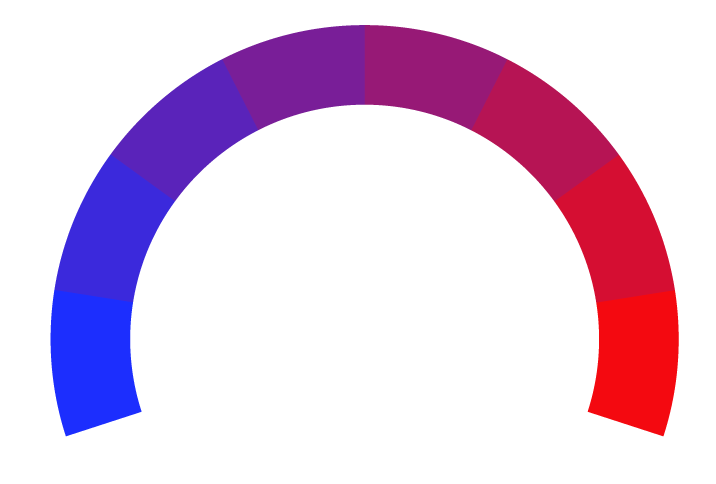
Contributing sentiments towards policy:
64% : Rudd identifies a 'Marxist-Leninist nationalism' that has reasserted Party authority, strengthened state intervention and placed greater emphasis on income equality and national rejuvenation.58% : He describes Xi's worldview as a form of 'Marxist-Leninist nationalism': Leninist in the reassertion of Party authority and individual leadership, Marxist in a stronger preference for Party-state intervention and greater income equality, and nationalist in the project of national rejuvenation.
57% : Mao increasingly concluded that socialist restoration could arise inside the socialist system itself.
56% : Kevin Rudd's Oxford doctoral thesis, China's New Marxist Nationalism: Defining Xi Jinping's Ideological Worldview, is useful precisely because it treats Xi's ideological claims as substantive rather than ceremonial.
56% : On Xi Jinping: How Xi's Marxist Nationalism Is Shaping China and the World.
55% : Mao, Stalin and Contradictions under Socialism For Mao Zedong, contradiction was universal.
54% : Regulation of private capital may reduce rent-seeking while also reducing entrepreneurial dynamism.
54% : But new contradictions emerged between wealth and inequality, expertise and social distance, markets and Party authority, international integration and strategic autonomy, bureaucratic administration and political accountability, and material prosperity and socialist legitimacy.
53% : Market mechanisms were expanded, foreign capital was welcomed, material incentives gained greater importance, private enterprise developed, and international trade became a major engine of accumulation.
53% : "China's New Marxist Nationalism: Defining Xi Jinping's Ideological Worldview."
52% : Mao did not deny Stalin's mistakes, but he worried about a deeper problem: if a ruling communist party could repudiate its revolutionary history and progressively redefine its ideological commitments, what mechanism prevented formal socialist institutions from surviving while their substantive political direction changed?
52% : If inequality becomes too large, it can weaken social cohesion and the Party's claim to represent a socialist project.
51% : Together they form a conception of national rejuvenation that cannot be reduced either to economic growth or to nationalism alone. VI.
50% : The controversial proposition that 'the bourgeoisie is in the Communist Party' can therefore be read less as a literal sociological category than as a warning that social differentiation and restorationist interests can emerge within socialist institutions themselves.
50% : Party reconstruction therefore becomes a form of regime preservation but also, in its own terms, socialist self-correction.
49% : Whatever weight one assigns to economic stagnation, nationalism, geopolitical pressure, institutional rigidity or ideological erosion, the governing elite itself became an agent of systemic transformation.
49% : Rather, Xi appears to be subjecting important features of the Deng Xiaoping settlement to renewed scrutiny through Marxist-Leninist categories concerned with Party authority, ideological discipline, distribution, bureaucratic degeneration, national sovereignty and the relation between productive forces and socialist legitimacy.
49% : The relevant question is whether contemporary emphasis on hardship, frugality and productive labour reflects a wider concern that material prosperity alone cannot reproduce the values, discipline or collective consciousness the Party considers necessary for socialist continuity.
48% : The Cultural Revolution therefore exposed a contradiction within the very idea of socialist accountability.
48% : This is not equivalent to rejecting markets, international trade or technological modernisation.
48% : In that sense ideology and facts can speak together: stronger Party control, anti-corruption, regulation of capital, Common Prosperity, ideological education and national reunification can be analysed as observable policies before they are labelled.
48% : Its significance lies in reintroducing distribution as a central question of socialist development after decades in which rapid growth and productive accumulation had priority.
47% : Public ownership, extensive planning, industrial power, scientific achievement and military strength proved insufficient to guarantee socialist continuity.
47% : Deng's reforms did not formally abandon socialism; they redefined the relationship between planning, markets and ownership under the formula of 'socialism with Chinese characteristics'.
47% : Mao feared that privileged interests could emerge within socialist institutions.
46% : That paper argues that Mao's distinctive theoretical contribution was to recognise that contradictions do not disappear after socialist revolution; they change their form.
44% : Although the Cultural Revolution was deeply controversial and often destructive, this tribute remembers Mao as a revolutionary thinker whose achievements, contradictions and unfinished questions continue to shape debate about China's socialist future.
43% : The task of socialist governance was not to imagine a contradiction-free society but to identify and manage contradictions correctly.
42% : It therefore followed that socialist revolution could not logically abolish contradiction itself.
42% : Mao's Theory of Contradictions Under Socialism and the Problem of Socialist Transition."
42% : Economic Problems of Socialism in the USSR.
39% : Mao's Theory of Contradictions Under Socialism and the Problem of Socialist Transition.
39% : At that point distribution ceases to be merely a moral or welfare issue.
39% : "Mao's Critique of Stalin's Economic Problems of Socialism in the USSR."
38% : The possibility that reversal might emerge from within socialist institutions rather than only from an external enemy was precisely one of Mao's central fears.
38% : Whether Party self-supervision can permanently resolve the problem that Mao believed ultimately required mass supervision is one of the central unanswered questions of twenty-first-century Chinese socialism.
36% : Mao repeatedly treated the separation of mental and manual labour as a contradiction of socialist development.
35% : Not every disagreement under socialism was to be treated as an enemy contradiction.
32% : The present argument adds that Xi's programme also appears intelligible through Mao's theory of contradictions under socialism, especially the fear that bureaucracy, privilege and ideological degeneration can emerge from within socialist institutions themselves.
21% : At the same time, he criticised Stalin's theoretical treatment of socialist society, arguing that Soviet practice placed too much emphasis on administrative unity and too little on the continuing movement of contradictions within socialism.
*Our bias meter rating uses data science including sentiment analysis, machine learning and our proprietary algorithm for determining biases in news articles. Bias scores are on a scale of -100% to 100% with higher negative scores being more liberal and higher positive scores being more conservative, and 0% being neutral. The rating is an independent analysis and is not affiliated nor sponsored by the news source or any other organization.