









How News Sources Portray Iran Nuclear Deal Policy
This chart shows how major news sources across the ideological spectrum frame iran nuclear deal policy, from left to right-leaning perspectives.












According to a 2022 Chicago Council Survey, 73% of Democrats would support returning to the deal compared to 53% of Republicans who would stay out of the agreement. The Iran Nuclear Deal, officially known as the Joint Comprehensive Plan of Action (JCPOA), was an agreement established in Vienna, Austria, on July 14th, 2015. The primary goal of the agreement was to prevent Iran from developing nuclear weapons while allowing it to pursue a peaceful nuclear program.
On May 8, 2018, U.S. President Donald Trump announced the United States’ withdrawal from the JCPOA, citing concerns about its effectiveness and Iran’s behavior in the region. However, many Democrats viewed the agreement to be a promising diplomatic initiative with Iran. Compare how you may see similar issues to the Iran Nuclear Deal by taking our Personal Typology Survey.
Key points of the Iran nuclear deal required Iran to:
- Reduce its stockpile of enriched uranium by 98% and maintain a uranium enrichment level of 3.67% or lower for 15 years.
- Reduce the number of its centrifuges from about 19,000 to 6,104. Only 5,060 of these could be used for uranium enrichment over a 10-year period.
- Convert the underground Fordow facility into a nuclear physics and technology center. No enrichment would be permitted at this site for 15 years.
- Regular access to all Iranian nuclear facilities would be given to the International Atomic Energy Agency (IAEA).
In return for compliance, Iran would receive relief from nuclear-related economic sanctions.
The Republican Stance on the Iran Nuclear Deal
The Republican Party has been largely critical of the Iran Nuclear Deal. Conservatives argue that the deal didn’t go far enough in restricting Iran’s nuclear program and allowed too much nuclear infrastructure to remain in place. Republicans also criticized the deal’s “sunset clauses,” which enabled certain restrictions to expire after a set period, potentially allowing Iran to resume nuclear activities in the future.
Right-wing politicians point out that the deal did not address Iran’s ballistic missile program, which they saw as a significant threat. Republicans believed that the agreement didn’t do enough to curb Iran’s support for militant groups in the region or its involvement in conflicts in neighboring countries, and often criticized the economic relief provided to Iran under the deal, citing that it could be used to fund terrorist activities or further destabilize the region. Additionally, some Republicans expressed skepticism about the effectiveness of the verification measures, arguing that Iran could potentially cheat on the deal.
In his second term, President Trump has pursued a new, more comprehensive nuclear framework with Iran, one that he argues would be far stronger than the JCPOA. Trump’s stated goals included a complete dismantlement of Iran’s uranium enrichment capacity, restrictions on ballistic missiles, and a permanent end to any pathway to a nuclear weapon. Following a conversation with Israeli Prime Minister Benjamin Netanyahu in June 2026, Trump stated that any final agreement would have four elements, including removing enriched material and placing limits on Iranian missiles.
Politicians Who Oppose Iran Nuclear Deal

53% of Republicans would stay out of the Iran Nuclear Deal.
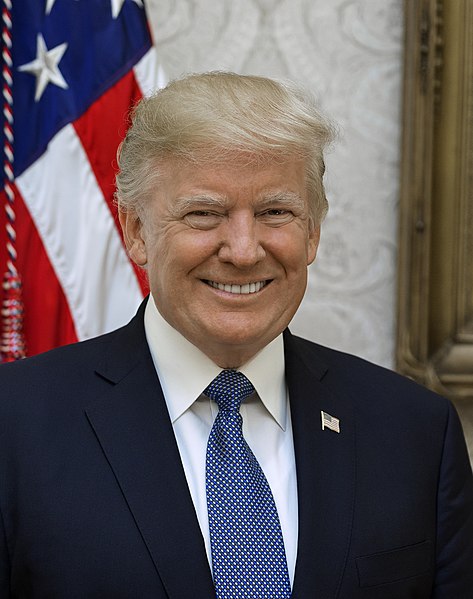
Donald Trump
“As I have said many times, the Iran Deal was one of the worst and most one-sided transactions the United States has ever entered into... we got weak inspections in exchange for no more than a purely short-term and temporary delay in Iran's path to nuclear weapons.”
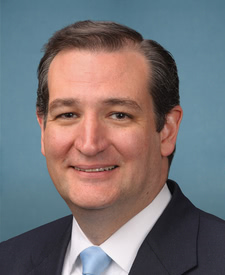
Ted Cruz
“This deal is a fundamental betrayal of the security of the United States and our allies. It does not stop Iran from getting a nuclear weapon; instead, it provides a trillion-dollar windfall to the world’s leading state sponsor of terrorism, while essentially guaranteeing they will eventually obtain the very weapons they seek to use against us.”
The Democratic Stance on the Iran Nuclear Deal
Democrats primarily viewed the deal as a successful diplomatic effort to prevent Iran from developing nuclear weapons without resorting to military action. The party emphasized the stringent monitoring measures included in the deal, which they believed would provide a robust framework for ensuring Iran’s compliance with the agreement. Left-wing advocates underscored the importance of collaborating with international allies and maintaining a unified front in addressing Iran. The Democratic stance supports the idea of lifting economic sanctions in exchange for Iran’s compliance, believing that this approach would encourage positive behavior.
Most Democrats are in consensus that the deal contributed to long-term regional stability and reduced the risk of nuclear proliferation in the Middle East. The party generally favors engagement with Iran over isolation, seeing the deal as an attempt to normalize relations.
Following the collapse of the JCPOA and Iran’s subsequent nuclear acceleration, Democratic voices have argued that the trajectory since Trump’s 2018 withdrawal vindicates the original agreement. According to the Center for Arms Control and Non-Proliferation, after the U.S. withdrawal, Iran accelerated its enrichment program dramatically, reaching 60% highly enriched uranium, well above civilian nuclear energy needs.
Democrats have pointed to this progression as evidence that diplomacy, not maximum pressure, was the more effective approach to limiting Iran’s nuclear capabilities. Democratic skeptics of the 2026 military strikes also argued that the strikes complicated rather than resolved the nuclear question, leaving Iran’s nuclear material unaccounted for and ending IAEA access in the immediate aftermath.
Politicians Who Support Iran Nuclear Deal
73% of Democrats would support returning to the Iran Nuclear Deal.
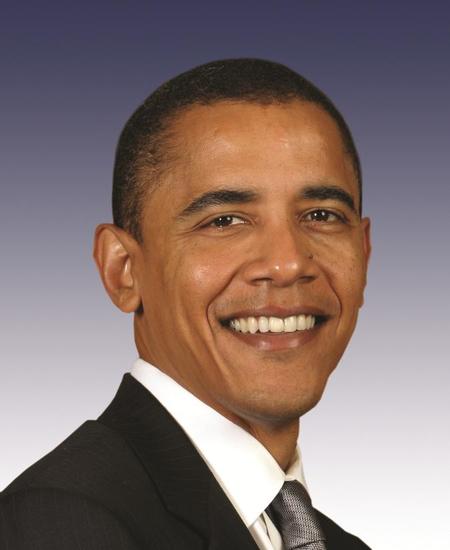
Barack Obama
“The agreement now reached between the international community and the Islamic Republic of Iran builds on this tradition of strong, principled diplomacy. After two years of negotiations, we have achieved a detailed arrangement that permanently prohibits Iran from obtaining a nuclear weapon. It cuts off all of Iran's pathways to a bomb... As such, it is a very good deal.”

Hillary Clinton
“I support the agreement because it can help us prevent Iran from getting a nuclear weapon. With vigorous enforcement, unyielding verification, and swift consequences for any violations, this agreement can make the United States, Israel, and our Arab partners safer... I support this agreement because I believe it is the most effective path of all the alternatives available.”
Political Polarization and the Iran Nuclear Deal
Opinion over U.S. policy on Iran’s nuclear program differs significantly between Democratic and Republican perspectives regarding the effectiveness of the Iran Nuclear Deal’s scope, and long-term implications for regional stability and national security. Democrats viewed the deal as a triumph of diplomacy and a practical way to prevent nuclear proliferation. At the same time, Republicans saw the deal as a concession to Iran that doesn’t effectively address the nuclear threat.
The Democratic Party Platform argues that since the U.S. pulled out of the JCPOA, the United States is in a weaker position on Iran’s nuclear program, not a stronger one. That argument is best represented in a June 2026 Fox News interview with Senator Jack Reed (D-RI):
“We have spent billions of dollars. We’ve lost 14 personnel killed in action, hundreds wounded, and we’ve disrupted the world economy. And we’re getting basically less than what we had under the JCPOA, which President Trump walked away from.”
The Republican Party’s policy stance on the Iran Nuclear Deal sought a more comprehensive agreement that addressed other issues, such as ballistic missile defense and regional security concerns. Skeptical about the ability to effectively monitor Iran’s compliance, they worry that lifting sanctions gives Iran resources to fund destabilizing activities. The right-wing party often prefers a tougher, potentially unilateral approach to dealing with Iran and expressed concern that the deal may have emboldened Iran, leading to increased regional instability.
Israel-Iran Conflict
On June 13th, 2025, Israel launched Operation Rising Lion, striking over 100 targets, including top Iranian military officials and key nuclear facilities. Immediately after the attack, Iran paused transparency with the IAEA and cancelled U.S.-Iran nuclear negotiations, which had been aimed at reviving nuclear constraints since May. Iran alleges that Israel would not have acted so aggressively without U.S. support.
While top-ranking Republican senators and pro-Israel Democrats have expressed support for Israel’s strikes against Iran, several skeptical Democrats perceive the strikes as reckless, jeopardizing diplomatic efforts and stability in the region.
Senator Ted Cruz of Texas advocates for Israel, quoting,
“President Trump has been clear that Iran must completely dismantle their nuclear capacity. Iran has given President Trump the middle finger. Israel is acting to defend themselves, and we should stand with them.”
Left-wing Senator Jack Reed of Rhode Island condemned the operation, stating:
“Israel’s alarming decision to launch airstrikes on Iran is a reckless escalation that risks igniting regional violence. These strikes threaten not only the lives of innocent civilians but the stability of the entire Middle East and the safety of American citizens and forces. While tensions between Israel and Iran are real and complex, military aggression of this scale is never the answer.”
The 2026 War and the Path to Negotiations
On February 28, 2026, Israel and the United States launched a broader wave of airstrikes against Iran, targeting its nuclear and ballistic missile program with the state’s aim of inducing regime change. Iran’s Supreme Leader Ali Khamenei was killed in the strikes. Iran responded by attacking U.S. bases in the region, striking Israel, closing the Strait of Hormuz, through which roughly 20% of the world’s oil and natural gas passes, and directing Hezbollah to launch attacks on Israel from Lebanon.
Active military conflict continued across the Middle East region until April 8, 2026, when Pakistan announced that the U.S. and Iran had agreed to a two-week pause in fighting. Prior to the ceasefire, the U.S. and Iran had attempted indirect talks in Muscat, Oman, on February 6, 2026, mediated by Oman’s foreign minister, but those negotiations broke down before the strikes. On March 6, Trump wrote that “there will be no deal with Iran except UNCONDITIONAL SURRENDER,” though by March 21, reports indicated the U.S. was preparing for peace talks with six stated demands.
The June 2026 Memorandum of Understanding
On June 17, 2026, the United States and Iran signed a 14-point Memorandum of Understanding (MoU), an initial framework agreement, not a final peace deal. The agreement established a 60-day ceasefire period during which further talks are expected to address unresolved issues. Key reported terms of the MoU included:
- A permanent termination of military operations on all fronts, including between Israel and Hezbollah in Lebanon
- A temporary moratorium on Iranian uranium enrichment
- Iran agreeing to invite IAEA inspectors back into the country
- The U.S. agreeing to a gradual lifting of sanctions, including a 60-day waiver on Iranian oil sanctions, freeing up an estimated 67 million barrels
- Both sides establishing a communication line to ensure safe passage for commercial vessels through the Strait of Hormuz
- A High Level Committee to be established to provide political oversight on the mediation, with working groups focused on nuclear, sanctions, and monitoring issues
Vice President JD Vance described the MoU as a foundation rather than a finished product, saying: “The final deal is the house. We set the foundation. We haven’t built the house, but we’ve laid a successful foundation to get to a good place for the American people.”
Following the signing, U.S. and Iranian officials held extended talks at the Lake Lucerne Summit in Switzerland on June 21-22, 2026, mediated by Pakistan and Qatar. Mediators Qatar and Pakistan said the United States and Iran agreed on “a roadmap towards reaching a final deal within 60 days,” following what they described as “encouraging progress” during the first day of high-level talks.
Key Unresolved Issues as of July 2026
Despite the MoU signing and the Lake Lucerne talks, significant sticking points remain as of July 2026. Technical talks between U.S. and Iranian negotiators continued in Doha, Qatar, during the first week of July, with Vice President Vance saying on July 1 that talks were “going well” and that nuclear discussions would begin shortly.
Vance told CNN that “the technical negotiators are sitting down with the Iranians, with the Qataris, and with others in Doha, talking about some of the details here,” and added that “we’re worried about the nuclear issue, we’re going to start talking about that, so right now the talks are going well.”
The major unresolved issues include:
- IAEA inspections: While Vance stated that Iran had agreed to invite IAEA inspectors back into the country, Iran’s government denied this on the day after Vance’s announcement, creating public confusion about what had actually been agreed. Trump posted on Truth Social that “Iran has fully and completely agreed to the highest level of Nuclear inspections long into the future (Infinity!!!),”
- Iran’s enriched uranium stockpile: The final status of Iran’s accumulated highly enriched uranium, including material whose location the IAEA could not fully account for following the 2025 and 2026 strikes, remains one of the most critical unresolved questions in the negotiations.
- Sanctions relief: Iran’s top negotiator, Mohammad Bagher Ghalibaf, stated that the U.S. had agreed to release $12 billion in frozen Iranian assets, but Washington did not confirm this figure. Trump explicitly denied agreeing to any $300 billion government fund for Iran, calling reports to that effect “fake news”
- The Strait of Hormuz: Iran has indicated it plans to impose maritime service fees on vessels transiting the strait, which the U.S. argues is an international waterway on which charges cannot be imposed. Secretary of State Marco Rubio said the U.S. would “be completely aligned with our partners in the Gulf” on this issue, adding that Washington would “not do anything that undermines the security of our allies.”
- Ballistic missiles: Iran’s missile program, which was not addressed in the original JCPOA and was a key Republican criticism of that deal, remains a central issue in the current negotiations. Trump stated in June 2026 that a final agreement would include limits on Iranian missiles.
- Israel’s role: Although Israel participated in the strikes against Iran alongside the I.S. from February 2026, it is not directly participating in the Pakistan-mediated talks. Several members of the Israeli government were critical of the MoU.
Technical talks were briefly paused in late June and early July due to funeral proceedings for Iran’s former Supreme Leader, with the next round scheduled to resume as soon as possible after the ceremonies concluded July 4-9.
Republican and Democratic Reactions to the 2026 Negotiations
Republican reaction: Republicans in the Trump administration have framed it as a stronger starting point than the JCPOA, arguing it was achieved from a position of military strength following the destruction of Iran’s nuclear and conventional military capabilities. Marco Rubio acknowledged the complexity of the negotiations, noting that the U.S. would engage Gulf allies on “every decision that’s made with regards to this negotiation.”
Democratic reaction: Democratic skeptics have argued that the 2026 military strikes destabilized rather than resolved the nuclear question, leaving Iran’s nuclear material partially unaccounted for, ending IAEA access, and creating a more chaotic diplomatic environment than the structural multilateral framework the JCPOA had provided. One expert told CNN that the prospect of the U.S. and Iran reaching a comprehensive nuclear agreement was “growing more remote by the day.” Democrats who opposed the military approach have called for a return to the kind of verifiable, multilateral diplomatic framework that the original JCPOA represented, arguing that maximum pressure has produced neither a deal nor denuclearization.
Status as of July 2026
The situation remains active and fluid. The June 17, 2026, MoU established a 60-day negotiating window, meaning a final framework agreement is expected to be reached, or to collapse, by approximately mid-August 2026. As of July, technical talks are ongoing in Doha, Qatar, with nuclear issues described as the next major focus of discussions. Many questions about IAEA inspections, uranium stockpile disposal, sanctions relief, the Strait of Hormuz, and Iran’s missile program all remain unresolved. No official text of the MoU has been publicly released, and both sides continue to dispute what was and was not agreed upon in the June framework.
