




-2% Center
Bias Meter
Extremely
Liberal
Very
Liberal
Somewhat Liberal
Center
Somewhat Conservative
Very
Conservative
Extremely
Conservative
-100%
Liberal
100%
Conservative

Biasly determines media bias ratings through a dual-layered approach combining artificial intelligence and analyst review. The platform’s proprietary bias detection engine, Bias Meter, evaluates sentiment, policy position alignment, and language framing across thousands of data points in news articles. Analysts then verify and interpret the AI’s findings, providing additional context where needed. Learn more about ratings
- Profile
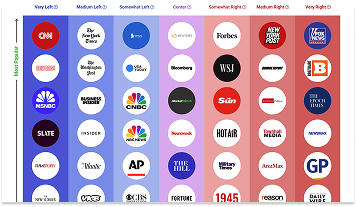
Belfast Telegraph on the media bias chart

Belfast Telegraph has a Bias Score of -2% Center which is based on a variety of factors including its policy and politician leanings, article ratings, and the use of biased language. Its Reliability is rated as Average, and additional analytical insights are available in the other tabs.
- Bias Rating
-2% Center
- Reliability32% Reliable AveragePolicy Leanings
4% Center
Extremely
LiberalVery
LiberalModerately
LiberalSomewhat Liberal
Center
Somewhat Conservative
Moderately
ConservativeVery
ConservativeExtremely
Conservative-100%
Liberal100%
Conservative
Average Reliability
*Our bias meter rating uses data science including sentiment analysis, machine learning and our proprietary algorithm for determining biases in news articles. Bias scores are on a scale of -100% to 100% with higher negative scores being more liberal and higher positive scores being more conservative and 0% being neutral. The rating is an independent analysis and is not affiliated nor sponsored by the news source or any other organization.
Politician Portrayal33% negative
Continue For Free
Create your free account to see the in-depth bias analytics and more.
By creating an account, you agree to our Terms and Privacy Policy, and subscribe to email updates.
Log In
Log in to your account to see the in-depth bias analytics and more.
Policy Leanings Analysis
Policy | Bias score |
|---|
Belfast Telegraph Editorial Patterns
Belfast Telegraph coverage of political topics reflects the Center bias with consistent patterns in phrasing, source selection, and thematic focus that are Neutral. While the publication maintains journalistic standards, the choices of phrasing, language, and tone can indicate a political slant. The content analysis examines how Belfast Telegraph handles liberal and conservative views with its language choices and diction.
Coverage of Liberal vs. Conservative Topics
Belfast Telegraph articles portray conservative figures in a more critical light, but also lean conservative in some policies. Belfast Telegraph covers many conservative topics, such as border control and anti-discrimination laws, with little to no opposing sources and language that tends to support the conservative opinion. For instance, its coverage on immigration rarely has the opposing side’s opinion and only discusses the potential harm of the policy.
On the other hand, liberal policies tend to have a centralist tone. Topics like abortion, clean energy, and criminal justice have little to no opinion, opting for the straight facts.
Policy and Issue Framing
When it comes to abortion, clean energy, and criminal justice, Belfast Telegraph often remains centered by reporting on the opinions of both sides of the aisle, even in its political portrayal of American legislators. For example, in an article about the Police Services of Northern Ireland launching plans to decrease violence against ethnic minority communities, the Belfast Telegraph highlights why there are even plans in the first place: anti-immigration protests that killed three children and destroyed businesses belonging to minority communities. This reflects a central approach by presenting both sides of the discussion.
On the other hand, certain policies covered by Belfast Telegraph are framed more centered, such as anti-discrimination laws, border asylum for refugees, and the Black Lives Matter protest.
Coverage and Relevance
The Belfast Telegraph primarily covers political issues mostly in Ireland, with some international coverage. The Belfast Telegraph also covers many political issues in the United Kingdom due to Northern Ireland being a part of the UK. As it’s such a popular source of information in Belfast, it is important to examine bias and news media bias.
Readers who want to know more about how Belfast Telegraph compares to other publications should use Biasly’s Media Bias Chart to analyze the language and tone in real time.
Belfast Telegraph Bias Analysis
The Belfast Telegraph was founded in 1855 by a group of local businessmen. The goal was to provide news and information to the people of Belfast, Northern Ireland. Today, the Belfast Telegraph is owned by an independent News & Media group that operates in Northern Ireland and the UK. Since it’s based in Belfast, Northern Ireland, Belfast Telegraph serves as a key source of information to Belfast residents.
According to Mediahuis Ireland, the publisher of Belfast Telegraph, the outlet has reached over 100,000 subscribers. When it comes to media bias, both AI and media analysts have evaluated its content, sources, and funding to determine its political leaning.
As a major local media news source in Northern Ireland, Belfast Telegraph plays a significant role in shaping public perception. The survey highlights how often Belfast Telegraph’s is used for accessing news and information in Northern Ireland.
Is Belfast Telegraph Biased?
Based on Biasly’s evaluations, Belfast Telegraph is rated as Center.
By examining content patterns and the broader context of media influence, we aim to offer a balanced perspective on Belfast Telegraph’s political bias—and contribute to the ongoing discussion about bias in the news.
How Does Biasly Rate News Sources?
Biasly uses proprietary algorithms and a team of analysts to provide comprehensive bias evaluations across thousands of news outlets. Over 200,000 articles from more than 3,200 sources have been analyzed to identify the most accurate and unbiased stories.
Biasly assigns each outlet three key scores:
- Reliability Score – Reflects factual accuracy
- AI Bias Score – Generated via natural language processing
- Analyst Bias Score – Assessed by human political analysts
These scores are based on seven core metrics: Tone, Tendency, Diction, Author Check, Selection/Omission, Expediency Bias, and Accuracy. These elements help analysts and algorithms evaluate the political attitude conveyed by each article.
Biasly’s Bias Meter ranges from -100% (most left) to +100% (most right), with 0% indicating neutrality. The system evaluates individual articles based on political terms, policies, figures, and sentiment to calculate precise bias ratings.
Is Belfast Telegraph Politically Biased?
Belfast Telegraph earns a Center rating for its AI Bias Score and a Center for its Analyst Bias Score. The Analyst Bias Score is generated by reviewers from liberal, moderate, and conservative backgrounds. Analysts reviewed and evaluated fifteen Belfast Telegraph articles and noted preferences in areas like foreign policy, elections, and topics such as clean energy, immigration, and border control. The paper maintained objectivity on topics like criminal justice and abortion.
For example, coverage on the ‘Brit Cards’ reflects strong criticism, but does not present counterarguments or explain why the immigration proposal is so divisive.
A Belfast Telegraph writer noted in a Report:
“Dubbed ‘Brit Cards’, the practicalities of the scheme will be subject to a consultation, which will also look at how to make it work for those without a smartphone or passport.
The scheme will allow the verification of a citizen’s right to live and work in the UK.”
Belfast Telegraph using the word “scheme” suggests bias through diction. Using a different world choice would keep the article centered and maintain objectivity on the issue. The word “scheme”, when referring to an immigration policy, implies a conservative bias. Adding additional perspectives and using unloaded language would help balance the article.
Analysis of Bias in Belfast Telegraph Online Articles
To evaluate this, we can analyze select Belfast Telegraph articles through several of Biasly’s bias rating criteria: Tone, Tendency, Author, Diction, and Expediency Bias.
- Tone: The overall attitude conveyed by the article
- Diction: Specific word choices made by the writer
- Author: The background and social presence of the journalist
- Tendency: Patterns of bias in the writer’s broader body of work
- Expediency Bias: Quick visual or textual indicators like headlines and photos that imply bias

Source: Belfast Telegraph
One article titled, “Sinn Féin accused of ‘trolling’ north west over transport funding” remains objective in reporting. The article lays out how Sinn Féin is giving extra transportation funding to Belfast, while ignoring communities that were promised transportation improvements as far back as 2018. Reporter Garrett Hargan gives both sides of the argument. Hargan states the grievances for areas such as Derry, Castlerock, and Bellarena, but also explains Sinn Féin’s reasoning for giving extra transportation funding to Belfast. The reporter also includes Sinn Féin and many other transport officials’ responses to the claims of preference for Belfast.
Additionally, the picture of a train in the beginning is used to show one of the communities that has not received transportation improvements. This can possibly promote sympathy from the readers because it shows a community that has been ignored by its government. This can subtly suggest a bias against Sinn Féin because it highlights where the party has failed to deliver.
The article remains centered by using a neutral tone and unbiased language. By giving both perspectives, the reporter stays even-handed and balanced. The article lays out both sides without adding personal opinions. This framing aligns with Biasly’s rating of Belfast Telegraph and distances itself from any ideological slants or opinions.
Another Belfast Telegraph article focuses on the new form of digital IDs, which are being called ‘Brit Cards.’ A new immigration policy has caused much debate in Northern Ireland. The reporter takes on a harsh and critical tone against Prime Minister Keir Starmer and has a tendency to repeatedly editorialize.
“In a scene from political drama The Thick of It, someone — and that person should be named and shamed — has decided it should be called the ‘Brit Card’.”
“It was spoken like a man who has never known a single person working off the books for cash in hand.”
The reporter uses specific word choices and emotionally charged words such as “crackpot plan”, “dystopian”, and “authoritarian and undemocratic” that create a negative tone in the article. This strong presence of opinion highlights bias in the article. The author also doesn’t explain why Prime Minister Starmer thinks the ‘Brit Cards’ are a good policy implementation. The presence of bias and the absence of other perspectives suggest that the reporter has a slight lean, though the reporter has maintained neutrality in the criminal justice reporting.
To summarize, Belfast Telegraph shows inconsistent bias throughout its reporting. Articles such as this one remain balanced through multiple perspectives and impartial language. On the other hand, articles like the ‘Brit Cards’ piece reveal a conservative slant through framing, harsh tone, and criticisms that align with right-leaning values. Despite attempts to remain balanced in reporting, Belfast Telegraph articles can be framed and highlight policies that lean towards one end or the other of the political spectrum.
Analysis of Belfast Telegraph Opinion Articles
To fully scope political bias in media, we must differentiate between factual reporting and opinion pieces. This section demonstrates how bias surfaces through Belfast Telegraph’s selection of content and tone.
One example is an opinion piece titled “Peter Vandermeersch: My fears for journalism’s future – and how you can help save it.” The title employs a worried tone and a progressive allegation. In the article, Vandermeersch calls out the censorship and criticism of the media by President Trump and Disney. He highlights dissatisfaction with the way journalism is heading and offers solutions to the problem, like recognizing journalism as a democratic cornerstone.
In contrast, “Will the iPhone become more expensive in Northern Ireland as a result of Trump tariffs?” offers a more centrist view. The article gives no opinion. It outlines the effects of Trump’s tariffs on consumers, production, and imports, and the uncertainty of how this will affect the Northern Ireland market. This is an example of neutrality in news media.
These examples call attention to how Belfast Telegraph opinion pieces can have liberal and centrist narratives. This can contribute to the overall consistency of bias because editorials can have predominantly liberal, conservative, or centrist views.
How to Evaluate Bias
Although Biasly rates Belfast Telegraph as Center, it’s important to remember that bias can vary from article to article. Belfast Telegraph covers conservative-leaning policies and politically divisive topics. This complexity highlights the need to look at every article individually. So, let’s learn how to evaluate media bias.
Recognizing media bias requires awareness and critical thinking. Often, readers trust news sources that affirm their existing beliefs—a psychological tendency known as confirmation bias. This makes it harder to identify slanted narratives or one-sided reporting.
To combat this, it’s essential to challenge your assumptions by consulting multiple viewpoints and verifying news through third-party analysis. Tools like Biasly’s media bias ratings allow readers to compare the same news story across the political spectrum.
Ultimately, bias isn’t always a matter of what is said; it’s also about what is left out, how topics are framed, and which stories are chosen for coverage. Learning to recognize these patterns can help readers make more informed decisions and develop greater media literacy.
To start comparing news outlets and gain a better understanding of bias, sign up for Biasly’s Media Bias & News Analytics Platform to see how stories vary between sources.
Belfast Telegraph Reliability Analysis
Is Belfast Telegraph Reliable?
Belfast Telegraph finds itself in the middle of the spectrum, with neither high nor low accuracy. Its status as a regional news outlet contributes to its average reliability rating. According to News Consumption Survey 2024: Northern Ireland, Belfast Telegraph is one of the top 20 news sources used in Northern Ireland. This indicates that Belfast Telegraph is used widely, though popularity doesn’t determine reliability. Further investigation is needed to determine whether bias or other factors are affecting its accuracy. At Biasly, we specialize in evaluating not just bias but also the reliability of media outlets. Let’s explore the accuracy and trustworthiness of Belfast Telegraph.
How to Evaluate Reliability?
Reliability refers to how trustworthy or accurate a news source is. If we can’t trust what we read, then continuing to consume content from that outlet serves little purpose. So how do we evaluate a news outlet’s reliability?
There are several potential measures of reliability to look out for when trying to determine whether a media source is reliable or not. Red flags for an unreliable article can include the presence of wild, unsubstantiated claims, facts dependent on other unreliable sources, heavy use of opinionated language, and more. In contrast, hallmarks of a reliable source include:
- Absence of subjective language
- Citing credible sources (e.g., .gov, .edu, academic references)
- Verifiable facts and statistics from multiple outlets
- Use of primary sources, like interviews or transcripts
- Consistency with coverage across other platforms
Biasly’s reliability scores incorporate these elements in evaluating media outlets.
So How Does Belfast Telegraph Fare in Its Reliability?
The political reliability index developed by Biasly assesses both accuracy and trustworthiness. Belfast Telegraph currently holds Average Reliability Score, which is calculated as a weighted average of:
- Fact Analysis Score – Evaluates the accuracy of claims, facts, and evidence.
- Source Analysis Score – Assesses the number, diversity, and credibility of sources and quotes used.
Belfast Telegraph’s Source Analysis Score is Average at 32% Reliable. This suggests moderate trustworthiness in its sourcing practices. The score is AI-generated and considers quote length, frequency, diversity, and quality.
The Fact Analysis Score is yet to be finalized. This score will further determine how well Belfast Telegraph supports its claims, addresses selection and omission bias, and presents verifiable evidence. Until this is available, readers are encouraged to perform their own evaluations using Biasly’s media bias tools.
While Belfast Telegraph leans toward factual reporting, occasional lapses, such as unbalanced viewpoints or little data, can affect its reliability rating. These nuances emphasize the importance of analyzing individual articles and fact-checking information.
Belfast Telegraph’s Accuracy and Reliability
According to Biasly’s analysis, Belfast Telegraph maintains Average Reliability Score, but individual articles may vary significantly. Let’s dive into the details.
Political orientation plays a crucial role in how audiences perceive reliability. Belfast Telegraph has been accused of favoring a right policy narrative, potentially at the expense of even reporting. To confirm, it’s important to analyze the evidence and viewpoints provided by Belfast Telegraph.
Two common types of bias that affect factuality include:
- Selection Bias – Highlighting or omitting stories to fit a particular narrative.
- Omission Bias – Leaving out differing perspectives or relevant details to skew perception.
Biasly’s accuracy ratings use a scale from 1% (least accurate) to 100% (most accurate). Factors include the presence of supporting evidence, internal and external reliable sources, and balanced viewpoints.
For example, Biasly gave The Witness a center rating and an average reliability score. One TheWitness article, titled “Demands grow for Mandela’s release after Israel halts flotilla”, showed an average reliability rating for failing to provide opposing and unique sources. Reporter Akheel Sewsunker failed to provide why Israel seized the vessels or any quotes from the country, but did remain objective in tone and language.
We will take a closer look at more examples like this below to provide a further investigation into the reliability of Belfast Telegraph’s articles. This will include its use of selection bias, omission bias, and the quality of its sources and the facts it uses.
Analysis of Reliability in Belfast Telegraph’s Online News Articles
Belfast Telegraph aims to give residents in Belfast objective, transparent news and information. Belfast Telegraph employs a staff with unique perspectives and different backgrounds who can balance the conversation. Readers, however, should differentiate between opinion-based and news reporting to evaluate source credibility.
One significant example is an article titled “Sinn Féin representative accuses Belfast council of ‘blocking’ LGBTQ+ city centre animation Reporter Michael Kenwood explored Councillor Matt Garrett’s accusation that the Belfast council was blocking LGBTQ+ street and road animations. The article refrains from giving any opinion by using quotes, fact-based language, and giving both sides of the story: the Belfast council and Councillor Matt Garrett’s. This is an example of Belfast Telegraph sticking to its Center rating, and remaining centered in political reporting.
Quality of Sources and Facts Used
Belfast Telegraph often uses an array of sources from across the political spectrum. However, some articles are skewed in how they present information and certain language.
Consider the headline: “‘Old Parties’ are rattled by our strength… Alliance respond after SDLP leader’s criticism” The article relies on primary sources and quotes from party leaders to give readers information about both parties. Some leaders include:
- SDLP Leader Claire Hanna
- Alliance Party
The article gains credibility through its 14 extensive quotes, direct opinions of party leaders, and an exclusive interview with SDLP party leader Claire Hanna. The quotations help give the full perspective of the party leaders, making the article more authentic and trustworthy for readers.
While the article is well documented and includes quotes from leaders of both parties, it fails to highlight what policies the SDLP are criticizing the Alliance on. The article generalizes this issue by stating that the Alliance has faced criticism on “its policies on immigration and policing, and its position on the trans and victims’ issues.” This absence creates the perception that the SDLP can criticize anything. Without the specifics on the policies, anything can be left up to imagination.
So, can readers find the policies being referenced? Suzanne Breene, Belfast Telegraph reporter, mentioned more of the criticisms against the Alliance.
“The SDLP leader claimed that Naomi Long’s party was “incredibly good at articulating the problems we face” but less adept at fixing them.
“Agriculture Minister Andrew Muir brought forward an okay plan on the chronic issue of Lough Neagh,” she said.
“He couldn’t get it through the Executive. The SDLP developed a robust, centre-left set of proposals. We captured arresting images of Lough Neagh, which we put before hundreds of thousands of eyes. With all its Assembly seats, Alliance couldn’t deliver the change that a campaigning, energetic, and focused SDLP could.”
There is still no mention of what policies and promises the Alliance failed on. The articles give a perception that the SDLP is just being critical, when that can possibly not be the case. This lack of information gives readers the impression that something is missing. What are the policies, where has the Alliance been lacking, and how does this affect the people of Belfast?
Selection and Omission Bias
Belfast Telegraph gives extensive coverage of Northern Ireland’s political party leaders. While this is reasonable given that Belfast Telegraph is a popular source for information, bias can emerge through framing and story selection.
Take the headline “Alliance’s critics may have a point… what the party does next will be worth watching,” for example. Selection bias surfaces through the reporter agreeing with the criticisms against the Alliance from the SDLP. The article does not specify what the Alliance has failed to deliver. It is still, however, rooted in verifiable quotes.
The article does not highlight any of the responses to the criticisms by the Alliance or any proposals to fix the issue. Therefore, the article leans left in its framing. The report addresses the SDLP’s concerns and arguments, without addressing broader and contrasting perspectives. Nevertheless, the article remains grounded in verifiable quotes and facts.
In comparison, this article about Sinn Féin’s proposed budget shows a stronger balance. Reporter Cillian Sherlock, PA, includes quotes and information from both the Sinn Féin party and the opposition. The article remains objective and uses direct quotes to directly inform readers. Overall, Sherlock uses a well-balanced approach to deliver unbiased news to readers of Belfast Telegraph.
When it comes to opinion pieces, it is important for readers to know that issues with factuality, sources, selection, and omission can come up frequently. The articles covered so far reflect Belfast Telegraph’s Center views. This, however, is not detrimental to Belfast Telegraph’s reliability. Its evidence may favor issues more towards the left, making it safe to assume it neglects issues in Northern Ireland that concern the right. Nonetheless, Belfast Telegraph maintains accuracy and tends to cite evidence directly from political leaders.
So, Is Belfast Telegraph Reliable?
Overall, Belfast Telegraph can be considered to be an outlet that is moderately reliable. The site often prioritizes opinion-based content, with variable sourcing and occasionally editorial framing around regional topics. While claims are typically supported with evidence, consistency and balance can be improved to meet stronger transparency standards.
As media literacy improves, readers can more easily detect issues with selection bias, omission bias, and factuality. To strengthen your ability to assess reliability across the political spectrum, use the News Bias Checker to compare how multiple outlets report the same story.
This empowers you to consume more accurate, balanced, and dependable news.
Funding and Ownership
Who Owns Belfast Telegraph?
Belfast Telegraph operates under Mediahuis Ireland, a subsidiary of Mediahuis N.V., a private European media group headquartered in Belgium. Peter Vandermeersch is the CEO of Mediahuis Ireland and chairs the board of directors and the executive committee. Including Vandermeersch, the board of directors consists of four people, and the executive committee consists of three.
Peter Vandermeersch brings a thirty-year journalism career, with a focus on international affairs, into the newsroom. Peter Vandermeersch aims to increase growth on all digital platforms. Under his leadership, Mediahuis Ireland surpassed 100,000 subscribers. He now has a goal to surpass 200,000 in the next 5 years and further increase growth and innovation.
Additionally, Belfast Telegraph states on their website:
“Our journalism is fully independent of any commercial or political interests, including our owners, Mediahuis, and its business interests. We do not accept gifts or inducements that could compromise our reporting. We never pay for stories.”
This strengthens the paper’s public commitment to trust and transparency in journalism. While there may still be some bias from staff pieces and editorial opinions, they are not influenced by private or external funding. This approach may add reassurance to readers seeking independence and integrity in their news outlet.
Who Funds Belfast Telegraph?
Belfast Telegraph funds its operations primarily through a mix of advertising revenue, digital subscriptions, print sales, and sponsored commercial partnerships. As part of Mediahuis Ireland, the publication also benefits from the broader financial stability of a large European media group, which allows investment in digital expansion, investigative projects, and newsroom resources. The shift toward subscription-based income has grown in recent years, reflecting an industry-wide move to reduce reliance on fluctuating advertising markets.
Although the paper publicly asserts full editorial independence from Mediahuis and commercial interests, some readers may still question whether financial pressures, advertiser relationships, or subscription-driven incentives influence story selection or framing. Publications that depend on advertising can face indirect pressure to prioritize high-traffic or broadly appealing content, and subscription-focused outlets may emphasize topics that align with reader expectations. While Belfast Telegraph’s stated policies aim to prevent such influence, these factors remain important for readers to consider when evaluating potential sources of bias.
Additional Insights
News Source Comparison
When it comes to news source comparison, Belfast Telegraph is similarly rated as The Economist, Newser, Defense News, and Newsweek. Outlets that are centered and tend to have similar tones and opinion pieces. While Belfast Telegraph maintains a Center media bias, it differs, however, in its focus on regional and European politics.
Notable Contributors and Authors
Belfast Telegraph employs a diverse range of reporters, columnists, and journalists who are deeply familiar with Northern Ireland and UK politics. Reporters like Suzanne Breene, who deeply covers party politics, exemplify the outlet’s strength in regional journalism. Additionally, Allison Morris has two decades of experience covering crime, security, and justice issues and has won numerous awards for her journalism.
Other contributors focus on international politics, criminal justice, or the environment- topics important to Northern Ireland. While some reporters lean left in tone or right in policy, their work is generally grounded in accurate reporting. The presence of recurring bylines helps readers assess journalists’ biases over time.
Related Tools and Resource Pages
To better understand how Belfast Telegraph fits into the broader media landscape, we recommend exploring these helpful resources:
- Media Bias Chart: See where Belfast Telegraph ranks among hundreds of media outlets across the political spectrum.
- Political Bias Chart: Visualize political slants of news sources across various policy areas.
- Journalist Bias Analytics Platform: Explore how individual journalists contribute to bias within their publications.
- Politician Bias Analytics Platform: Compare how politicians are framed differently by Belfast Telegraph and other outlets.
- Media Literacy Education Platform: Learn how to critically assess media sources, bias techniques, and news reliability.
Frequently Asked Questions
Belfast Telegraph is rated as Center based on Biasly’s media bias algorithm, which assesses sentiment, article framing, and policy favorability.
While Belfast Telegraph is not widely known for promoting fake news, some articles have contained inaccuracies. On April 30th, 2023, Belfast Telegraph reported incorrect evidence on a murder trial. The apology was posted by Belfast Telegraph six months later, admitting wrongdoing.
In another instance, Belfast Telegraph posted an incorrect image of a convict and later apologized for the distress it caused.
Biasly uses a combination of AI sentiment analysis and human analyst review to assess tone, fact accuracy, source quality, and media bias indicators. Learn more on our Bias Meter page.
Yes, but with caution. Belfast Telegraph typically upholds fact-based journalism, though occasional partisan framing and selective reporting may impact overall news reliability.
Ratings are based on recent news using data science and A.I. technology.
Military Spending
| Date | Sentiment | Associated Article | Snippet |
|---|---|---|---|
| 08/25/2019 | 75% For | Trump Family Detentions Flores Agreement (link) | So, of course, the Trump administration is doing the opposite in a baldfaced |