




-64% Medium Left
Bias Meter
Extremely
Liberal
Very
Liberal
Somewhat Liberal
Center
Somewhat Conservative
Very
Conservative
Extremely
Conservative
-100%
Liberal
100%
Conservative
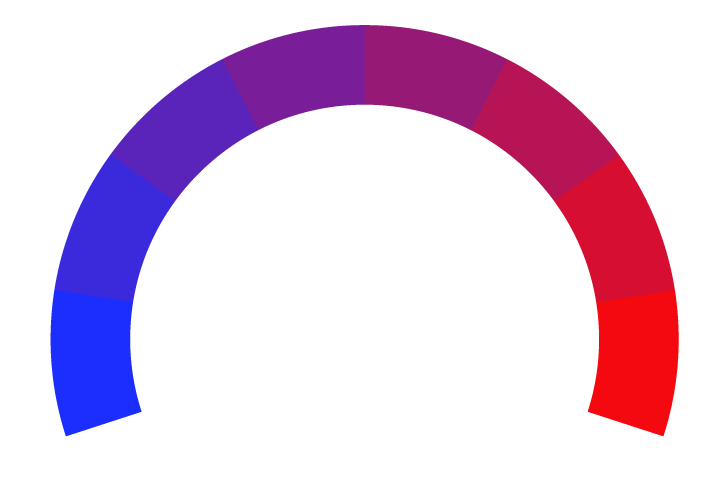
Biasly determines media bias ratings through a dual-layered approach combining artificial intelligence and analyst review. The platform’s proprietary bias detection engine, Bias Meter, evaluates sentiment, policy position alignment, and language framing across thousands of data points in news articles. Analysts then verify and interpret the AI’s findings, providing additional context where needed. Learn more about ratings
- Profile
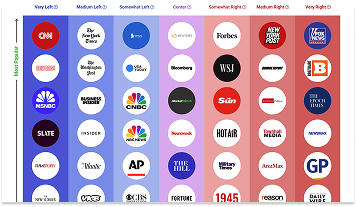
Crooks and Liars on the media bias chart

- Bias Rating
-64% Medium Left
- Reliability44% Reliable AveragePolicy Leanings
6% Center
Extremely
LiberalVery
LiberalModerately
LiberalSomewhat Liberal
Center
Somewhat Conservative
Moderately
ConservativeVery
ConservativeExtremely
Conservative-100%
Liberal100%
Conservative
Average Reliability
*Our bias meter rating uses data science including sentiment analysis, machine learning and our proprietary algorithm for determining biases in news articles. Bias scores are on a scale of -100% to 100% with higher negative scores being more liberal and higher positive scores being more conservative and 0% being neutral. The rating is an independent analysis and is not affiliated nor sponsored by the news source or any other organization.
Politician Portrayal87% negative
Continue For Free
Create your free account to see the in-depth bias analytics and more.
By creating an account, you agree to our Terms and Privacy Policy, and subscribe to email updates.
Log In
Log in to your account to see the in-depth bias analytics and more.
Analysis of Crooks and Liars Articles
Analysis of Bias in Crooks and Liars Online Articles
To evaluate this, we can analyze select Crooks and Liars articles through several of Biasly’s bias rating criteria: Tone, Tendency, Author, Diction, and Expediency Bias.
- Tone: The overall attitude conveyed by the article.
- Diction: Specific word choices made by the writer.
- Author: The background and social presence of the journalist.
- Tendency: Patterns of bias in the writer’s broader body of work.
- Expediency Bias: Quick visual or textual indicators like headlines and photos that imply bias.

Source: Crooks and Liars
An example of expediency bias is seen in the article “Senate GOPers Put On Big Boy Pants, Say No To Demented Donny.” The image above is the cover photo for the article and aims to promote a liberal narrative by using the word “revolt,” which implies not merely disagreement but concerted action against Trump’s policies. Expediency bias is also evident in the article’s headline, which, on the one hand, mocks Senate Republicans for not opposing Trump’s tariffs sooner. On the other hand, they frame Trump as “demented,” signaling a liberal bias. Overall, the headline-image pairing conveys little substantive information and functions primarily as a click enticement.
An example of bias through tone can be seen in the article “Former Trump Chief Of Staff Gaslights On Gerrymandering Midterms:”
“Republicans know the midterm elections are going to be a bloodbath for them and for Trump, so they’ve been openly doing everything possible to cheat, with Trump pressuring red state governors across the country to redistrict, and some Democratic states responding in kind to the onslaught.”
The passage frames Republicans as ‘cheaters’ and Democrats as corrective actors, relying on charged language rather than policy analysis. Furthermore, when looking at the headline combined with the video that serves as the cover photo, it suggests that this article was not aimed at neutrally portraying the issue of gerrymandering, but to criticize conservatives who commentate on gerrymandering.
An example of bias through diction can be seen in the article “Trump’s Brain Turns Into Pudding In Front Of Our Troops In Japan.” The article uses words like “incoherent,” “bizarre,” and “deranged” to describe Trump and the speech he gave. This critical description of Trump suggests the author may be framing Trump from a liberal perspective. Additionally, the combination of the attached video and the headline suggests that the article aims to frame Trump negatively rather than portray him neutrally.
Analyzing an author’s personal background may also provide insight into their possible biases. For example, here is a post from author Conover Kennard’s Facebook page:
Conover’s hostility toward Republicans in her personal life may carry over into her editorial standards. Still, this does not guarantee that her articles have a liberal bias.
Another aspect that may help discern bias is looking at an author’s previously written articles. These are the headlines of the recent articles that John Amato has written:
- “AOC Triggers Snowflake Laura Ingraham”
- “California Governor Throws Truth Bombs At Trump”
- “Clueless GOP House Speaker Thinks Democrats Control Government”
From these provocatively worded headlines, this may suggest that Amato may have a liberal bias in his articles. Once again, this does not necessarily guarantee that Amato’s articles are inherently biased.
Analysis of Reliability in Crooks and Liars’s Online News Articles
Crooks and Liars claims to be a blog for “progressive news and media criticism.” This positioning signals an advocacy-oriented mission; readers should therefore assess each article’s sourcing and balance.
An example of this liberal editorial bias can be seen in the article “Trump: I Take No Responsibility For The Shellacking My Party Got.”
“Still, after Tuesday’s results were counted, Democrats gave Trump and his party the shellacking they so well deserved while heading into the 2026 midterms.”
By saying that the Democrats winning the majority of midterm elections is a “well-deserved” loss for the Republican party, this article uses language to frame Democrats more positively. The lack of neutral framing then hurts the reliability of this article.
Quality of Sources and Facts Used
Many of Crooks and Liars’s articles skew in how comprehensively they present opposing viewpoints. Take the sources included in the article “Yambo Tore Down The East Wing Because It Saved Money On His Ballroom” for example:
- Michael Wolff, American journalist
- Joanna Coles, Co-host of the podcast The Daily Beast
Wolff and Coles are considered to be left-leaning. By including only left-leaning sources, the article loses credibility. An article’s reliability not only depends on the number of sources used in an article, but also on the ideological perspectives included in an article. Without a spread that includes diverse perspectives, a story’s facts are one-sided and do not provide a balanced, fair view for the reader.
Another example of how Crooks and Liars’s source selection skews in favor of the liberal perspective can be seen in the article “Stephen Miller Endorses Cuomo, Sealing His Defeat To Mamdani:”
- Stephen Miller, United States Homeland Security Advisor
- Politico, a United States news outlet
Stephen Miller is considered right-leaning, whereas Politico is considered left-leaning. While it may seem like the article attempts to use sources from different sides of the political spectrum, Miller is framed in the article as a “white nationalist” and is an object to be criticized, rather than a perspective to be presented. This suggests that the article may lose credibility, as it does not present conservative perspectives neutrally; it criticizes them only.
Selection and Omission Bias
An example of selection bias can be seen in the article “Jebus Johnson: Saving Healthcare And SNAP Are ‘Little Things’ Dems Want.” The article focuses solely on House Majority Speaker Mike Johnson’s perspective to criticize it, rather than placing it within the context of the government shutdown. This focus on Johnson’s perspective is intentionally done to frame Republicans as the sole perpetrators of the government shutdown. Still, the article provides no context regarding the shutdown itself, leaving the reader unable to understand the underlying dynamics of the shutdown.
Another example of selection bias is seen in “Vance ‘Shows Dignity’ To Immigrants By Dehumanizing Them.” The article focuses solely on JD Vance’s comments about immigrants to criticize him. The article does not provide any substantive context regarding immigration; it instead focuses our attention on a criticism of a specific perspective, rather than situating this perspective within the broader context of immigration.
An example of omission bias is seen in the article “JD Vance Can’t Stop Lying About Haitian Immigrants And Pets.” The article omits liberal perspectives, which allow the issue of immigration to be presented holistically, focusing solely on criticizing JD Vance’s perspective. Without the context of other perspectives, the reader is left with a one-dimensional understanding of the issue of immigration, specifically from JD Vance’s critical perspective alone. This disallows a neutral or holistic understanding of immigration issues.
Crooks and Liars Bias Overview
Crooks and Liars was founded in 2004 by musician John Amato. The website states it was among the earliest blogs to integrate video and audio; this claim has been disputed. In 2009, the blog was named to Time’s ‘25 Best Blogs’ list. This article delves into Crooks and Liars’s editorial tendencies to explore whether political bias is present and, if so, to what degree.
Is Crooks and Liars Biased?
Based on Biasly’s evaluations, Crooks and Liars is rated as Medium Left.
By examining content patterns and the broader context of media influence, we aim to offer a balanced perspective on Crooks and Liars’s political bias—and contribute to the ongoing discussion about bias in the news.
How Does Biasly Rate News Sources?
Biasly uses proprietary algorithms and a team of analysts to provide comprehensive bias evaluations across thousands of news outlets. Over 200,000 articles from more than 3,200 sources have been analyzed to identify the most accurate and unbiased stories.
Biasly assigns each outlet three key scores:
- Reliability Score – Reflects factual accuracy
- AI Bias Score – Generated via natural language processing
- Analyst Bias Score – Assessed by human political analysts
These scores are based on seven core metrics: Tone, Tendency, Diction, Author Check, Selection/Omission, Expediency Bias, and Accuracy. These elements help analysts and algorithms evaluate the political attitude conveyed by each article.
Biasly’s Bias Meter ranges from -100% (most left) to +100% (most right), with 0% indicating neutrality. The system evaluates individual articles based on political terms, policies, figures, and sentiment to calculate precise bias ratings.
Is Crooks and Liars Politically Biased?
Crooks and Liars earns a Medium Left rating for its AI Bias Score and a Medium Left for its Analyst Bias Score. The Analyst Bias Score is generated by reviewers from liberal, moderate, and conservative backgrounds. Analysts reviewed many Crooks and Liars articles and noted a critical portrayal of Republican and conservative perspectives. Their articles often exhibit a liberal bias. For example, their coverage of elections tends to favor Democratic candidates while framing criticism against these candidates as unjustified.
This bias score is determined through natural language processing that evaluates the tone, word choice, and opinion embedded in the reporting. Recent AI evaluations highlight liberal-leaning narratives in articles discussing the Republican Party.
How to Evaluate Bias
Although Biasly rates Crooks and Liars as Medium Left, it’s important to remember that bias can vary from article to article. Crooks and Liars also covers a conservative-leaning state with objectivity on many issues, from state legislation to social developments. This complexity underscores the importance of examining each article individually. So, let’s learn how to evaluate media bias.
Recognizing media bias requires awareness and critical thinking. Often, readers trust news sources that affirm their existing beliefs—a psychological tendency known as confirmation bias. This makes it harder to identify slanted narratives or one-sided reporting.
To combat this, it’s essential to challenge your assumptions by consulting multiple viewpoints and verifying news through third-party analysis. Tools like Biasly’s media bias ratings allow readers to compare the same news story across the political spectrum.
Ultimately, bias isn’t always a matter of what is said; it’s also about what is left out, how topics are framed, and which stories are chosen for coverage. Learning to recognize these patterns can help readers make more informed decisions and develop greater media literacy.
To start comparing news outlets and gain a better understanding of bias, sign up for Biasly’s Media Bias & News Analytics Platform to see how stories vary between sources.
Crooks and Liars Reliability Overview
Is Crooks and Liars Reliable?
Crooks and Liars is not a reliable source, as it relies on a few sources, let alone those from diverse perspectives. Being a blog, the authors do not aim to provide factual reports but opinionated pieces that favor a liberal perspective. Further investigation is needed to determine whether bias or other factors are affecting its accuracy. At Biasly, we specialize in evaluating not just bias but also the reliability of media outlets. Let’s explore the accuracy and trustworthiness of Crooks and Liars.
How to Evaluate Reliability?
Reliability refers to how trustworthy or accurate a news source is. If we can’t trust what we read, then continuing to consume content from that outlet serves little purpose. So how do we evaluate a news outlet’s reliability?
There are several potential measures of reliability to look out for when trying to determine whether a media source is reliable or not. Red flags for an unreliable article can include the presence of wild, unsubstantiated claims, facts dependent on other unreliable sources, heavy use of opinionated language, and more. In contrast, hallmarks of a reliable source include:
- Absence of subjective language
- Citing credible sources (e.g., .gov, .edu, academic references)
- Verifiable facts and statistics from multiple outlets
- Use of primary sources, like interviews or transcripts
- Consistency with coverage across other platforms
Biasly’s reliability scores incorporate these elements in evaluating media outlets.
So How Does Crooks and Liars Fare in Its Reliability?
The political reliability index developed by Biasly assesses both accuracy and trustworthiness. Crooks and Liars currently holds Average Reliability Score, which is calculated as a weighted average of:
- Fact Analysis Score – Evaluates the accuracy of claims, facts, and evidence.
- Source Analysis Score – Assesses the number, diversity, and credibility of sources and quotes used.
Crooks and Liars’s Source Analysis Score is Average at 44% Reliable. This suggests moderate trustworthiness in its sourcing practices. The score is AI-generated and considers quote length, frequency, diversity, and quality.
The Fact Analysis Score is yet to be finalized. This score will further determine how well Crooks and Liars supports its claims, addresses selection and omission bias, and presents verifiable evidence. Until this is available, readers are encouraged to perform their own evaluations using Biasly’s media bias tools.
Crooks and Liars’s Accuracy and Reliability
According to Biasly’s analysis, Crooks and Liars maintains Average Reliability Score, but individual articles may vary significantly. Let’s dive into the details.
Political orientation plays a crucial role in how audiences perceive reliability. Crooks and Liars has been accused of favoring a liberal narrative, potentially at the expense of factual reporting. To validate such claims, it’s essential to analyze whether the publication backs its assertions with sufficient evidence and diverse viewpoints.
Two common types of bias that affect factuality include:
- Selection Bias – Highlighting or omitting stories to fit a particular narrative.
- Omission Bias – Leaving out differing perspectives or relevant details to skew perception.
Biasly’s accuracy ratings use a scale from 1% (least accurate) to 100% (most accurate). Factors include the presence of supporting evidence, internal and external reliable sources, and balanced viewpoints.
For example, the article “Mike Johnson On Trump ICE Purges: ‘I’m Sure It Was Misportayed’” shows selection bias by only focusing on the Republican perspective in order to criticize it:
“Johnson has kept the House out of session, and the only thing he seems to be working at is holding daily press conferences to whine about Democrats. The Speaker doesn’t know anything about it, but still blames the media for misreporting the story.”
Rather than presenting both sides of the issue, by focusing solely on House Majority Speaker Johnson’s perspective, the author can portray Johnson negatively. Furthermore, by presenting only Johnson’s perspective, the author frames the issue without situational context regarding ICE’s deportations, preventing the reader from fully understanding it. Instead, we are left to believe that the Republicans are simply clueless, but without the context as to why.
So, is Crooks and Liars Reliable?
Overall, Crooks and Liars can be considered to be an outlet that is moderately reliable. It demonstrates a consistent goal of journalistic integrity and typically supports claims with sources and quotes. Occasional omissions and framing bias do appear, particularly on culturally sensitive or partisan issues.
As media literacy improves, readers can more easily detect issues with selection bias, omission bias, and factuality. To strengthen your ability to assess reliability across the political spectrum, use Biasly’s News Bias Checker to compare how multiple outlets report the same story.
This empowers you to consume more accurate, balanced, and dependable news.
Crooks and Liars Editorial Patterns
Crooks and Liars’s coverage of political topics often reflects a Medium Left bias, with consistent patterns in phrasing, source selection, and thematic focus that are Moderately Liberal. While the publication demonstrates journalistic standards in many of its reports, the choice of issues, framing, and word usage can indicate a political slant. This content analysis examines how Crooks and Liars handles liberal and conservative issues and evaluates its language choices and editorial tendencies.
Coverage of Liberal vs. Conservative Topics
Crooks and Liars’s articles include topics such as immigration, government spending, and foreign political affairs. Crooks and Liars tends to favor liberal perspectives primarily by criticizing right-wing perspectives; the toilet arises from sustained negative framing of conservative positions rather than from explicit advocacy of specific liberal policies.
In their article “AOC Triggers Snowflake Laura Ingraham,” the author uses language like “snowflake” and “MAGA cult” to describe the Republican Party. The author does not touch on what specifically AOC said, but rather spends the article ridiculing and criticizing various Fox News hosts. Therefore, this suggests a liberal bias, not because of their support towards liberal policies and politicians, but rather their dislike of right-wing perspectives.
This news media bias manifests in subtle ways, such as placing greater prominence on Democratic voices or using emotional diction when describing liberal causes, while offering more detached or critical language in conservative contexts.
Policy and Issue Framing
When covering tariffs, Crooks and Liars continues to focus solely on criticizing conservative perspectives rather than providing a holistic and balanced perspective on the issue. In their article “GRINCH: Christmas Festival Canceled Due To Trump’s Tariffs,” the main message can be summed up in the author’s statement that “Trump is the Grinch Who Stole Christmas!!!” The author does not provide a robust counterargument and instead merely criticizes Trump’s tariffs, resulting in a one-sided narrative.
Similarly, “Fox Host Accuses Democrats Of Having A ‘Thirst For Violence’,” labels opponents “clowns,” “puppets,” and “extremists,” focusing on invective over substantiating evidence, reinforcing a liberal framing.
Coverage and Relevance
Crooks and Liars’s reporting primarily critiques Fox News and other conservative perspectives, with limited substantive reporting beyond commentary.
Readers who wish to further explore how Crooks and Liars compares with other publications can visit Biasly’s Media Bias Chart to analyze tone and word choice in real time.
Funding and Ownership
Who Owns Crooks and Liars?
Crooks and Liars is a political blog owned by John Amato, who founded the blog in 2004. The blog is a for-profit company that works under the phrase “Help Make America Blue.” With this in mind, it suggests that the blog likely has an editorial standard that favors liberal perspectives and will aim to portray conservative perspectives negatively.
Who Funds Crooks and Liars?
Crooks and Liars funds its operations primarily through digital advertising, reader donations, and sponsored partnerships typical of independent political blogs. Advertising, delivered through networks such as programmatic ad services, remains its largest revenue source, meaning site traffic and audience engagement directly influence financial performance. The outlet also relies on voluntary contributions from readers, which it regularly solicits during fundraising drives to support its reporting and staffing needs.
Because both its donor base and much of its advertising ecosystem cater to left-leaning audiences, there is a natural risk that financial incentives could reinforce ideological alignment. Outlets dependent on politically homogenous readerships may be more inclined to prioritize stories, framing, or commentary that resonate strongly with those supporters. While this does not inherently undermine the accuracy of the site’s reporting, it does mean that funding dynamics can subtly influence editorial focus and topic selection, especially for a politically oriented blog like Crooks and Liars.
Additional Insights
News Source Comparison
In news source comparisons, Crooks and Liars is often evaluated alongside other far-left regional and national outlets. Sources like The Daily Beast and Democratic Underground often present similar tones and editorial philosophies. While Crooks and Liars exhibits a Medium Left media bias, it differs from strongly partisan sources in that it occasionally includes opposing viewpoints and strives to balance regional coverage.
This puts it in contrast with media outlets that present balanced narratives with factual counterpoints. Readers seeking balanced political coverage may compare Crooks and Liars’s framing of issues with outlets rated as Center or Lean Right on our Media Bias Chart, or explore other regional papers on our Similar Sources page.
Notable Contributors and Authors
Crooks and Liars features reporters who tend to all lean left in terms of their personal views. This bias is also present in their editorial standards, as they all tend to present one-sided narratives. Writers like John Amato and Conover Kennard embody this the most, as their articles, regardless of the issue being covered, tend to focus on criticizing conservative perspectives.
Related Tools and Resource Pages
To better understand how Crooks and Liars fits into the broader media landscape, we recommend exploring these helpful resources:
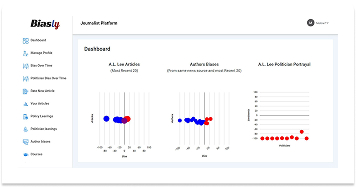
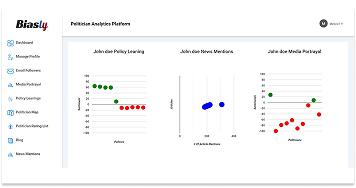
- Media Bias Chart: See where Crooks and Liars ranks among hundreds of media outlets across the political spectrum.
- Political Bias Chart: Visualize political slants of news sources across various policy areas.
- Journalist Bias Analytics Platform: Explore how individual journalists contribute to bias within their publications.
- Politician Bias Analytics Platform: Compare how politicians are framed differently by Crooks and Liars and other outlets.
- Media Literacy Education Platform: Learn how to critically assess media sources, bias techniques, and news reliability.
Frequently Asked Questions
Crooks and Liars is rated as Medium Left based on Biasly’s media bias algorithm, which assesses sentiment, article framing, and policy favorability.
Crooks and Liars’s articles tend to show selection and omission bias, especially in political reporting. For example, their articles sometimes tend to focus on criticizing conservative perspectives without providing sufficient background to understand the political issue more broadly.
Biasly uses a combination of AI sentiment analysis and human analyst review to assess tone, fact accuracy, source quality, and media bias indicators. Learn more on our Bias Meter page.
No, partisan framing and selective reporting are prevalent throughout their articles and significantly undermine their reliability.
Military Spending
| Date | Sentiment | Associated Article | Snippet |
|---|---|---|---|
| 08/25/2019 | 75% For | Trump Family Detentions Flores Agreement (link) | So, of course, the Trump administration is doing the opposite in a baldfaced |