




-18% Somewhat Left
Bias Meter
Extremely
Liberal
Very
Liberal
Somewhat Liberal
Center
Somewhat Conservative
Very
Conservative
Extremely
Conservative
-100%
Liberal
100%
Conservative
Biasly determines media bias ratings through a dual-layered approach combining artificial intelligence and analyst review. The platform’s proprietary bias detection engine, Bias Meter, evaluates sentiment, policy position alignment, and language framing across thousands of data points in news articles. Analysts then verify and interpret the AI’s findings, providing additional context where needed. Learn more about ratings
- Profile
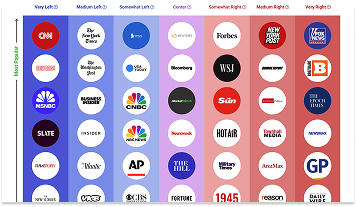
France 24 on the media bias chart
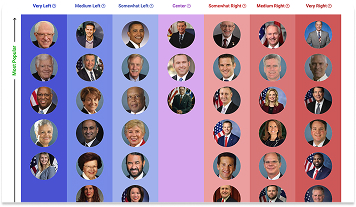

France 24 has a Bias Score of -18% Somewhat Left which is based on a variety of factors including its policy and politician leanings, article ratings, and the use of biased language. Its Reliability is rated as Average, and additional analytical insights are available in the other tabs.
- Bias Rating
-18% Somewhat Left
- Reliability35% Reliable AveragePolicy Leanings
-10% Center
Extremely
LiberalVery
LiberalModerately
LiberalSomewhat Liberal
Center
Somewhat Conservative
Moderately
ConservativeVery
ConservativeExtremely
Conservative-100%
Liberal100%
Conservative
Average Reliability
*Our bias meter rating uses data science including sentiment analysis, machine learning and our proprietary algorithm for determining biases in news articles. Bias scores are on a scale of -100% to 100% with higher negative scores being more liberal and higher positive scores being more conservative and 0% being neutral. The rating is an independent analysis and is not affiliated nor sponsored by the news source or any other organization.
Politician PortrayalN/A
Continue For Free
Create your free account to see the in-depth bias analytics and more.
By creating an account, you agree to our Terms and Privacy Policy, and subscribe to email updates.
Log In
Log in to your account to see the in-depth bias analytics and more.
Policy Leanings Analysis
Policy | Bias score |
|---|
France 24 Editorial Patterns
France 24’s coverage of political topics often reflects a Somewhat Left bias, with consistent patterns in phrasing, source selection, and thematic focus that are Slightly Liberal. While the publication demonstrates journalistic standards in many of its reports, the choice of issues, framing, and word usage can indicate a political slant. This content analysis examines how France 24 handles liberal and conservative issues and evaluates its language choices and editorial tendencies.
Coverage of Liberal vs. Conservative Topics
France 24’s articles include several topics, such as the environment, business, technology, and politics, which tend to be presented from a neutral standpoint. For instance, its coverage of clean energy and international issues uses neutral language to explain these policies and situations to the public as clearly as possible.
Articles covering conservative and liberal figures within the political sphere are given the same treatment. Biasly’s analysis of recent France 24 articles reveals a tendency to remain impartial when reporting on political dilemmas, regardless of whichever side of the spectrum is being scrutinized. There is an emphasis on remaining in the center, which is in accordance with France 24’s bias rating.
Within news sources, news media bias manifests in subtle ways, such as placing greater prominence on one party’s voices or using emotional diction when describing social causes. However, the language used in France 24 articles does not cater to any one party. Words like “informed,” “brought to light,” and “explained in detail” appear frequently inFrance 24 articles, no matter the situation being discussed.
Policy and Issue Framing
When covering issues specifically within France, France 24 often references crime and upcoming elections, striving to remain impartial in the debate. This aligns with a center bias, which is important in a country such as France, where politics is often a very divisive issue between the people. Similarly, coverage of environmental issues stays rooted in France 24’s position, often featuring voices from scientists and community leaders who explain the situation clearly.
Hot-button issues like environmental regulations or trade policies are covered in a similar tone. These stories provide limited context to the situation, even if they are topics that may be divisive in today’s political climate.
In neutral coverage, phrasing choices may still shape the audience’s perception. France 24 is careful to avoid this within its articles and refrains from labeling legislation as positive or negative. This consistency reflects that the journalists are committed to abiding by the precedent France 24 has already set.
Coverage and Relevance
France 24’s reporting often touches on key issues central to the political bias discussion, including French and international politics, environmental concerns, and developments in business and technology. As such, it serves as a compelling case study for examining source bias and news media bias in state-focused reporting.
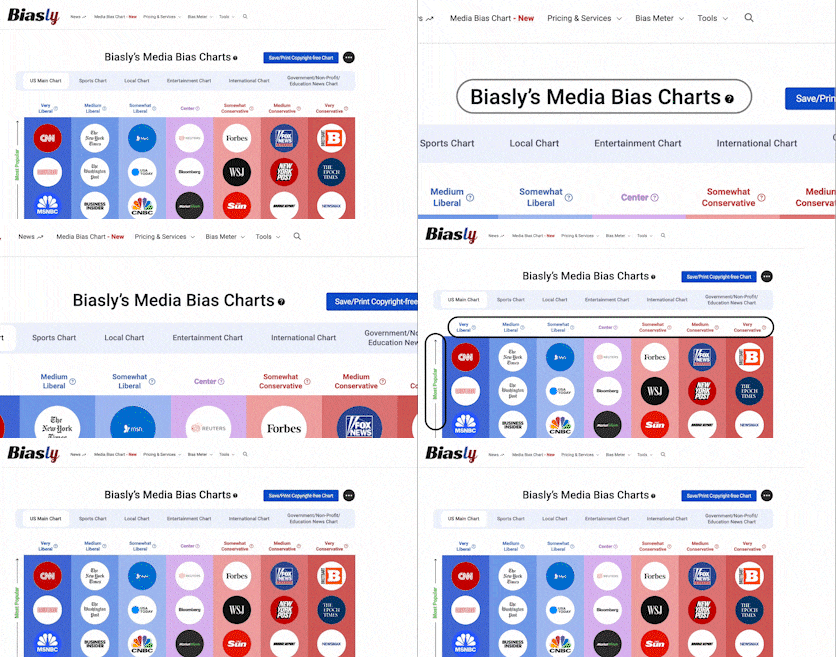
Readers who wish to further explore how France 24 compares with other publications can visit Biasly’s Media Bias Chart to analyze tone and word choice in near real time.
France 24 Bias Analysis
France 24 was founded by the French government in 2006. Today, it functions as an innovative and collaborative news organization. It operates as a company whose main revenue is ad-based. France 24 positions itself as a prominent news source in France and outside of France, committed to providing its readers with clear, unbiased news.
According to its “Who are we?” page, France 24 averaged 19.6 million visits in 2023, and its videos drew about 192.5 million views. When it comes to media bias, both AI and media analysts have evaluated its content, sources, and funding to determine its political leaning.
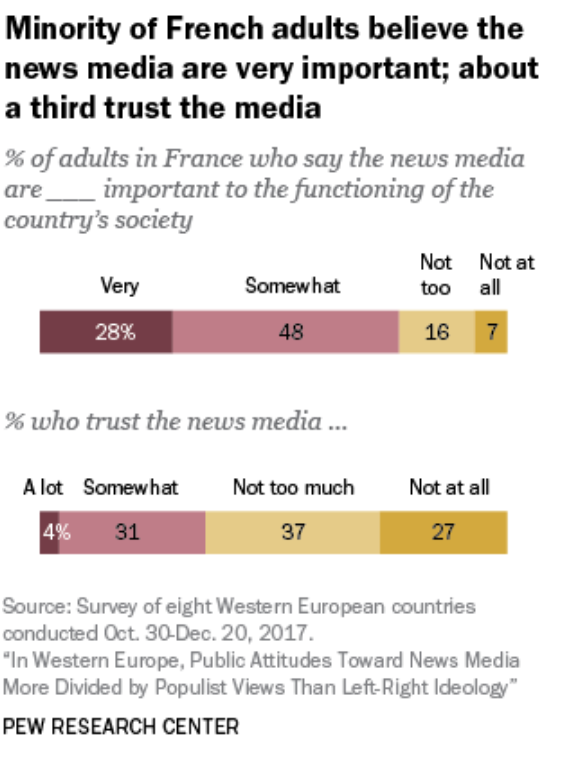
Source: Pew Research
As a leading media outlet in France, France 24 plays a significant role in shaping public perception. Readers’ trust in the accuracy of local news may mirror the conclusions reached by Biasly’s media bias ratings. This article delves into France 24’s editorial tendencies to explore whether political bias is present and, if so, to what degree.
Is France 24 Biased?
Based on Biasly’s evaluations, France 24 is rated as Somewhat Left.
By examining content patterns and the broader context of media influence, we aim to offer a balanced perspective on France 24’s political bias—and contribute to the ongoing discussion about bias in the news.
How Does Biasly Rate News Sources?
Biasly uses proprietary algorithms and a team of analysts to provide comprehensive bias evaluations across thousands of news outlets. Over 200,000 articles from more than 3,200 sources have been analyzed to identify the most accurate and unbiased stories.
Biasly assigns each outlet three key scores:
- Reliability Score – Reflects factual accuracy
- AI Bias Score – Generated via natural language processing
- Analyst Bias Score – Assessed by human political analysts
These scores are based on seven core metrics: Tone, Tendency, Diction, Author Check, Selection/Omission, Expediency Bias, and Accuracy. These elements help analysts and algorithms evaluate the political attitude conveyed by each article.
Biasly’s Bias Meter ranges from -100% (most left) to +100% (most right), with 0% indicating neutrality. The system evaluates individual articles based on political terms, policies, figures, and sentiment to calculate precise bias ratings.
Is France 24 Politically Biased?
France 24 earns a Somewhat Left rating for its AI Bias Score and a Somewhat Left for its Analyst Bias Score. The Analyst Bias Score is generated by reviewers from liberal, moderate, and conservative backgrounds. Analysts reviewed France 24 articles and noted a recurring tendency to maintain objectivity across topics.
For example, coverage of political problems in the Middle East reflects a mostly neutral tone, and it is the same for articles about a completely separate topic, such as crime. This analysis of France 24’s articles reinforces the Center rating Biasly has given it.
France’s current political context presents a contrasting backdrop. Politics in France is currently very divided, as President Emmanuel Macron has been facing heavy criticism from the French residents. President Macron had been hailed as “France’s great liberal hope”, but is now blamed for the rise of far-right extremism in France.
This means France is currently politically split, which could explain differing perceptions of France 24’s content. The paper may draw mixed reactions depending on readers’ political orientations.
This Bias score is determined through natural language processing that evaluates the tone, word choice, and opinion embedded in the reporting. Recent AI evaluations have analyzed France 24’s articles about many different issues, and the bias rating developed from those concurs with Biasly’s.
Analysis of Bias in France 24 Online Articles
France 24 has found that in-depth coverage of national and international politics is one of the most effective ways to drive subscriptions. Given that its readership is spread across the world, it’s essential to ask: is France 24 truly biased?
To evaluate this, we can analyze select France 24 articles through several of Biasly’s bias rating criteria: Tone, Tendency, Author, Diction, and Expediency Bias.
- Tone: The overall attitude conveyed by the article
- Diction: Specific word choices made by the writer
- Author: The background and social presence of the journalist
- Tendency: Patterns of bias in the writer’s broader body of work
- Expediency Bias: Quick visual or textual indicators like headlines and photos that imply bias
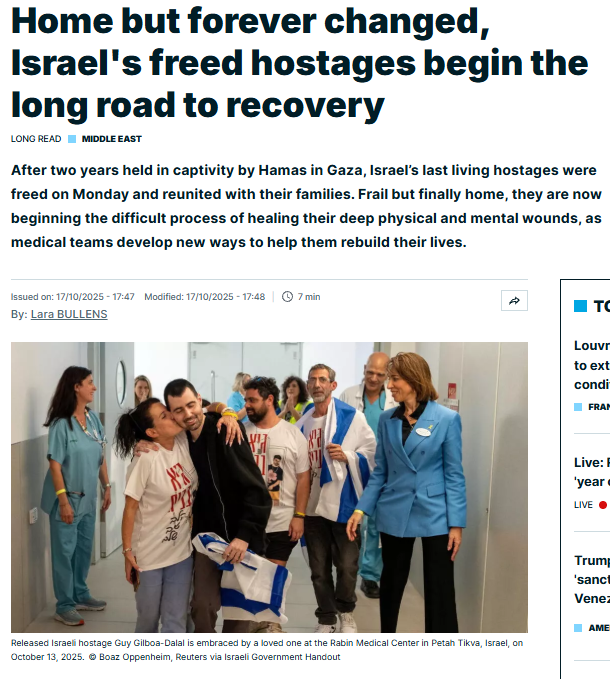
Source: France 24
One such article features a title and image that draws a correlation between the country of Israel and the freed Israeli hostages returning from Palestine. The photo is of the released hostages and their families reuniting at a hospital. It is supported by the title of the article, too, “Home but forever changed, Israel’s freed hostages begin the long road to recovery”. The article begins positively, with quotes from one of the freed hostages greeting his family—a message likely to resonate with their diverse audience, as it is a general story of hope.
Reporter Lara Bullens outlines the hostages’ return, the challenges they may face, and what the families may do to help. All of this information is presented only as facts, despite the positive tone of the article itself. There are multiple quotes from doctors, other hostages, and the Missing Families Forum. This lends weight to the article, and also reinforces France 24’s commitment to try and remain unbiased.
“Deprived of a sense of autonomy for two years, the physician explains that it is essential to allow the returnees to make small decisions on a consistent basis. Guidelines from the Israeli health ministry state that everyone treating the former hostages should ask for permission before carrying out an action, including turning the lights off or changing bedsheets, to ensure a gradual return of autonomy.”
The article does not lean to either side in its portrayal of the hostages’ return to normal living. While bias may be expected, considering that the Israeli-Palestinian war has been a topic of much contention, Reporter Bullens remains impartial. As described before, the article does tend to frame things in a more positive light. But this framing does not interfere with the factual points Bullens is making. By tilting the story toward a more uplifting direction, it may appeal to more French residents, especially with France’s divided political climate.
Lara Bullens’ Twitter activity reflects a professional and largely non-partisan journalistic posture, closely aligned with her reporting style. Her posts primarily amplify her own published work and highlight reporting from fellow journalists, documentary filmmakers, and international news organizations. The themes she engages with most often include humanitarian issues, climate change, indigenous rights, refugee integration, and media development. While these topics are commonly associated with center-left editorial priorities, Bullens’ language remains factual and observational, avoiding emotionally charged rhetoric or explicit political advocacy. Her feed suggests an emphasis on storytelling, field reporting, and journalistic craft rather than ideological positioning. Let’s take a closer look at one tweet that reflects this approach:
A country is more than its land. But without sovereign territory to stand on, can a country continue to exist? Latest piece for @France24_en on the climate crisis in the Pacific.
Huge thanks to @lagiseru for sharing your experiences with me.https://t.co/GxHBn6NFqw
— Lara Bullens (@larabullens) November 25, 2022
In this tweet, Bullens shares a report examining the existential challenges faced by Pacific Island nations as rising sea levels threaten their territorial sovereignty. Rather than promoting a partisan political solution, the post underscores the human and legal implications of climate change through a question-driven frame. This approach aligns with Bullens’s broader reporting style, which prioritizes explanatory journalism and firsthand accounts while maintaining professional distance from overt political advocacy.
Another article titled “NATO looks to bolster air defenses in wake of Russian incursions” is slightly more opinionated, despite still maintaining France 24’s bias rating. The opinionated language in this article comes from the situation being explained from a perspective that fully backs NATO, favoring the European Organization as a positive one. Phrases and diction like “Russia is pushing the boundaries”, “asking for a more robust response”, and “prepare the bloc for potential conflict with Moscow” are examples of where the reporter’s own opinions may bleed into the article. The hot-button issue is sometimes presented with an opinionated spin, as shown here:
“The Kremlin has warned Washington against the move, but Trump may be willing to let Kyiv hit far inside Russia to pressure Putin towards peace.”
However, despite the article’s relative slant, it employs diction and language that are notably restrained and formal. This contributes to its overall neutral tone. Terms like “present” and “focusing” are informative but measured, conveying the dynamics of NATO’s situation without implying aggression.
To sum it up, France 24 shows consistent bias across its reporting. While Bullen’s Israeli hostage article maintains neutrality through balanced presentation and restrained language, the NATO article reveals a very slight progressive slant by framing NATO as the ‘hero’ and the Kremlin as the ‘villain’ within a social justice narrative that aligns with left-leaning values. Attempts at balance in reporting are frequently made, and France 24’s tendency to remain unbiased within its articles further confirms the bias rating Biasly has analyzed.
Analysis of France 24 Opinion Articles
To fully understand political bias in media, it’s important to distinguish between factual reporting and opinion pieces. While reporting aims to present facts and let readers form their own conclusions, opinion articles express personal viewpoints on current issues. Although the previous section examined factual reporting, this section turns to how bias surfaces through France 24’s selection and tone of opinion content.
One example is the article titled “Ten contenders for the Nobel Peace Prize who are not Donald Trump”. The title itself signals a persuasive tone and may push the narrative that Donald Trump does not deserve the Nobel Peace Prize. It implies dissatisfaction with the idea that he may, and presents other people and/or organizations that could win it, suggesting the author’s skepticism toward Donald Trump’s candidacy.
In contrast, another opinion piece titled “How the Moroccan monarchy is trying to win back its estranged youth” employs more centrist language. Its title does not lean toward any political side and frames the issue around a shared desire to maintain peace. The subheading is neutral and avoids emotionally loaded phrasing, indicating that the piece may be less ideologically charged.
These examples show that only a very few of France 24’s articles are opinion pieces. This consistent selection of unbiased articles may contribute to France 24’s bias rating and viewer trust.
This tendency underscores the importance of distinguishing subjective viewpoints from the reporting, especially when interpreting the political leanings of any news organization.
How to Evaluate Bias
Although Biasly rates France 24 as Somewhat Left, it’s important to remember that bias can vary from article to article. France 24 covers a very split political climate with objectivity on many issues, from state legislation to social developments. This complexity underscores the importance of examining each article individually. So, let’s learn how to evaluate media bias.
Recognizing media bias requires awareness and critical thinking. Often, readers trust news sources that affirm their existing beliefs—a psychological tendency known as confirmation bias. This makes it harder to identify slanted narratives or one-sided reporting.
To combat this, it’s essential to challenge your assumptions by consulting multiple viewpoints and verifying news through third-party analysis. Tools like Biasly’s media bias ratings allow readers to compare the same news story across the political spectrum.
Ultimately, bias isn’t always a matter of what is said—it’s also about what is left out, how topics are framed, and which stories are chosen for coverage. Learning to recognize these patterns can help readers make more informed decisions and develop greater media literacy.
To start comparing news outlets and gain a better understanding of bias, sign up for Biasly’s Media Bias & News Analytics Platform to see how stories vary between sources.
France 24 Reliability Analysis
Is France 24 Reliable?
France 24 finds itself toward the middle of the reliability spectrum, with neither high nor low accuracy. Its status as a large news outlet may contribute to its moderate reputation for reliability. According to Pew Research, regardless of political affiliation, French residents tend to report lower trust in the media.
This suggests that France 24’s popularity among French residents may not stem from the reliability of its political news coverage. Further investigation is needed to determine whether bias or other factors are affecting its accuracy. At Biasly, we specialize in evaluating not just bias but also the reliability of media outlets. Let’s explore the accuracy and trustworthiness of France 24.
How to Evaluate Reliability?
Reliability refers to how trustworthy or accurate a news source is. If we can’t trust what we read, then continuing to consume content from that outlet serves little purpose. So how do we evaluate a news outlet’s reliability?
There are several potential measures of reliability to look out for when trying to determine whether a media source is reliable or not. Red flags for an unreliable article can include the presence of wild, unsubstantiated claims, facts dependent on other unreliable sources, heavy use of opinionated language, and more. In contrast, hallmarks of a reliable source include:
- Absence of subjective language
- Citing credible sources (e.g., .gov, .edu, academic references)
- Verifiable facts and statistics from multiple outlets
- Use of primary sources, like interviews or transcripts
- Consistency with coverage across other platforms
Biasly’s reliability scores incorporate these elements in evaluating media outlets.
So How Does France 24 Fare in Its Reliability?
The political reliability index developed by Biasly assesses both accuracy and trustworthiness. France 24 currently holds Average Reliability Score, which is calculated as a weighted average of:
- Fact Analysis Score – Evaluates the accuracy of claims, facts, and evidence.
- Source Analysis Score – Assesses the number, diversity, and credibility of sources and quotes used.
France 24’s Source Analysis Score is Average at 35% Reliable. This suggests moderate trustworthiness in its sourcing practices. The score is AI-generated and considers quote length, frequency, diversity, and quality.
The Fact Analysis Score of France 24 is Pending at N/A. This further shows how well France 24 supports its claims, addresses selection and omission bias, and presents verifiable evidence.
While France 24 leans toward factual reporting, occasional lapses, such as unbalanced viewpoints or incomplete data, can affect its reliability rating. These nuances emphasize the importance of analyzing individual articles.
France 24’s Accuracy and Reliability
According to Biasly’s analysis, France 24 maintains Average Reliability Score, but individual articles may vary significantly. Let’s dive into the details.
Political orientation plays a crucial role in how audiences perceive reliability. France 24 has been accused of favoring a very slight liberal narrative, potentially at the expense of factual reporting. To validate such claims, it’s essential to analyze whether the publication backs its assertions with sufficient evidence and diverse viewpoints.
Two common types of bias that affect factuality include:
- Selection Bias – Highlighting or omitting stories to fit a particular narrative.
- Omission Bias – Leaving out differing perspectives or relevant details to skew perception.
Biasly’s accuracy ratings use a scale from 1% (least accurate) to 100% (most accurate). Factors include the presence of supporting evidence, internal and external reliable sources, and balanced viewpoints.
For instance, Biasly gave CNN a Very Left Bias and a Good Analyst Reliability Score. One CNN article, titled “How Trump-Zelensky meeting turned acrimonious over demands for territorial concessions”, showed an Average reliability rating for failing to include diverse viewpoints and for employing inflammatory language. Critical language towards Donald Trump did not stop at the headline, and reporter Kevin Liptak failed to complement his selection of liberal opinions with views belonging to any other school of thought. In contrast, another piece from CNN titled “Justices agree to review federal law banning drug users from possessing guns” featuring legal and political sources with balanced quotes, was rated as Center and scored high for accuracy. The most significant language that may indicate bias here is written by the reporter, John Fritze:
“The appeal represents a rare circumstance in which the Trump administration is defending a gun prohibition, which it described in a briefing at the Supreme Court as a “narrow” limitation on one of “Americans’ most cherished freedoms.”
We will take a closer look at more examples like this below to provide a further investigation into the reliability of France 24’s articles. This will include its use of selection bias, omission bias, and the quality of its sources and the facts it uses.
Analysis of Reliability in France 24’s Online News Articles
France 24 aims to serve France and its worldwide audience with objective, fact-based reporting. Its staff includes writers from varying ideological backgrounds, which can help balance coverage. However, readers should distinguish between news reporting and opinion pieces to evaluate credibility effectively.
One notable example is the article titled “US jury finds French bank BNP Paribas liable for damages for enabling Sudan atrocities”. The reporter covered the United States’ judicial decision about the French bank, BNP Paribas, being liable for damages against three Sudanese citizens, who have since become American citizens. The article refrains from editorial commentary, sticking to quotes and fact-based language. Consistent with France 24’s Somewhat Left rating, this piece illustrates factual neutrality.
Quality of Sources and Facts Used
France 24 often uses credible sources from across the political spectrum. However, some articles may skew slightly in how comprehensively they present opposing viewpoints.
Consider the headline: “Lithium: Can Bolivia’s new president revive the country’s ‘white-gold’ dream?” While well-documented and supported by nonprofit data and legal references, the article lacks heavy insight as to the challenges that come with the newly elected President Paz’s lithium focus. There is a small chunk near the end that explains the environmental ramifications that this lithium exploitation may bring. Yet, there is very little information as to what the people who voted for him or against him think. This absence creates a perception that Paz’s push for lithium is entirely supported, even if this may not be true.
Readers cannot find voters’ viewpoints that disagree with Paz’s politics in this article. Reporter Barbara Gabel notes some potential challenges:
“The challenge for the new government is also environmental. Lithium exploitation requires colossal quantities of water in already arid zones, threatening biodiversity and the traditional activities (herding, agriculture) of the Aymara and Quechua Indigenous peoples.”
In contrast, the article “Louvre heist losses estimated at 88 million Euros” maintains objectivity. It features multiple credible experts speaking about the Louvre’s recent heist, without any editorial slant. There is no favoritism within the article itself, and the author refrains from making any personal assessments. This allows readers to interpret the article on their own and decide for themselves what they wish to believe.
The article gains credibility through its 7 quotes from varied sources—5 long and 2 medium-length. These quotations strengthen reliability by providing full context and minimizing misrepresentation, offering readers a more authentic and trustworthy account from primary sources.
The article features five sources, primarily prosecutors and museum staff, along with several officers who also took a stance. This article includes some internal diversity, as is seen in the different types of sources used, varying from organizations to individual higher-ups.
- Laure Beccuau, Parisian Prosecutor
- France’s Court of Auditors
- Laurence des Cars, President of the Louvre
- Laurent Nunez, Minister of the Interior
- Central Office for Fight Against Trafficking in Cultural Property
The article accurately reflects legislative records and explanations about the heist that occurred. All statements are presented as-is, leaving room for reader interpretation.
The article relies on primary sources, which are highly valid and enhance its reliability. Given its focus on the Louvre heist, including varied sources to bolster reader trust in France 24.
Selection and Omission Bias
France 24 provides extensive coverage of French and international politics. However, bias may still emerge through framing and story selection.
In “Top UN court rules Israel must provide Palestinians with basic needs” selection bias surfaces through the article’s emphasis on the Israeli ambassador’s negative comments on the World Court. The article does not explore positive opinions on what the World Court decreed, and it stays focused on Ambassador Danny Danon’s perspective. Still, it remains rooted in verifiable quotes.
The article does not highlight any proactive or positive thoughts on the ruling, and how Israel must provide assistance to Palestine now that the war has come to a standstill. The author addresses the stipulations of the ruling, alongside other courts that have declared Netanyahu a war criminal before the law. That said, the reporting does not cross into overt editorializing and is still grounded in verifiable facts and quotes.
By comparison, the article “Louvre director admits ‘insufficient’ security and says she offered to resign after jewel heist” shows a stronger balance. The reporter includes quotes from officials who were at the press conference, and references the conference for public review. An example of this unbiased language can be found in the following quote:
“The Louvre theft is the latest in a string of robberies targeting French museums, raising questions about security at the country’s cultural institutions.”
The reporter uses an extensive number of sources that display diversity when brought together. The article integrated conversations that took place at the press conference and also separately, like President Macron’s statements. Overall, this article used a well-rounded approach to delivering unbiased news to readers of France 24.
In opinion pieces, issues with factuality, sources, selection, and omission are frequently present. The articles we’ve covered so far reflect France 24’s Somewhat Left, but this is not detrimental to its reliability. Its story selection does not favor any party over the other, making it a trustworthy news source for its audience. The contents of France 24’s article maintain accuracy and tend to cite evidence from numerous and varied sources.
So, Is France 24 Reliable?
Overall, France 24 can be considered to be an outlet that is moderately reliable. The site does not often use sources that differ in perspective, with variable sourcing and occasional editorial framing on sensitive topics. While some claims are supported with evidence, consistency in sourcing and balance could be improved to meet stronger journalistic standards.
As media literacy improves, readers can more easily detect issues with selection bias, omission bias, and factuality. To strengthen your ability to assess reliability across the political spectrum, use Biasly’s News Bias Checker to compare how multiple outlets report the same story.
This empowers you to consume more accurate, balanced, and dependable news.
Funding and Ownership
Who Owns France 24?

Source: France Médias Monde
Established in 2006, France 24 is overseen by the French government and owned by France. It was established in 2006, is overseen by the French government, and is owned by France Médias Monde; it operates as a public-service broadcaster and also carries advertising. As of 2025, Marie-Christine Saragosse is the current CEO of France Médias Monde.
France Médias Monde is the organization that owns France 24 and its sister organizations, RFI and MCD. Their purpose is to let France 24 and these other organizations provide news to the public freely without barriers. They strive to reach audiences across the world and not just in France.
Under its business structure, the newspaper’s editorial board operates independently of its newsroom, yet both still remain committed to providing unbiased news. France Médias Monde’s financial policy states the following:
“As a public service company, France Médias Monde contributes to the common effort to control public spending.
France Médias Monde’s governance bodies, particularly the Audit Committee and the Administrative Board, closely monitor this policy of rigorous management.”
This reinforces the paper’s public commitment to transparency in journalism, helping ensure that financial contributions do not bias editorial content. While some biases may still arise due to staff perspectives or editorial practices, they are not easily attributed to external funding.
Who Funds France 24?
France 24 is owned and operated by France Médias Monde, a national French company, which is in turn fully owned by the French State. Before 2022, its main source of funding came from France’s audiovisual license fee, up to when it was abolished. Now, a part of France 24’s funding comes from France’s value-added tax. The other part comes from the advertisements that France 24 carries on its page.
France 24 is funded by the French government and does not accept reader donations for this purpose. Nevertheless, as with any outlet, funding sources and board priorities can shape newsroom incentives over time and should be monitored by readers.
Additional Insights
News Source Comparison
When it comes to news source comparison, France 24 is often evaluated alongside other regional and national outlets that lean center. Sources like Reuters, The Hill, or Newser often present similar tones and editorial philosophies. France 24 maintains a Somewhat Left media bias, yet it differs from strongly partisan sources in that it strives for regional coverage balance.
This puts it in contrast with more biased media outlets that present consistently one-sided narratives without factual counterpoints. Readers seeking balanced political coverage may compare France 24’s framing of issues with outlets rated as Somewhat Right or Medium Right on our Media Bias Chart, or explore other regional papers on our Similar Sources page.
Notable Contributors and Authors
France 24 features a diverse range of reporters and columnists, many of whom are deeply familiar with France’s political and social climate. Reporters like Lara Bullens, who frequently covers political controversies and the developing situations in the Middle East, exemplify the outlet’s strength in investigative journalism. Reporters like Louise Nordstrom also cover international conflicts, reporting upon these with a keen sense of objectivity.
Other contributors focus on current events, environment, or international politics, topics central to French and international readers. Their work is generally grounded in factual reporting. The presence of recurring bylines helps readers evaluate individual journalists’ bias over time.
Related Tools and Resource Pages
To better understand how France 24 fits into the broader media landscape, we recommend exploring these helpful resources:
- Media Bias Chart: See where France 24 ranks among hundreds of media outlets across the political spectrum.
- Political Bias Chart: Visualize political slants of news sources across various policy areas.
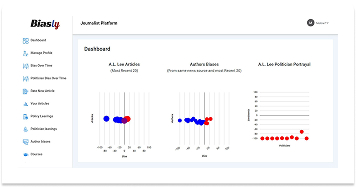
- Journalist Bias Analytics Platform: Explore how individual journalists contribute to bias within their publications.
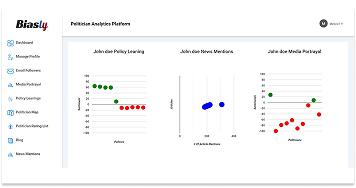
- Politician Bias Analytics Platform: Compare how politicians are framed differently by France 24 and other outlets.
- Media Literacy Education Platform: Learn how to critically assess media sources, bias techniques, and news reliability.
Frequently Asked Questions
France 24 is rated as Somewhat Left based on Biasly’s media bias algorithm, which assesses sentiment, article framing, and policy favorability.
France 24 has faced specific accusations of fake news and misinformation, notably over its reporting on conflicts, which led to temporary broadcast suspensions in some African nations. These criticisms contrast with the channel’s dedicated efforts to combat misinformation through its fact-checking program, Truth or Fake, which debunks manipulated content like deepfake videos.
Biasly uses a combination of AI sentiment analysis and human analyst review to assess tone, fact accuracy, source quality, and media bias indicators. Learn more on our Bias Meter page.
Generally, yes. Its reporting is typically sourced to primary documents and experts, with limited overt bias, though balance varies piece by piece.
Military Spending
| Date | Sentiment | Associated Article | Snippet |
|---|---|---|---|
| 08/25/2019 | 75% For | Trump Family Detentions Flores Agreement (link) | So, of course, the Trump administration is doing the opposite in a baldfaced |