




-34% Somewhat Left
Bias Meter
Extremely
Liberal
Very
Liberal
Somewhat Liberal
Center
Somewhat Conservative
Very
Conservative
Extremely
Conservative
-100%
Liberal
100%
Conservative

Biasly determines media bias ratings through a dual-layered approach combining artificial intelligence and analyst review. The platform’s proprietary bias detection engine, Bias Meter, evaluates sentiment, policy position alignment, and language framing across thousands of data points in news articles. Analysts then verify and interpret the AI’s findings, providing additional context where needed. Learn more about ratings
- Profile
Rolling Stone on the media bias chart

- Bias Rating
-34% Somewhat Left
- Reliability73% Reliable GoodPolicy Leanings
2% Center
Extremely
LiberalVery
LiberalModerately
LiberalSomewhat Liberal
Center
Somewhat Conservative
Moderately
ConservativeVery
ConservativeExtremely
Conservative-100%
Liberal100%
Conservative
Average Reliability
*Our bias meter rating uses data science including sentiment analysis, machine learning and our proprietary algorithm for determining biases in news articles. Bias scores are on a scale of -100% to 100% with higher negative scores being more liberal and higher positive scores being more conservative and 0% being neutral. The rating is an independent analysis and is not affiliated nor sponsored by the news source or any other organization.
Politician Portrayal99% negative
Continue For Free
Create your free account to see the in-depth bias analytics and more.
By creating an account, you agree to our Terms and Privacy Policy, and subscribe to email updates.
Log In
Log in to your account to see the in-depth bias analytics and more.
Analysis of Rolling Stone Articles
Analysis of Bias in Rolling Stone Online Articles
Given that much of its readership is spread globally and covers contemporary news, it’s essential to ask: Is Rolling Stone truly biased?
To evaluate this, we can analyze select Rolling Stone articles using several of Biasly’s bias-rating criteria: Tone, Tendency, Author, Diction, and Expediency Bias.
- Tone: The overall attitude conveyed by the article
- Diction: Specific word choices made by the writer
- Author: The background and social presence of the journalist
- Tendency: Patterns of bias in the writer’s broader body of work
- Expediency Bias: Quick visual or textual indicators like headlines and photos that imply bias
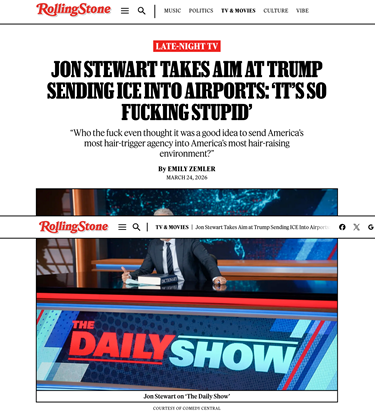
Source: Rolling Stone
One such article features a headline that is immediately eye-grabbing: “Jon Stewart Takes Aim at Trump Sending ICE Into Airports: ‘It’s So F*** Stupid’.” The piece opens with a photo of Jon Stewart on The Daily Show (courtesy of Comedy Central) and quickly dives into Stewart’s monologue criticizing President Trump’s decision to deploy ICE agents to help manage long TSA lines at airports. The image exhibits authority bias, featuring a well-dressed man behind a professional-looking news desk. This can sway readers to give greater weight to the article’s message and title, which is provocative in its language and left-leaning, using expressive/emotive language to grab readers’ attention.
The article prominently features Stewart’s profane and exasperated commentary, presenting it as sharp, truthful insight rather than a single comedian’s opinion. For example:
“Who the f*** even thought it was a good idea to send America’s most hair-trigger agency into America’s most hair-raising environment?”
“It’s so f*** stupid. Meanwhile, the rest of us suffer under Donald Trump’s attention deficit-style of government by whim.”
The reporter frames the policy as absurd and dangerous, using Stewart’s sarcasm—comparing ICE deployment to “calming dogs during thunderstorms with a blanket of fireworks”—without including any counterarguments from the administration, such as claims about enhanced border security or operational efficiency. Loaded language like “hair-trigger agency,” “f*** madness,” and “attention deficit-style” amplifies a mocking, anti-Trump tone (expediency bias via headline and selective video clips). This reflects a strong negative tendency toward conservative immigration enforcement policies.
The reporter, Emily Zemler, doesn’t use particularly emotionally charged language outside of quoting Steward directly, though she clearly indicates that she agrees with his overall sentiment. While her social media presence is mostly professional and apolitical, her few political posts on her X are heavily left-leaning. Here is an example of left-leaning sway used on Emily Zelmer’s Twitter profile:
As the U.S. descends into a dictatorship, I am very excited to vote in my first U.K. general election tomorrow and send our dipshit PM packing.
— Emily Zemler (@emilyzemler) July 3, 2024
The piece shows clear left-leaning diction and tone by emphasizing chaos and incompetence under Trump while omitting potential justifications or data on airport security challenges. Reliance on a single satirical source (Stewart) with no balancing conservative voices raises questions about objectivity in what is presented as entertainment/news coverage.
In contrast, another article titled “Trump’s State of the Union: Medals, Fearmongering, Arguing With Dems” maintains a more factual recap style on the surface but still reveals bias through selection and diction. It describes the speech as filled with “ravings and falsehoods” and “a torrent of ravings,” while highlighting Democratic shouts like Rep. Ilhan Omar’s “You have killed Americans!” without equivalent weight to Republican perspectives. Hot-button issues like immigration are presented with phrases such as “fearmongering about immigrants” and “brutal tactics,” contributing to a critical tone.
On the other hand, another article titled “No Kings Is Going After Disillusioned Trump Voters” focuses on anti-Trump protests amid the Iran conflict and immigration crackdown. It frames Trump policies as an “intensifying immigration crackdown that includes documented abuses” and a “growing military quagmire,” while celebrating protest turnout and outreach to “disillusioned Trump voters.” No conservative counter-voices are included, showing selection/omission bias.
In summary, Rolling Stone shows inconsistent bias in its reporting. While some non-political coverage remains relatively straightforward, the Jon Stewart article reveals a progressive slant by framing Trump administration actions through a lens of ridicule and absurdity that aligns with left-leaning values. The heavy use of profanity, selective quoting, and lack of counterpoints—alongside similar patterns in the State of the Union and No Kings coverage—indicates an overall Somewhat Left orientation, particularly when covering immigration, foreign policy, or conservative initiatives. This pattern contributes to perceptions of Rolling Stone media bias in its political reporting.
Analysis of Rolling Stone Opinion Articles
To fully understand political bias in media, it’s important to distinguish between factual reporting and opinion pieces. While reporting aims to present facts and let readers form their own conclusions, opinion articles express personal viewpoints on current issues. Although the previous section examined factual reporting, this section turns to how bias surfaces through Rolling Stone selection and tone of opinion content.
One prominent example is the piece highlighting Trump’s mail-in voting hypocrisy, titled along the lines of “Trump Says Not to Trust ‘Corrupt’ Mail-In Voting. He Just Did.” The title itself signals a persuasive tone and a clear alignment with progressive values by emphasizing inconsistency. It implies dissatisfaction with the political status quo—particularly under the Trump administration—and draws attention to perceived double standards, suggesting that the author prioritizes persuasion over the balanced delivery of information.
This example shows that while not all Rolling Stone opinion pieces are overtly liberal, the platform frequently publishes content that aligns with liberal media narratives. This consistent selection of opinion pieces can contribute to perceptions of systemic bias—particularly when the editorials predominantly support liberal views or causes.
This tendency underscores the importance of distinguishing subjective viewpoints from straight reporting, especially when interpreting the political leanings of any news organization.
Analysis of Reliability in Rolling Stone Online News Articles
Rolling Stone aims to deliver sharp cultural and political commentary alongside its music roots. Its staff includes writers with backgrounds in entertainment and progressive journalism, which can influence coverage. However, readers should distinguish between news reporting and opinion pieces to evaluate credibility effectively.
One notable example is the article on Jon Stewart’s monologue, which sticks closely to quoting the comedian but offers minimal independent fact-checking on the underlying ICE/TSA policy. Despite Rolling Stone’s Somewhat Left rating, pieces like this illustrate how entertainment framing can blend with news in ways that prioritize satire over balanced analysis.
Quality of Sources and Facts Used
Rolling Stone often uses credible sources from across the political spectrum. However, some articles lean too heavily toward how comprehensively they present opposing viewpoints.
Rolling Stone often draws from credible entertainment figures, public officials, and its own internal reporting, but can lean heavily on progressive or satirical voices when covering politics. Some articles provide good sourcing on cultural topics, yet political pieces sometimes omit conservative rationales or data.
Consider the Jon Stewart ICE article. The piece contains 9 direct quotes (or extended paraphrases) from Jon Stewart (average length ~18 words) and only 3 short video-clip quotes from Trump administration officials (average length ~7 words). The longest quote is Stewart’s 42-word “fireworks” analogy; the shortest are single-sentence clips from Transportation Secretary Sean Duffy and White House Border Czar Tom Homan.
Because almost all substantive commentary comes from Stewart’s monologue, the piece is not quote-driven in the typical “soundbite” sense; instead, it relies on long, attributed satirical blocks. That approach can feel more transparent in one way—readers hear extended, uninterrupted satire—but it also means we don’t get classic “verbatim” quotation context from the other side except for three brief, cherry-picked clips; in general, longer attributed passages from the favored voice reduce the risk of selective snippetting for Stewart while leaving administration statements minimally contextualized.
On linked sources, the article uses 4 distinct hyperlinks in the body: all internal Rolling Stone politics pages (e.g., prior ICE reporting, Trump tag, general ICE tag). By left/center/right: Left = 3, Center = 1, Right = 0. The “linked-source” footprint is small and doesn’t function as a cross-ideological evidence base; it mainly provides navigation within the same publication’s left-leaning political vertical.
- Jon Stewart, host of The Daily Show (Left)
- Transportation Secretary Sean Duffy (video clip) (Right)
- White House Border Czar Tom Homan (video clip) (Right)
- President Donald Trump (video clip taking credit) (Right)
- Rolling Stone internal politics articles (3 links) (Somewhat Left)
- Comedy Central (image/video source) (Center/Institutional)
The sourcing is lopsided by design: Stewart’s voice dominates nearly all substantive content (roughly 85 % of quoted-word share), while the three Right-leaning officials appear only in short, adversarial clips selected to highlight contradictions. Claims about ICE training limitations or policy intent are not heavily challenged or contextualized within the text, which can function as neutrality (letting the clips “speak for themselves”) but can also inadvertently advantage the satirical speaker by giving unchallenged space to mockery.
Grounded in what we can count here (speaker access, quote volume, and framing), the article’s operating bias reads closest to Somewhat Left: the structure is satirical rather than argumentative, but it is not “balanced” left/right in source representation because the assignment is explicitly to showcase anti-Trump comedy.
On factual accuracy, the broad context is generally consistent with public, widely known facts: Trump did direct ICE to airports, officials made the referenced statements, and TSA lines have been a reported issue. Where accuracy becomes harder is inside Stewart’s characterizations presented without verification—e.g., “attention deficit-style of government by whim” or the implication that the policy is purely chaotic—some of which are opinion rather than verifiable fact and require careful qualifiers.
By comparison, the State of the Union recap and “No Kings” protest article show similar patterns: heavy reliance on progressive protest voices or late-night clips, internal RS links, and minimal Right-leaning counter-sources.
Selection and Omission Bias
Rolling Stone provides extensive coverage of progressive social causes and critiques of Republican figures, which aligns with its audience but can introduce selection bias. Articles often emphasize negative aspects of conservative policies (e.g., immigration enforcement, Iran policy) while downplaying positive outcomes or alternative viewpoints. Still, many pieces remain rooted in verifiable quotes from public figures.
In opinion pieces, issues with factuality, sourcing, selection, and omission are common. The articles we’ve covered so far reflect Rolling Stone’s Somewhat Left, though this is not detrimental to their reliability. Its story selection favors issues more likely to concern liberals, suggesting it neglects issues in Utah that concern conservatives. However, the contents of Rolling Stone’s article maintain accuracy and tend to cite evidence from numerous and varied sources.
Rolling Stone Bias Overview
Rolling Stone was founded in 1967 by Jann Wenner as a counterculture music magazine that quickly expanded into political and cultural commentary. Today, it functions as a multi-platform digital brand under Penske Media Corporation, blending music reviews, celebrity interviews, and hard-hitting political takes. With a global audience of millions, Rolling Stone positions itself as a voice for progressive culture and investigative journalism.
When it comes to media bias, both AI and media analysts have evaluated its content, sources, and editorial choices to determine its political leaning.
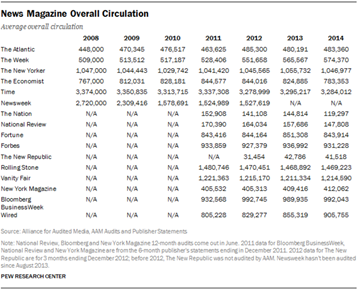
Source: Pew Research
As a leading digital media outlet with roots in music and youth culture, Rolling Stone plays a significant role in shaping public perception on cultural and political issues. Readers’ trust in its accuracy may mirror the conclusions reached by Biasly’s media bias ratings. Biasly’s media bias ratings. This article delves into Rolling Stone editorial tendencies to explore whether political bias is present and, if so, to what degree.
Is Rolling Stone Biased?
Based on Biasly’s evaluations, Rolling Stone is rated as Somewhat Left
By examining content patterns and the broader context of media influence, we aim to offer a balanced perspective on Rolling Stone’s political bias—and contribute to the ongoing discussion about bias in the news.
How Does Biasly Rate News Sources?
Biasly uses proprietary algorithms and a team of analysts to provide comprehensive bias evaluations across thousands of news outlets. Over 200,000 articles from more than 3,200 sources have been analyzed to identify the most accurate and unbiased stories.
Biasly assigns each outlet three key scores:
- Reliability Score – Reflects factual accuracy
- AI Bias Score – Generated via natural language processing
- Analyst Bias Score – Assessed by human political analysts
These scores are based on seven core metrics: Tone, Tendency, Diction, Author Check, Selection/Omission, Expediency Bias, and Accuracy. These elements help analysts and algorithms evaluate the political attitude conveyed by each article.
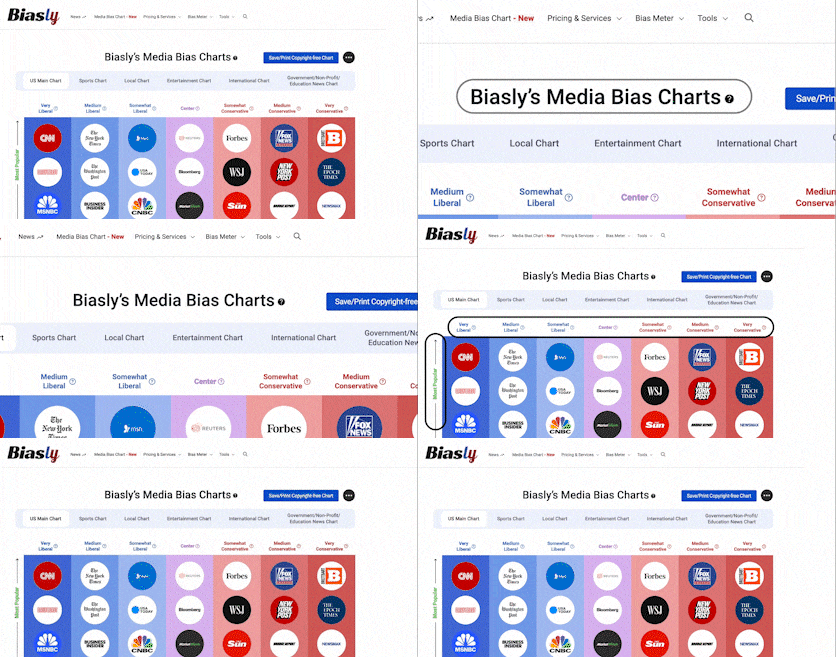
Biasly’s Bias Meter ranges from -100% (most left) to +100% (most right), with 0% indicating neutrality. The system evaluates individual articles based on political terms, policies, figures, and sentiment to calculate precise bias ratings.
Is Rolling Stone Politically Biased?
Rolling Stone earns a Somewhat Left rating for its AI Bias Score and a Somewhat Left for its Analyst Bias Score. The Analyst Bias Score is generated by reviewers from liberal, moderate, and conservative backgrounds.
Other news sources, such as The Guardian, Wall Street Journal, and The Washington Post, have also found the Rolling Stone to lean left. This is relevant because these sources tend to lean left as well. In 2022, an opinion piece from the Wall Street Journal stated:
“Rolling Stone has a history of making reckless and defamatory accusation in furtherance of a political agenda. “
This Bias score is determined through natural language processing that evaluates the tone, word choice, and opinion embedded in the reporting.
How to Evaluate Bias
Although Biasly rates Rolling Stone as Somewhat Left, it’s important to remember that bias can vary from article to article. Rolling Stone also covers a conservative-leaning state with objectivity on many issues, from state legislation to social developments. This complexity underscores the importance of examining each article individually. So, let’s learn how to evaluate media bias.
Recognizing media bias requires awareness and critical thinking. Often, readers trust news sources that affirm their existing beliefs—a psychological tendency known as confirmation bias. This makes it harder to identify slanted narratives or one-sided reporting.
To address this, it’s essential to challenge your assumptions by consulting multiple perspectives and verifying information through third-party analysis. Tools like Biasly’s media bias ratings allow readers to compare the same news story across the political spectrum.
Ultimately, bias isn’t always a matter of what is said—it’s also about what is left out, how topics are framed, and which stories are chosen for coverage. Learning to recognize these patterns can help readers make more informed decisions and develop greater media literacy.
To start comparing news outlets and gain a better understanding of bias, sign up for Biasly’s Media Bias & News Analytics Platform to see how stories vary between sources.
Rolling Stone Reliability Overview
Is Rolling Stone Reliable?
Rolling Stone finds itself toward the middle-to-upper part of the spectrum on factual sourcing in non-political content. Its status as a cultural magazine with a strong digital reach contributes to its reputation. According to Pew Research, Americans generally hold more politically polarized views of national media compared to local news. This is exacerbated by the fact that satisfaction regarding partisan-influenced coverage can vary, regardless of whether the medium is primarily entertainment-oriented.
This suggests that Rolling Stone popularity may stem more from its cultural authority rather than uniform reliability regarding political news coverage. Further investigation is needed to determine whether bias or other factors are affecting its accuracy. At Biasly, we specialize in evaluating not just bias but also the reliability of media outlets. Let’s explore the accuracy and trustworthiness of Rolling Stone.
How to Evaluate Reliability?
Reliability refers to how trustworthy or accurate a news source is. If we can’t trust what we read, then continuing to consume content from that outlet serves little purpose. So how do we evaluate a news outlet’s reliability?
There are several key indicators of reliability to consider when assessing a media source. Red flags of an unreliable article can include wild, unsubstantiated claims, facts that depend on other unreliable sources, heavy use of opinionated language, and more. In contrast, hallmarks of a reliable source include:
- Absence of subjective language
- Citing credible sources (e.g., .gov, .edu, academic references)
- Verifiable facts and statistics from multiple outlets
- Use of primary sources, like interviews or transcripts
- Consistency with coverage across other platforms
Biasly’s reliability scores incorporate these elements in evaluating media outlets.
So How Does Rolling Stone Fare in Its Reliability?
The political reliability index developed by Biasly assesses both accuracy and trustworthiness. Rolling Stone currently holds Good Reliability Score, which is calculated as a weighted average of:
- Fact Analysis Score – Evaluates the accuracy of claims, facts, and evidence.
- Source Analysis Score – Assesses the number, diversity, and credibility of sources and quotes used.
Rolling Stone’s Source Analysis Score is Average at 69% Reliable. This suggests moderate trustworthiness in its sourcing practices. The score is AI-generated and considers quote length, frequency, diversity, and quality.
The Fact Analysis Score of Rolling Stone is Good at 74% Reliable. This further shows how well Rolling Stone supports its claims, addresses selection and omission bias, and presents verifiable evidence.
While Rolling Stone leans toward factual reporting, occasional lapses—such as unbalanced viewpoints or incomplete data—can affect its reliability rating. These nuances emphasize the importance of analyzing individual articles.
Rolling Stone Accuracy and Reliability
According to Biasly’s analysis, Rolling Stone maintains a Good reliability Score, but individual articles may vary significantly. Let’s dive into the details.
Political orientation plays a crucial role in how audiences perceive reliability. Rolling Stone has been accused of favoring a liberal narrative, potentially at the expense of factual reporting. To validate such claims, it’s essential to analyze whether the publication backs its assertions with sufficient evidence and diverse viewpoints.
Two common types of bias that affect factuality include:
- Selection Bias – Highlighting or omitting stories to fit a particular narrative.
- Omission Bias – Leaving out differing perspectives or relevant details to skew perception.
Biasly’s accuracy ratings use a scale from 1% (least accurate) to 100% (most accurate). Factors include supporting evidence, reliable internal and external sources, and balanced viewpoints.
For instance, Biasly gave The Independent a Somewhat Left Bias and a Good Reliability Score. A piece from the outlet, titled “What does fall of Assad in Syria mean for the Middle East and the West,” featuring analysis with an overall Center bias rating and Conservative policy sentiment in parts, scored higher for accuracy and balance. The most significant language here stems from expediency bias in the headline image, which created a “jubilant atmosphere of the Syrian people raising the opposition flag after years of civil war and oppression,” portraying the overthrow positively, but the article as a whole maintained more measured journalistic standards overall. This framing is characteristic of The Independent’s stronger pieces, as their variation in sourcing, fact-checking protocols, and occasional inclusion of opposing viewpoints produced Good reliability ratings with Biasly.
So, is Rolling Stone Reliable?
Overall, Rolling Stone can be considered to be an outlet that is very reliable. It demonstrates a consistent goal of journalistic integrity and typically supports claims with sources and quotes. Occasional omissions and framing bias do appear, particularly on culturally sensitive or partisan issues.
As media literacy improves, readers can more easily detect issues with selection bias, omission bias, and factuality. To strengthen your ability to assess reliability across the political spectrum, use Biasly’s News Bias Checker to compare how multiple outlets report the same story.
This empowers you to consume more accurate, balanced, and dependable news.
Rolling Stone Editorial Patterns
Rolling Stone’s coverage of political topics often reflects a 69% Reliable bias, with consistent patterns in phrasing, source selection, and thematic focus that are Slightly Liberal. While the publication demonstrates journalistic standards in many of its reports, the choice of issues, framing, and word usage can indicate a political slant. This content analysis examines how Rolling Stone handles liberal and conservative issues and evaluates its language choices and editorial tendencies.
Coverage of Liberal vs. Conservative Topics
Rolling Stone articles frequently include progressive social causes, such as immigration reform rights, critiques of authoritarianism, and cultural inclusivity, which tend to adopt sympathetic and supportive language. For instance, its coverage of topics related to Trump administration policies or conservative figures often aligns with liberal viewpoints, using inclusive and affirmative language to frame these policies as necessary reforms.
On the other hand, articles covering conservative figures or Republican-led initiatives often employ a more critical tone. Biasly’s analysis of recent Rolling Stone articles reveals a tendency to highlight controversies or opposition surrounding Republican policies, while downplaying positive aspects or conservative rationale. For example, in political campaign coverage, Republican candidates may receive more scrutiny, with an emphasis on potential missteps or public backlash.
This news media bias manifests in subtle ways, such as placing greater prominence on Democratic voices or using emotional diction when describing liberal causes, while offering more detached language in conservative contexts. Words like “justice,” “equality,” and “rights” appear more frequently in liberal-oriented reporting, while conservative views are often framed as “pushbacks,” “restrictions,” or “oppositions.”
Policy and Issue Framing
When covering government policy, Rolling Stone often references chaos, harm to marginalized groups, or incompetence. This aligns with a Somewhat Left media bias.
In contrast, issues like border security or religious liberties — typically associated with conservative platforms — are covered in a more cautious or critical tone. These stories are often contextualized through the lens of their impact on marginalized groups or framed as polarizing.
Even in neutral coverage, phrasing choices shape perception. Articles will describe liberal proposals as “expanding access” or “strengthening protections,” while conservative legislation may be described as “imposing limits” or “rolling back rights.” This consistent choice of words reflects an editorial direction that, even unintentionally, can contribute to bias in news media.
Coverage and Relevance
Rolling Stone reporting often touches on key issues central to the media political bias discussion, including biased media narratives. As such, it serves as a potential reference for examining source bias and news media bias in state-focused reporting.
Funding and Ownership
Who Owns Rolling Stone?
Rolling Stone is owned and operated by Penske Media Corporation (PMC), a diversified media company headed by Jay Penske, CEO of Penske Media Corporation, owner and operator of Rolling Stone. It acquired majority control in 2017 and full ownership by 2019 after purchasing stakes from founder Jann Wenner and previous minority investor BandLab Technologies
Editorial oversight has historically remained with the Rolling Stone team, though corporate ownership can influence long-term direction. Under its current structure
Who Funds Rolling Stone?
Rolling Stone primarily generates revenue through advertising, subscriptions, events, licensing, and branded content. As part of Penske Media Corporation, it benefits from the parent company’s broader portfolio, which includes other media outlets such as Variety. While not a nonprofit, the outlet has emphasized editorial independence in pubic statements, though readers should monitor potential corporate influences common to for-profit media.
Additional Insights
News Source Comparison
When it comes to news source comparison, Rolling Stone is often evaluated alongside other regional and national media outlets that lean left or center-left and also blend culture and politics. Sources like The Guardian, Mother Jones, or Huffpost often present similar tones and editorial philosophies. While Rolling Stone maintains Somewhat Left leaning media bias, it differs from strongly partisan sources in that it occasionally includes opposing viewpoints and strives for regional coverage balance.
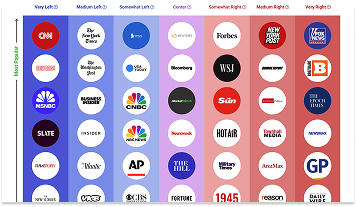
This contrasts with more biased media outlets that consistently present one-sided narratives without factual counterpoints. Readers seeking balanced political coverage may compare Rolling Stone framing of issues with outlets rated as Center or Lean Right on our Media Bias Chart, or explore other regional papers on our Similar Sources page.
Notable Contributors and Authors
Rolling Stone features a diverse range of reporters and columnists, many of whom are known for sharp cultural and political commentary, though they range in where they land on the political spectrum. For instance, contributor Jeremy Childs holds different leanings than contributor Nikki McCann Ramirez. However, one common thread is that Rolling Stone generally doesn’t have any reporters who lean right of center.
Writers often bring backgrounds in music journalism, film journalism, and advocacy, which can influence coverage on topics that cover multiple areas.
Related Tools and Resource Pages
To better understand how Rolling Stone fits into the broader media landscape, we recommend exploring these helpful resources:
- Media Bias Chart: See where Rolling Stone ranks among hundreds of media outlets across the political spectrum.
- Political Bias Chart: Visualize political slants of news sources across various policy areas.
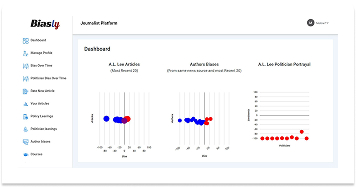
- Journalist Bias Analytics Platform: Explore how individual journalists contribute to bias within their publications.
- Politician Bias Analytics Platform: Compare how politicians are framed differently by Rolling Stone and other outlets.
- Media Literacy Education Platform: Learn how to critically assess media sources, bias techniques, and news reliability.
Frequently Asked Questions
Rolling Stone is rated as Somewhat Left based on Biasly’s media bias algorithm, which assesses sentiment, article framing, and policy favorability.
While Rolling Stone has recently not promoted fake news or misinformation, some historical articles have shown misinformation and outright defamation, most notably A Rape on Campus, which cost Rolling Stone millions in Defamation lawsuits from UVA students and faculty. In general, such cases involved failures in fact-checking, over-reliance on single or unverified sources, and confirmation bias. The magazine has issued retractions or corrections in several instances. Reader
Biasly uses a combination of AI sentiment analysis and human analyst review to assess tone, fact accuracy, source quality, and media bias indicators. Learn more on our Bias Meter page.
Generally, yes, though partisan framing and selective reporting can affect perceived reliability.
Military Spending
| Date | Sentiment | Associated Article | Snippet |
|---|---|---|---|
| 08/25/2019 | 75% For | Trump Family Detentions Flores Agreement (link) | So, of course, the Trump administration is doing the opposite in a baldfaced |