




-70% Medium Left
Bias Meter
Extremely
Liberal
Very
Liberal
Somewhat Liberal
Center
Somewhat Conservative
Very
Conservative
Extremely
Conservative
-100%
Liberal
100%
Conservative
Biasly determines media bias ratings through a dual-layered approach combining artificial intelligence and analyst review. The platform’s proprietary bias detection engine, Bias Meter, evaluates sentiment, policy position alignment, and language framing across thousands of data points in news articles. Analysts then verify and interpret the AI’s findings, providing additional context where needed. Learn more about ratings
- Profile
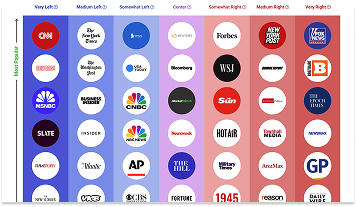
The Daily Beast on the media bias chart
- Bias Rating
-70% Medium Left
- Reliability73% Reliable GoodPolicy Leanings
-14% Somewhat Left
Extremely
LiberalVery
LiberalModerately
LiberalSomewhat Liberal
Center
Somewhat Conservative
Moderately
ConservativeVery
ConservativeExtremely
Conservative-100%
Liberal100%
Conservative
Average Reliability
*Our bias meter rating uses data science including sentiment analysis, machine learning and our proprietary algorithm for determining biases in news articles. Bias scores are on a scale of -100% to 100% with higher negative scores being more liberal and higher positive scores being more conservative and 0% being neutral. The rating is an independent analysis and is not affiliated nor sponsored by the news source or any other organization.
Politician Portrayal77% negative
Continue For Free
Create your free account to see the in-depth bias analytics and more.
By creating an account, you agree to our Terms and Privacy Policy, and subscribe to email updates.
Log In
Log in to your account to see the in-depth bias analytics and more.
Analysis of The Daily Beast Articles
Analysis of Bias in The Daily Beast Online Articles
The Daily Beast has found that in-depth coverage of the Trump administration is one of the most effective ways to drive subscriptions. Given that much of its readership is liberal, it’s essential to ask: is The Daily Beast truly biased?
To evaluate this, we can analyze select The Daily Beast articles using several of Biasly’s bias-rating criteria: Tone, Tendency, Author, Diction, and Expediency Bias.
- Tone: The overall attitude conveyed by the article
- Diction: Specific word choices made by the writer
- Author: The background and social presence of the journalist
- Tendency: Patterns of bias in the writer’s broader body of work
- Expediency Bias: Quick visual or textual indicators like headlines and photos that imply bias
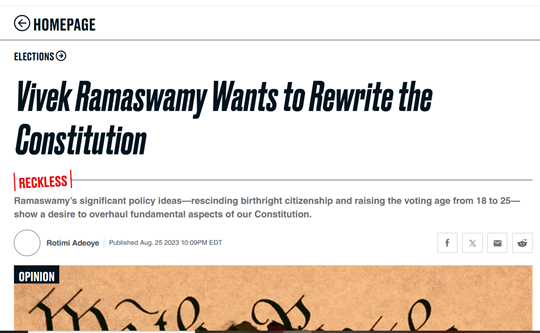
The first article we will look at is “Vivek Ramaswamy Wants to Rewrite the Constitution”. Biasly has rated this article “Very Liberal.” Part of the reason for this rating is that it portrays Republican Presidential Candidate Vivek Ramaswamy very negatively and includes negative sentiments about Donald Trump.
One of the most immediately noticeable signs of bias in the article is its loaded framing and selective emphasis. The headline and repeated phrasing characterize Vivek Ramaswamy’s ideas as “rewriting the Constitution,” which primes the reader to see them as extreme before any details are evaluated.
The piece also highlights the most controversial proposals, like changes to voting rules or citizenship, while giving little space to any broader constitutional rationale he might claim, creating a skewed picture from the outset. The tone leans heavily on skepticism and alarm, using language that suggests danger or radicalism rather than neutrally describing policy differences. Altogether, these choices signal bias because they guide the reader toward a predetermined judgment instead of presenting a balanced examination of the arguments.
Throughout the article, the author, Rotimi Adeoye, adopts a negative tone when discussing Ramaswamy. He repeatedly draws parallels between Ramaswamy and Trump and attempts to paint them both as destructive to America.
“Ramaswamy might be the first candidate I’ve ever seen to imitate the ignorant arrogance of Trump.”
On X, formerly known as Twitter, Adeoye has posted critical commentary on conservative viewpoints. He responded to a tweet from Ramaswamy about school lunches. Adeoye had an attacking tone towards Ramaswamy.
Michelle Obama tried to this in 2010 and you guys called her a communist.
Great idea and all but we could have done this years ago and been reaping the results now. https://t.co/kCBttMkST7
— Rotimi Adeoye (@_rotimia) February 13, 2025
The author does very little to discuss why Ramaswamy is pushing for ending birthright citizenship for those parents who crossed the border illegally and why he wants to raise the voting age from 18 to 25.
We can also look at the headline and accompanying image to see that the author’s intention in this article is to frame Ramaswamy as harmful to democratic norms. The headline “Vivek Ramaswamy Wants to Rewrite the Constitution” is far-fetched and can definitely be viewed as clickbait, since he would not be solely capable of changing the U.S. Constitution; making changes to the Constitution requires approval by two-thirds of Congress and three-fourths of state legislators.
He has proposed amendments to the U.S. Constitution, like raising the voting age to 25 unless a person passes a citizenship test or serves in the military, and ending birthright citizenship. Both amendment suggestions are his response to a lack of national pride in the United States and the migrant crisis at the Southern Border.
The tone of the article is distinctly critical and cautionary, bordering at times on alarmist. Rather than neutrally outlining Vivek Ramaswamy’s proposals, the language carries an undercurrent of skepticism, framing his ideas as destabilizing or extreme.
Word choices and phrasing subtly signal disapproval, encouraging the reader to view the proposals as threats to established norms rather than as policy positions open to debate. This creates a sense of urgency and concern, which can make the argument more persuasive but also reveals a lack of tonal balance, as opposing perspectives or neutral interpretations are largely absent.
The diction of the article is loaded and evaluative, using word choices that subtly push the reader toward a negative view of Vivek Ramaswamy and his proposals. Terms like “rewrite,” “radical,” or similarly charged language carry strong connotations, suggesting disruption or danger rather than neutral policy change.
This kind of wording is not purely descriptive, but rather frames the ideas in a way that implies they are extreme or illegitimate. Additionally, the article tends to favor vivid, attention-grabbing language over precise legal or constitutional terminology, which makes the argument more emotionally resonant but less analytically neutral, revealing a clear bias in how the subject is presented.
Ultimately, the authors frame the story to support one perspective. All of this suggests that the article was found to be left-leaning overall, which aligns with our analysis of the The Daily Beast consistently publishing liberal-leaning articles.
In another article, called “Pentagon Pete’s Hi-Tech Laser Weapon Behind Airport Chaos,” we see The Daily Beast show slightly less bias. This article looks at a laser weapon used at the El Paso airport that shot down a Mylar balloon, causing delays and chaos. The article is somewhat critical of Secretary Hegseth, but it fully explains the situation. Readers learn that the weapon was created to attack Mexican drug cartels. In their titles, The Daily Beast tends to come up with silly names like “Felon Trump” and “Pentagon Pete” when referring to government officials.
“Meanwhile, administration officials have claimed the airport closure was necessary because cartel drones were being downed while coming across the border. They have declined to elaborate.”
These word choices can cause readers to click away due to possible bias. The author, William Vaillancourt, writes for The Daily Beast and Rolling Stone. He also wrote for Weekly Humorist and Robot Butt before, which could explain the comedic title. On social media, he posts about political issues and pop culture. He is a huge fan of the Boston Celtics, shown by his profile picture on X being Celtics star Jayson Tatum. Overall, the title could indicate bias, but the article itself is fair.
To sum it up, The Daily Beast shows inconsistent bias across its reporting. Despite attempts at balance in some reporting, The Daily Beast’s tendency to highlight progressive initiatives and frame stories through a social justice lens indicates an overall left-leaning orientation, particularly when covering the Trump administration.
Analysis of The Daily Beast Opinion Articles
To fully understand political bias in media, it’s important to distinguish between factual reporting and opinion pieces. While reporting aims to present facts and let readers form their own conclusions, opinion articles express personal viewpoints on current issues. Although the previous section examined factual reporting, this section turns to how bias surfaces through The Daily Beast’s selection and tone of opinion content.
Consider the opinion article “Here’s Why Ron DeSantis Was Booed After a Racist Mass Murder in Jacksonville.” The title alone shows bias because it uses language that suggests a negative opinion of DeSantis. The author opens the article by stating that DeSantis has previously not adequately condemned hate crimes in Florida. The author, Ameshia Cross, then draws a parallel between these events and the mass shooting that occurred in Jacksonville. The author writes:
“On Monday, DeSantis attended the vigil for the three victims of the hate crime and was roundly booed and told, ‘you’re not welcome here.” His anti-Black policies lend themselves to that treatment.”
The author then lists several Florida laws enacted in recent years under Governor DeSantis’s leadership. The author then argues that these laws are inherently racist, but is unable to provide any data or evidence that supports this strong negative diction. She goes on to write at the end of the article:
“Why wouldn’t racists support DeSantis? He’s normalized de facto and de jure racism in Florida policy, and expresses frightening indifference to the most odious racists among his base. Who could be surprised that, in 2023, Florida, a swastika-wearing mass murderer, wouldn’t hunt Black people for sport?”
Another article, titled “Why Trump’s Late-Night Rants Prove He’s Losing It,” shows less bias. This article examines statements made by President Trump during the night. This article uses neutral, reliable fact-checkers to examine statements. People with dementia or Alzheimer’s tend to have problems focusing and sleeping at night. Although this article doesn’t directly say President Trump has one of these conditions, it seems to be hinting at it. The one thing this article lacks is a defense of President Trump’s words.
Although these factually incorrect nighttime statements could be a warning sign of serious conditions, they could also just be a sign of old age. President Trump was the oldest president during his inauguration. Although some experts, like those at Cornell University, have suggested President Trump could be going through an “extreme cognitive decline”, he has not formally been diagnosed with any conditions. Overall, this article pushes an Anti-Trump narrative but does so with facts and neutral sourcing.
These tendencies underscore the importance of distinguishing subjective viewpoints from straight reporting, especially when interpreting the political leanings of any news organization.
Analysis of Reliability in The Daily Beast’s Online News Articles
The Daily Beast aims to serve its readers with liberal-leaning news. Nearly all the staff writers are left-leaning politically, based on Biasly’s rating.
The article “Prosecutor Who Quit in Protest Signs On to Defend Trump Target” reports that veteran prosecutor Joseph H. Thompson, who recently resigned from the U.S. Attorney’s Office in Minnesota after internal disputes with the Department of Justice, has joined the defense team of former CNN anchor and independent journalist Don Lemon in a federal case tied to a protest at a Minnesota church. It outlines Thompson’s background, his reasons for leaving the DOJ, the charges against Lemon, and details from court filings and official actions without editorializing on the case’s merits.
The piece uses factual language and direct quotations. Despite incorporating multiple sources, it does not include opposing viewpoints or analysis from critics of Lemon’s defense or of the broader legal context.
The article “ICE Barbie’s Alleged Lover’s Bonkers Gun Demand Revealed” reports that Corey Lewandowski, a senior adviser at the Department of Homeland Security and a close associate of Secretary Kristi Noem, reportedly sought to obtain law-enforcement credentials, including a badge and a federally issued gun, despite not having completed required training, a request that “rankled” senior DHS staff and influenced internal leadership decisions.
It outlines how the request affected personnel decisions, cites the Wall Street Journal’s reporting, and notes the duo’s ongoing scrutiny amid other departmental controversies, without offering broader analysis. The piece relies on factual background and direct reporting, but despite using multiple sources, it does not include explicit opposing viewpoints or perspectives that challenge its claims.
Quality of Sources and Facts Used
The Daily Beast often uses credible sources from across the political spectrum. However, some articles skew in the comprehensiveness with which they present opposing viewpoints.
For instance, think about “Nikki Haley Is Starting to Look Like a Real Threat to Trump.” In this article, Matt Lewis used 11 quotes. Many of these quotes were from polls conducted after the debate, as well as from Nikki Haley during the first GOP Primary Debate.
In addition to that, the author’s 6 sources for the article were as follows:
- Nikki Haley, former Governor of South Carolina and former U.N. Ambassador for the United States.
- A poll conducted before and after the first GOP Primary debate by The Washington Post, FiveThirtyEight, and Ipsos
- An Emerson College Polling survey was conducted after the first GOP Primary debate.
- Mike Pence, former Vice President of the United States.
- The The Daily Beast Opinion Piece, “Nikki Haley Is the Latest ‘Adult in the Room’ to Exit With Pie on Her Face”
- The Washington Examiner, “Nikki Haley’s chameleon candidacy”
Overall, the quality of the sources is good and includes both direct quotes from the GOP debate and statistics from two separate polls conducted around the time of the debate. The author relies heavily on other The Daily Beast articles as well as The Washington Post, The Washington Examiner, and 19th News. These sources are diverse and offer opposing viewpoints, so the author is not relying solely on liberal or conservative sources. The evidence suggests the author is somewhat fair in his article, even though it is an opinion piece. This article received an Excellent rating for using a very high number of different sources and a very high total number of sources. It also received a fair rating for the number of opposing sources used and the length of the quotes.
However, not every The Daily Beast article uses this amount of diverse sources. In “Felon Trump Issues Pardon For Five Disgraced NFL Players,” we see less of a commitment to diverse sourcing. This article fails to cover why President Trump is pardoning these former NFL players. It also doesn’t address the players’ perspective. Readers are left with a very unclear picture of why these pardons happened due to a lack of diverse sources.
Selection and Omission Bias
The Daily Beast provides extensive coverage of Republican leaders. However, bias emerges through framing and story selection.
The article, “CNN Host Forces Vivek Ramaswamy to Admit Comparing Ayanna Pressley to KKK Grand Wizard Was ‘Fringe’” by Corbin Bolies, is a story that only uses a very limited number of sources. The author relies on a CNN State of the Union segment that featured CNN journalist Dana Bash and Republican presidential candidate Vivek Ramaswamy. In the CNN segment, Bash questions Ramaswamy’s comments, in which he compares Rep. Ayanna Pressley (D-MA) to a Ku Klux Klan grand wizard.
The Daily Beast’s article does include a quote from Rep. Ayanna Pressley (D-MA) that caused Ramaswamy to make his comparison. She stated back in 2019 that they “don’t need any more brown faces that don’t want to be a brown voice.” This is the only quote by Rep. Pressley that the The Daily Beast article includes, but portrays the The Daily Beast attitudes toward Vivek Ramaswamy. However, it does quote a fundraising email sent out by her team that comments on what Ramaswamy said about her.
This negative tone is present throughout the article as the author fails to mention that Rep. Pressley received backlash for the comments she made in 2019. Although her comments were not originally viewed as racist, she was accused of targeting black congressional leaders.
The author focuses solely on the CNN State of the Union segment, which has a very negative tone against Ramaswamy. Dana Bash’s rhetoric during the interview on the show demonstrates the author’s disregard for reliable, unbiased sources. Dana Bash repeatedly attempts to paint Ramaswamy as someone who is deaf to the atrocities that the KKK committed against African Americans.
The author does not include any other sources on the KKK, leaving the reader with only Dana Bash’s quotes to draw conclusions about Ramaswamy’s comments. The GOP presidential candidate does attempt to explain his controversial statement to viewers, but is repeatedly shut down by Bash, who only focuses on the more extreme physical violence that the KKK exhibited from the 1860s to the 1970s.
In another article, called “Trump, 79, Appears With More Makeup On Chronically Bruised Hand,” we see several instances of omission bias take place. First, we don’t have any strong sourcing for Trump having makeup on his hand, aside from the author’s perspective.
Second, there’s no medical proof of the hand being chronically bruised. Although Trump did admit to having a bruised hand in Jan. 2026, which he attributed to hitting his hand on a table, no medical experts have suggested this is permanent. Older people generally need longer to heal from bruises. Overall, any source that would debunk the article’s premise is completely absent.
In opinion pieces, issues with factuality, sources, selection, and omission are frequently present. The articles we’ve covered so far reflect The Daily Beast’s Medium Left views, but this is not detrimental to its reliability. Its story selection favors issues more likely to concern liberals, making it safe to assume it neglects issues in Utah that concern conservatives.
However, the contents of The Daily Beast’s article maintain accuracy and tend to cite evidence from numerous and varied sources.
The Daily Beast Bias Overview
The Daily Beast was founded in 2008 by media mogul and businessman Barry Diller, Tina Brown, and a team of experienced journalists and editors. The idea behind The Daily Beast was to create an online news and opinion platform that would provide a fresh, engaging, and often provocative take on current events, politics, and popular culture. The Daily Beast covers a wide range of news and topics, including politics, entertainment, technology, science, and lifestyle.
Unlike many traditional news outlets, The Daily Beast has embraced a more conversational and opinionated style of journalism, often featuring provocative and sometimes controversial takes on current events. This approach has helped the publication cultivate a loyal following among readers who appreciate its unique voice and willingness to tackle complex issues from unconventional angles.
Source: Pew Research
As a leading media outlet in liberal spaces, The Daily Beast plays a significant role in shaping public perception. Readers’ trust in the accuracy of the news may mirror the conclusions reached by Biasly’s media bias ratings. This article delves into The Daily Beast’s editorial tendencies to explore whether political bias is present and, if so, to what degree.
Is The Daily Beast Biased?
Based on Biasly’s evaluations, The Daily Beast is rated as Medium Left.
By examining content patterns and the broader context of media influence, we aim to offer a balanced perspective on The Daily Beast’s political bias—and contribute to the ongoing discussion about bias in the news.
How Does Biasly Rate News Sources?
Biasly uses proprietary algorithms and a team of analysts to provide comprehensive bias evaluations across thousands of news outlets. Over 200,000 articles from more than 3,200 sources have been analyzed to identify the most accurate and unbiased stories.
Biasly assigns each outlet three key scores:
- Reliability Score – Reflects factual accuracy
- AI Bias Score – Generated via natural language processing
- Analyst Bias Score – Assessed by human political analysts
These scores are based on seven core metrics: Tone, Tendency, Diction, Author Check, Selection/Omission, Expediency Bias, and Accuracy. These elements help analysts and algorithms evaluate the political attitude conveyed by each article.
Biasly’s Bias Meter ranges from -100% (most left) to +100% (most right), with 0% indicating neutrality. The system evaluates individual articles based on political terms, policies, figures, and sentiment to calculate precise bias ratings.
Is The Daily Beast Politically Biased?
The Daily Beast earns a Medium Left rating for its AI Bias Score and a Somewhat Left for its Analyst Bias Score. The Analyst Bias Score is generated by reviewers from liberal, moderate, and conservative backgrounds. Analysts reviewed The Daily Beast articles and noted more scrutiny towards conservative politicians. However, there was less bias in the coverage of issues like Black Lives Matter and tariffs.
This bias score is determined through natural language processing that evaluates the tone, word choice, and opinion embedded in the reporting.
How to Evaluate Bias
Although Biasly rates The Daily Beast as Medium Left, it’s important to remember that bias can vary from article to article. The Daily Beast also covers a conservative-leaning state with objectivity on many issues, from state legislation to social developments. This complexity underscores the importance of examining each article individually. So, let’s learn how to evaluate media bias.
Recognizing media bias requires awareness and critical thinking. Often, readers trust news sources that affirm their existing beliefs, a psychological tendency known as confirmation bias. This makes it harder to identify slanted narratives or one-sided reporting.
To combat this, it’s essential to challenge your assumptions by consulting multiple viewpoints and verifying news through third-party analysis. Tools like Biasly’s media bias ratings allow readers to compare the same news story across the political spectrum.
Ultimately, bias isn’t always a matter of what is said; it’s also about what is left out, how topics are framed, and which stories are chosen for coverage. Learning to recognize these patterns can help readers make more informed decisions and develop greater media literacy.
To start comparing news outlets and gain a better understanding of bias, sign up for Biasly’s Media Bias & News Analytics Platform to see how stories vary between sources.
The Daily Beast Reliability Overview
Despite identifiable bias, The Daily Beast is often regarded as relatively reliable. Strong use of fact-checking and using multiple sources helps its reputation as a reliable source.
At Biasly, we specialize in evaluating not just bias but also the reliability of media outlets. Let’s explore the accuracy and trustworthiness of The Daily Beast.
How to Evaluate Reliability?
Reliability refers to how trustworthy or accurate a news source is. If we can’t trust what we read, then continuing to consume content from that outlet serves little purpose. So how do we evaluate a news outlet’s reliability?
There are several potential measures of reliability to look for when determining whether a media source is reliable. Red flags for an unreliable article can include wild, unsubstantiated claims, facts that rely on other unreliable sources, heavy use of opinionated language, and more. In contrast, hallmarks of a reliable source include:
- Absence of subjective language
- Citing credible sources (e.g., .gov, .edu, academic references)
- Verifiable facts and statistics from multiple outlets
- Use of primary sources, like interviews or transcripts
- Consistency with coverage across other platforms
Biasly’s reliability scores incorporate these elements in evaluating media outlets.
So How Does The Daily Beast Fare in Its Reliability?
The political reliability index developed by Biasly assesses both accuracy and trustworthiness. The Daily Beast currently holds Good Reliability Score, which is calculated as a weighted average of:
- Fact Analysis Score – Evaluates the accuracy of claims, facts, and evidence.
- Source Analysis Score – Assesses the number, diversity, and credibility of sources and quotes used.
The Daily Beast’s Source Analysis Score is Average at 57% Reliable. This suggests moderate trustworthiness in its sourcing practices. The score is AI-generated and considers quote length, frequency, diversity, and quality.
The Fact Analysis Score of The Daily Beast is Good at 77% Reliable. This further shows how well The Daily Beast supports its claims, addresses selection and omission bias, and presents verifiable evidence.
While The Daily Beast leans toward factual reporting, occasional lapses—such as unbalanced viewpoints or incomplete data—can affect its reliability rating. These nuances emphasize the importance of analyzing individual articles.
The Daily Beast’s Accuracy and Reliability
According to Biasly’s analysis, The Daily Beast maintains Good Reliability Score, but individual articles may vary significantly. Let’s dive into the details.
Political orientation plays a crucial role in how audiences perceive reliability. The Daily Beast has been accused of favoring a liberal narrative, potentially at the expense of factual reporting. To validate such claims, it’s essential to analyze whether the publication backs its assertions with sufficient evidence and diverse viewpoints.
Two common types of bias that affect factuality include:
- Selection Bias – Highlighting or omitting stories to fit a particular narrative.
- Omission Bias – Leaving out differing perspectives or relevant details to skew perception.
Biasly’s accuracy ratings use a scale from 1% (least accurate) to 100% (most accurate). Factors include the presence of supporting evidence, internal and external reliable sources, and balanced viewpoints.
For instance, Biasly gives The Wall Street Journal a Somewhat Right bias score and an overall Good reliability rating, reflecting generally solid reporting with a slight conservative lean in coverage and language. One WSJ article that drew a Somewhat Right bias rating from Biasly, for example, leaned on conservative sources and framed economic policy debates in language favoring deregulation, while offering limited counterpoints from progressive economists, resulting in critiques for the selection and omission of diverse viewpoints. In contrast, another piece from the Journal that quoted a range of policymakers and independent experts on a complex federal regulation issue was assessed closer to Center on Biasly’s scale, scoring high for accuracy and a balanced presentation of sources that helped mitigate the outlet’s overall ideological tilt in that instance.
So, is The Daily Beast Reliable?
Overall, The Daily Beast can be considered an outlet that is very reliable. The site regularly publishes fact-based reporting and demonstrates a commitment to credible sourcing across most of its content. While some opinion or editorial framing may appear, particularly in commentary sections, the majority of its coverage maintains journalistic integrity and a balanced presentation of perspectives. Occasional gaps in attribution or depth may occur, but they do not significantly undermine the outlet’s overall trustworthiness.
As media literacy improves, readers can more easily detect issues with selection bias, omission bias, and factuality. To strengthen your ability to assess reliability across the political spectrum, use Biasly’s News Bias Checker to compare how multiple outlets report the same story.
This empowers you to consume more accurate, balanced, and dependable news.
The Daily Beast Editorial Patterns
The Daily Beast’s coverage of political topics often reflects a Medium Left bias, with consistent patterns in phrasing, source selection, and thematic focus that are Moderately Liberal. While the publication demonstrates journalistic standards in many of its reports, the choice of issues, framing, and word usage can indicate a political slant. The editorial pattern of The Daily Beast is liberal.
Coverage of Liberal vs. Conservative Topics
The Daily Beast tends to take a more critical tone when covering conservative figures or issues. The Daily Beast has done several in-depth, investigative pieces about President Trump and other members of his administration. They focus on scandals and investigations for the Trump administration rather than policies.
Meanwhile, liberal policies are portrayed more positively by the news source. The Daily Beast rarely does the in-depth reporting of scandals for Democrats the way they would for Republicans. There are exceptions, like their coverage of Senator Bob Menendez, but it’s not as common.
This news media bias manifests in subtle ways, such as placing greater prominence on Democratic voices or using emotional diction when describing liberal causes, while offering more detached language in conservative contexts.
Policy and Issue Framing
Although The Daily Beast tends to show bias in its topic selection, when it does cover everyday political issues, it tends to be less biased. On issues like the politicization of Black Lives Matter and China tariffs, they approach them from a neutral perspective. These are not issues they cover extensively, but they do show The Daily Beast’s willingness to cover some issues from a neutral perspective.
On other issues, like affirmative action, border control, and charter schools, they are more willing to showcase their liberal-leaning bias. Border control is a hot-button political issue in 2026, and The Daily Beast has covered it extensively. Biasly has reviewed more than 30 The Daily Beast articles related to border control.
Even in neutral coverage, phrasing choices shape perception. Articles will describe liberal proposals as “expanding access” or “strengthening protections,” while conservative legislation may be described as “imposing limits” or “rolling back rights.” This consistent word choice reflects an editorial direction that, even unintentionally, can contribute to bias in news media.
Coverage and Relevance
The Daily Beast’s reporting often touches on key issues central to the Trump administration. As such, it serves as a compelling case study for examining source bias and news media bias in state-focused reporting.
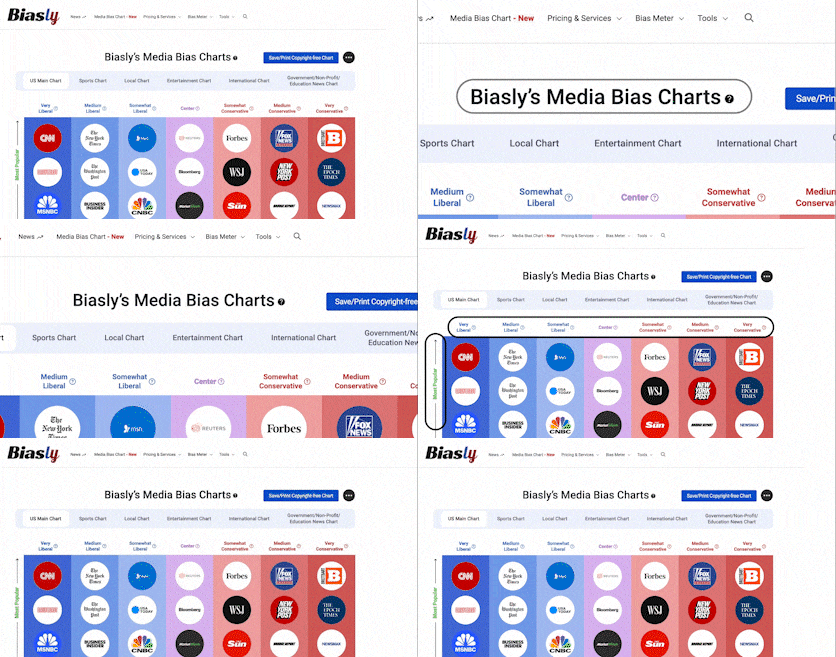
Readers who wish to further explore how The Daily Beast compares with other publications can visit Biasly’s Media Bias Chart to analyze tone and word choice in real time.
Funding and Ownership
Who Owns The Daily Beast?
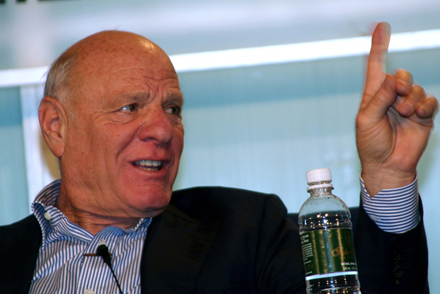
Barry Diller- Chairman and Acting CEO of IAC – Source- Wikimedia Commons
The Daily Beast is still owned by IAC. Barry Diller is still a part of the company. From 2010 to 2025, he was the Chairman and Senior Executive. In early 2025, CEO Joey Levin left IAC. Diller has assumed CEO duties until a replacement is found. Tina Brown, the founding editor-in-chief, left the company in 2013 to pursue other endeavors.
Who Funds The Daily Beast?
The Daily Beast heavily relies on advertising to make money. They do have a paid subscription service called “The Beast Inside”, but very few articles are paywalled. The Daily Beast partners with YouTube, Apple News, and Yahoo to syndicate content. They have recently expanded their digital content in hopes of getting more ad revenue. They also make money through affiliate links, although affiliates are generally limited to just entertainment coverage.
Additional Insights
News Source Comparison
When comparing news sources, The Daily Beast is often evaluated alongside other national outlets that lean left. Sources like Democracy Now, Democratic Underground, and MSNBC often present similar tones and editorial philosophies. While The Daily Beast maintains a Medium Left media bias, it differs from strongly non-partisan sources in that they rarely show opposing viewpoints.
However, despite its strong bias, The Daily Beast is generally more reliable than most other publications with similar bias. Their commitment to rigorous sourcing and fact-checking puts them above most left-leaning publications in terms of reliability.
Notable Contributors and Authors
William Vaillancourt is one of the most notable writers for The Daily Beast. He started his writing career in 2017 as a contributor to The Progressive Magazine. He bounced around several news publications from 2017 to 2020, including humor-focused outlets like Weekly Humorist and Robot Butt. He found a home as a reporter for The Daily Beast in May 2021. He is also a contributor to Rolling Stone.
Before joining The Daily Beast, Isabel Van Brugen was already an award-winning journalist. In 2018, she won the Eric Robbins Prize for Journalism, which is awarded to journalists who demonstrate outstanding reporting, professionalism, and initiative. In 2019, she received the Hugh Cudlipp award for an undercover investigation piece. She worked for Newsweek from 2021 to 2025. In 2025, she joined The Daily Beast, where she continues to make investigative pieces.
Related Tools and Resource Pages
To better understand how The Daily Beast fits into the broader media landscape, we recommend exploring these helpful resources:
- Media Bias Chart: See where The Daily Beast ranks among hundreds of media outlets across the political spectrum.
- Political Bias Chart: Visualize political slants of news sources across various policy areas.
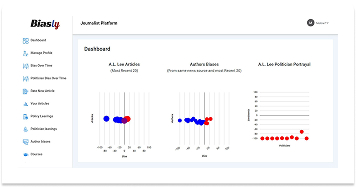
- Journalist Bias Analytics Platform: Explore how individual journalists contribute to bias within their publications.
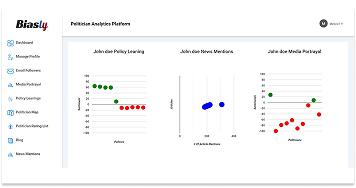
- Politician Bias Analytics Platform: Compare how politicians are framed differently by The Daily Beast and other outlets.
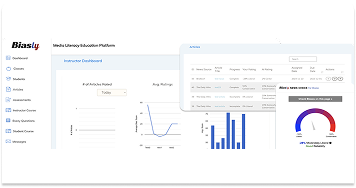
- Media Literacy Education Platform: Learn how to critically assess media sources, bias techniques, and news reliability.
Frequently Asked Questions
The Daily Beast is rated as Medium Left based on Biasly’s media bias algorithm, which assesses sentiment, article framing, and policy favorability.
In 2016, The Daily Beast was accused by critics of posting fake news regarding the Clinton-Silsby scandal. The Clinton-Silsby scandal refers to a 2010 event where Laura Silsby and her group, New Child’s Life Refuge, were accused of trying to traffic children from Haiti to the United States. The group claimed it only tried to save orphans, but it was later revealed that the majority of the children they found were given to the group by their parents. When WikiLeaks published this story in 2016, The Daily Beast accused them of publishing a Reddit conspiracy theory, specifically about Bill Clinton’s involvement. However, they ignored a case study from the Harvard Human Rights Journal that confirmed the story, including Clinton’s involvement as a U.N. envoy.
Biasly uses a combination of AI sentiment analysis and human analyst review to assess tone, fact accuracy, source quality, and media bias indicators. Learn more on our Bias Meter page.
Generally, yes, though partisan framing and selective reporting can affect perceived reliability.
Military Spending
| Date | Sentiment | Associated Article | Snippet |
|---|---|---|---|
| 08/25/2019 | 75% For | Trump Family Detentions Flores Agreement (link) | So, of course, the Trump administration is doing the opposite in a baldfaced |