




-44% Medium Left
Bias Meter
Extremely
Liberal
Very
Liberal
Somewhat Liberal
Center
Somewhat Conservative
Very
Conservative
Extremely
Conservative
-100%
Liberal
100%
Conservative

Biasly determines media bias ratings through a dual-layered approach combining artificial intelligence and analyst review. The platform’s proprietary bias detection engine, Bias Meter, evaluates sentiment, policy position alignment, and language framing across thousands of data points in news articles. Analysts then verify and interpret the AI’s findings, providing additional context where needed. Learn more about ratings
- Profile
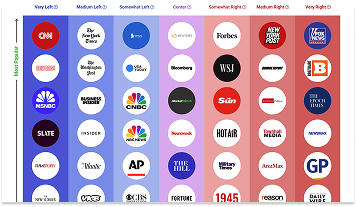
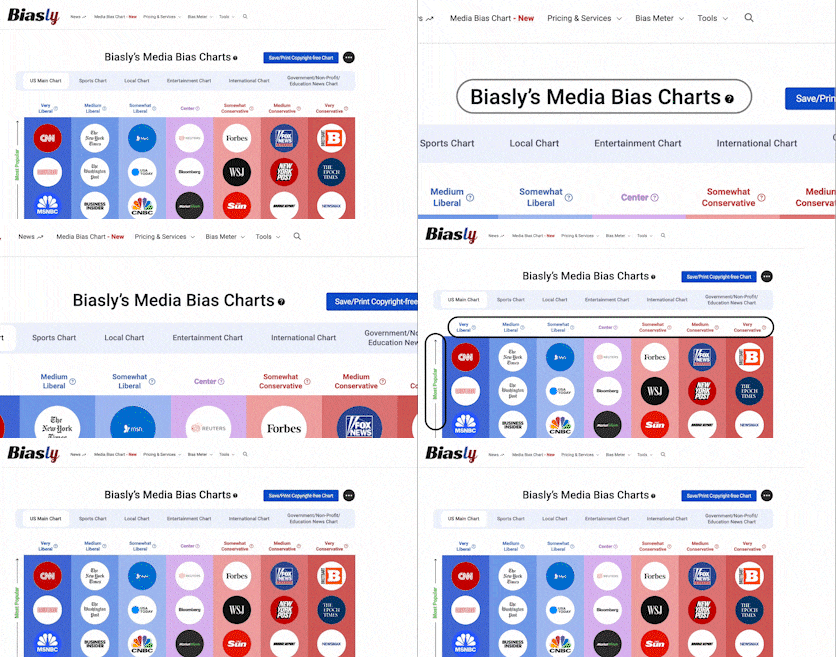
The New Yorker on the media bias chart

- Bias Rating
-44% Medium Left
- Reliability70% Reliable GoodPolicy Leanings
12% Somewhat Right
Extremely
LiberalVery
LiberalModerately
LiberalSomewhat Liberal
Center
Somewhat Conservative
Moderately
ConservativeVery
ConservativeExtremely
Conservative-100%
Liberal100%
Conservative
Average Reliability
*Our bias meter rating uses data science including sentiment analysis, machine learning and our proprietary algorithm for determining biases in news articles. Bias scores are on a scale of -100% to 100% with higher negative scores being more liberal and higher positive scores being more conservative and 0% being neutral. The rating is an independent analysis and is not affiliated nor sponsored by the news source or any other organization.
Politician Portrayal70% negative
Continue For Free
Create your free account to see the in-depth bias analytics and more.
By creating an account, you agree to our Terms and Privacy Policy, and subscribe to email updates.
Log In
Log in to your account to see the in-depth bias analytics and more.
Analysis of The New Yorker Articles
Analysis of Bias in The New Yorker Online Articles
To evaluate this, we can analyze select The New Yorker articles through several of Biasly’s bias rating criteria: Tone, Tendency, Author, Diction, and Expediency Bias.
- Tone: The overall attitude conveyed by the article
- Diction: Specific word choices made by the writer
- Author: The background and social presence of the journalist
- Tendency: Patterns of bias in the writer’s broader body of work
- Expediency Bias: Quick visual or textual indicators like headlines and photos that imply bias
Source: The New Yorker
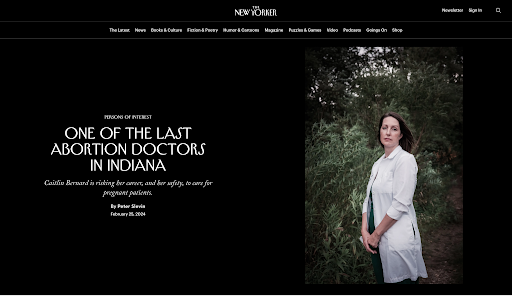
One such article features a headline that makes a bold and direct claim and showcases a picture of said doctor right next to the title. This is an instance of expedience bias, where the author prioritizes a judgment call and a bold claim over complete accuracy.
Reporter Peter Slevin outlines the subject of the article’s work toward providing reproductive care and access. Dr. Caitlin Bernard’s work in Indiana, providing abortion access despite threats to her life and her family, as well as recollections from Bernard, are quoted extensively. While this lends weight to the article, it may lead some readers to perceive sympathy toward the article’s central figure
“The most senior complex-abortion doctor in a state that recently outlawed almost all abortions, Bernard has struggled to balance her work—which involves delivering babies, as well as ending pregnancies—with the fraught task of supporting her patients through medical decisions that increasingly require the advice of an attorney. ‘Mostly, it’s just incredibly sad,’ she told me. ‘All of these absolutely brilliant clinicians have just spent their entire lives fighting for one basic human right that is literally the easiest procedure that you’ve ever done in your entire life.”
The article leans progressive in its portrayal of abortion providers as heroic figures fighting restrictive laws, reflecting social justice and reproductive rights values. By emphasizing the emotional toll and framing the procedure as a basic human right, the author aligns the narrative with left-leaning ideals. This framing, while detailed and literary, situates the subject within a progressive ideological lens.
Another The New Yorker article, “Migrant-Crisis Fearmongering Wasn’t Enough to Hold George Santos’s Old Seat”, showcases similar leanings. The headline itself uses “fearmongering,” an expediency bias indicator that frames Republican messaging negatively from the outset.
Pilip had been handpicked by the local Republican Party machine, which has been trying hard to shed its reputation as the gang that brought the world Santos: an incorrigible grifter who managed to get himself kicked out of a Congress otherwise stuffed full of opportunists, conspiracists, manipulators, and insurrectionists, and who is now facing federal fraud charges.
The diction here—“machine,” “grifter,” “opportunists, conspiracists, manipulators, and insurrectionists”—is strongly negative toward Republicans. The article leans left in its portrayal of Republican candidates and strategies.
On the other hand, an article titled “What Could Tip the Balance in the War in Ukraine?” takes a more objective stance. It lays out multiple perspectives on the conflict, funding, and strategic options without strong editorializing. The piece employs measured diction and presents competing analyses from various experts, contributing to a more neutral tone overall.
The reporter, Joshua Yaffa, avoids emotional language and speaks from a primarily objective perspective in the article. That said, his social media presence leans quite liberal, with his writing being emotional and direct in tone. Here is an example of left-leaning sway used on Joshua Yaffa’s Twitter profile:
Surreal and maddening to see our friend in a glass cage in a Moscow courtroom. An innocent man—decent, kind, and honest—arrested for doing his job. Every day he spends in jail is an outrage. https://t.co/sGNfMJdc4H
— Joshua Yaffa (@yaffaesque) April 18, 2023
In summary, The New Yorker shows inconsistent but generally left-leaning bias in its reporting. While some international coverage remains more neutral, domestic political and social-issue articles often show a progressive slant through framing, diction, and source selection. Reliance on sources and narratives aligned with liberal viewpoints further underscores the outlet’s ideological orientation, particularly when covering the intersection of politics, culture, and social justice.
Analysis of The New Yorker Opinion Articles
To fully understand political bias in media, it’s important to distinguish between factual reporting and opinion pieces. While reporting aims to present facts and let readers form their own conclusions, opinion articles express personal viewpoints on current issues. Although the previous section examined factual reporting, this section turns to how bias surfaces through The New Yorker’s selection and tone of opinion content.
One prominent example is the op-ed-style piece “Trump’s Wild Pursuit of Presidential Immunity”. The title itself signals a persuasive and critical tone with the word “wild,” implying recklessness. It employs strongly negative framing toward Trump and conservative legal arguments.
If Trump loses his appeal, the Presidency as we know it might, indeed, change in a fundamental way. Contrary to the Trump team’s suggestion, though, it might change for the better; whereas, if Trump gets everything he asks for, it will certainly change for the worse.
In contrast, another opinion piece, “Could a Trump Win Put His Running Mate in Office?” employs more measured language in parts while still containing critical elements toward Trump. Its analysis includes factual legal details alongside interpretive commentary.
These examples show that while not all The New Yorker opinion pieces are blatantly liberal, the platform frequently publishes content that greatly aligns with liberal media narratives. This consistent selection of opinion pieces can contribute to perceptions of systemic bias—particularly when the editorials predominantly support liberal views or causes.
This tendency underscores the importance of distinguishing subjective viewpoints from straight reporting, especially when interpreting a news organization’s political leanings.
Analysis of Reliability in The New Yorker’s Online News Articles
The New Yorker aims to provide readers with in-depth, literary journalism on local, national, and international developments. While some reporting touches on politically charged topics, the outlet generally maintains high standards of writing and research. Readers should still distinguish between standard reporting and opinion-based framing when evaluating reliability and bias, particularly because the magazine’s prestige and polished prose can sometimes mask underlying issues with source selection or omission.
One notable example is the article “A Financial Reckoning For Donald Trump”. The piece provides detailed financial and legal context around Trump’s business dealings and legal troubles. However, it relies heavily on left-leaning sources such as The New York Times and other New Yorker reporting while omitting perspectives from traditionally Republican or conservative-leaning outlets.
The article also includes language that portrays Trump in a strongly negative light, such as references to his “unscrupulous behavior” and ability to “maneuver around” legal threats for decades. While the factual details about court cases and financial penalties are generally accurate and well-documented, the selective sourcing and evaluative language reduce the piece’s reliability as a balanced account. Readers receive a detailed but one-sided narrative that emphasizes accountability for Trump without equivalent examination of counterarguments or defenses offered by his legal team or supporters.
Quality of Sources and Facts Used
The New Yorker often uses credible, high-quality sources and features extensive original reporting. However, reliability often depends on how comprehensively (or incompletely) it presents opposing viewpoints, especially on politically contested domestic topics. The outlet’s strong Fact Analysis Score reflects generally accurate claims and solid evidence for the facts it includes. Its more modest Source Analysis Score stems from patterns in source selection, quote usage, and ideological balance.
Consider the article “The Increasing Attacks on Kamala Harris”. While well-documented with numerous attributed statements, the piece offers limited insight into why conservative critics hold the views they express. Instead, the author frequently follows conservative quotes with commentary that questions or undercuts them. This creates a perception that opposing arguments lack substantive grounding, even when they reflect widely held positions within one of the two major parties.
The article contains a relatively high volume of attributed material: 21 short quotes, 6 medium-length quotes, and 2 long quotes. The shortest quotes are brief phrases or single sentences, while the longest run several sentences. Because many statements from Republican figures are presented as attributed answers or paraphrased summaries rather than extended verbatim blocks, the piece leans more toward reporter-mediated narrative than pure “let the sources speak” transparency. This approach can be reliable when the reporting is accurate, but it also gives the author greater control over emphasis and framing.
On linked and referenced sources, the article draws heavily from left-of-center outlets. A typical distribution in politically focused The New Yorker pieces includes:
- The New York Times (Left)
- CNN, Washington Post, MSNBC (Left)
- Other The New Yorker articles and reporting (Left/Center-Left)
- Academic researchers and public health experts aligned with progressive policy views (Left/Center-Left)
- Republican elected officials and strategists such as Nikki Haley and Ron DeSantis (Right & Medium Right) — quoted but often immediately contextualized or questioned by the author
- Conservative voters or activists (Right) — usually presented as subjects rather than authoritative voices
- Primary documents, polling data, and court records (Center)
By left/center/right classification in many domestic political stories, the sourcing footprint is heavily weighted toward Left and Center-Left voices, with Right perspectives appearing in smaller volume and often framed critically. This lopsided sourcing contributes directly to the Fair Source Analysis Score.
In contrast, some international or less partisan pieces demonstrate stronger balance. For example, articles that draw on a wider range of geopolitical experts, official statements from multiple governments, and primary documents tend to receive higher marks for source diversity and reliability. These pieces more closely resemble standardized Q&A or multi-perspective formats that let readers evaluate claims with less reporter mediation.
On factual accuracy, the broad context in The New Yorker reporting is generally consistent with widely reported public facts. Background details on legislation, court cases, polling trends, and historical events are typically well supported. Accuracy and reliability are harder to assess in interpretive framing and the selective presentation of sources. Claims made by conservative figures are sometimes presented without the same verification or context routinely given to progressive sources, while progressive policy positions are often treated as self-evidently reasonable.
Selection and Omission Bias
The New Yorker provides extensive, nuanced, and often literary coverage of cultural, political, and international topics. However, bias often emerges through story selection and, more significantly, through the systematic omission of perspectives that challenge progressive framing of domestic political and social issues.
In the article “The Shameless Oral Arguments in the Supreme Court’s Abortion-Pill Case”, selection bias is evident from the headline onward. The piece focuses almost exclusively on arguments and evidence supporting continued broad access to Mifepristone while giving minimal space to the legal, medical, or ethical concerns raised by those seeking greater restrictions. The article emphasizes the drug’s safety profile and frames opposition arguments as extreme or lacking in seriousness, but it does not meaningfully present the regulatory or pro-life perspectives that formed the basis of the litigation. Conservative and pro-life medical experts, organizations, and arguments are either omitted or referenced only critically. This selective presentation creates the impression that one side of the debate lacks legitimate grounding, even though the underlying policy disagreement reflects deeply held and widely debated views in American society.
By comparison, some The New Yorker international reporting shows a stronger balance. Articles that examine geopolitical developments often incorporate official statements, expert analysis, and perspectives from multiple governments and institutions, giving readers a more comprehensive view of competing interests and interpretations. These pieces tend to receive higher marks for reliability precisely because they avoid the one-sided source selection and omission patterns common in domestic political coverage.
In opinion pieces and politically charged domestic reporting, selection and omission issues are especially common. The New Yorker ‘s story selection often favors topics and angles more likely to concern liberal readers, while conservative policy rationales, voter concerns, or data points that support right-leaning positions receive less sustained or sympathetic treatment. This does not mean the factual content is inaccurate; rather, the consistent pattern of what it emphasizes and what it leaves out shapes reader perception in ways that align with a Medium Left orientation.
Overall, while The New Yorker maintains strong factual standards in the material it does present, its recurring selection and omission patterns on contested American political and cultural topics meaningfully limit its reliability. Readers who want a fuller picture of competing arguments are often required to consult additional sources.
The New Yorker Bias Overview
The New Yorker began in 1925 under founding editor Harold Ross with a mission for sophisticated humor, fiction, and reporting. Today, it is renowned worldwide for its in-depth reporting, political and cultural commentary, fiction, poetry, and distinctive cartoons. It operates as a division of Condé Nast under Advance Publications.
As a leading long-form publication, The New Yorker plays a significant role in shaping elite and cultural discourse.
Readers’ trust in the accuracy of political news may mirror the conclusions reached by Biasly’s media bias ratings. This article delves into The New Yorker’s editorial tendencies to explore whether political bias is present and, if so, to what degree.
Is The New Yorker Biased?
Based on Biasly’s evaluations, The New Yorker is rated as Medium Left.
By examining content patterns and the broader context of media influence, we aim to offer a balanced perspective on The New Yorker’s political bias—and contribute to the ongoing discussion about bias in the news.
How Does Biasly Rate News Sources?
Biasly uses proprietary algorithms and a team of analysts to provide comprehensive bias evaluations across thousands of news outlets. Over 200,000 articles from more than 3,200 sources have been analyzed to identify the most accurate and unbiased stories.
Biasly assigns each outlet three key scores:
- Reliability Score – Reflects factual accuracy
- AI Bias Score – Generated via natural language processing
- Analyst Bias Score – Assessed by human political analysts
These scores are based on seven core metrics: Tone, Tendency, Diction, Author Check, Selection/Omission, Expediency Bias, and Accuracy. These elements help analysts and algorithms evaluate the political attitude conveyed by each article.
Biasly’s Bias Meter ranges from -100% (most left) to +100% (most right), with 0% indicating neutrality. The system evaluates individual articles based on political terms, policies, figures, and sentiment to calculate precise bias ratings.
Is The New Yorker Politically Biased?
The New Yorker earns a Medium Left rating for its AI Bias Score and a Somewhat Left for its Analyst Bias Score. The Analyst Bias Score is generated by reviewers from liberal, moderate, and conservative backgrounds. Analysts reviewed multiple The New Yorker articles and noted preferences in areas like coverage of liberal politicians and policy topics such as abortion rights, climate, and critiques of conservative figures. However, the magazine maintained higher objectivity on many international topics and cultural features.
For example, coverage of racial justice, LGBTQ+ issues, and progressive social movements often reflects a sympathetic or supportive tone, while articles involving conservative policies or political figures like Donald Trump frequently adopt a more critical stance.
This bias score is determined through natural language processing that evaluates the tone, word choice, and opinion embedded in the reporting. Recent AI evaluations highlight liberal-leaning narratives in articles discussing Republican politicians, abortion access, and immigration policy.
How to Evaluate Bias
Although Biasly rates The New Yorker as Medium Left, it’s important to remember that bias can vary from article to article. The New Yorker also covers a conservative-leaning state with objectivity on many issues, from state legislation to social developments. This complexity underscores the importance of examining each article individually. So, let’s learn how to evaluate media bias.
Recognizing media bias requires awareness and critical thinking. Often, readers trust news sources that affirm their existing beliefs—a psychological tendency known as confirmation bias. This makes it harder to identify slanted narratives or one-sided reporting.
To address this, it’s essential to challenge your assumptions by consulting multiple perspectives and verifying information through third-party analysis. Tools like Biasly’s media bias ratings allow readers to compare the same news story across the political spectrum.
Ultimately, bias isn’t always a matter of what is said—it’s also about what is left out, how topics are framed, and which stories are chosen for coverage. Learning to recognize these patterns can help readers make more informed decisions and develop greater media literacy.
To start comparing news outlets and gain a better understanding of bias, sign up for Biasly’s Media Bias & News Analytics Platform to see how stories vary between sources.
The New Yorker Reliability Overview
Is The New Yorker Reliable?
The New Yorker finds itself toward the middle of the spectrum, with neither high literary/journalistic standards nor strong factual standards. According to Pew Research, Americans generally hold less politically polarized views of local news than of national media. In fact, 85% of adults regard local journalism as at least somewhat important to their community. However, another Pew study reports that satisfaction with local political news coverage remains disproportionately low relative to its airtime.
This suggests that The New Yorker’s popularity may not stem from the reliability of its political news coverage. Further investigation is needed to determine whether bias or other factors are affecting its accuracy. At Biasly, we specialize in evaluating not just bias but also the reliability of media outlets. Let’s explore the accuracy and trustworthiness of The New Yorker.
How to Evaluate Reliability?
Reliability refers to how trustworthy or accurate a news source is. If we can’t trust what we read, then continuing to consume content from that outlet serves little purpose. So how do we evaluate a news outlet’s reliability?
There are several key indicators of reliability to consider when assessing a media source. Red flags of an unreliable article can include wild, unsubstantiated claims, facts that depend on other unreliable sources, heavy use of opinionated language, and more. In contrast, hallmarks of a reliable source include:
- Absence of subjective language
- Citing credible sources (e.g., .gov, .edu, academic references)
- Verifiable facts and statistics from multiple outlets
- Use of primary sources, like interviews or transcripts
- Consistency with coverage across other platforms
Biasly’s reliability scores incorporate these elements in evaluating media outlets.
So How Does The New Yorker Fare in Its Reliability?
The political reliability index developed by Biasly assesses both accuracy and trustworthiness. The New Yorker currently holds Good Reliability Score, which is calculated as a weighted average of:
- Fact Analysis Score – Evaluates the accuracy of claims, facts, and evidence.
- Source Analysis Score – Assesses the number, diversity, and credibility of sources and quotes used.
The New Yorker’s Source Analysis Score is Average at 48% Reliable. This suggests moderate trustworthiness in its sourcing practices. The score is AI-generated and considers quote length, frequency, diversity, and quality.
The Fact Analysis Score of The New Yorker is Good at 76% Reliable. This further shows how well The New Yorker supports its claims, addresses selection and omission bias, and presents verifiable evidence.
While The New Yorker leans toward factual reporting, occasional lapses—such as unbalanced viewpoints or incomplete data—can affect its reliability rating. These nuances emphasize the importance of analyzing individual articles.
The New Yorker’s Accuracy and Reliability
According to Biasly’s analysis, The New Yorker maintains Good Reliability Score, but individual articles may vary significantly. Let’s dive into the details.
Political orientation plays a crucial role in how audiences perceive reliability. The New Yorker has been accused of favoring a liberal narrative, potentially at the expense of factual reporting. To evaluate these claims, it’s essential to assess whether the publication supports its assertions with sufficient evidence and diverse viewpoints.
Two common types of bias that affect factuality include:
- Selection Bias – Highlighting or omitting stories to fit a particular narrative.
- Omission Bias – Leaving out differing perspectives or relevant details to skew perception.
Biasly’s accuracy ratings use a scale from 1% (least accurate) to 100% (most accurate). Factors include supporting evidence, reliable internal and external sources, and balanced viewpoints.
For instance, Biasly gave The Daily Wire a Somewhat Right bias and an Average reliability rating. One Daily Wire article, titled “The Fauci Files Tulsi Says They Never Wanted You To See”, showed an Average reliability rating for failing to include diverse viewpoints and for employing inflammatory language. Critical language toward Anthony Fauci did not stop at the headline, either, and reporter Leif Le Mahieu failed to balance his selection of conservative opinions with views from other schools of thought. In contrast, another piece from the outlet, titled “Hezbollah Kills Four Israeli Soldiers In Attack Just Two Days After U.S.-Iran Peace Deal”, was rated as Center and scored Good for reliability.
So, is The New Yorker Reliable?
Overall, The New Yorker can be considered to be an outlet that is very reliable. It demonstrates a consistent goal of journalistic integrity and typically supports claims with sources and quotes. Occasional omissions and framing bias do appear, particularly on culturally sensitive or partisan issues.
As media literacy improves, readers can more easily detect issues with selection bias, omission bias, and factuality. To strengthen your ability to assess reliability across the political spectrum, use Biasly’s News Bias Checker to compare how multiple outlets report the same story.
This empowers you to consume more accurate, balanced, and dependable news.
The New Yorker Editorial Patterns
The New Yorker’s coverage of political topics often reflects a Medium Left bias, with consistent patterns in phrasing, source selection, and thematic focus that are Moderately Liberal. While the publication meets journalistic standards in many reports, its choice of issues, framing, and word choice can suggest a political slant. This content analysis examines how The New Yorker handles liberal and conservative issues and evaluates its language choices and editorial tendencies.
Coverage of Liberal vs. Conservative Topics
The New Yorker’s articles frequently address progressive social causes, such as reproductive rights, racial justice, climate policy, and critiques of conservative governance, which tend to adopt sympathetic and supportive language. For instance, its coverage of topics related to abortion access, immigration reform, and anti-discrimination policies frequently aligns with liberal viewpoints, using nuanced, humanizing, and affirmative language to frame these policies as necessary protections or expansions of rights.
On the other hand, articles covering conservative figures (particularly Donald Trump and Republican-led initiatives) often employ a more critical or skeptical tone. Biasly’s analysis of recent The New Yorker articles reveals a tendency to highlight controversies, legal challenges, or opposition surrounding conservative policies, while providing more context or positive framing for progressive initiatives. Republican positions on issues like border security or traditional values are frequently presented through the lens of their impact on marginalized groups or as sources of division.
This news media bias manifests in subtle, sophisticated ways, such as placing greater prominence on progressive voices or using literary diction that evokes empathy for liberal causes, while offering more detached or critical language in conservative contexts. Words and phrases that emphasize justice, equity, and protection appear more frequently in coverage of liberal-aligned topics, while conservative positions are often framed as restrictions, pushbacks, or sources of controversy.
Policy and Issue Framing
When covering gender and reproductive rights, The New Yorker often references bodily autonomy, access, and the experiences of providers and patients, supporting expanded legal protections. This aligns with a Medium Left media bias, especially given its elite, urban, and highly educated readership. Coverage of environmental issues and climate policy similarly reflects urgency and support for regulatory action consistent with progressive environmental advocacy.
In contrast, issues like gun rights, border security, or religious liberties, in conflict with progressive policies, are often contextualized through the lens of their impact on marginalized communities or framed as polarizing. Even in relatively neutral coverage, word choice shapes perception. Articles tend to describe liberal proposals as “expanding access,” “strengthening protections,” or “advancing equity,” while conservative legislation is more likely to be described as “imposing limits,” “rolling back rights,” or “creating new barriers.”
This consistent choice of framing reflects an editorial direction that, even unintentionally, can contribute to bias in news media. The sophisticated and literary nature of the writing can make these patterns less immediately obvious than in more overtly partisan outlets, but close reading reveals a clear directional preference on contested domestic political and cultural issues.
Coverage and Relevance
The New Yorker’s reporting often touches on key issues central to the media political bias discussion — including newspaper bias, bias in journalism, and biased media narratives. As such, it serves as a compelling case study for examining source bias and news media bias.
Readers who wish to further explore how The New Yorker compares with other publications can visit Biasly’s Media Bias Chart to analyze tone and word choice in real time.
Funding and Ownership
Who Owns The New Yorker?

Source: Wikipedia
The New Yorker is owned by Advance Magazine Publishers, Inc., operating as a division of Condé Nast, which is itself owned by Advance Publications (controlled by the Newhouse family). It was acquired by Condé Nast in 1985 after a period of financial challenges under previous ownership. Steven Newhouse has served as chairman of Advance Publications, overseeing digital growth, paywall implementation, and sustained critical acclaim.
Under its corporate structure, the magazine maintains a strong tradition of editorial independence. The New Yorker is not a nonprofit; it operates as a for-profit publication within the larger Condé Nast portfolio. The publication has long emphasized that its editorial decisions remain independent of ownership influence, a stance reinforced through multiple changes in corporate structure over the decades.
Who Funds The New Yorker?
The New Yorker is funded primarily through reader subscriptions (it has long had a successful paywall and membership model), high-end advertising, events, and ancillary revenue streams such as licensing and syndication. Unlike donor-supported nonprofit outlets, its business model relies on direct audience payment and premium brand advertising aligned with its upscale readership.
This model provides some insulation from direct donor influence on editorial content, though corporate ownership and audience expectations inevitably shape coverage priorities over time. The New Yorker has built one of the most loyal paying audiences in journalism, which has contributed to relative financial stability even as many traditional print publications have struggled. The publication regularly discloses financial information and maintains a clear separation between its business operations and editorial decision-making.
Additional Insights
News Source Comparison
In news source comparisons, The New Yorker is often evaluated alongside other outlets that lean left or center-left. Sources like The Guardian and Slate often present similar tones and editorial philosophies. While The New Yorker maintains a Medium Left media bias, it differs from strongly partisan sources in that it occasionally includes opposing viewpoints and strives for some degree of balance.
This puts it in contrast with more biased media outlets that present consistently one-sided narratives without factual counterpoints. Readers seeking balanced political coverage may compare The New Yorker’s framing of issues with outlets rated as Center or Lean Right on our Media Bias Chart, or explore other regional papers on our Similar Sources page.
Notable Contributors and Authors
The New Yorker features a diverse range of reporters and columnists, many of whom are deeply familiar with the American political and social climate. Reporters like Peter Slevin, who frequently covers social issues and political matters, exemplify the outlet’s strength in investigative journalism.
Other contributors focus on religion, environment, or civil rights—topics highly relevant to many Americans. While some contributors may be seen as leaning left in tone or topic selection, their work is generally grounded in factual reporting. Recurring bylines help readers evaluate individual journalists’ bias over time.
Related Tools and Resource Pages
To better understand how The New Yorker fits into the broader media landscape, we recommend exploring these helpful resources:
- Media Bias Chart: See where The New Yorker ranks among hundreds of media outlets across the political spectrum.
- Political Bias Chart: Visualize political slants of news sources across various policy areas.
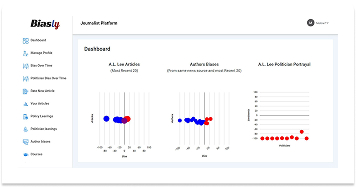
- Journalist Bias Analytics Platform: Explore how individual journalists contribute to bias within their publications.
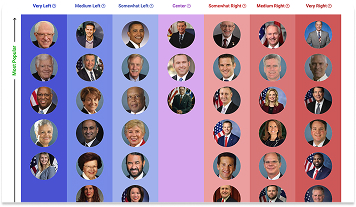
- Politician Bias Analytics Platform: Compare how politicians are framed differently by The New Yorker and other outlets.
- Media Literacy Education Platform: Learn how to critically assess media sources, bias techniques, and news reliability.
Frequently Asked Questions
The New Yorker is rated as Medium Left based on Biasly’s media bias algorithm, which assesses sentiment, article framing, and policy favorability.
While The New Yorker is not widely known for promoting fake news in recent years, some articles have historically shown selection and omission bias, such as the 1984 Alastair Reid composite character scandal, where the longtime contributor admitted to creating composite characters and inventing details/places. And resituating conversations in his reporting pieces for The New Yorker. But since this major scandal, it hasn’t been embroiled in any major controversy, and, for all intents and purposes, its factual reporting is generally sound.
Biasly uses a combination of AI sentiment analysis and human analyst review to assess tone, fact accuracy, source quality, and media bias indicators. Learn more on our Bias Meter page.
Generally, yes, though partisan framing and selective reporting can affect perceived reliability.
Military Spending
| Date | Sentiment | Associated Article | Snippet |
|---|---|---|---|
| 08/25/2019 | 75% For | Trump Family Detentions Flores Agreement (link) | So, of course, the Trump administration is doing the opposite in a baldfaced |